News · Fitness & Exercise
Strength training builds some muscle in children and teens, most clearly after puberty
Worries about children lifting weights have faded, but how much muscle it actually builds before adulthood was unclear. A review of 23 studies found small gains overall and the biggest ones in older teens.
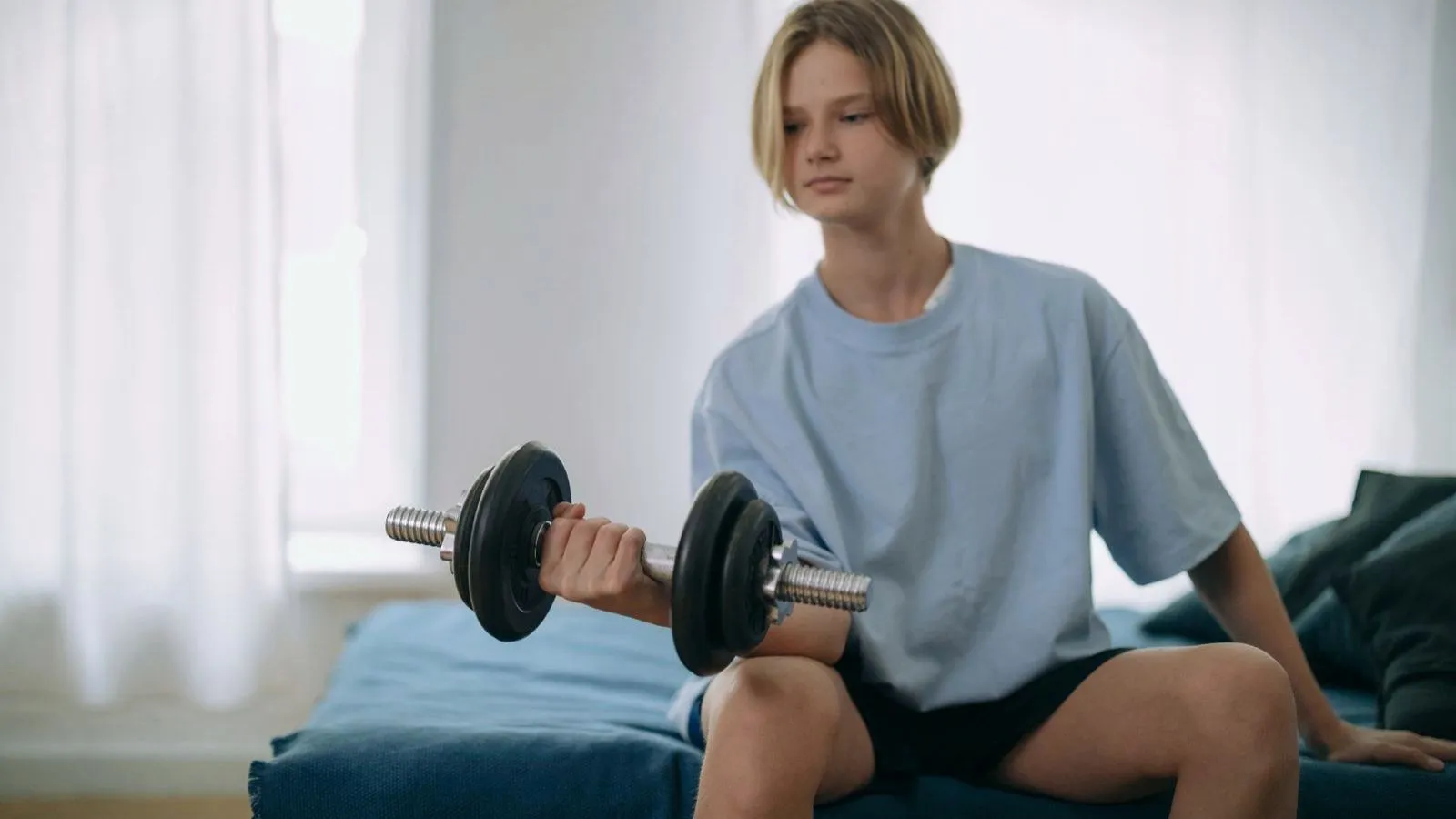
- A review of 23 studies with 1,443 participants under 18, published in Sports Medicine.
- Compared with no training, strength training produced a small increase in muscle size.
- Compared with other exercise, the gain was larger, and largest in teens who had finished puberty.
- Effects before and during puberty were trivial to small, and results by sex were inconsistent.
- Many studies were small, and some were not randomized, so the estimates are imprecise.
For decades, parents and coaches worried that lifting weights was unsafe for children or pointless before puberty. The first worry has largely given way: sports medicine groups now back supervised strength training for young people. The second question, how much muscle it actually builds at different ages, has been harder to answer.
A review in Sports Medicine pooled 23 studies of children and teens and found a clear pattern. Strength training added a small amount of muscle overall, with the clearest gains in teenagers who had already been through puberty.
What changed in thinking about strength training for children
The review’s authors start from where the field now stands: resistance training is considered safe and beneficial for young individuals. That view was set out in a 2014 international consensus statement, adapted from the official position statement of the UK Strength and Conditioning Association on youth resistance training and then endorsed by sports medicine, exercise science and pediatric groups.
It also fits wider guidance. The World Health Organization notes that in children and adolescents, physical activity promotes bone health, encourages healthy growth and development of muscle, and that muscle strengthening benefits everyone. MedlinePlus notes that most children need at least an hour of physical activity every day.
How the youth strength training review worked
The researchers searched for controlled studies in people younger than 18 that measured muscle size, either with scans or with instrumented measurements. In all, twenty-three studies with a total of 1443 participants were included.
They compared strength training with two kinds of control groups: passive controls, who did no extra training, and active controls, who did other exercise such as sport or endurance training. They also split results by stage of puberty and by sex, and checked whether each program was designed in a way known to build muscle.
What happened to muscle size
Compared with doing nothing extra, strength training induced a small increase in muscle mass. On the standard scale researchers use for effect sizes, the gain was about 0.22, where 0.2 counts as small. In practical terms, a trained group ended up with slightly more muscle than an untrained one, but the two groups overlapped a great deal.
Against other exercise, the difference was bigger, about 0.61, a moderate effect. And puberty mattered. Among teens who had finished puberty, the gain compared with other exercise was large, while children before or during puberty showed trivial to small changes. Against passive controls, the estimates were about 0.16 before puberty, 0.30 around puberty and close to zero after it, and only the middle one was clearly different from no effect. By sex, the picture was mixed: large gains in boys against active controls but not against passive ones, so the authors conclude that sex did not consistently influence outcomes.
Why active and passive comparisons of strength training differ
The two kinds of comparison answer different questions. A passive control group shows what strength training adds over a child’s normal life, which already includes play, sport and growth. An active control group shows what strength training adds over other exercise that does not load the muscles in the same way.
The larger effect against active controls may partly reflect the studies themselves: they were fewer, and some were in older, trained teenagers, where muscle growth is easier to detect. The authors also rated each program against established guidelines for building muscle, because many school and sports programs are designed for skill or endurance rather than size.
Why the puberty pattern matters
The findings help explain an old observation. Children who lift weights get stronger, but they often do not look much more muscular, and this review suggests that visible muscle growth comes mostly after puberty. Before that, strength gains are likely to come more from the nervous system learning to use muscle than from bigger muscles, although this review did not measure that.
For parents and coaches, the results suggest that the main purpose of strength training in young children is not muscle size. The consensus statement frames it as part of healthy development, alongside skill, coordination and sport.
What the youth resistance training studies cannot show
The studies were mostly small and short, and some were not randomized. Muscle was measured in different ways, from imaging scans to indirect instruments, which adds noise. Several effect estimates had wide ranges that crossed zero, so the size of the benefit in younger children is uncertain.
The review looked only at muscle size. It says nothing about strength, sports performance, injury risk or bone health, which are the outcomes many families care about most, and it cannot say which programs work best for which children.
What the review adds on strength training for young people
The review supports the picture drawn by the 2014 consensus: strength training is an accepted part of youth fitness, and its effects on muscle size are modest until the teenage years. Programs for young children are generally built around technique, supervision and gradual progress rather than maximum loads.
For teenagers past puberty, the evidence for muscle growth is stronger. Decisions about a specific program, especially for a child with a health condition, are best made with a qualified coach or clinician who knows the child.
People also ask
What did the review find?
Against passive controls, strength training produced a small increase in muscle size (Cohen's d 0.22, 95% CI 0.06 to 0.37). Against active controls it was larger (d 0.61, 0.03 to 1.20), and in teens past puberty it was large (d 1.50, 0.46 to 2.54). Effects in children before or during puberty were trivial to small.
What is a Cohen's d?
A standard way to express how big a difference is, in units of how much people normally vary. Roughly, 0.2 counts as small, 0.5 as moderate and 0.8 as large.
Is strength training safe for children?
The review's authors describe resistance training as considered safe and beneficial for young people, and a 2014 international consensus statement on youth resistance training was endorsed by sports medicine and pediatric organizations.
Why do teens after puberty gain more muscle?
The review did not test reasons. Hormonal changes during puberty are the usual explanation for why muscle grows more easily afterwards.
Does muscle size tell the whole story?
No. This review measured muscle size only. Strength, coordination and bone health can improve without much change in muscle size, and those were outside its scope.
How much activity do guidelines describe for children?
MedlinePlus notes that most children need at least an hour of physical activity every day, and the World Health Organization says muscle strengthening benefits everyone. This is general information rather than medical advice.
References
- Komm, Y., Zeiler, L., Held, S., et al. Effects of Resistance Training on Muscle Hypertrophy in Children and Adolescents: A Systematic Review and Meta-Analysis. Sports Medicine, 2026.
- Lloyd, R. S., Faigenbaum, A. D., Stone, M. H., et al. Position statement on youth resistance training: the 2014 International Consensus. British Journal of Sports Medicine, 2014.
- World Health Organization. Physical activity. Fact sheet.
- MedlinePlus. Exercise for Children. US National Library of Medicine.