Explainer · Fitness & Exercise
Cold-water immersion: what ice baths do for sore muscles, strength gains and general health
Reviews of dozens of small trials suggest cold plunges ease soreness and help power recover a day after hard exercise. Regular ice baths after strength training may blunt muscle growth, and wider health claims rest on thin evidence.
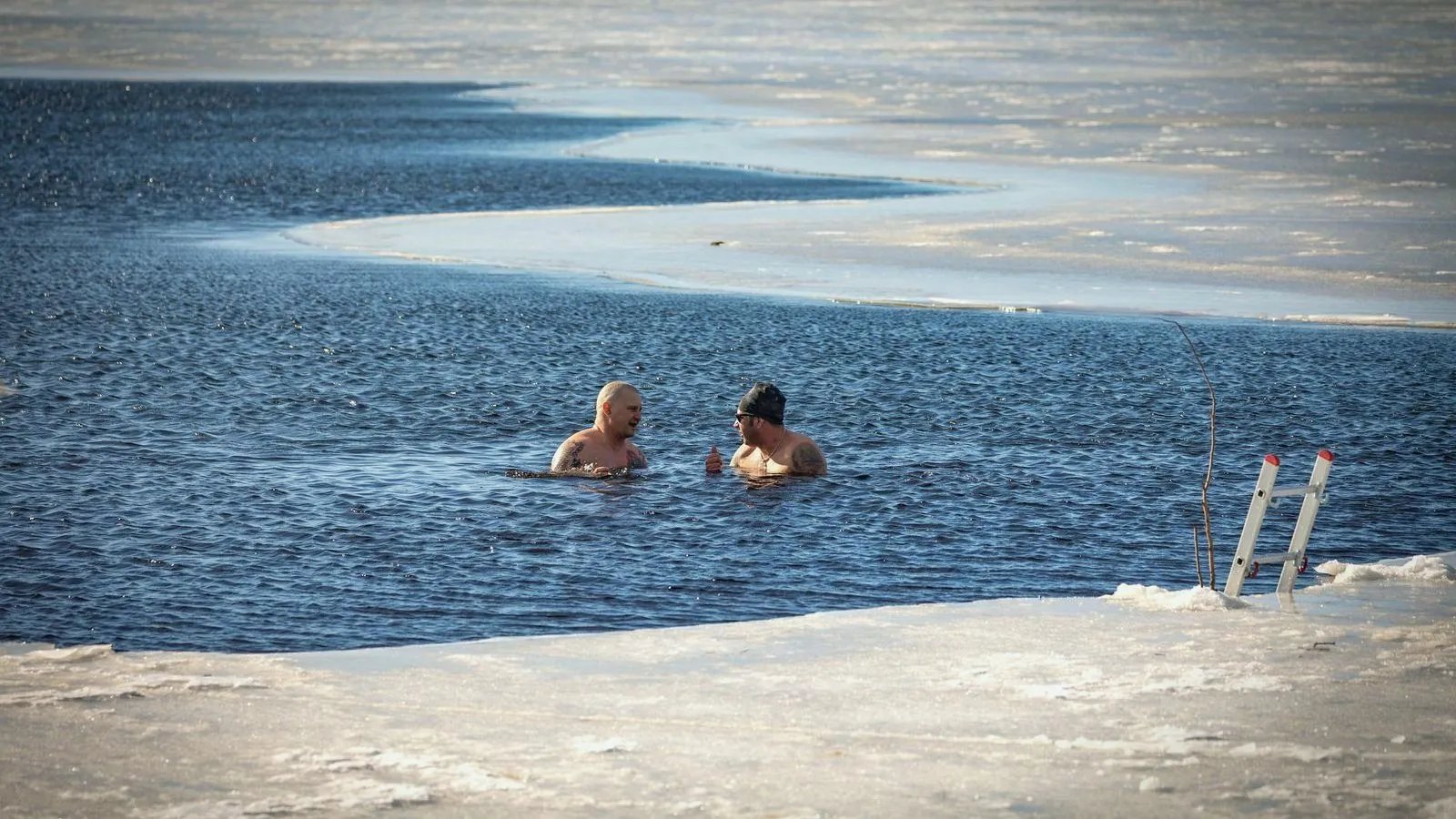
- In 52 studies, a cold plunge after hard exercise eased soreness and helped power recover a day later.
- It did not help strength recover, and in one review it beat rest but not a warm bath.
- Regular ice baths after weight training went with smaller gains in muscle size and strength.
- Claims about metabolism, mood and immunity come mostly from small studies of winter swimmers.
- Trials are small, cannot be blinded and rarely track harms, and sudden cold has known dangers.
The ice bath used to belong to professional sport: a wheelie bin of slush behind the changing rooms and a grimacing athlete lowered into it. It has since moved to back gardens, gyms and social media, where a morning plunge is credited with everything from faster recovery to a stronger immune system.
The research is narrower than the enthusiasm. Sports scientists at the University of South Australia pooled 52 studies in the journal Sports Medicine and found that cold water does help people feel and perform better a day after very hard exercise. Other trials suggest the habit can work against anyone trying to build muscle. For general health, a specialist review calls the question “a continuing subject of debate.”
What counts as cold-water immersion?
In research the term means sitting or standing in cold water, usually up to the waist or chest, shortly after exercise. A Cochrane review defined it by temperature and noted that it is currently one of the most popular interventional strategies used after exercise.
How cold and how long varies between studies, which makes them hard to compare. One meta-analysis tried to pin down the useful range. For soreness, water temperature of between 10 and 15 degrees Celsius, which is 50 to 59 degrees Fahrenheit, gave the best results, and immersion of between 10 and 15 min had the best results for duration. That is about the temperature of a cold tap in winter, well short of a tub full of ice.
Does a cold plunge help muscles recover after exercise?
Emma Moore and colleagues at the University of South Australia set out to settle a literature of mixed results. They compared cold-water immersion (CWI) with simply resting after a single bout of strenuous exercise. Fifty-two studies were included in the meta-analyses, all in people who played sport or were physically active.
The answer depended on the kind of exercise. After high-intensity work such as sprints or team sport, cold water helped on four counts a day later: people reported less muscle soreness, said they felt more recovered, produced more muscular power, and had lower blood levels of creatine kinase, an enzyme that leaks from damaged muscle. The authors’ verdict was that CWI was an effective recovery tool after high-intensity exercise.
After eccentric exercise the picture was thinner. Eccentric means the muscle lengthens under load, as in walking downhill or lowering a weight, and it is the classic cause of next-day stiffness. Here cold water improved power at 24 hours and little else. In neither case did it help maximal strength return any faster.
An earlier Cochrane review reached a similar, more cautious conclusion. Seventeen small trials were included, involving a total of 366 participants, and the authors rated their quality as low. There was some evidence that cold-water immersion reduces delayed onset muscle soreness after exercise when compared with rest.
That review also contains a result ice-bath enthusiasts rarely quote. When cold water was compared with warm water, or with alternating hot and cold, pooled data for pain showed no evidence of differences between the two groups. Cold beat doing nothing. It did not clearly beat a warm bath.
Do ice baths interfere with building muscle?
Soreness and inflammation after training are unpleasant, and they are also part of how muscle adapts. Damp them down after every session and the adaptation itself may suffer. A trial in Australia tested this directly. Llion Roberts and colleagues had 21 physically active men strength trained for 12 weeks, twice a week. After each session half sat in cold water for ten minutes and half cycled gently.
Both groups got stronger, but unequally. In the authors’ summary, cold water immersion attenuated long term gains in muscle mass and strength. Muscle samples showed why: the signals that tell muscle fibers to grow were weaker for up to two days after a cold bath.
One trial of 21 men is not much, and a 2024 meta-analysis gathered what else exists. A total of 8 studies met the inclusion criteria. Taken together they pointed the same way, toward smaller gains in muscle size when cold immersion followed weight training. The authors, led by Alec Piñero at Lehman College in New York, were careful about how firmly to say it, given study quality they rated fair to poor: the results of the current study should be interpreted with some caution.
The two bodies of evidence are not in conflict. Cold water seems to help with getting through the next day, and to subtract a little from the long-term response to lifting. Which of those matters more depends on whether someone is in the middle of a tournament or trying to add muscle over months.
What about cold plunges for mood, metabolism and immunity?
Most of the bigger claims trace back to studies of people who swim outdoors through winter. Researchers at the Arctic University of Norway reviewed 104 such studies. They found hints that regular cold exposure alters body fat and improves the body’s response to insulin, the hormone that controls blood sugar.
They also found reasons for doubt. Clear conclusions from most studies were hampered by the fact that they were carried out in small groups, often of one sex, in water of differing temperature. And the people being studied had chosen the hobby. In the review’s words, whether winter swimmers as a group are naturally healthier is unclear. The authors expect that the topic will continue to be a subject of debate.
Michael Tipton, a physiologist at the University of Portsmouth who studies the body in extreme environments, reached a parallel judgment in a review titled “Cold water immersion: kill or cure?” There is usually a credible rationale for a claimed benefit, the review found, but in some instances the supporting data remain at the level of anecdotal speculation.
What are the risks of cold water?
Tipton’s review gives the hazards equal billing. It examines cold-water immersion as a precursor to drowning, cardiac arrest and hypothermia, and its summary is that cold water can be either good or bad, threat or treatment, depending on circumstance. A supervised bath at a training ground and a solo dip in a winter lake are different exposures. The same review assesses cold water’s established uses too, among them extending exercise time in the heat and treating hyperthermic casualties, which matters to anyone exercising in the heat.
The recovery trials offer little reassurance either way, because they mostly did not look. The Cochrane authors noted that the majority of trials did not undertake active surveillance of pre-defined adverse events. Whether cold immersion is suitable for someone with a heart or circulation condition depends on their own health, which their doctor assesses.
How strong is the cold-water immersion evidence?
Weaker than its popularity suggests, for reasons built into the subject. Nobody can be given a fake ice bath, so every participant knows which treatment they received. Soreness and feeling recovered are self-rated, and the South Australian team acknowledged that such ratings may be shaped by belief in the treatment. In their quality check, only four studies concealed treatment groups from the research team.
The trials are also small and involve fit, physically active volunteers, measured over a day or two. That says little about older adults or about a habit kept up for years.
Ice baths do one modest job reasonably well, easing the day after hard exercise, at a possible cost to muscle growth. The larger health promises made for them are unproven.
People also ask
Do ice baths reduce muscle soreness?
In a meta-analysis of 52 studies, cold-water immersion reduced muscle soreness 24 hours after high-intensity exercise (standardized mean difference -0.89, 95% CI -1.48 to -0.29, where a negative value means less soreness than with rest). A Cochrane review of 17 small trials also found less soreness than with rest for up to 96 hours.
How cold and how long were the baths in studies?
A meta-analysis of nine trials found the best results for soreness with water between 10 and 15 degrees Celsius (50 to 59 degrees Fahrenheit) and immersion of 10 to 15 minutes. The Cochrane review defines cold-water immersion as water below 15 degrees Celsius.
Do ice baths affect muscle growth?
They may reduce it. In a 12-week trial of 21 men, strength and muscle mass increased more with active recovery than with 10 minutes of cold-water immersion after each session. A 2024 meta-analysis of 8 studies concluded that cold-water immersion straight after resistance training may attenuate hypertrophy, meaning muscle growth, while rating study quality as fair to poor.
Are cold plunges good for general health?
The evidence is limited. A review of 104 studies found some signals for body fat and insulin sensitivity but said clear conclusions were hampered by small groups and varied methods, and that it is unclear whether winter swimmers are simply healthier people.
Is cold-water immersion risky?
A review in Experimental Physiology describes cold-water immersion as a possible precursor to drowning, cardiac arrest and hypothermia, depending on circumstance. Most recovery trials did not monitor harms systematically. This is general information rather than medical advice.
References
- Moore, E., Fuller, J. T., Buckley, J. D., et al. Impact of Cold-Water Immersion Compared with Passive Recovery Following a Single Bout of Strenuous Exercise on Athletic Performance in Physically Active Participants: A Systematic Review with Meta-analysis and Meta-regression. Sports Medicine, 2022.
- Bleakley, C., McDonough, S., Gardner, E., Baxter, G. D., Hopkins, J. T., Davison, G. W. Cold-water immersion (cryotherapy) for preventing and treating muscle soreness after exercise. Cochrane Database of Systematic Reviews, 2012.
- Machado, A. F., Ferreira, P. H., Micheletti, J. K., et al. Can Water Temperature and Immersion Time Influence the Effect of Cold Water Immersion on Muscle Soreness? A Systematic Review and Meta-Analysis. Sports Medicine, 2016.
- Roberts, L. A., Raastad, T., Markworth, J. F., et al. Post-exercise cold water immersion attenuates acute anabolic signalling and long-term adaptations in muscle to strength training. The Journal of Physiology, 2015.
- Piñero, A., Burke, R., Augustin, F., et al. Throwing cold water on muscle growth: A systematic review with meta-analysis of the effects of postexercise cold water immersion on resistance training-induced hypertrophy. European Journal of Sport Science, 2024.
- Espeland, D., de Weerd, L., Mercer, J. B. Health effects of voluntary exposure to cold water: a continuing subject of debate. International Journal of Circumpolar Health, 2022.
- Tipton, M. J., Collier, N., Massey, H., Corbett, J., Harper, M. Cold water immersion: kill or cure? Experimental Physiology, 2017.