News · Fitness & Exercise
Heat slowed Grand Slam tennis and favored older players in a 26-year study of 13,081 men's matches
An analysis in Medicine & Science in Sports & Exercise matched weather records to men's Grand Slam matches from 2000 to 2025. In the hottest tournaments play was slower, matches ran eight minutes longer and double faults edged up.
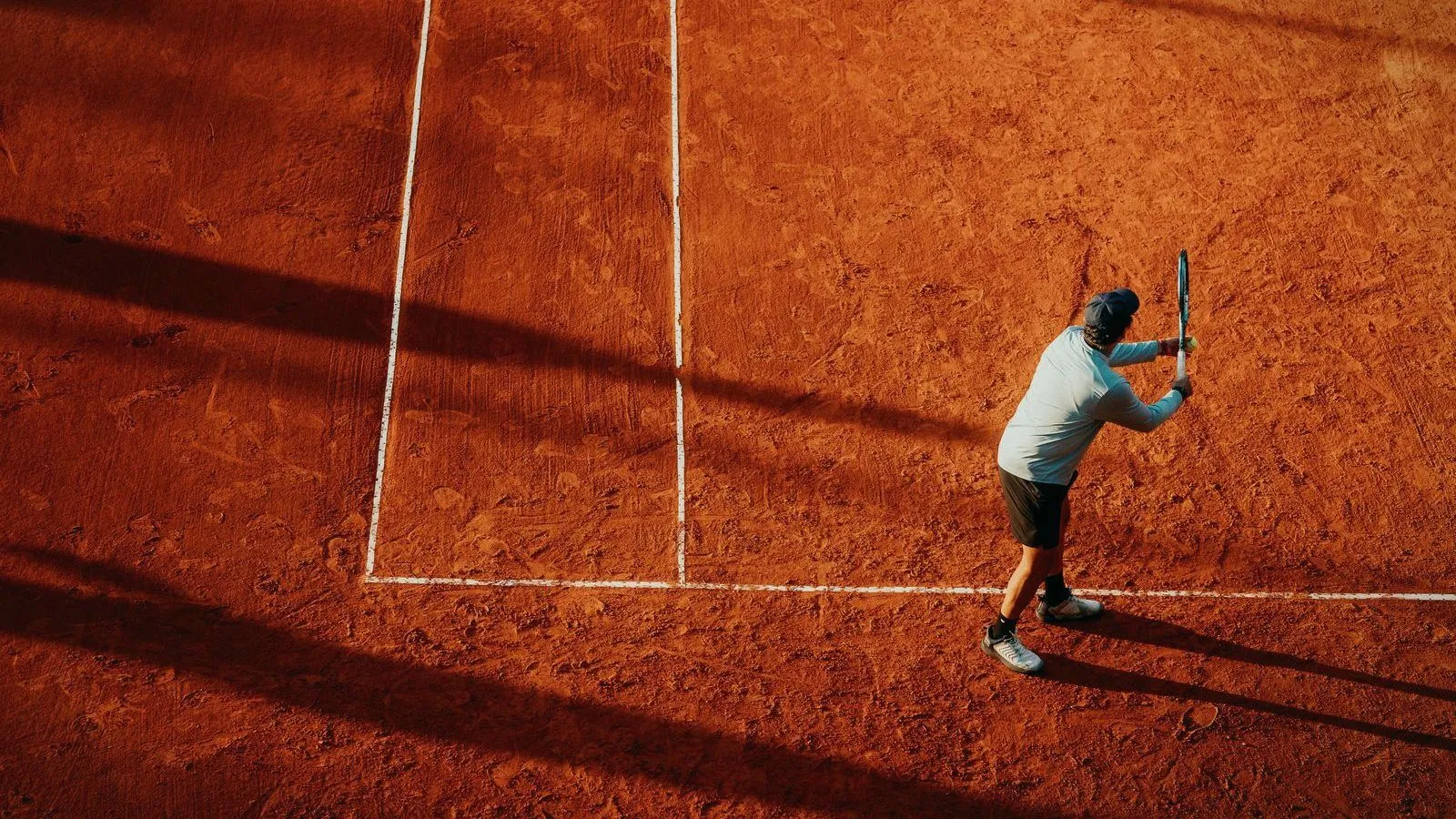
- Researchers linked weather data to 13,081 men's Grand Slam matches played from 2000 to 2025.
- In the hottest tournaments, play was slower and the typical match lasted eight minutes longer.
- Winners in the heat tended to be slightly older than the players they beat, a reversal of the usual gap.
- Retirements stayed level overall but were nearly twice as common in hot years at the US Open.
- The changes are small, cover men only, and heat was measured per tournament, not per match.
Every January in Melbourne and every August in New York, television cameras find a tennis player draped in an ice towel, staring at the court. Grand Slam tennis is played outdoors in summer by people who cannot easily stop, which makes it an unusually good place to see what heat does to a body that is working hard.
A team in Israel that includes the heat physiologist Yoram Epstein has now measured that across a generation of the sport. Writing in Medicine & Science in Sports & Exercise, they report on 13,081 men’s matches from 2000 to 2025. In the hottest tournaments nobody fell apart. Play simply slowed, and a few other things shifted with it.
How much did heat change Grand Slam matches?
Liam Simani, Epstein and Itay Ketko describe their work as a retrospective cohort study, meaning they went back through existing records. They analyzed 13,081 men’s matches in all four Grand Slam tournaments and attached local weather data to each event. A tournament counted as hot when its average Heat Index, which combines air temperature and humidity, sat well above that venue’s own long-run norm. Everything else was the comparison.
Tempo is the clearest change. Median match pace was 1.47 points per minute during hot tournaments, against 1.53 in the rest. That sounds trivial until it is multiplied across a best-of-five match. The typical hot-weather match lasted 149 minutes, eight more than the 141 recorded in ordinary conditions.
Precision slipped a little too. The share of service points ending in a double fault rose from 3.50% to 3.71%. One extra double fault in roughly every 500 serves is not something a spectator would notice, yet with this many matches the pattern is clear.
The oddest result concerns age. In normal conditions the winner of a match was, on average, slightly younger than the loser. In the heat that flipped: the authors report that elevated thermal stress inverted the winner-minus-loser age gap, indicating a relative advantage for older athletes. The differences are fractions of a year either way. Experience at rationing effort is one possible explanation, though match records alone have no means of testing it.
Then there is the result that did not appear. Retirements and walkovers did not climb across the sport as a whole, and lower-ranked players did not beat favorites any more often. Only one venue broke the pattern. While overall match non-completion rates and ranking upsets remained stable globally, the non-completion rate nearly doubled at the US Open, from under 5% to more than 8%.
Slowing down in the heat looks like self-protection
The authors read the slower tempo in a particular way: the observed reduction in match pace is consistent with self-pacing under elevated thermal stress. Players, on this account, are turning themselves down before their bodies force the issue.
A controlled experiment from Qatar supports that reading. Julien Périard and colleagues had 12 male tennis players play matches in hot and in cool conditions while their core and skin temperatures and heart rate were recorded. In the heat, rallies were no shorter, with point duration similar between conditions, while the time between points stretched by about ten seconds. Core temperature still ended higher. The researchers concluded that the adjustments were a strategy to offset the sensation of environmental conditions being rated as difficult. The players slowed because of how hot they felt, well before any breakdown.
Earlier studies at a single tournament saw the medical side of the same picture. At the Australian Open, Matthew Smith and colleagues, working with Tennis Australia, tracked 360 men’s matches and measured heat by wet bulb globe temperature, a gauge that also accounts for sun and wind. As it rose, players called for the doctor and for cooling devices more often. However, few matchplay characteristics were noticeably affected. Their companion study of women’s matches did pick up a change in play: as conditions got hotter, the number of winners and net approaches were reduced, while double faults increased. The new analysis finds the same drift in double faults among men, now across 26 years and four venues.
Tennis is not a special case. An analysis of decades of results from seven North American marathons found a progressive slowing of marathon performance as the WBGT increases from 5 to 25 degrees C, with slower runners losing more time than the leaders.
Men’s tennis only, and heat measured by tournament
The study covers men’s matches. Women play best-of-three sets at the Grand Slams, and the earlier Australian work suggests their play shifts in its own way.
Heat was assigned to a whole event, so a cool night match in a hot fortnight counts as hot. That blurring would tend to shrink the differences rather than create them. A larger worry runs the other way. The authors note that the hot tournaments clustered heavily in the last decade, which means hot years are also recent years. Rackets, rules, scheduling and the fitness of the field have all changed since 2000, and an analysis of match records struggles to pull those apart from temperature.
The effects are also small. The authors’ own summary is that heat was associated with small but consistent changes in elite men’s tennis match dynamics. These are among the best-prepared athletes in the world, with ice towels, shade and medical staff at the side of the court.
For everyone else, the study is a large demonstration of something sports physiology already held: a body working in heat protects itself by doing less. The consensus statement that guides elite sport says exercising in the heat induces thermoregulatory and other physiological strain that can lead to impairments in endurance exercise capacity, and it says sport governing bodies should consider allowing additional (or longer) recovery periods when competitions are held in the heat.
Across 26 years of Grand Slam tennis, heat’s clearest mark was a slower game.
People also ask
How did the study define a hot tournament?
A tournament was classified as hot if its mean Heat Index, a measure combining air temperature and humidity, was at least one standard deviation above that tournament's own 26-year average. A standard deviation is a measure of how much a value normally varies from year to year. All other tournaments served as the comparison.
How much slower was play in the heat?
Median match pace was 1.47 points per minute in hot tournaments against 1.53 in the others, and median match duration was 149 minutes against 141.
Did more players retire from matches in the heat?
Not overall. Match non-completion rates were stable across the four tournaments combined, but at the US Open the rate was 8.35% in hot years against 4.65% in other years.
What happened to the age of winners?
In ordinary conditions winners were on average 0.21 years younger than the players they beat. In hot tournaments they were 0.16 years older, which the authors describe as a relative advantage for older athletes.
What do sports medicine bodies recommend for competing in heat?
A 2015 consensus statement in the British Journal of Sports Medicine describes heat acclimatization, meaning repeated exercise in the heat over one to two weeks, as the most important step for athletes, alongside hydration and cooling, and says event organizers should plan shade, cooling facilities and scheduling. This is general information rather than medical advice.
References
- Simani, L., Epstein, Y., Ketko, I. Heat Stress and Elite Tennis Performance: A 26-Year Analysis of Grand Slam Match Dynamics in a Warming Climate. Medicine & Science in Sports & Exercise, 2026.
- Smith, M. T., Reid, M., Kovalchik, S., Woods, T. O., Duffield, R. Heat stress incident prevalence and tennis matchplay performance at the Australian Open. Journal of Science and Medicine in Sport, 2018.
- Smith, M. T., Reid, M., Kovalchik, S., Wood, T., Duffield, R. Heat stress incidence and matchplay characteristics in Women's Grand Slam Tennis. Journal of Science and Medicine in Sport, 2018.
- Périard, J. D., Racinais, S., Knez, W. L., Herrera, C. P., Christian, R. J., Girard, O. Thermal, physiological and perceptual strain mediate alterations in match-play tennis under heat stress. British Journal of Sports Medicine, 2014.
- Ely, M. R., Cheuvront, S. N., Roberts, W. O., Montain, S. J. Impact of Weather on Marathon-Running Performance. Medicine & Science in Sports & Exercise, 2007.
- Racinais, S., Alonso, J. M., Coutts, A. J., et al. Consensus recommendations on training and competing in the heat. British Journal of Sports Medicine, 2015.