News · Fitness & Exercise
Exercise prompt in health records linked to 9% fewer falls in a trial of 11,945 older primary care patients
Brigham and Women's Hospital tested a records tool that lets doctors prescribe a 10-minute home strength and balance program. Falls dipped modestly across 22 practices, though only one in five patients got a prescription.
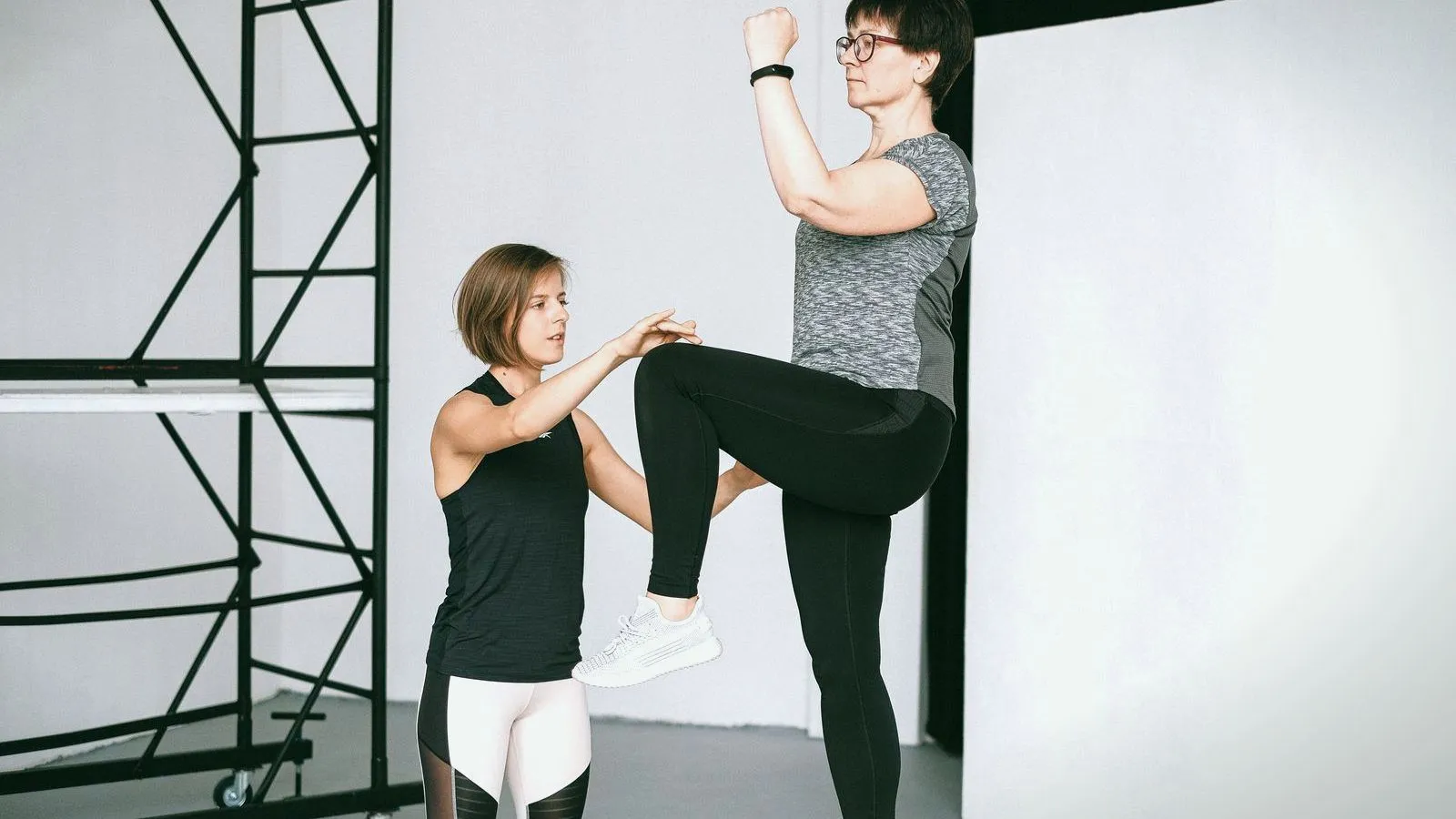
- Practices given a health-record tool for prescribing exercise saw about 9% fewer falls in at-risk older patients.
- Over two years, 32% of patients at those practices had a fall against 34.5% at usual-care practices.
- That gap of 2.5 percentage points came even though only 22% of patients got a prescription.
- Fall injuries dipped slightly, mainly in patients 76 and older; deaths did not change.
- Coded falls were clearly lower only after adjusting for patient differences, and nobody tracked who did the exercises.
Three questions come up at many primary care visits for older Americans: have you been hurt in a fall in the last year, have you fallen twice or more, and are you afraid of falling because of your balance or walking? A yes to any of them marks a patient as at risk. What usually happens next is far less settled, and often nothing does.
A large trial run from Boston tested a simple way to change that. At 22 primary care practices in the Mass General Brigham health system, half of the clinics got a tool inside their electronic health record that let clinicians prescribe a short, tailored home exercise program for balance and leg strength in a few clicks. Among 11,945 at-risk patients aged 65 and older, falls were about 9% lower at the practices with the tool, even though only about one patient in five received a prescription. The team, led by Nancy Latham with Patricia Dykes as senior author, both at Brigham and Women’s Hospital and Harvard Medical School, published the results on October 16 in JAMA Network Open.
Why fall-prevention exercise rarely reaches primary care
Falls are common and costly in later life. The US Preventive Services Task Force reports that in 2018, 27.5% of community-dwelling adults aged 65 or older said they had fallen in the past year, and that falls are the leading cause of injury-related illness and death in that age group. A Cochrane review of 108 trials, led by Catherine Sherrington at the University of Sydney, found that exercise reduces the rate of falls by 23% in older people living in the community. The reviewers rated that evidence high-certainty, and exercise also cut the number of people who fell at all by about 15%. According to a 2013 meta-analysis in The BMJ, exercise programs designed to prevent falls also seem to prevent injuries caused by falls, including fractures.
On that evidence, the task force recommends exercise interventions to prevent falls in adults 65 and older who are at increased risk. Getting it to patients is the hard part. The eSTEPS team points out that, for all the evidence, the use of exercise in primary care remains limited. Doctors have a long list of things to cover in a short visit, and an exercise referral that requires a separate program, staff or trip is easy to drop.
A bigger, more hands-on attempt had already struggled. The STRIDE trial, published in 2020, sent specially trained nurses into 86 primary care practices to assess risk and build individual plans for adults aged 70 and older. It did not result in a significantly lower rate of serious fall injuries than enhanced usual care, at 4.9 against 5.3 per 100 person-years. Latham and Dykes were among the STRIDE investigators, and eSTEPS tries the opposite approach: something cheap that fits inside the visit doctors are already having.
How the eSTEPS records tool worked
eSTEPS, short for Electronic Strategies for Tailored Exercise to Prevent Falls, appeared as a quiet reminder in the Epic health record, not a pop-up, whenever an eligible patient was seen. From there a clinician could open a ready-made order set that suggested exercises based on the patient’s characteristics. They were pared-down versions of exercises from the Otago program, a home-based fall-prevention routine, all aimed at balance and lower-body strength. A 2010 review of the original Otago program, pooling seven trials with 1,503 participants, found that it significantly reduced fall rates, by about a third, in community-dwelling adults aged 65 and older. Each session took about 10 minutes and could be done at home with no additional equipment, at one of four levels of difficulty. The default was the beginner level, or seated exercises for anyone who could not safely stand.
Patients got handouts, and the after-visit summary and patient portal linked to a website and a mobile app with videos and optional tracking. Clinicians could also refer to physical therapy, as they could at the comparison clinics, which offered usual care: the same three screening questions and the usual option of a physical therapy referral.
The trial assigned whole practices, not individual patients. They were sorted by type and size, paired with a similar practice, and one of each pair was chosen by chance to get the tool. The trial ran from June 2023 to May 2025, and falls were counted from diagnosis codes in the health record using an algorithm previously checked against patients’ own reports, alongside falls patients reported at later screenings.
How many falls the eSTEPS tool prevented
The effect was modest and consistent across measures. Patients at practices with the tool had 19.3 coded falls per 100 patient-years against 21.2 at usual-care practices, a gap of about 9%. Over two years, 32.0% of patients at eSTEPS clinics had at least one fall, against 34.5% at the others. Falls that patients themselves reported at later visits fell by the same 9%.
Fall-related injuries dropped by about 6%, from 16.7 to 15.7 per 100 patient-years. That benefit was confined to the older patients: the paper reports that for fall-related injuries, the intervention only had a clear effect in older patients, those aged 76 and over. Hospital stays were slightly less common at eSTEPS practices in an analysis the team had not planned in advance, and deaths did not differ.
All this happened with limited use of the tool itself. Exercise prescriptions through eSTEPS were issued for 1,255 patients, 22.1% of those eligible, and 215 clinicians, 77.9% of those at the eSTEPS practices, used the tool to deliver the exercise program at least once. Uptake varied a great deal from practice to practice, from about half of clinicians to nearly all. Referrals to physical therapy were about as common in both arms, a little over half of patients.
Why a small drop in falls from a records prompt matters
Nine percent is smaller than the 23% reduction in the Cochrane review. That figure comes from trials that delivered exercise programs directly to the people enrolled, while eSTEPS reached everyone who screened positive at a visit and left the exercising to them. The authors describe falls and fall-related injuries as “modestly reduced in older adults in primary care,” and they argue that a small effect from a tool needing little extra clinician time can add up across a health system serving large numbers of older patients.
They also suggest why a tool used for only one patient in five could shift the numbers for everyone. The prompt may have raised clinician awareness of fall risk, led doctors to use it for their highest-risk patients, or changed how often they asked about falls and talked about them. The trial was not designed to tell those explanations apart.
Where the eSTEPS fall result is weakest
The headline effect depends on statistical adjustment. Despite the matched pairs, patients at eSTEPS clinics differed from those at usual-care clinics: more were Black, had lower incomes or no college degree, and fewer had fallen in the previous year. The eSTEPS practices had also had higher death rates in the year before the trial. Before adjusting for a set of factors chosen in advance, only self-reported falls showed a clear reduction. The authors attribute the gap between the unadjusted and adjusted results to these differences, writing that it likely reflects baseline imbalances between study groups, and they treat the adjusted results as the main ones; the unadjusted picture is weaker.
The trial also cannot say who exercised. The study had no data on patient uptake and adherence to the exercises, so nobody knows how many patients did the routines, or how often. Sticking with home exercise is hard: in the Otago trials, only about a third of those still enrolled at a year were still exercising three or more times per week. Falls counted from diagnosis codes miss falls that never reach a doctor, and the authors acknowledge the tool could, in principle, have changed how often falls were recorded, although similar effects on self-reported falls and hospital stays make that less likely.
Finally, everything happened in a single integrated health system in Massachusetts, on one electronic record platform. Most patients were white, and how the tool would work in practices with fewer resources, or with different record systems, is untested.
What the eSTEPS trial means for older patients
For an older person flagged as at risk of falling, the evidence that strength and balance exercise lowers the chance of a fall was already strong, and it is the basis of the task force’s recommendation. What the eSTEPS trial adds is evidence about delivery: a prompt in the record, with a ready-made home program, went with slightly fewer falls across a large, ordinary patient population. Whether a particular exercise program suits a particular person is assessed by their doctor or a physical therapist.
The gain was small and needed adjustment to show. It was also achieved with a tool that asked little extra of clinicians, covering nearly 6,000 eligible patients in one health system, about 1,250 of whom got a prescription through it.
People also ask
How much did the eSTEPS tool reduce falls?
Patients at practices with the tool had 19.3 coded falls per 100 patient-years against 21.2 at usual-care practices, a rate ratio of 0.91 (95% CI 0.88 to 0.95), about 9% lower. Over two years, 32.0% had at least one fall against 34.5%. Fall-related injuries were 15.7 against 16.7 per 100 patient-years (rate ratio 0.94, 0.90 to 0.97).
What exercises did eSTEPS prescribe?
Simplified versions of exercises from the Otago program, a home fall-prevention routine, aimed at balance and leg strength. They needed no equipment, took about 10 minutes a session, came in four levels of difficulty, and had sitting versions for people who could not safely stand. Patients got handouts and access to a website and app with videos.
Who counted as being at risk of falling?
Adults aged 65 or older who answered yes to at least one of three routine questions at a primary care visit: whether they had fallen and hurt themselves in the past year, whether they had fallen two or more times in the past year, and whether they were afraid of falling because of balance or walking problems.
Why did the result depend on statistical adjustment?
Practices were randomized in matched pairs, but the patient groups still differed: the tool practices had more Black patients, lower incomes, fewer college graduates, fewer falls in the year before, and higher prior death rates. Without adjustment, only self-reported falls showed a clear reduction. After adjusting for a set of factors chosen in advance, coded falls, injuries, self-reported falls and hospital stays were all lower.
What do guidelines say about exercise to prevent falls?
The US Preventive Services Task Force recommends exercise interventions to prevent falls in community-dwelling adults aged 65 or older who are at increased risk of falling, a B recommendation based on moderate certainty of a moderate benefit. Whether a particular exercise program suits a particular person is assessed by their doctor or physical therapist. This is general information rather than medical advice.
References
- Latham, N. K., Hommel, E., Kiesman, M., Lipsitz, S. R., Bates, D. W., Carroll, D. L., Frost, A. C., Garabedian, P. M., Loewenthal, J. V., Sainlaire, M., Samal, L., Song, W., Wien, M., Dykes, P. C. Clinical Decision Support for Fall Prevention in Primary Care: The eSTEPS Cluster Randomized Clinical Trial. JAMA Network Open, 2026.
- Sherrington, C., Fairhall, N. J., Wallbank, G. K., et al. Exercise for preventing falls in older people living in the community. Cochrane Database of Systematic Reviews, 2019.
- El-Khoury, F., Cassou, B., Charles, M. A., Dargent-Molina, P. The effect of fall prevention exercise programmes on fall induced injuries in community dwelling older adults: systematic review and meta-analysis of randomised controlled trials. BMJ, 2013.
- Thomas, S., Mackintosh, S., Halbert, J. Does the Otago exercise programme reduce mortality and falls in older adults? A systematic review and meta-analysis. Age and Ageing, 2010.
- Bhasin, S., Gill, T. M., Reuben, D. B., et al. A Randomized Trial of a Multifactorial Strategy to Prevent Serious Fall Injuries. New England Journal of Medicine, 2020.
- US Preventive Services Task Force. Interventions to Prevent Falls in Community-Dwelling Older Adults: US Preventive Services Task Force Recommendation Statement. JAMA, 2024.