News · Fitness & Exercise
Coached home exercise sped concussion recovery over stretching in a trial of 210 teens
A Seattle Children's-led trial in four states coached teens with lingering concussion symptoms through gentle aerobic exercise by video. They improved faster than teens who stretched, but by six months the difference had faded.
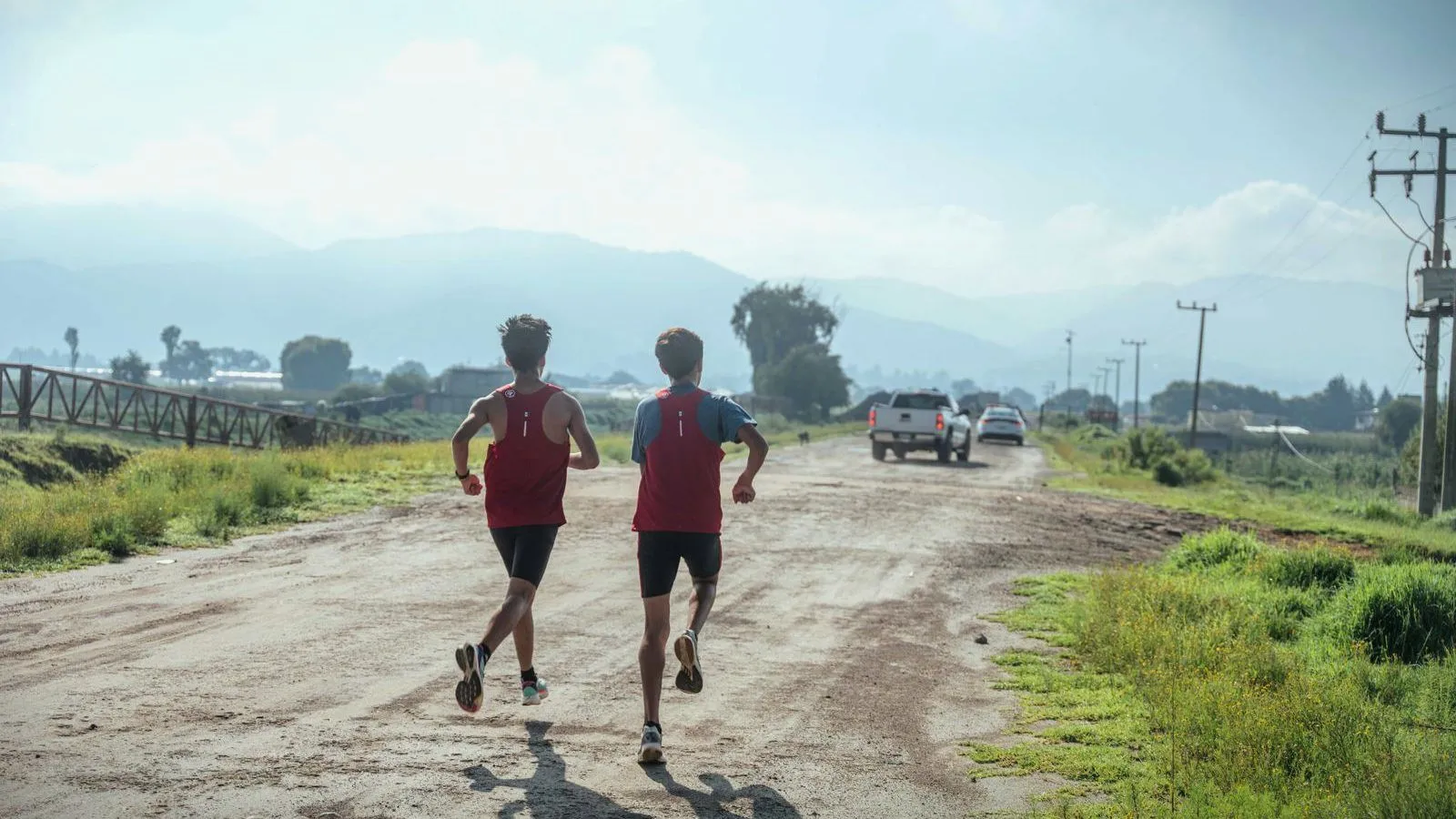
- Teens still struggling after a concussion recovered faster with coached home exercise than with a stretching routine.
- At three months they had fewer symptoms and better quality of life; by six months the difference had faded.
- The whole program ran remotely, through weekly video calls and a wrist fitness tracker.
- The gain looked larger in teens who joined less than three months after injury, a subgroup result that needs confirming.
- Symptoms were self-reported and the margins were narrow; mood and sleep improved equally in both groups.
For a long time the standard advice after a concussion was to rest until the symptoms went away. That advice has been shifting for a decade, and for teenagers whose headaches, dizziness and foggy thinking drag on for weeks, a new trial adds a practical twist: the exercise that seems to help can be coached over a video call.
Researchers led by Sara Chrisman of Seattle Children’s Research Institute randomly assigned 210 young people aged 11 to 18, all still symptomatic after a concussion, to six weeks of gentle aerobic exercise guided by a wrist fitness tracker and weekly video calls, or to a stretching routine with the same calls. Writing on October 19 in JAMA Pediatrics, the team reports that the exercise group recovered faster, with fewer symptoms and better quality of life at three months. By six months, though, the trial could no longer tell the two groups apart, and the benefit was larger in teens less than 3 months from injury, a subgroup result that needs confirming.
Why would exercise help a teenager recover from concussion?
Most young people recover from a concussion fairly quickly, but not all. About 1.9 million youth sustain a concussion each year, by the trial team’s count, and up to 30% are left with persistent postconcussive symptoms, such as headache, dizziness and trouble focusing, that last weeks or months. In a large Canadian study of children seen in emergency departments, persistent symptoms at 28 days occurred in 30.4% of those followed.
Many of these teens avoid exercise, because exertion can bring the symptoms back. Chrisman’s group argues in its published plan for the trial that this avoidance can itself become part of the problem, as young people grow fearful that any discomfort during activity signals a worse injury and stop moving altogether. The idea behind the program is that exercise performed below the threshold that brings on symptoms, and raised slowly, can retrain the body’s response to exertion. In their earlier pilot work, teens with lingering symptoms managed a median of only 14 minutes a day of moderate-to-vigorous activity, despite having previously been athletes.
That reasoning grew out of trials by John Leddy’s group in Buffalo. In 2019 they randomly assigned 103 adolescent athletes seen within about 10 days of a sport concussion to aerobic exercise or a placebo-like stretching program, and the exercisers recovered in a median of 13 days against 17 days for the stretchers. A larger repeat at three US centers found that early aerobic exercise made it less likely that symptoms would outlast four weeks, with a 48% reduced risk of persistent symptoms, and no adverse events were reported.
What was new about the MSTEP concussion trial
Those trials had two features that limited who could take part. They treated athletes within days of a sport injury, and they required clinic visits, including a treadmill test to set the exercise level. The Mobile Subthreshold Exercise Program, or MSTEP, went further on both counts. It took teens aged 11 to 18 whose concussion was anything up to 1 year from injury, found them through outpatient clinics in Washington, Utah, Wisconsin and Oregon, and ran entirely at a distance.
On average the participants were about 10 weeks past the blow to the head when they joined, and 122 of the 210 (58.1%) were girls. Teens in the exercise group were given activity trackers and an aerobic exercise program that started at 60% of their maximum heart rate. Each week the teens met by video with health coaches to set goals, and the exercise, of a type each teen chose, was stepped up in intensity and duration as long as symptoms allowed, with the aim of reaching an hour of moderate-to-vigorous activity a day. The comparison group was given stretching exercises and similar weekly calls, with stretches focused on the neck and upper back that also advanced over the six weeks.
That stretching group was a deliberate choice. Both groups were told they would receive one of two exercise programs, which the team describes as providing a measure of blinding, and both kept receiving usual care from their concussion providers.
How much faster did the exercising teens recover?
Everyone got better. Symptom and quality-of-life scores improved in both arms of the trial at every check, which is what usually happens as time passes after a concussion. The question was whether the exercise group improved more.
At three months it had. On the trial’s 20-item symptom checklist, teens in the exercise group scored about 3 points lower than those who stretched, and on a 23-item quality-of-life questionnaire about 4 points higher. When the researchers modeled how quickly symptoms faded over the whole period, the exercise group’s curve dropped faster: the analysis showed significantly faster symptom recovery in the exercise group, meaning the difference was unlikely to be chance. Both 3-month gaps were modest, and their plausible ranges ran from almost nothing to a sizable effect.
By six months the advantage was gone. The trial found no significant differences by group at that point, meaning any remaining gap could have been chance, so the trial could not tell the exercisers and the stretchers apart. Sleep, mood and anxiety, the secondary measures, also improved in all participants, and no more in one arm than the other.
The clearest split was by time since injury. For teens who joined less than three months after their concussion, the benefit at the three-month follow-up was larger, about 4.4 points on the symptom checklist and 6.6 on the quality-of-life scale, and for teens further out there was no clear benefit. Sex and age made no difference. The authors conclude that the program “appears to be most beneficial for individuals with acute or subacute injury (<3 months since injury).”
How the MSTEP result fits with earlier concussion research
The broad direction matches what came before. A meta-analysis of randomized trials in adolescents found that, compared with usual treatment, aerobic exercise lowered symptom scores and shortened time to recovery, but did not improve scores on cognitive tests such as memory and reaction time. MSTEP adds that the approach can be delivered at home, without a clinic, and that its benefit fades as time from the injury grows.
Observational research points the same way on timing. The Canadian study followed 3,063 children and adolescents. Those who took part in physical activity within a week of their concussion were less likely to have persistent symptoms at four weeks than those who did none, 24.6% against 43.5% before adjustment, and the gap held, though smaller, once the researchers accounted for other differences between them. Because the children chose whether to be active, that study cannot rule out that the less injured simply moved more, which is why trials like Leddy’s and Chrisman’s matter.
Current US guidance already leans toward movement. The CDC’s 2018 guideline on mild traumatic brain injury in children recommends more restrictive physical and cognitive activity during the first several days, then a gradual return. After that, the guideline says clinicians “should offer an active rehabilitation program of progressive reintroduction of noncontact aerobic activity that does not exacerbate symptoms”, with symptoms closely watched. Its authors noted that the best time to start such a program had not been established. MSTEP’s subgroup result hints at part of an answer: for teens who started more than about three months after their injury, the benefit looked small.
What the MSTEP concussion trial leaves open
The benefit was short-lived and the margins were narrow. The 3-month differences only just cleared the bar for chance, and the trial could no longer detect them at six months. For a teenager, getting better weeks sooner can mean returning to school and sport sooner, which matters, but the trial does not show that exercise changes how well a teen ends up.
The result about time since injury comes from comparing subgroups. The team set out to look at time since injury, but those results were not adjusted for the many comparisons made, so they need confirming in a trial built to test that question. The outcomes were reported by the teens themselves, and although both groups were offered an exercise program, each teen could see what kind of exercise they were doing. The trial ran from 2021 to 2025 in four western and midwestern states, so it says little about teens elsewhere or about how the program would fare outside a research setting.
What MSTEP could mean for teens with lingering concussion symptoms
The trial does not change the CDC’s advice; it gives clinicians a remote way to deliver the aerobic part of it. That matters most for families far from a concussion clinic, the access gap the program was designed to close. The team’s protocol notes that earlier exercise trials all required weekly in-person visits, which impedes access for many youth, particularly in rural areas.
When and how a teenager returns to exercise after a concussion is decided with their doctor. The MSTEP results suggest that, for teens a few weeks to a few months out, coached gentle exercise at home can speed recovery compared with stretching, without yet showing that it changes where recovery ends up.
People also ask
How much did the MSTEP exercise program help teens with concussion?
At three months, symptom scores were 3.15 points lower in the exercise group than in the stretching group on a 20-item symptom checklist (95% confidence interval 0.25 to 6.05 points lower), and quality-of-life scores were 4.15 points higher (0.64 to 7.66). Symptoms also eased at a faster rate. At six months the groups did not differ.
What is subthreshold aerobic exercise?
It is aerobic exercise, such as brisk walking or cycling, kept below the intensity that brings on concussion symptoms, then stepped up gradually as it is tolerated. In the MSTEP trial, teens started at 60% of their maximum heart rate and were moved up over six weeks.
Does the CDC guideline advise complete rest after a concussion in children?
The 2018 CDC guideline for children advises more restrictive physical and cognitive activity during the first several days, then a gradual return, followed by noncontact aerobic activity that does not make symptoms worse. The guideline adds that inactivity beyond the first few days may worsen self-reported symptoms for most children.
Who benefited most in the MSTEP trial?
Teens who joined less than three months after their injury. In that group, symptom scores were 4.44 points lower and quality-of-life scores 6.64 points higher than with stretching at three months. Teens further from their injury showed no clear benefit, though this was a subgroup analysis that needs confirming.
Is home exercise a replacement for seeing a concussion specialist?
The trial did not test that. Teens in both groups kept receiving usual care from their concussion providers, and the exercise program was added to it. How a particular teen's recovery is managed is decided with their doctor. This is general information rather than medical advice.
References
- Chrisman, S. P. D., Bollinger, B. J., Flaat, A., Sahlberg, J., Zhou, C., Mendoza, J. A., Brooks, M. A., Palermo, T. M., Hansen, C. R., Rivara, F. P. Mobile Subthreshold Exercise Program (MSTEP) for Youth With Prolonged Concussion Recovery. JAMA Pediatrics, 2026.
- Chrisman, S. P. D., Bollinger, B. J., Mendoza, J. A., et al. Mobile Subthreshold Exercise Program (MSTEP) for concussion: study protocol for a randomized controlled trial. Trials, 2022.
- Leddy, J. J., Haider, M. N., Ellis, M. J., et al. Early Subthreshold Aerobic Exercise for Sport-Related Concussion: A Randomized Clinical Trial. JAMA Pediatrics, 2019.
- Leddy, J. J., Master, C. L., Mannix, R., et al. Early targeted heart rate aerobic exercise versus placebo stretching for sport-related concussion in adolescents: a randomised controlled trial. The Lancet Child and Adolescent Health, 2021.
- Grool, A. M., Aglipay, M., Momoli, F., et al. Association Between Early Participation in Physical Activity Following Acute Concussion and Persistent Postconcussive Symptoms in Children and Adolescents. JAMA, 2016.
- Shen, X., Gao, B., Wang, Z., et al. Therapeutic Effect of Aerobic Exercise for Adolescents After Mild Traumatic Brain Injury and Sport-Related Concussion: A Meta-Analysis from Randomized Controlled Trials. World Neurosurgery, 2020.
- Lumba-Brown, A., Yeates, K. O., Sarmiento, K., et al. Centers for Disease Control and Prevention Guideline on the Diagnosis and Management of Mild Traumatic Brain Injury Among Children. JAMA Pediatrics, 2018.