News · Fitness & Exercise
The body's own cannabis-like chemical climbed steadily through a marathon, in blood drawn every 14 km
The runner's high has been pinned on endorphins for decades, but newer work points to endocannabinoids. Sampling blood every 14 km of real races showed one of them rising the whole way.
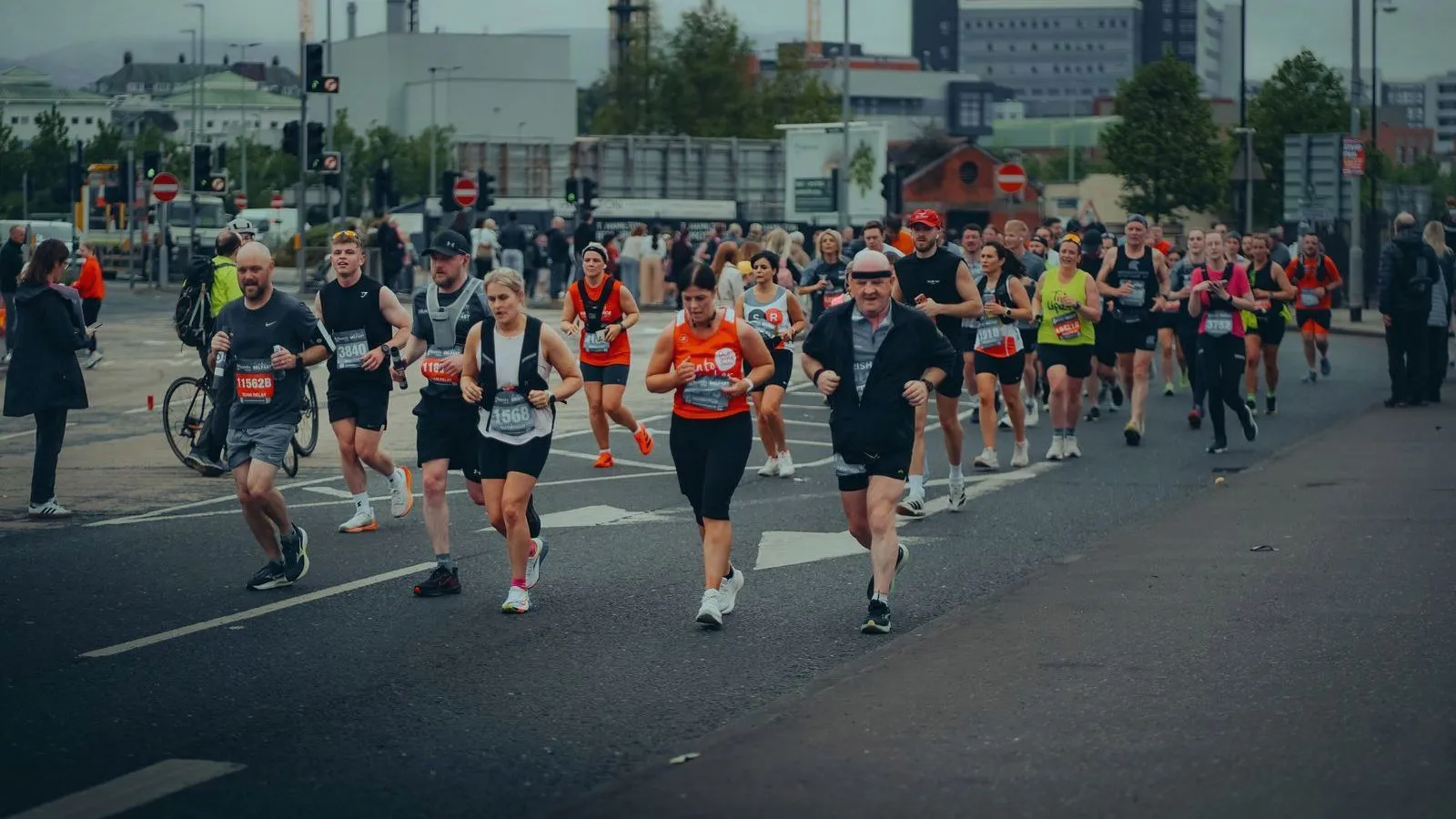
- Two small field studies: 19 trained runners in a marathon, and 36 runners in ultramarathons of 100 to 230 km.
- Anandamide, one of the body's own cannabis-like chemicals, rose steadily through the marathon and stayed up afterward.
- Marathon runners reported more euphoria and less anxiety than when the same people walked for as long.
- After the ultramarathons, anandamide was also up, and anxiety down, but pain was up too.
- This describes what happens in the blood, not what causes the high, and it is not a reason to run a marathon.
Ask a distance runner about the high and you will usually hear about endorphins. It is a satisfying story, and a shaky one: endorphins are large molecules that do not cross easily from the blood into the brain. In the past two decades, attention has shifted to a different family, the endocannabinoids, which the body makes itself and which act on the same receptors as cannabis.
A study in BMC Medicine took that idea out of the laboratory and onto the road. Researchers drew blood from 19 trained runners every 14 kilometers of a marathon, and from 36 ultramarathon runners before and after races of up to 230 kilometers. One of those chemicals rose steadily the whole way.
What exercise does to mood
MedlinePlus sums up the everyday version: during exercise, your body releases chemicals that can improve your mood and make you feel more relaxed. It adds that this can help you deal with stress, manage anxiety, and reduce your risk of depression.
Which chemicals, and how, is less settled. The runner’s high, a short-lived glow of well-being and calm during long runs, is the most dramatic form. The authors note that evidence regarding eCB signaling is largely limited to exercise bouts shorter than 60 min, although people can run for hours or even days.
How the marathon blood sampling worked
The first study used the same runners twice. In Study 1, 19 trained runners completed both a marathon and a duration-matched walking session, with blood taken every 14 km during the marathon and again after a 45-minute rest. Walking for the same length of time gave each runner their own comparison.
The second study went further out. In Study 2, 36 ultramarathon runners completed races of 100 km, 160 km, or 230 km, with blood taken before and after. Runners also rated euphoria, anxiety and pain on simple scales, the three feelings most often used to describe the high.
What happened to the runners’ anandamide on the road
The clearest signal came from anandamide, the best-known endocannabinoid. It increased progressively throughout the marathon and remained elevated after 45 min, while walking produced only modest changes. After every ultramarathon distance, it was also higher than before the race.
The feelings lined up in the marathon. Marathon running was associated with higher euphoria and lower anxiety than walking. Pain climbed after about 28 km. In the ultramarathons the picture changed: pain rose, anxiety fell, and euphoria did not shift significantly, which may say something about how far past comfortable those races go.
Why a rising cannabis-like chemical is interesting
It fits a story that animal studies had already sketched, in which the calm and pain relief mice show after running depend on the receptors endocannabinoids act on. That made these chemicals a leading candidate for the human high. Previously, though, human measurements came mostly from short bouts on treadmills.
Seeing anandamide rise in real races, kilometer by kilometer, and stay raised after the finish, fills in a piece of that picture. It also shows the rise building with duration, which fits the common experience that the high arrives well into a long run, not in the first few minutes.
What 55 runners and blood tests cannot show
These are small studies, and the authors list the limits plainly, including the small sample sizes, heterogeneity between the marathon and ultramarathon study designs, and the lack of longer-term samples.
The measurements come from the blood, not the brain, so they show what the body is producing, not what reaches the parts of the brain that create feelings. Runners set their own pace, which varied, and the mood scales were single questions, which the authors describe as an approximate rather than a comprehensive assessment. Nothing here proves that anandamide causes the high.
What this changes for runners
Nothing about how anyone should train. This is a study of what happens in the blood during races most people will never run, and it is not a reason to chase longer distances in search of a feeling.
What it offers is a better-grounded explanation for something millions of runners describe. The high that arrives deep into a long run seems to travel with a steady rise in the body’s own cannabis-like chemistry, and a little of the same rise showed up in walking too. The mood benefits of ordinary exercise, at whatever pace suits you, are the part with the firm evidence behind them.
People also ask
What did the study find?
Anandamide (AEA) increased progressively throughout the marathon and remained elevated after 45 minutes, whereas walking elicited only modest changes. After all ultramarathon distances, AEA was increased compared with baseline. Marathon running was associated with higher euphoria and lower anxiety than walking, while pain increased after 28 km of running.
What are endocannabinoids?
Chemicals the body makes itself that act on the same receptors as the active ingredients in cannabis. They are involved in mood, pain and stress. Anandamide is one of the best known.
Is the runner's high caused by endorphins?
Endorphins were the traditional explanation, but they do not easily reach the brain from the blood. Endocannabinoids can, which is one reason researchers have turned to them. This study does not settle the question.
Did walking do anything?
Yes, a little. Anandamide rose gradually during walking too, just much less than during running.
Why was pain higher after ultramarathons?
Running 100 km or more is punishing. Pain rose, anxiety fell, and euphoria did not change significantly, which suggests the extreme distances push past the point where the high is felt.
Should I run longer to get a runner's high?
This small study was not designed to answer that, and nobody should change their training based on it. Regular exercise at any level has well-established benefits for mood. This is general information rather than medical advice.