News · Fitness & Exercise
Strength training's longevity sweet spot: two hours a week
Research in the British Journal of Sports Medicine tracked 147,374 people for up to 30 years. About 90 to 120 minutes of strength training a week lined up with the lowest risk of death, and more added nothing. A link, not proof.
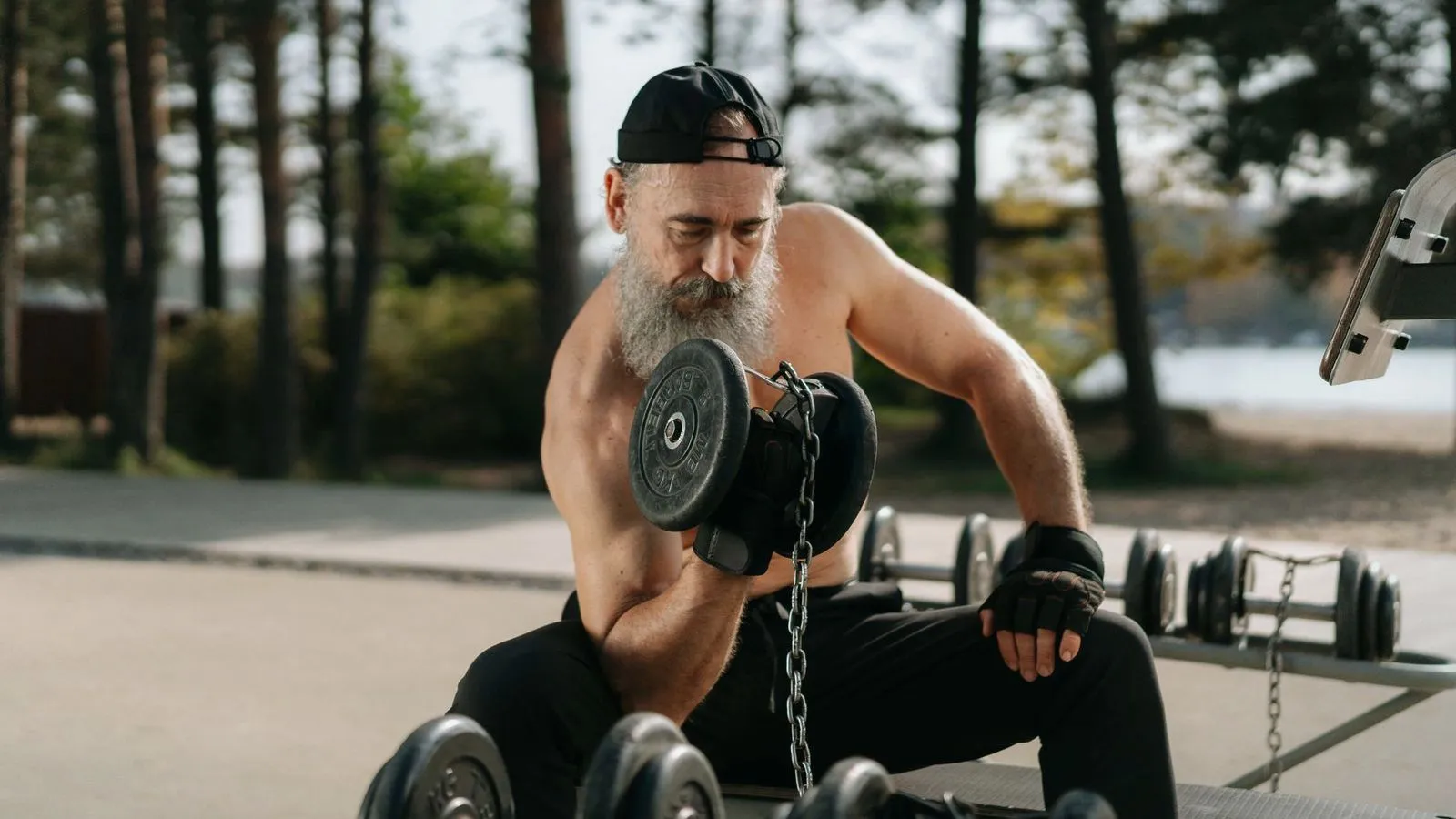
- 147,374 people followed for up to 30 years, tracking strength training against who later died.
- About 90 to 120 minutes a week lined up with the lowest risk, around 13% lower overall.
- Cardiovascular death ran 19% lower and neurological death 27% lower at that dose.
- More than 120 minutes a week added no further benefit for overall risk of death.
- Observational, so it points to a link rather than proof.
The case for cardio is settled. Decades of research tie aerobic exercise to a longer life, and the advice to get your heart pumping is on every clinic wall. Lifting weights has been harder to place. It builds muscle and keeps older bodies steady, but its effect on overall lifespan, and on specific causes of death, has been less clear.
Now a large analysis published in the British Journal of Sports Medicine has put a number on it. Following 147,374 people for up to 30 years, the researchers found a sweet spot: about 90 to 120 minutes of strength training a week lined up with the lowest risk of death, and going past that added nothing.
A ceiling around two hours a week
The shape of the result was a climb, then a plateau. As people did more strength training, their odds of dying fell, up to a point. People who did 90 to 119 minutes a week had roughly a 13 percent lower risk of death from any cause. Above that, no additional benefit was observed for the overall death rate.
The same modest amount tracked with fewer deaths from two of the biggest killers. It was tied to a lower risk of death from cardiovascular disease, and a steeper drop in deaths from neurological disease, the disorders of the brain and nervous system.
Cancer was the exception. There, the lower risk turned up at much smaller amounts of strength training, well under an hour a week, which the researchers treated as a lead to chase rather than a target to hit.
Three decades of the same people
The scale is part of what gives the study its weight. The researchers pooled three long-running US studies, the Health Professionals Follow-up Study and two Nurses’ Health Studies, covering 147,374 women and men. Across the follow-up, 35,798 participants died.
What separates this from a one-time snapshot is repetition. Every couple of years, participants reported how much time they spent each week on strength training and cardio. Using repeated measures over up to 30 years, the researchers could map how the amount of training lined up with risk, not just whether someone lifted at all. Prior studies had tied being strong to a longer life; the open question was how much training it takes.
Strength on top of cardio
Strength training did its best work in company. Compared with people who did neither, those who combined high levels of aerobic exercise with strength training had the lowest death rate in the whole study. Strength training was also tied to a further drop in risk at all levels of aerobic activity, so it added something on top of cardio.
That squares with what health agencies already tell people. US guidelines advise adults to do muscle-strengthening activities on 2 or more days a week, working all major muscle groups, in addition to their aerobic exercise. The study adds an upper limit those guidelines leave open.
What the strength training data cannot show
This is observational research, and that caps what it can claim. It can link strength training to a lower risk of death, but it cannot show the training is what did it. People who did more strength training were also generally younger, weighed less, and were more active to begin with, and any of those could explain part of the gap.
The arrow can also point the other way. Serious illness saps strength and cuts into exercise, so some of the sickest people may have trained less because they were already unwell. Exercise habits were self-reported, which can introduce inaccuracies. And the researchers did not have information on the duration of individual workouts or the intensity of the strength training, which could sway the results.
How much to aim for
For a healthy adult, the takeaway is manageable. You do not need to live in the gym. Two 45-minute sessions, or three half-hour ones, land you inside the window the study highlights, and they build on your walking or cycling.
The researchers were careful about what the numbers mean. Different amounts of resistance training, they wrote, “may be needed to optimize benefits across outcomes”. Boiled down: some strength work beats none, a moderate amount looks best for a long life, and doing it alongside cardio is better still.
Strength training is no longevity drug, but it is a low-cost habit with a strong track record, and this study suggests you can get most of what it offers without going to extremes.
People also ask
How much strength training did the study point to?
About 90 to 120 minutes a week. In that range, people had roughly a 13 percent lower risk of death from any cause, a 19 percent lower risk of cardiovascular death, and a 27 percent lower risk of death from neurological disease, after accounting for aerobic activity. Doing more than 120 minutes a week did not lower the risk further.
Is more strength training always better?
Not for the overall risk of death, which flattened out at around 120 minutes a week. The link with lower cancer death was different, showing up at much smaller amounts of 1 to 59 minutes a week, which the researchers described as a pattern to explore rather than a firm target.
Does this prove strength training makes you live longer?
No. It is an observational study, so it can show a link but not cause and effect. People who did more strength training were also younger on average, leaner, and more active, and exercise was self-reported, so those factors cannot be ruled out.
What counts as strength training, and how does it fit with cardio?
Exercises using weights or your own body weight, such as push-ups, squats and lunges. The lowest death rates were among people who combined strength work with high levels of aerobic exercise, which fits guidelines advising muscle-strengthening on at least two days a week on top of regular cardio.
References
- Zhang Y, Lee DH, Rezende LFM, Ma Y, Giovannucci E. Long-term resistance training with all-cause and cause-specific mortality: assessing dose-response and joint associations with aerobic physical activity. British Journal of Sports Medicine (2026).
- U.S. Centers for Disease Control and Prevention. Adult Activity: An Overview.
- U.S. Department of Health and Human Services. Physical Activity Guidelines for Americans, 2nd edition (2018).