News · Fitness & Exercise
Grip strength and chair stands tracked with longer life
In 5,472 women aged 63 to 99, two simple measures - grip strength and how fast they rose from a chair - tracked with living longer over eight years, even after accounting for exercise. It shows a link, not proof.
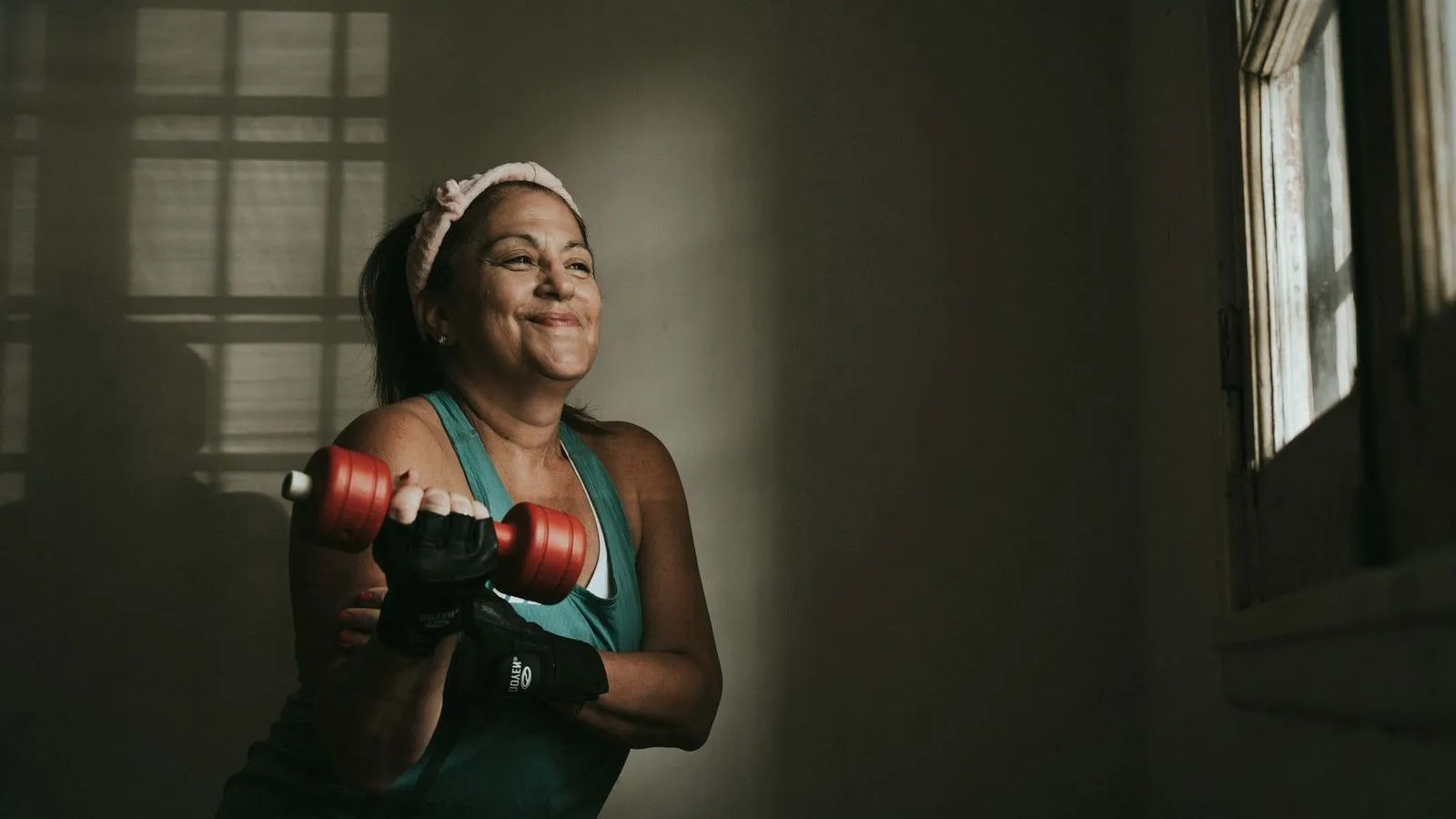
- Grip strength and chair-stand speed measured in 5,472 women aged 63 to 99, followed eight years.
- Every extra 7 kg of grip strength tracked with roughly 12% lower risk of death.
- The link held after accounting for activity, fitness and inflammation, and body size did not explain it.
- Women who did not meet exercise guidelines still benefited from being stronger.
- Observational, so it shows an association rather than proof.
Two of the best clues to how long an older woman will live may take under a minute to measure in a clinic: how hard she can squeeze, and how quickly she can rise from a chair. In a large study from the University at Buffalo, published in JAMA Network Open, both measures tracked with a significantly lower risk of death in women in their sixties through nineties.
Researchers set out to weigh muscular strength and mortality in women aged 63 to 99, following 5,472 of them for a mean of about eight years. Women who performed better on these tests had notably lower death rates over the years that followed.
Grip and chair stand, measured in minutes
The measures are humble. Grip strength is captured by squeezing a handheld gauge; the chair-stand test times how quickly someone can complete five unassisted sit-to-stand movements as quickly as possible. Both are already used in clinics to size up strength in older adults, which is part of the appeal. No lab, no treadmill, just a squeeze and a stand.
How much stronger women’s odds were
The associations were not subtle. Every additional 7 kilograms of grip strength was linked to an average 12 percent reduction in death risk. For the chair stand, every 6-second improvement from the slowest to the fastest times came with about a 4 percent lower death rate. Taken together, greater muscular strength was associated with lower mortality across the group, with the strongest women faring markedly better than the weakest.
The strength link held up under scrutiny
What makes the finding sturdier than most is what the researchers ruled out. Prior research often lacked detailed measures of physical activity and fitness, making it harder to isolate strength; this was the largest such study in older women. The link between strength and survival held even after accounting for physical activity levels, cardiovascular fitness, and inflammation. This was not simply fitter, more active women living longer; strength seemed to carry a signal of its own. Body size did not explain the relationship between strength and longevity either. And notably, women who did not meet current physical activity recommendations still benefited from greater muscle strength.
Cause, or a warning light?
There is the usual catch. This was an observational study, so it can link strength to survival but cannot prove that building muscle extends life. Strength may partly be a warning light rather than a lever: serious illness saps muscle, so the weakest women may have been sicker to begin with. The researchers guarded against that by setting aside deaths in the earliest years of follow-up, and the pattern held, but no single study of this kind settles cause. The women were also older, so the results may not read across to men or to younger adults.
How to get stronger
The practical upshot is encouraging, because strength is trainable at almost any age. Health guidelines already call for muscle-strengthening activity on at least 2 days a week, working all major muscle groups, on top of the usual aerobic target. You do not need a gym to start: the researchers note that free weights, weight machines and bodyweight exercises all help, and that even soup cans or books can serve as a form of resistance for people easing in. The one caveat worth heeding is that anyone new to this, or managing a health condition, should speak with a health care provider before beginning a strength program.
Strength is not a magic switch for longevity, and this study cannot promise that a firmer grip buys extra years. But it sharpens a simple, hopeful message for later life: the ability to rise from a chair under your own power is worth protecting, and it is rarely too late to build.
People also ask
What did the two tests involve?
Grip strength was measured by squeezing a handheld gauge. The chair-stand test timed how quickly someone could complete five unassisted sit-to-stand movements. Both are simple checks already used in clinics to gauge strength in older adults.
How big was the benefit?
Every extra 7 kilograms of grip strength was linked to about a 12 percent lower risk of death, and every 6-second improvement in chair-stand time to about a 4 percent lower death rate, over roughly eight years. These are population associations, not guarantees for any one person.
Do I need a gym to build strength?
No. The researchers note that free weights, weight machines and bodyweight exercises all help, and that even soup cans or books can work as resistance to start gentle. Anyone new to it, or with a health condition, should speak with a health care provider first.
Does this prove that getting stronger makes you live longer?
No. It is observational, so it shows a link but not cause and effect. Serious illness saps muscle, so weaker women may have been sicker to begin with, though the researchers took steps to reduce that possibility.
References
- LaMonte MJ, Hyde ET, Nguyen S, et al. Muscular Strength and Mortality in Women Aged 63 to 99 Years. JAMA Network Open (2026).
- University at Buffalo / ScienceDaily. This simple strength test could predict how long you live (2026).
- U.S. Centers for Disease Control and Prevention. Older Adult Activity: An Overview.