Explainer · Nutrition & Diet
Fiber explained: what the evidence shows on the heart, cholesterol and digestion, and where it stops
Fiber has become a viral health trend, yet only about 4% of US adults eat the recommended amount. Cohort studies link each extra 7 grams a day to 9% less heart disease. Trials confirm smaller effects on cholesterol and blood pressure.
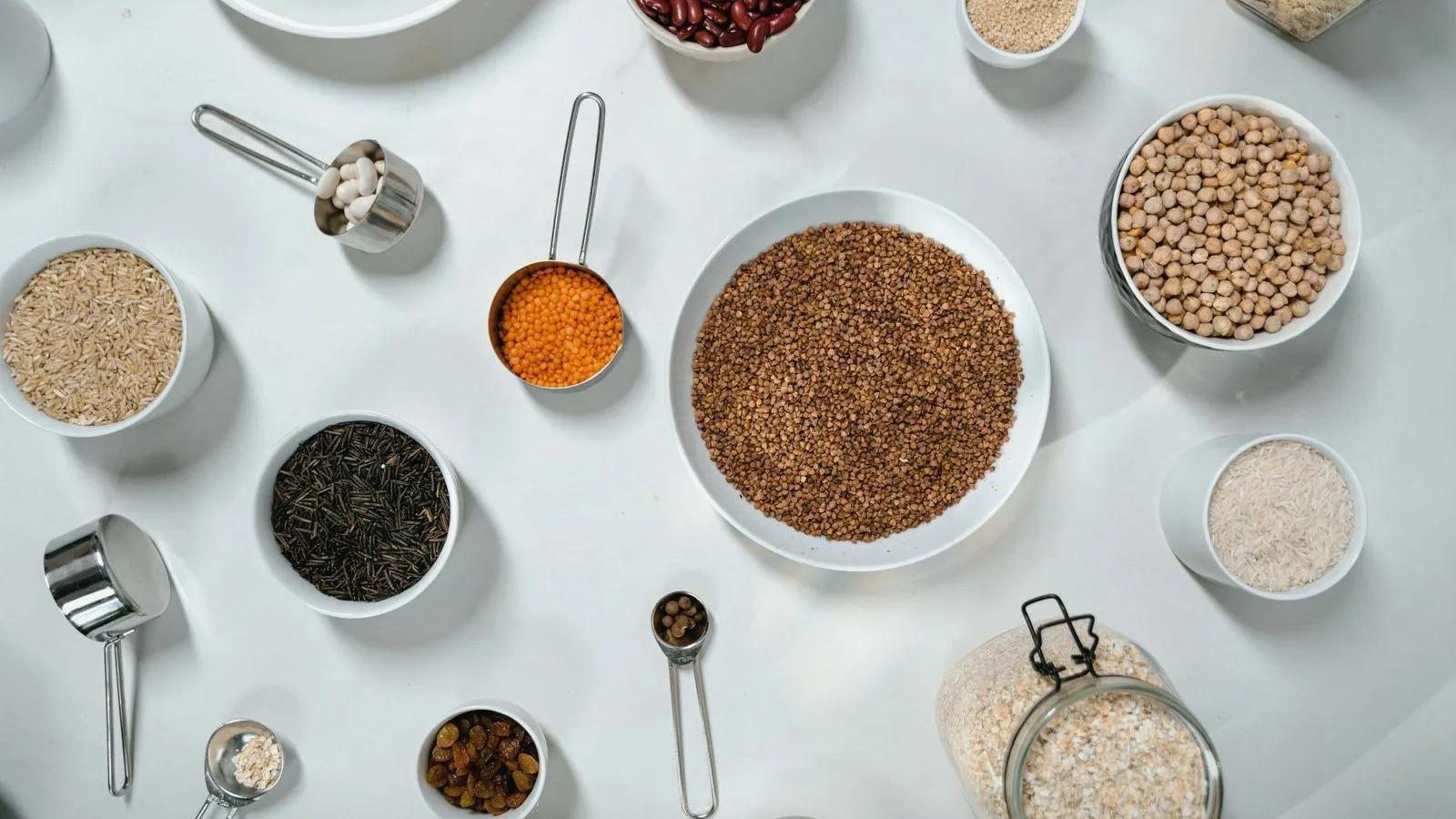
- The recommended fiber intake is 25 grams a day for women and 38 for men, and the US average is about 16.
- In cohort studies, each extra 7 grams a day went with a 9% lower risk of cardiovascular disease.
- In trials, more fiber lowered total and LDL cholesterol modestly and blood pressure in people with hypertension.
- Bloating is common with fermentable fibers such as inulin, especially after a sudden increase.
- In a Cochrane review of 23 trials none reported on heart attacks, and the cohort evidence may be confounded.
Fiber is having a moment. Adding it to the diet, through fiber-rich foods or supplements, has become a viral health trend, a Boston University physician wrote in The Conversation in late September 2026. Snack bars and even sodas are now marketed on their fiber content.
The enthusiasm sits oddly beside the facts of what people eat. From 2013 to 2018, only 4% of U.S. adults met their recommended adequate intake for dietary fiber.
Fiber is one of the better-studied parts of the diet, and the research supports a good deal of what is claimed for it. It also has gaps that the trend tends to skip. This explainer covers both.
What fiber is, and why types of fiber differ
Fiber is the part of plant food that human digestion cannot break down. “Dietary fiber refers to carbohydrates your body can’t digest,” wrote Jean Liew, the Boston University physician-scientist. It passes through the stomach and small intestine largely intact and reaches the large intestine, where some of it is consumed by bacteria.
The word covers many substances that behave differently. Three properties matter most.
Some fibers dissolve in water and some do not. Studies often report the two groups, soluble and insoluble, separately.
Some soluble fibers are viscous, meaning they thicken in liquid. Psyllium, the husk of a plant seed sold as a supplement, is the standard example: it forms a gel when added to water. That gel can make people feel full sooner, and viscous fiber can help lower cholesterol.
Some fibers are fermentable, which means gut bacteria feed on them and release by-products. Inulin, extracted from chicory root, is one. Isolated fibers such as inulin are now increasingly added to foods, including snack bars and sodas.
A food usually contains a mix. An isolated fiber added to a product is one type, and results for one type do not automatically apply to another.
How much fiber people eat
Official targets are specific. The recommended daily fiber intake is 25 grams a day for women and 38 grams a day for men. The average fiber intake was about 16 grams a day.
The gap is long-standing and largely unnoticed by those in it. A report from a 2014 summit on the problem noted that national consumption surveys indicate that only about 5% of the population meets recommendations, while most people believe they consume enough fiber.
Researchers at the University of Leeds gave a sense of scale for a modest increase. An additional 7 grams can be provided through eating just one portion of whole grains plus a portion of beans or lentils, or through two to four servings of fruit and vegetables.
What cohort studies show about fiber and heart disease
The strongest claims for fiber come from cohort studies, in which researchers record what large groups of people eat and follow them for years to see who becomes ill.
The Leeds team pooled this evidence for heart and circulatory disease in 2013. They searched for prospective studies with a minimum follow-up of three years, and 22 cohort study publications met inclusion criteria. Their analysis was built to measure dose: how much risk changes for a given change in intake.
Risk fell steadily as fiber rose. For every additional 7 grams a day, the risk of cardiovascular disease was 9% lower, with a plausible range of 6% to 12%. The same figure held for coronary heart disease, the narrowing of arteries that causes heart attacks. The authors concluded that greater intake is associated with a lower risk of both cardiovascular disease and coronary heart disease.
The association held across sources. Insoluble fiber and fiber from cereals and vegetables showed the association, and fruit fiber was linked to lower cardiovascular risk as well.
A larger and more recent analysis looked at death itself. Researchers at Tehran University of Medical Sciences combined results on fiber and survival, and their systematic review included 64 eligible studies, with a total sample size of 3512828 subjects. People with higher total fiber intake had a 23% lower risk of death from any cause over the study periods, a 26% lower risk of cardiovascular death and a 22% lower risk of cancer death. The consumption of insoluble fiber tended to be more effective than soluble fiber intake, the authors reported.
These are large numbers of people and consistent results. They are also the kind of evidence that cannot settle cause, a point taken up below.
What trials show about fiber, cholesterol and blood pressure
Randomized trials, in which people are assigned to eat more fiber or not, can test cause directly. They exist for fiber, and they measure smaller things.
| Outcome | Trial evidence | Result with more fiber |
|---|---|---|
| Total cholesterol | Cochrane review: 17 trials, 1,067 participants | 0.23 mmol/L lower |
| LDL cholesterol | Same Cochrane review | 0.14 mmol/L lower |
| LDL cholesterol, psyllium about 10 g a day | 28 trials, 1,924 participants | 0.33 mmol/L lower |
| Blood pressure in people with hypertension | Trials from a review of 12, with 878 adults in all | Systolic 4.3 mmHg lower, diastolic 3.1 mmHg lower |
| Heart attacks, strokes, deaths | Cochrane review of 23 trials | Not reported by any trial |
A Cochrane review, a systematic review produced to a published protocol, gathered 23 trials of fiber for preventing cardiovascular disease in people who did not yet have it. Total and LDL cholesterol fell modestly. LDL is the form of cholesterol most closely tied to artery disease, and 0.14 mmol/L is about 5 milligrams per deciliter.
The reviewers were frank about quality. The risk of bias was unclear for most studies and studies had small sample sizes. Few studies had an intervention duration of longer than 12 weeks. The decisive gap is in the table’s last row: none of the studies reported on mortality (total or cardiovascular) or cardiovascular events.
Psyllium has the most consistent record. A meta-analysis by researchers in Toronto pooled 28 trials with 1,924 participants, in individuals with or without hypercholesterolemia, the medical term for high cholesterol. A median dose of about 10 grams a day lowered LDL cholesterol by 0.33 mmol/L, roughly 13 milligrams per deciliter.
Blood pressure responds too, at least in those whose pressure is high. A review from the University of Otago in New Zealand reported high certainty evidence from trials of adults with hypertension that eating more fiber lowers systolic pressure, the upper number of a reading, by 4.3 mmHg and diastolic, the lower number, by 3.1. The unit is millimeters of mercury. Benefits were observed irrespective of cardioprotective drug use, meaning they appeared in people already on medication.
What fiber does for digestion and gut bacteria
Fiber’s oldest reputation is for keeping bowels regular, and trials bear it out in part. A meta-analysis of randomized trials in people with constipation set a high bar for quality, and five studies were included in the analysis. Across those trials, people given fiber had more bowel movements per week than people given placebo. Stool consistency, pain and laxative use did not clearly improve.
Interest has shifted to the bacteria that ferment fiber. A Stanford team compared two diets in a 17-week randomized, prospective study with 18 healthy adults assigned to a high-fiber diet and 18 to a diet rich in fermented foods such as yogurt and kimchi. The fiber group’s gut bacteria became better equipped to break fiber down. Their diversity did not increase, and the study’s main immune measure did not change. It was in the other group that the high-fermented-food diet steadily increased microbiota diversity and decreased inflammatory markers. Microbiota means the community of bacteria living in the gut.
That result is a caution against a simple story in which more fiber means healthier gut bacteria within weeks. In a small study over four months, it did not.
What the side effects of more fiber are, and what gets in the way
Fiber is not free of drawbacks, and the form matters. Highly fermentable fibers, such as inulin, often cause bloating and discomfort. Liew notes that this is a particular issue for high-fiber drinks and snacks, which deliver a large amount in a single serving to people not used to it.
Liew’s description of standard practice is to raise intake slowly, so the gut can adapt, and to drink enough fluid.
Cost and access are barriers of a different kind. Liew lists cost, accessibility and tolerability as the main obstacles, and observes that some fiber-rich whole foods, such as berries, are expensive.
People with bowel conditions can respond differently to particular fibers, and what suits an individual with such a condition is assessed by their doctor or dietitian.
Limits of the evidence on fiber
The cohort studies carry the weight of the health claims, and they have a built-in weakness. The Leeds authors state it plainly: limitations of observational cohort studies include the problem of residual confounding. People who eat a lot of fiber tend to have healthier habits in other respects. Statistical adjustment removes some of that, but not all studies adjusted for other potentially important confounders such as physical activity or other dietary factors.
Measurement is imprecise. The majority of dietary data were collected using food frequency questionnaires, which ask people to recall what they usually eat and capture broad patterns better than exact grams.
The trials have the opposite problem. They can show cause, and they are short, small and limited to laboratory measures. Liew, whose own research is on designing such studies, described the state of the field: “While there have been many small clinical trials on fiber, they have not been big enough, specific enough or broad enough to provide answers that can be put into guidelines for everyone.”
There is also a question of substitution. Cohort participants got their fiber from whole grains, vegetables, fruit and legumes, which bring other nutrients with them. Whether the same amount of an isolated fiber added to a snack bar or a soda has the same effect on disease has not been tested.
People who eat more fiber have less heart disease and lower death rates in studies of millions, while the trials reviewed so far confirm only modest effects on cholesterol, blood pressure and bowel habit and did not report on heart attacks.
People also ask
How much fiber is recommended for adults?
The recommended daily intake in the United States is 25 grams for women and 38 grams for men. Average intake is about 16 grams, and from 2013 to 2018 only 4% of US adults met the recommendation.
Does fiber lower the risk of heart disease?
People who eat more fiber have less heart disease. A meta-analysis of 22 cohort study publications found a 9% lower risk of cardiovascular disease for every additional 7 grams a day. These are observational studies, so they cannot prove fiber is the cause.
What have trials of fiber shown?
A Cochrane review of 23 randomized trials found that more fiber lowered total cholesterol by 0.23 mmol/L and LDL cholesterol by 0.14 mmol/L. None of the trials reported on deaths or cardiovascular events, and few lasted longer than 12 weeks.
Are fiber supplements as good as fiber from food?
Specific supplements have specific effects. Psyllium, about 10 grams a day, lowered LDL cholesterol by 0.33 mmol/L across 28 trials. The cohort evidence on heart disease and survival comes from people eating fiber in whole grains, vegetables, fruit and legumes.
Can too much fiber cause problems?
Highly fermentable fibers such as inulin often cause bloating and discomfort, especially in people not used to them. The physician quoted in this article describes the general recommendation as increasing intake slowly and staying hydrated. This is general information rather than medical advice.
References
- Threapleton, D. E., Greenwood, D. C., Evans, C. E. L., et al. Dietary fibre intake and risk of cardiovascular disease: systematic review and meta-analysis. The BMJ, 2013.
- Ramezani, F., Pourghazi, F., Eslami, M., et al. Dietary fiber intake and all-cause and cause-specific mortality: An updated systematic review and meta-analysis of prospective cohort studies. Clinical Nutrition, 2024.
- Liew, J. Fiber is both diet fad and fixture for good health: a doctor explains why there is no one-size-fits-all way to increase your intake. The Conversation, 2026.
- Hartley, L., May, M. D., Loveman, E., Colquitt, J. L., Rees, K. Dietary fibre for the primary prevention of cardiovascular disease. Cochrane Database of Systematic Reviews, 2016.
- Reynolds, A. N., Akerman, A., Kumar, S., et al. Dietary fibre in hypertension and cardiovascular disease management: systematic review and meta-analyses. BMC Medicine, 2022.
- Yang, J., Wang, H. P., Zhou, L., Xu, C. F. Effect of dietary fiber on constipation: A meta analysis. World Journal of Gastroenterology, 2012.
- Wastyk, H. C., Fragiadakis, G. K., Perelman, D., et al. Gut-microbiota-targeted diets modulate human immune status. Cell, 2021.
- Jovanovski, E., Yashpal, S., Komishon, A., et al. Effect of psyllium (Plantago ovata) fiber on LDL cholesterol and alternative lipid targets, non-HDL cholesterol and apolipoprotein B. American Journal of Clinical Nutrition, 2018.
- Quagliani, D., Felt-Gunderson, P. Closing America's Fiber Intake Gap. American Journal of Lifestyle Medicine, 2017.