News · Longevity & Aging
Wildfire smoke was linked to shorter survival in lung cancer, more so per microgram than other air pollution
Among 414,016 older Americans with lung cancer, each extra microgram of wildfire particles per cubic meter of air was tied to a 7.8% higher death rate, against 1.7% for other particles. Exposure was estimated by zip code.
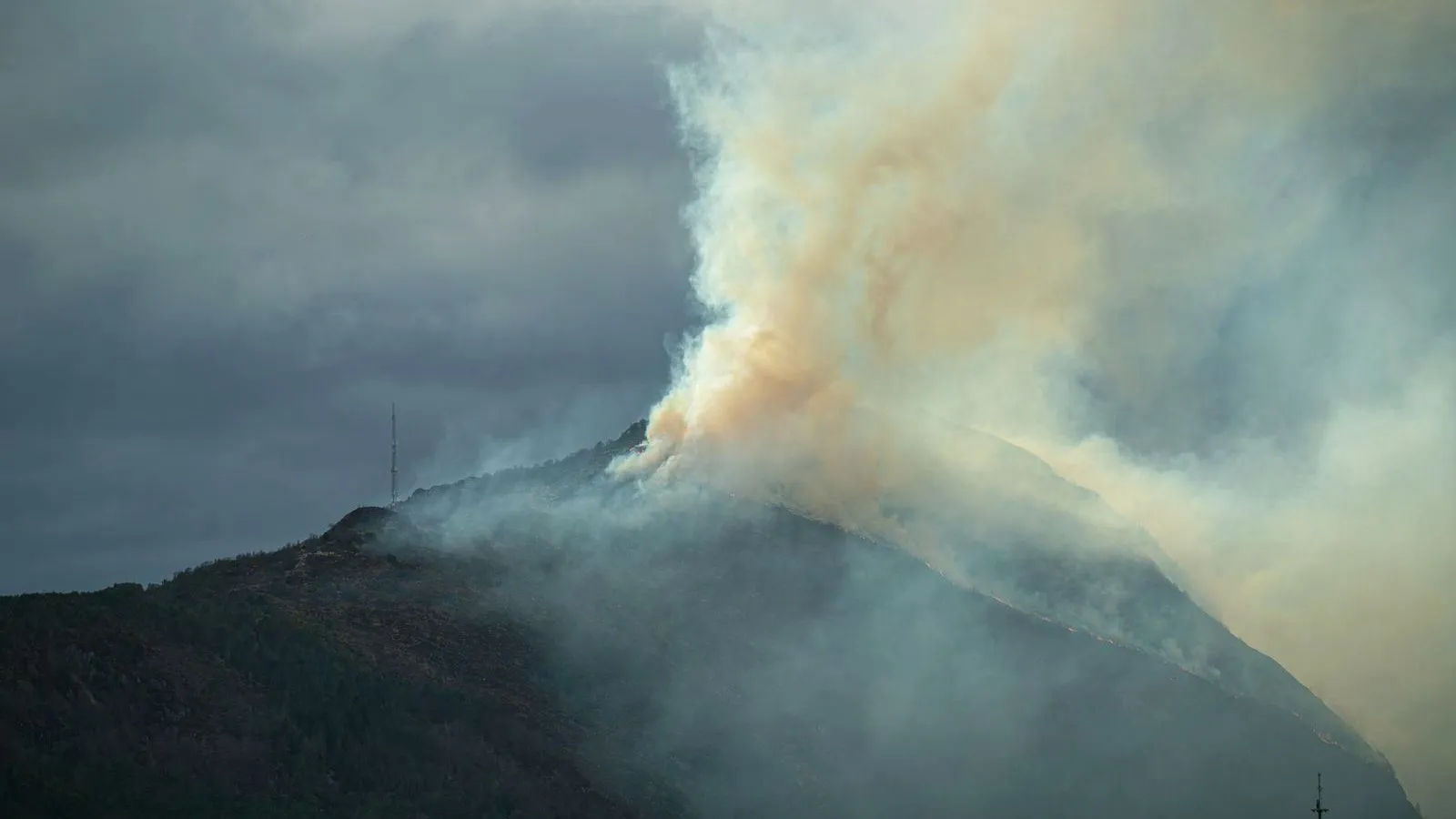
- A study followed 414,016 Americans aged 65 or over with lung cancer, of whom 77.3% died during follow-up.
- Each extra microgram per cubic meter of wildfire particles was linked to a 7.8% higher death rate.
- The same increase in fine particles from other sources was linked to a 1.7% higher death rate.
- More deaths were still attributed to other sources, an estimated 3,465 a year against 696, as exposure was far greater.
- Exposure was estimated from home zip codes, and detailed smoking history was unavailable for the main analysis.
Air pollution rules treat a particle as a particle. A microgram of soot from a diesel engine counts the same as a microgram from a burning forest. A study of more than 400,000 Americans with lung cancer adds to the evidence that the two are not equal, and that smoke from wildfires may be the worse of them.
The study, published in The Lancet Oncology in September, found that patients who lived where wildfire smoke was heavier died sooner. So did patients who lived with more of every other kind of fine-particle pollution. But measure for measure, the link with smoke was more than four times as strong. It is an observational study with real gaps, and it cannot prove that smoke was the cause.
Why wildfire smoke may differ from other air pollution
The pollutant in question is fine particulate matter, written PM2.5 because the particles are smaller than 2.5 thousandths of a millimeter across. Mount Sinai, the New York hospital where the study was led, describes it as a mixture of microscopic airborne particles that can penetrate deep into the lungs and enter the bloodstream.
It is already tied to lung cancer. In the authors’ words, fine particulate matter has been identified as a key risk factor for lung cancer incidence and survival. A study of patients in California diagnosed between 1988 and 2009 concluded that its results support the hypothesis that air pollution exposures after lung cancer diagnosis shorten survival.
Smoke is a growing share of the problem. For decades the air in the United States became cleaner. An analysis in Nature found that the trend has stalled or reversed in much of the country, and that since at least 2016, wildfire smoke has influenced trends in average annual particle levels in nearly three-quarters of the contiguous states. Its authors expect that the contribution of wildfire to regional and national air quality trends is likely to grow as the climate continues to warm.
And smoke may not be ordinary pollution. The new paper describes it as driven by climate change, and potentially more toxic than non-wildfire particles due to its smaller particle size and higher toxic contents. Regulation does not make that distinction. As researchers in California put it five years ago, air quality regulations however assume that the toxicity of fine particles does not vary with their source.
How the lung cancer survival study was done
The researchers, led by Min Zhang and Yaguang Wei of the Icahn School of Medicine at Mount Sinai in New York, used a national database that links cancer registries to the records of Medicare, the public insurance program for older Americans.
They included patients aged 65 years or older with histologically confirmed primary small-cell lung cancer or non-small-cell lung cancer, histologically confirmed meaning verified under a microscope. The analysis covered 414,016 patients diagnosed from 2006 to 2019. Participants were followed up annually from diagnosis until death, loss to follow-up, or the end of the study in 2019.
Lung cancer at that age is a grim diagnosis, and the follow-up was short for that reason, with a median follow-up of 2 years. During the study period, 319,928 patients, or 77.3%, died.
Nobody’s exposure was measured directly. Daily estimates of wildfire particles and of all fine particles came from previously developed and validated models and were averaged over each zip code. The team worked using total ambient PM2.5 estimates developed on their own and wildfire-specific PM2.5 estimates published by researchers at Stanford University. Non-wildfire pollution was the total minus the wildfire part.
Each patient was then assigned the average level in their home zip code over the previous three years, updated as time passed. The analysis asked whether patients in smokier places died sooner, accounting for factors including age, cancer stage, treatment, comorbidities, and neighborhood characteristics. Comorbidities are a patient’s other illnesses.
Wildfire smoke and survival, in numbers
Both kinds of pollution were linked to earlier death.
| Wildfire particles | Other fine particles | |
|---|---|---|
| Median level, micrograms per cubic meter of air | 0.28 | 8.11 |
| Higher death rate per extra microgram | 7.8% | 1.7% |
| Plausible range | 6.4% to 9.2% | 1.5% to 1.9% |
| Estimated deaths a year in the study group | 696 | 3,465 |
Two readings of that table are both true.
Microgram for microgram, smoke looked far worse. An extra microgram of wildfire particles in each cubic meter of air went with a 7.8% higher death rate, against 1.7% for an extra microgram from other sources. Both kinds were, in the authors’ words, associated with an increased risk of death for patients with lung cancer, and smoke more steeply.
In total, more deaths were attributed to other pollution, because there was so much more of it. Average nonwildfire PM2.5 concentrations were about 23.5 times higher than wildfire-related concentrations. That ratio is of averages. The table shows medians, the middle values, which for smoke sit lower in proportion, as would happen if a minority of places had far more smoke than the rest. About five times as many estimated deaths were therefore put down to other sources.
Mount Sinai’s summary puts the two facts together. By its account, although wildfire-related PM2.5 accounts for only about 4 percent of total PM2.5, it is responsible for about 17 percent of mortality related to total PM2.5 exposure. “Responsible” is the hospital’s word. The study shows a link.
More smoke went with worse outcomes. The researchers report that higher numbers of smoky days and prolonged periods of smoke exposure were associated with poorer survival outcomes. A pattern of that kind, in which more exposure goes with more harm, is one of the things that makes a causal reading more plausible.
The link held across most groups of patients. The association was stronger among women than men and among patients who had not received surgery or chemotherapy.
“Wildfire smoke is no longer a regional environmental issue. It is becoming a nationwide public health challenge,” said Wei. Zhang drew the clinical point: “Patients with lung cancer are already medically vulnerable, and our findings suggest that wildfire smoke may place them at even greater risk.”
How it fits with earlier studies of smoke and lung cancer
The claim that smoke is worse than other pollution has been made before, for a different outcome. A study in Southern California separated wildfire particles from the rest and counted hospital admissions for breathing problems. It found increases in respiratory hospitalizations ranging from 1.3 to up to 10% for a given rise in wildfire particles, against 0.67% to 1.3% for the same rise in other particles.
For lung cancer specifically, the closest earlier work looked at patients recovering from surgery. Researchers used a national hospital database of 466,912 people who had a lung tumor removed, and defined exposure as an active wildfire detected at the zip code of residence in the year after the operation. Those exposed within three months of leaving the hospital had a death rate 43% higher than those not exposed. The authors concluded that wildfire exposure was associated with worse overall survival following lung cancer surgery.
That study counted fires. The new one estimates the smoke itself, year after year, and sets it beside other pollution in the same patients. That comparison is its main contribution.
The same team published a companion paper in Nature Communications two days later, on hospital admissions for heart and lung disease in 20 states, and reported the same pattern of larger effects from wildfire particles at equal concentrations.
Where the wildfire smoke study is weakest
Cause. The study is observational. Places with more wildfire smoke differ from places with less in many ways, and the analysis can only adjust for the ones it has data on.
What each patient breathed. The authors acknowledge several limits. Exposure was estimated at the ZIP code level rather than measured individually, the analysis was limited to adults aged 65 years or older, detailed smoking history was unavailable for the main analysis, and residual confounding may remain. Residual confounding means influences the adjustment did not remove. Time spent indoors, air filtering and evacuation during fires are all invisible in the data.
Smoking. Smoking is the main cause of lung cancer and affects survival after it. Lacking detailed smoking history is a serious gap in a study of this disease.
Very low levels. The median wildfire exposure was 0.28 micrograms per cubic meter. The per-microgram figure of 7.8% describes a change several times larger than most patients experienced, so it should not be read as the effect of a typical smoky season.
Why smoke would be worse. The paper offers particle size and chemistry as explanations. One suggestion is that the difference may be related to its higher proportion of smaller particles and greater concentrations of carcinogens such as polycyclic aromatic hydrocarbons and heavy metals. The study did not measure what the particles contained.
The authors’ conclusion is addressed to policy more than to patients. Since smoke is the fastest-growing contributor to ambient air pollution, they write, there is an urgent need for updated strategies to manage wildfires and mitigate their effects.
What an individual patient can sensibly do during a smoke episode depends on their condition and treatment, which is assessed by their doctor.
Among 414,016 older Americans with lung cancer, long-term exposure to wildfire smoke was linked to a death rate 7.8% higher per microgram of particles in each cubic meter of air, more than four times the figure for other fine particles, in an observational study that estimated exposure by zip code, lacked detailed smoking history and still attributed more deaths overall to ordinary pollution.
People also ask
What did the study find?
In 414,016 older Americans with lung cancer, living where long-term wildfire smoke levels were higher was linked to a higher death rate. Per microgram of fine particles in each cubic meter of air, the link was 7.8% for wildfire smoke and 1.7% for particles from other sources.
Does that mean wildfire smoke causes more deaths than other pollution?
No. Smoke looked more harmful for a given amount, but people breathed far less of it. The researchers attributed an estimated 696 deaths a year in the group to wildfire particles and 3,465 to particles from other sources.
Why might wildfire smoke be more toxic?
The authors point to its smaller particle size and higher toxic contents. Cancer-causing chemicals and heavy metals are among the suspects. The study did not test which components are responsible.
Does this apply to people without lung cancer?
The study included only people aged 65 or over who already had lung cancer. A companion study by the same team linked wildfire particles to hospital admissions for heart and lung disease in 20 states.
What are the limits of the study?
It is observational. Exposure was estimated for zip codes, not measured for individuals, and detailed smoking history was unavailable for the main analysis. Whether any precaution is appropriate for a particular patient is assessed by their doctor. This is general information rather than medical advice.
References
- Zhang, M., Wisnivesky, J. P., Qiu, M., et al. Long-term exposure to wildfire-related PM2.5 and overall survival of older patients with lung cancer: a retrospective, registry-based cohort study. The Lancet Oncology, 2026.
- Mount Sinai. Wildfire Smoke May Be More Harmful Than Other Air Pollution, Two Mount Sinai Studies Find. 2026.
- Barbor, M. Wildfire-Related Fine Particulate Matter Linked to Higher Mortality in Older Patients With Lung Cancer. The ASCO Post, 2026.
- Aguilera, R., Corringham, T., Gershunov, A., Benmarhnia, T. Wildfire smoke impacts respiratory health more than fine particles from other sources: observational evidence from Southern California. Nature Communications, 2021.
- Zhang, D., Xi, Y., Boffa, D. J., Liu, Y., Nogueira, L. M. Association of Wildfire Exposure While Recovering From Lung Cancer Surgery With Overall Survival. JAMA Oncology, 2023.
- Eckel, S. P., Cockburn, M., Shu, Y.-H., et al. Air pollution affects lung cancer survival. Thorax, 2016.
- Burke, M., Childs, M. L., de la Cuesta, B., et al. The contribution of wildfire to PM2.5 trends in the USA. Nature, 2023.