News · Brain & Mental Health
Wildfire smoke sent more people to the ER with migraine
Across 997,701 emergency visits in Alberta and Ontario, wildfire particles tracked a 6% rise in headache visits. Ordinary air pollution at the same concentration did not.
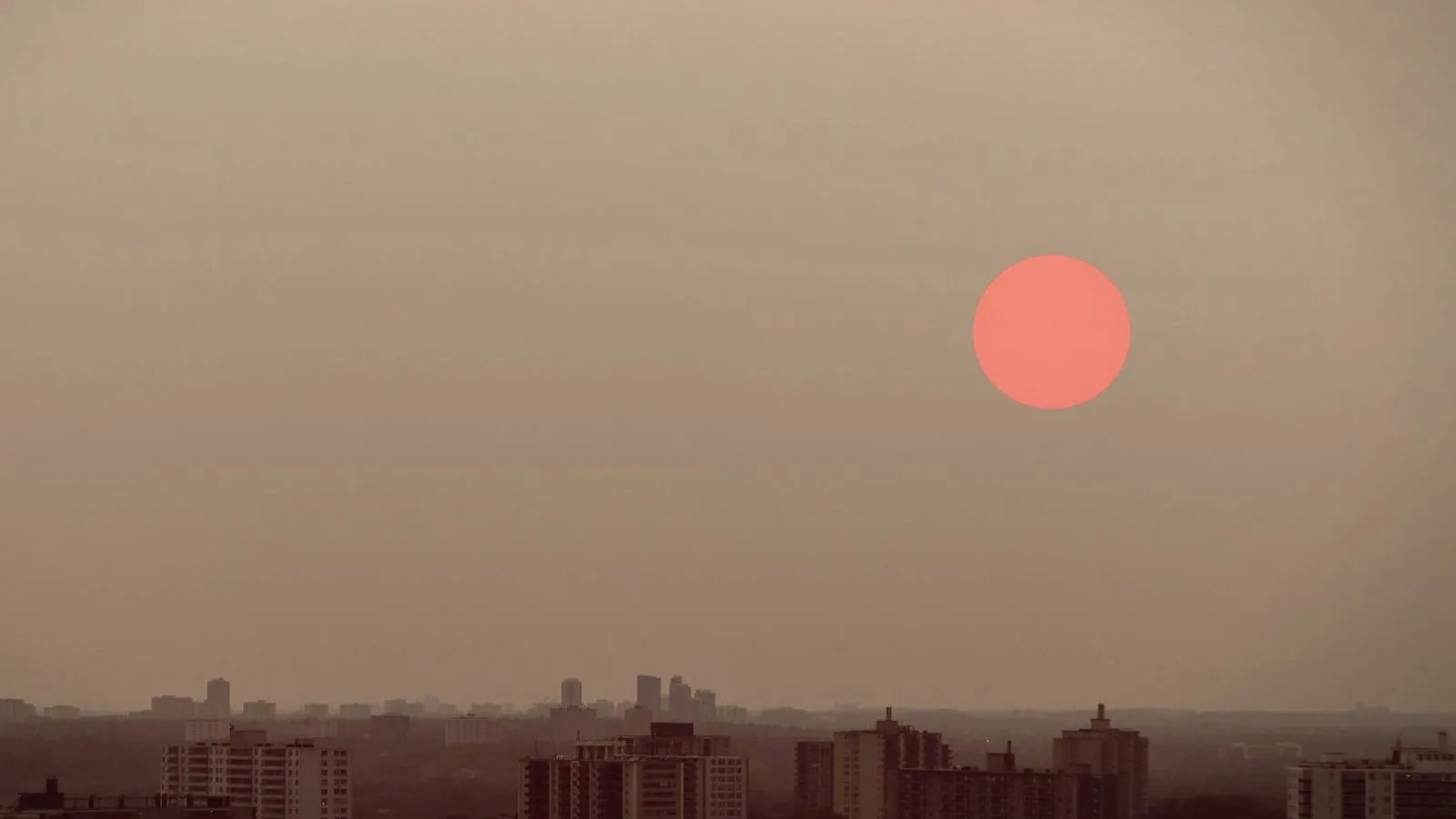
- 997,701 emergency headache visits across Alberta and Ontario wildfire seasons, 2010 to 2023.
- Each patient was compared against themselves on other days, matched by weekday, month and area.
- Wildfire particles tracked a 6.07% rise in visits (95% CI, 5.75-6.39).
- Ordinary pollution at the same concentration showed nothing (0.21%; 95% CI, -0.20 to 0.62).
- Emergency visits catch only severe attacks, and this shows triggering, not whether smoke causes migraine.
Wildfire seasons are getting longer, and the health case against smoke has been built almost entirely on lungs and hearts. A study in JAMA Network Open looked at a symptom nobody counts and found a clear signal, along with a comparison that makes it more interesting than a simple pollution story.
The authors note the gap: there is limited research examining the association between wildfire smoke, an increasingly frequent exposure, and headache-related emergency department (ED) visits, despite headaches being a leading cause of years lived with disability globally.
Comparing people against themselves
The method is the reason to trust the result.
This case-crossover study used conditional logistic regression to examine ED visits during wildfire seasons from 2010 to 2023 in Alberta and Ontario provinces in Canada, with case days matched to referent days by day of week, month, year, and forward sortation area - the first three characters of a postal code.
Because each person is compared against their own other days, everything fixed about them cancels out. Their age, sex, genetics, chronic conditions and neighborhood cannot explain a difference between Tuesday and the following Tuesday.
The scale is substantial: 997,701 ED visits for 622,753 patients, with a mean age of 24.6 years and 76.3% female. Of those visits, 86.2% were for migraines and 13.8% were for other primary headache syndromes.
What smoke did
Wildfire-sourced fine particles were associated with a 6.07% increase in ED visits, with a range from 5.75% to 6.39%.
Roughly six extra visits per hundred. On a base of nearly a million visits, that is a lot of people in enough pain to seek emergency care.
The comparison that sharpens it
Now the part that separates this from a generic air-pollution finding.
In contrast, total PM2.5 concentration on non-wildfire days was not significantly associated with ED visits - the estimate was 0.21%, with a range from -0.20% to 0.62%, sitting squarely on nothing.
Same measurement, same population, same design. Particles from wildfires tracked with headache visits; particles from everything else did not.
That is a useful result because fine particulate matter is defined by size rather than composition. Smoke from burning forests carries a different chemical load than traffic exhaust, and this suggests the difference registers in the body.
Who bore it
The burden was not evenly spread. Associations appeared attenuated in the least materially and socially deprived quantile, with the increase running at 3.61% in the least deprived fifth and 10.42% in the most deprived.
Nearly three times the effect at the same exposure. The study does not establish why, and the candidates are not mysterious: housing that seals less well, less access to filtration or air conditioning, more outdoor work, and fewer options than an emergency department when an attack becomes unbearable.
What it cannot show
Emergency visits are the tip of the iceberg. Most migraine attacks are managed at home, and the people who reach hospital are those whose usual treatment failed or who have no other route to care. Whether smoke triggers more attacks overall, or simply makes existing ones worse, is not distinguishable here.
The design also captures short-term triggering, over days rather than years. It says nothing about whether repeated smoke exposure contributes to developing migraine in the first place.
And this is Alberta and Ontario, two provinces with particular smoke patterns, populations and health systems. The mean age of 24.6 is also strikingly young for an emergency population, which reflects who attends hospital for headache rather than who has migraines.
Why it matters
The conclusion is straightforward: acute exposure to wildfire-sourced PM2.5 was associated with increased ED visit for MOPHS, and associations were greater in magnitude for wildfire-sourced PM2.5 than nonwildfire-sourced PM2.5.
Migraine is among the leading causes of years lived with disability worldwide, and it is routinely left out of the accounting when the health costs of wildfire smoke are tallied. On this evidence it belongs there, and the people paying most are the ones with the least ability to shut the smoke out.
People also ask
What is a case-crossover design and why does it help here?
Each person acts as their own comparison. The researchers compare the air on the day someone attended the emergency department against the air on other days for that same person, matched by day of week, month, year and area. Because the comparison is within a person, everything that does not change about them - genetics, sex, chronic conditions, where they live - is automatically controlled. It is a strong design for short-term triggers.
Why would wildfire smoke differ from ordinary air pollution?
Because fine particles are a category, not a substance. Wildfire smoke carries a distinct chemical mixture from burning vegetation and structures, including compounds not typical of traffic or industrial sources, and its particles differ in size distribution and oxidative potential. The finding that one produced an association and the other did not, at comparable concentrations, is evidence that what the particles are made of matters.
How large is a 6% increase?
Modest per person and substantial in aggregate. It means roughly 6 extra emergency visits for every 100 that would otherwise occur during wildfire smoke exposure. Set against nearly a million visits across two provinces, that is a meaningful number of people in enough pain to go to hospital, and wildfire seasons are lengthening.
Why were poorer areas affected more?
The study documents the gradient without establishing its cause. Plausible contributors include housing that filters outdoor air less well, less access to air conditioning or filtration, more outdoor work, higher background rates of untreated migraine, and fewer alternatives to an emergency department when an attack becomes unmanageable. Any of those would widen the same exposure into a larger effect.
What can someone with migraine do on a smoky day?
This is general information rather than medical advice. Standard public health guidance during wildfire smoke is to stay indoors, keep windows closed, use filtration if available, and limit outdoor exertion. Anyone whose migraine pattern is changing, or who is reaching for acute medication more often, should discuss it with a clinician rather than managing escalating attacks alone.