Explainer · Nutrition & Diet
People who drank more water with a meal ate more of it, not less, across 86 video-recorded lunches
Drinking water with food to fill up is standard diet advice. Filmed and counted sip by sip, the people who drank the most and alternated most often ate the most.
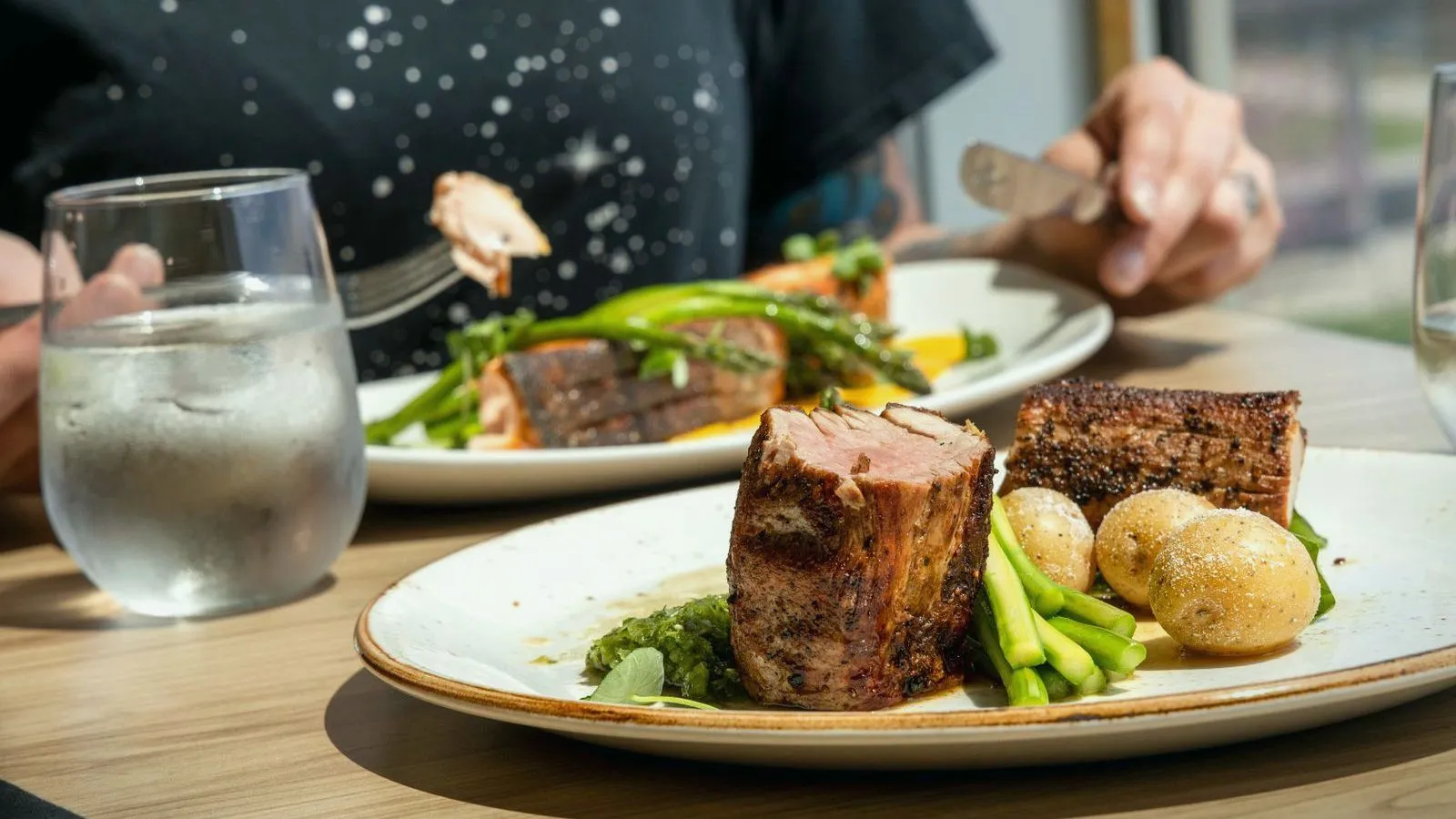
- A further analysis of two small laboratory experiments, 86 adults in total, eating lunch on film.
- Everyone got the same meal and the same 450 grams of water, then ate as much as they wanted.
- More water drunk went with more food eaten, not less.
- So did alternating: people who switched between bites and sips more often ate more.
- This is a single laboratory lunch, and it cannot say what water does across a whole day.
The advice is everywhere, and it sounds like physics: fill the stomach with water and less food will fit. Drink a glass before eating, sip through the meal, and the portion takes care of itself. It appears in diet books, on clinic handouts and in most newspaper lists of easy weight-loss tips.
Researchers writing in the journal Appetite pooled two laboratory experiments in which 86 adults ate lunch on camera, with every sip counted. The people who drank the most water ate the most food.
What water is supposed to do at a meal
The mechanism people have in mind is volume. Stretch receptors in the stomach contribute to the feeling of fullness, water adds volume, so a stomach part-filled with water should signal fullness sooner.
It is not a silly idea, and short-term studies of drinking a glass shortly before a meal have sometimes supported it. The weaker link has always been water drunk during the meal, which empties from the stomach quickly and takes its volume with it.
How the water and the food were counted
This analysis went back to two existing crossover experiments, meaning each participant ate the same meal more than once under different conditions and served as their own comparison. The meal was an ad libitum lunch, 650 grams of beef chili for one group and chicken tikka masala for the other, served with 450 grams of water and eaten while being video-recorded.
The recordings are what make this unusual. Videos were coded to measure sip number, sip size, drinking rate, and number of switches between bites of food and sips of water. Most studies of drinking and eating ask people afterwards, and nobody remembers how many times they alternated between a fork and a glass.
The original experiments were about spiciness, which is why the meals were chili and tikka masala with the heat varied. This analysis asked a different question of the same footage.
What the video showed about drinking and eating
The association ran opposite to the advice. Across all meals, greater water intake and more switching between bites and sips were associated with greater food intake.
Both parts of that are worth separating. People who drank more of the water in front of them ate more of the food in front of them. And independently, people who alternated more frequently, sip, bite, sip, bite, also ate more.
The spiciness effect, which was the original finding, held and was unaffected: the reduction in food intake with spicier meals was not moderated by water intake, switching, or drinking behaviors. Whatever the water was doing, it was not interfering with that.
Why more water and more food probably travel together
The obvious reading is that drinking causes eating, and it is almost certainly wrong. The likelier explanation is that both reflect the same thing: a bigger, longer meal.
Someone who eats more chili needs more water to manage the heat, the salt and the volume. A person who is enjoying a meal spends longer at it, and a longer meal contains more sips as well as more bites. Under that reading, water intake is a marker of how much someone is eating rather than a cause of it.
The switching finding has a more interesting possible explanation. Taste adapts: a flavor becomes less intense the longer it stays in the mouth, which is part of what makes people stop eating. A sip of water between bites clears the palate and restores the intensity, which would make the next bite taste as good as the first. That is a mechanism worth testing directly, and this study does not test it.
What a laboratory lunch cannot show
Everything here happened at one meal, in a laboratory, with a fixed amount of water placed in front of people who knew they were being filmed. None of those conditions resembles a kitchen.
The design also cannot separate cause from company, as above, and the sample is 86 adults across two experiments that were built to answer a different question. A secondary analysis asks the data something it was not collected for, which is a reasonable way to generate a hypothesis and a poor way to settle one.
And nothing here addresses drinking water before a meal, or across a day, which is the version of the advice with the better supporting evidence.
What to do with the drink-water-to-eat-less advice
Hold it loosely, and keep drinking water. The MedlinePlus encyclopedia is unbothered about the quantity, noting that there is no specific recommendation for how much water you should drink. Its practical line is that if you drink fluids when you feel thirsty and have beverages with meals, you should get enough water to keep you hydrated.
What deserves retiring is the confident claim that sipping through a meal will hold your portion down. The best-measured look at people actually doing it found the opposite pattern, and while the explanation is probably that big meals come with big drinks, that is precisely the point: the water is not doing the work anybody hoped it was.
People also ask
What did the study find?
Across all meals, greater water intake (p < 0.001) and more switching between bites and sips (p = 0.02) were associated with greater food intake. The previously reported effect of spiciness on reducing food intake was not moderated by water intake, switching or drinking behavior (all p > 0.73).
How was the eating measured?
By video. Participants ate a fixed amount of chili or tikka masala with 450 grams of water in a laboratory while being recorded, and coders counted the number of sips, the size of each sip, the drinking rate and every switch between a bite and a sip.
Does this mean water makes you eat more?
No. This is an association within a meal, and the likeliest explanation runs the other way: people who eat more, and eat spicier or saltier food, drink more while doing it.
Why would alternating bites and sips matter?
One idea is that a sip clears the mouth and refreshes the taste of the next bite, so the food stays interesting for longer. Another is simply that a longer meal is a bigger meal.
Should I stop drinking water with meals?
No. Nothing here suggests water is harmful, and staying hydrated matters for other reasons. What it questions is the specific claim that water fills you up enough to eat less.
What does work for eating less?
Slowing down has better evidence than drinking more, and so does what is on the plate. This is general information rather than medical advice.