Explainer · Nutrition & Diet
How much water do people need each day? What the research shows
The eight-glasses-a-day rule is widely repeated but has little evidence behind it. Measurements in 5,604 people show water needs vary widely with body size, activity and climate, and food supplies part of the total.
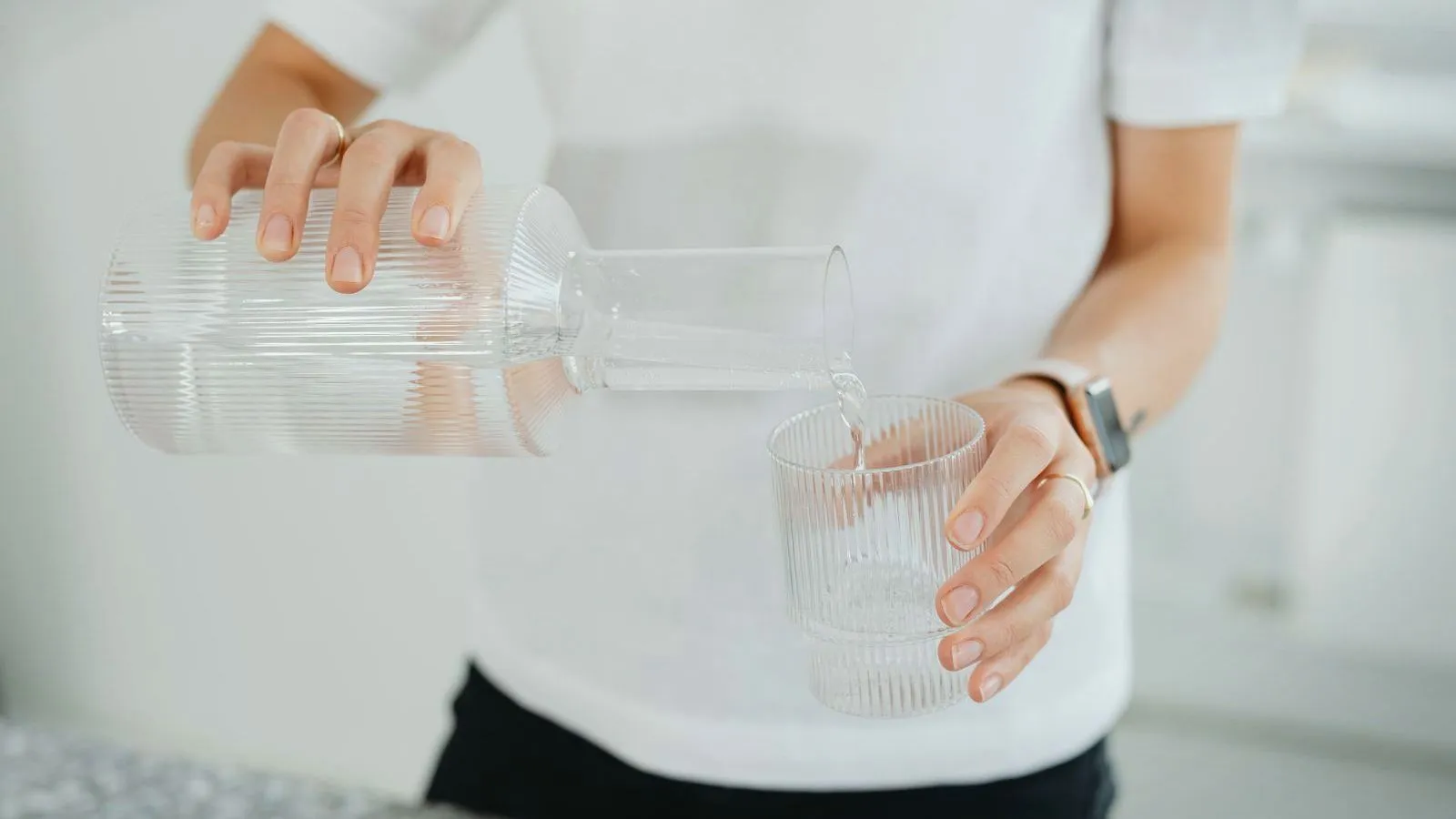
- A 2002 review found no scientific studies supporting the advice to drink eight 8-ounce glasses of water a day.
- A study in Science measured daily water use in 5,604 people aged 8 days to 96 years in 23 countries.
- Body size, physical activity, pregnancy, climate and altitude all changed how much water people used.
- US reference intakes of 2.7 to 3.7 liters a day count water from food and all drinks, not just plain water.
- MedlinePlus says there is no specific recommendation for how much plain water to drink.
“Drink eight glasses of water a day” is one of the most repeated pieces of health advice. It sounds precise, but the number has never had much evidence behind it, and it leaves out where most people’s water actually comes from.
Research that measures how much water bodies use shows that needs vary widely from person to person, with body size, activity, pregnancy and climate all playing a part. Official reference values count water from food and all drinks, not only plain water, and they are averages rather than personal targets.
Where the eight glasses of water rule came from
In 2002, in the American Journal of Physiology, the physiologist Heinz Valtin set out to find the origin of the advice to drink at least eight 8-ounce glasses a day, known as “8 x 8”, and to examine the evidence for it. After searching the literature and consulting nutritionists who specialize in thirst and drinking, he reported that no scientific studies were found in support of the rule.
Surveys of food and fluid intake in thousands of healthy adults suggested such large amounts were not needed. He also noted that caffeinated drinks may indeed be counted toward the daily total, contrary to a common claim that they do not count. His conclusion was limited to healthy adults in a temperate climate who were not very active. Larger intakes, he wrote, are called for in special circumstances such as vigorous work and exercise, especially in hot climates.
How much water the body actually uses
A study published in Science in 2022 measured water turnover, the water used by the body each day, in 5,604 people from 8 days to 96 years old in 23 countries. It used isotope tracking, a method that follows a harmless labeled form of water through the body to measure how much is taken in and lost.
Water use varied widely. Age, body size and body composition were all linked to how much water people turned over, as were physical activity, athletic training and pregnancy. So were the surroundings: latitude, altitude, air temperature and humidity. People in countries with a low human development index, a measure of income, education and life expectancy, had higher water turnover than people in wealthier countries.
The researchers used the data to build equations that predict water turnover from factors such as body size, activity and climate. Water turnover is not the same as how much people need to drink, because some water comes from food and some is made by the body itself.
What official water intake values say
MedlinePlus reports that the US Dietary Reference Intake for water is between 91 and 125 fluid ounces (2.7 to 3.7 liters) of water per day for adults. That figure covers the total amount people get from both food and beverages, and individual needs depend on sex, weight, age, activity level and health.
MedlinePlus adds that there is no specific recommendation for how much plain water to drink. It says that drinking fluids when thirsty and having beverages with meals is generally enough to stay hydrated.
In Europe, the European Food Safety Authority set adequate intakes of total water of 2.0 liters a day for women and 2.5 liters for men. Its reference values include water from drinking water, beverages of all kind, and from food moisture, and apply to moderate temperatures and moderate activity. The authority adds about 300 mL a day in pregnancy and about 700 mL a day while breastfeeding.
How food and other drinks count toward daily water
A large share of daily water does not come from glasses of water. MedlinePlus notes that people get some of their water through the foods they eat, that some is made during metabolism, and that liquid foods and beverages such as soup, milk, tea, coffee and juices also count.
Sources differ on alcohol. MedlinePlus states that alcohol does not add to the body’s water because it is a diuretic, meaning it makes the body release more water. The 2002 review suggested mild alcoholic drinks like beer, in moderation, may partly count. It also notes that as you get older, your thirst may change.
When water needs go up
The Science study shows which situations push water use higher: physical activity, athletic training, pregnancy, heat, humidity and altitude. The 2002 review makes the same point from the other direction, noting that large intakes suit hard physical work and exercise in hot climates, and the treatment or prevention of some diseases.
Too little water carries its own risk. MedlinePlus explains that not getting enough water throws the body’s fluids out of balance, causing dehydration, and that severe dehydration can be life threatening.
What the water research cannot tell us
Water turnover measures how much water bodies use, not the ideal amount for health. The studies here do not show whether drinking more water than thirst prompts improves long-term health, or by how much. The reference values are population averages based largely on what healthy people already consume, not targets tested in trials.
Individual needs also shift from day to day with weather, activity and illness, which no single number can capture.
What the water evidence adds up to
The eight-glasses rule has little scientific support, and water needs vary widely between people and situations. Reference values of roughly 2 to 3.7 liters a day refer to total water from food and all drinks, not plain water alone.
For healthy adults in moderate conditions, the sources here describe thirst and drinks with meals as generally enough, with needs rising in heat, exercise, pregnancy and breastfeeding. How much a particular person needs depends on their body, activity, surroundings and health.
People also ask
Is there evidence for drinking eight glasses of water a day?
A 2002 review found no scientific studies supporting the rule of eight 8-ounce glasses a day. Its conclusion applied to healthy adults in a temperate climate who were not very active.
How much water does the US reference intake suggest?
The US Dietary Reference Intake for water is 2.7 to 3.7 liters (91 to 125 fluid ounces) a day for adults, counting water from all foods and beverages.
What are the European water intake values?
The European Food Safety Authority set adequate intakes of total water of 2.0 liters a day for women and 2.5 liters for men, including water in food, for moderate temperatures and activity levels. It adds about 300 mL a day in pregnancy and about 700 mL while breastfeeding.
Does coffee count toward water intake?
MedlinePlus lists tea and coffee among the beverages that supply water, and a 2002 review found that caffeinated drinks may be counted toward the daily total.
What affects how much water a person uses?
In the study of 5,604 people, age, body size and composition, physical activity, athletic status, pregnancy, socioeconomic status, latitude, altitude, air temperature and humidity were all associated with water turnover. This is general information rather than medical advice.
References
- Yamada, Y., Zhang, X., Henderson, M. E. T., et al. Variation in human water turnover associated with environmental and lifestyle factors. Science, 2022.
- Valtin, H. Drink at least eight glasses of water a day. Really? Is there scientific evidence for 8 x 8? American Journal of Physiology-Regulatory, Integrative and Comparative Physiology, 2002.
- EFSA Panel on Dietetic Products, Nutrition, and Allergies. Scientific Opinion on Dietary Reference Values for water. EFSA Journal, 2010.
- MedlinePlus Medical Encyclopedia. Water in diet. US National Library of Medicine.