Explainer · Fitness & Exercise
VO2 max: what it measures, how it changes with age and what it says about long-term health
VO2 max is the most oxygen the body can use in all-out exercise. In studies covering close to a million people, higher fitness went with lower death rates at every age with no upper limit found, though smartwatch estimates of it carry wide error.
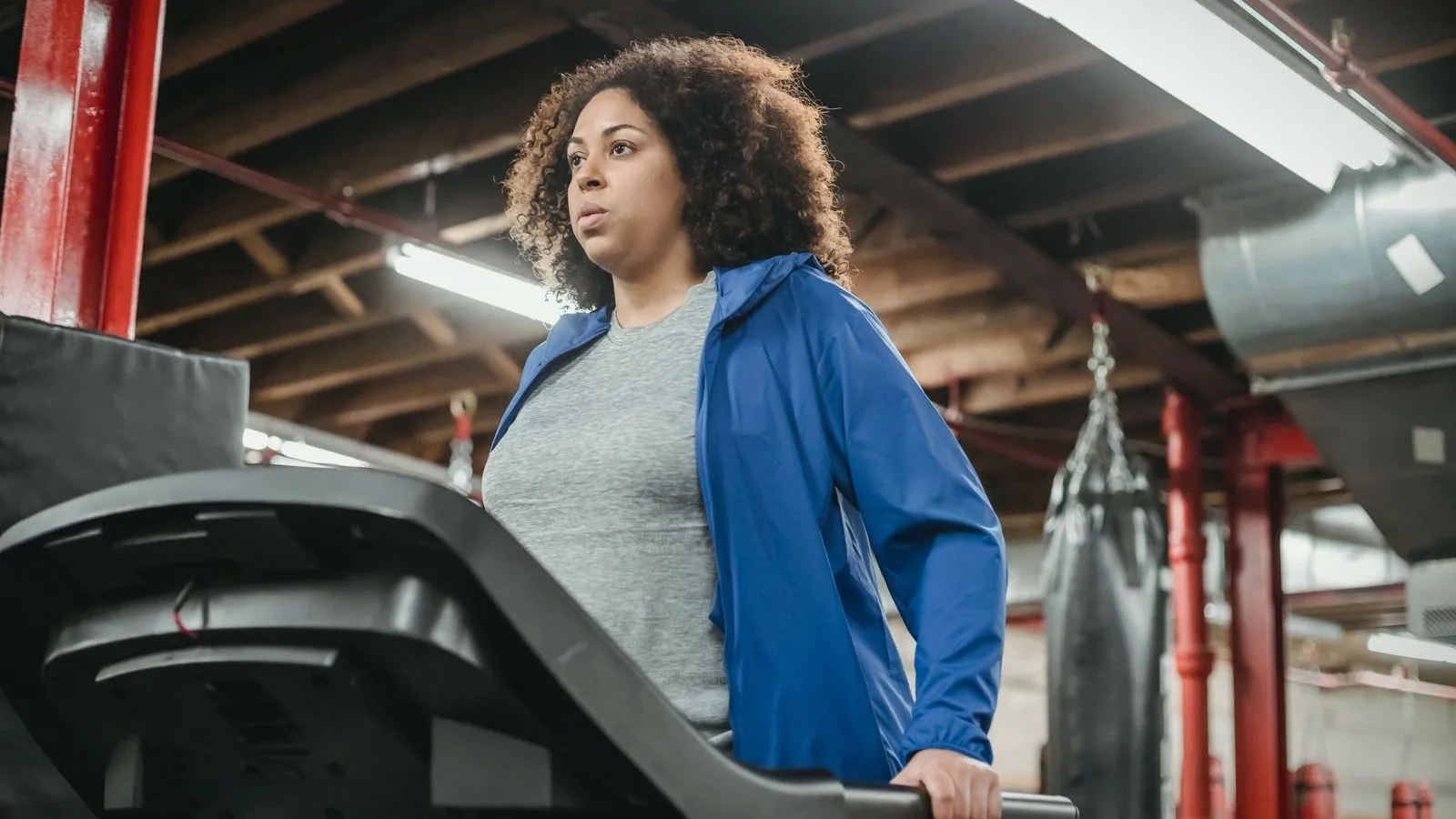
- VO2 max is the most oxygen the body can use in all-out exercise, the standard measure of aerobic fitness.
- In 122,007 adults, the fittest group had death rates about 80% lower than the least fit.
- The link held at every age and fitness level studied, with no upper limit found.
- On average VO2 max falls by more than 10% for each decade of adult life.
- These are observational links, and smartwatch estimates can be off by about 10 points either way.
A number that once belonged to elite endurance sport now turns up on ordinary wrists. Running watches and fitness trackers report a VO2 max alongside steps and sleep, and podcasts about longevity have made it a figure people compare.
The interest has a real basis. Cardiorespiratory fitness, which VO2 max measures, is among the strongest predictors of how long people live that medicine has found. The American Heart Association argued in 2016 that it deserves to be treated as a vital sign, on the grounds that it is a potentially stronger predictor of mortality than established risk factors such as smoking, hypertension, high cholesterol, and type 2 diabetes mellitus. What the number can and cannot tell an individual is less often explained.
What does VO2 max measure?
VO2 max is the greatest amount of oxygen the body can take in, transport and use per minute during exercise hard enough to exhaust it. Oxygen has to pass through the lungs, be pumped by the heart, travel in the blood and be taken up by working muscle, so the figure sums up how well that whole chain performs. It is usually divided by body weight and given in milliliters of oxygen per kilogram per minute.
Measuring it properly means running or cycling to exhaustion in a laboratory while breathing through a mask that analyzes each breath. Because that is costly, many studies and most clinics estimate fitness from how far a person gets on a treadmill test. Those estimates are expressed in metabolic equivalents, or METs. One MET is the energy the body uses sitting still, so a person who can reach 10 METs can work at ten times their resting rate.
What is a typical VO2 max, and how does it change with age?
Reference values come from a national registry in the United States. Thirty-four laboratories in the United States contributed data from more than 22,000 maximal exercise tests in healthy adults from their twenties to their eighties.
Two patterns stand out. Values are higher in men than in women at every age. And they fall steadily through adult life. The registry team, led by Leonard Kaminsky of Ball State University, calculated that on a treadmill the average rate of decline per decade over a 6-decade period was 13.5%. That is roughly 4 points every ten years, so an average 70-year-old has lost close to half of what an average 20-year-old has.
Training shifts the curve. In controlled studies of healthy adults under 45, both steady endurance work and high-intensity interval training (HIT) raised VO2 max by about 5 points over weeks to months. The meta-analysis that pooled them concluded that endurance training and HIT both elicit large improvements in the VO2max of healthy, young to middle-aged adults.
How strongly is VO2 max tied to living longer?
The study that brought the question to wide attention came from Cleveland Clinic. Kyle Mandsager, Wael Jaber and colleagues examined records of consecutive adult patients referred for symptom-limited exercise treadmill testing over 23 years, more than 122,000 people. They sorted each patient into one of five fitness groups for their age and sex and then counted deaths over the following years.
The gradient was steep and had no ceiling. Death rates fell from each fitness group to the next, and the top group, whose fitness matched that of endurance athletes, had rates about 80% lower than the bottom group. Even between the top two groups there was a gap. The paper’s conclusion is that cardiorespiratory fitness is inversely associated with long-term mortality with no observed upper limit of benefit.
“We were particularly interested in the relationship between extremely high fitness and mortality,” Mandsager said in a statement from the hospital. “This relationship has never been looked at using objectively measured fitness, and on such a large scale.”
The comparison with familiar risks drew the most notice. Being below average in fitness carried about the same excess risk as smoking or diabetes. The authors wrote that the mortality penalty of low fitness was comparable to or greater than traditional clinical risk factors.
A much larger study has since confirmed the pattern in a different population. A total of 750,302 U.S. veterans aged 30 to 95 years were followed for a median of ten years. The least fit fifth had about four times the death rate of the fittest, and the relationship was inverse, independent, and graded in men and women, in every racial group and in people in their seventies and eighties.
When Canadian and Australian researchers gathered all such work in 2024, they included 26 systematic reviews built on 199 cohort studies. Across them, each additional MET of fitness went with 11% to 17% lower mortality from any cause. One MET is a modest difference in exercise capacity.
Most of these studies estimated fitness from treadmill performance. One that measured oxygen use directly, in 4,137 self-referred apparently healthy adults followed for an average of 24 years, found nearly the same figure, with each MET linked to about 12% lower mortality. Its authors had noted that this relationship has almost exclusively been studied using estimated CRF, the abbreviation for cardiorespiratory fitness.
Does a higher VO2 max cause the longer life?
None of these studies can say. They observe who is fit and who dies, and the fit differ from the unfit in many ways. They are less likely to be ill to begin with, and illness itself lowers fitness years before it kills. Genes influence both VO2 max and health.
The Cleveland Clinic authors are direct about it in the paper. The association, they write, does not prove causation, and how far high fitness simply marks out people who were going to live longer “is not discernible from our study.” They add that a randomized trial large and long enough to settle it is not feasible.
The release that accompanied the paper was less careful. Jaber is quoted there saying: “Aerobic fitness is something that most patients can control. And we found in our study there is no limit to how much exercise is too much.” The study measured fitness on a single treadmill test. It did not measure exercise, and it did not test whether people who raise their fitness live longer as a result.
The 2024 overview reflects that caution in its grading. The certainty of the evidence across all studies ranged from very low-to-moderate, mainly because the underlying studies are observational.
How accurate are smartwatch VO2 max estimates?
A watch cannot measure oxygen. It infers VO2 max from heart rate, pace and personal details, using the maker’s own formula.
An expert network reviewed how well that works. Fourteen validation studies were included in the systematic review and meta-analysis, each comparing a wearable against a laboratory test. Devices that based their estimate on data recorded during exercise were, on average, almost exactly right. The reviewers noted that devices using exercise-based information in their algorithms showed a lower systematic and random error than those estimating from resting data, which tended to read high.
The average hides the individual error, which is the part that matters to a wearer. For exercise-based devices, single readings ranged from about 10 points below the laboratory value to about 10 above. Set against a decline of roughly 4 points per decade, that margin is the equivalent of twenty years of aging in either direction. A watch is more useful for following one person’s trend over months than for placing them against a reference table.
The heart association’s case for measuring VO2 max
The American Heart Association’s 2016 scientific statement is titled a case for fitness as a clinical vital sign. Its argument is that fitness predicts outcomes at least as well as the risk factors doctors already record, and that adding it to those factors improves the sorting of patients into higher and lower risk. The statement calls for fitness to be assessed routinely. It is a position paper and does not set numerical targets for individuals.
Referred patients, single tests and no trial: gaps in the VO2 max evidence
The participants in the largest studies were not a cross-section of the public. The Cleveland Clinic patients had been sent for a treadmill test, usually because a doctor wanted to check their heart, and the authors acknowledge that such a group may not reflect the general population. The veterans cohort was mostly male. Fitness was recorded once, so the studies say little about what happens when it changes.
That last gap matters most. Training raises VO2 max, and high VO2 max goes with longer life, but no trial has shown that raising it extends life. What a particular fitness result means for one person depends on their age, sex and medical history, which their doctor weighs alongside everything else.
VO2 max marks out who lives longer in large populations. Whether raising it adds years is unknown.
People also ask
What is VO2 max?
The maximum rate at which the body can take in and use oxygen during exhausting exercise, usually expressed in milliliters of oxygen per kilogram of body weight per minute. It reflects how well the heart, lungs, blood and muscles work together and is the standard laboratory measure of cardiorespiratory fitness.
How strongly is fitness linked to mortality?
In 122,007 adults tested on a treadmill, the hazard ratio for death in the elite fitness group compared with the low group was 0.20 (95% CI 0.16 to 0.24), where a value below 1 means a lower rate. An overview of meta-analyses found each 1-MET higher fitness associated with 11% to 17% lower all-cause mortality. One MET, or metabolic equivalent, is the energy the body uses at rest.
How fast does VO2 max decline with age?
In US reference data from 22,379 exercise tests in healthy adults aged 20 to 89, the average decline per decade on a treadmill was 13.5%, or about 4.0 milliliters per kilogram per minute.
Can training raise VO2 max?
Yes. A meta-analysis of 28 controlled studies in healthy adults aged 18 to 45 found gains of 4.9 milliliters per kilogram per minute with endurance training and 5.5 with high-intensity interval training, compared with no exercise.
How accurate is the VO2 max on a smartwatch?
A meta-analysis of 14 validation studies found that wearables estimating from exercise data were close on average (bias -0.09 milliliters per kilogram per minute) but that individual readings ranged from about 9.9 below to 9.7 above the laboratory value. Devices estimating from resting data overestimated by 2.17 on average, with a wider range. This is general information rather than medical advice.
References
- Mandsager, K., Harb, S., Cremer, P., Phelan, D., Nissen, S. E., Jaber, W. Association of Cardiorespiratory Fitness With Long-term Mortality Among Adults Undergoing Exercise Treadmill Testing. JAMA Network Open, 2018.
- Cleveland Clinic. Cleveland Clinic Research Shows Better Cardiorespiratory Fitness Correlates to a Longer Life. News release, 2018.
- Kokkinos, P., Faselis, C., Samuel, I. B. H., et al. Cardiorespiratory Fitness and Mortality Risk Across the Spectra of Age, Race, and Sex. Journal of the American College of Cardiology, 2022.
- Lang, J. J., Prince, S. A., Merucci, K., et al. Cardiorespiratory fitness is a strong and consistent predictor of morbidity and mortality among adults: an overview of meta-analyses representing over 20.9 million observations from 199 unique cohort studies. British Journal of Sports Medicine, 2024.
- Ross, R., Blair, S. N., Arena, R., et al. Importance of Assessing Cardiorespiratory Fitness in Clinical Practice: A Case for Fitness as a Clinical Vital Sign: A Scientific Statement From the American Heart Association. Circulation, 2016.
- Kaminsky, L. A., Arena, R., Myers, J., et al. Updated Reference Standards for Cardiorespiratory Fitness Measured with Cardiopulmonary Exercise Testing. Mayo Clinic Proceedings, 2022.
- Molina-Garcia, P., Notbohm, H. L., Schumann, M., et al. Validity of Estimating the Maximal Oxygen Consumption by Consumer Wearables: A Systematic Review with Meta-analysis and Expert Statement of the INTERLIVE Network. Sports Medicine, 2022.
- Imboden, M. T., Harber, M. P., Whaley, M. H., Finch, W. H., Bishop, D. L., Kaminsky, L. A. Cardiorespiratory Fitness and Mortality in Healthy Men and Women. Journal of the American College of Cardiology, 2018.
- Milanović, Z., Sporiš, G., Weston, M. Effectiveness of High-Intensity Interval Training (HIT) and Continuous Endurance Training for VO2max Improvements: A Systematic Review and Meta-Analysis of Controlled Trials. Sports Medicine, 2015.