News · Nutrition & Diet
Sugary-drink program at Boys & Girls Clubs trimmed BMI gains in a trial of 437 children
A Boston University trial at 11 Massachusetts clubs taught children aged 8 to 13 to swap soda for water over six weeks. A year on, their BMI scores for age had edged down against peers, though reported drinking did not clearly differ.
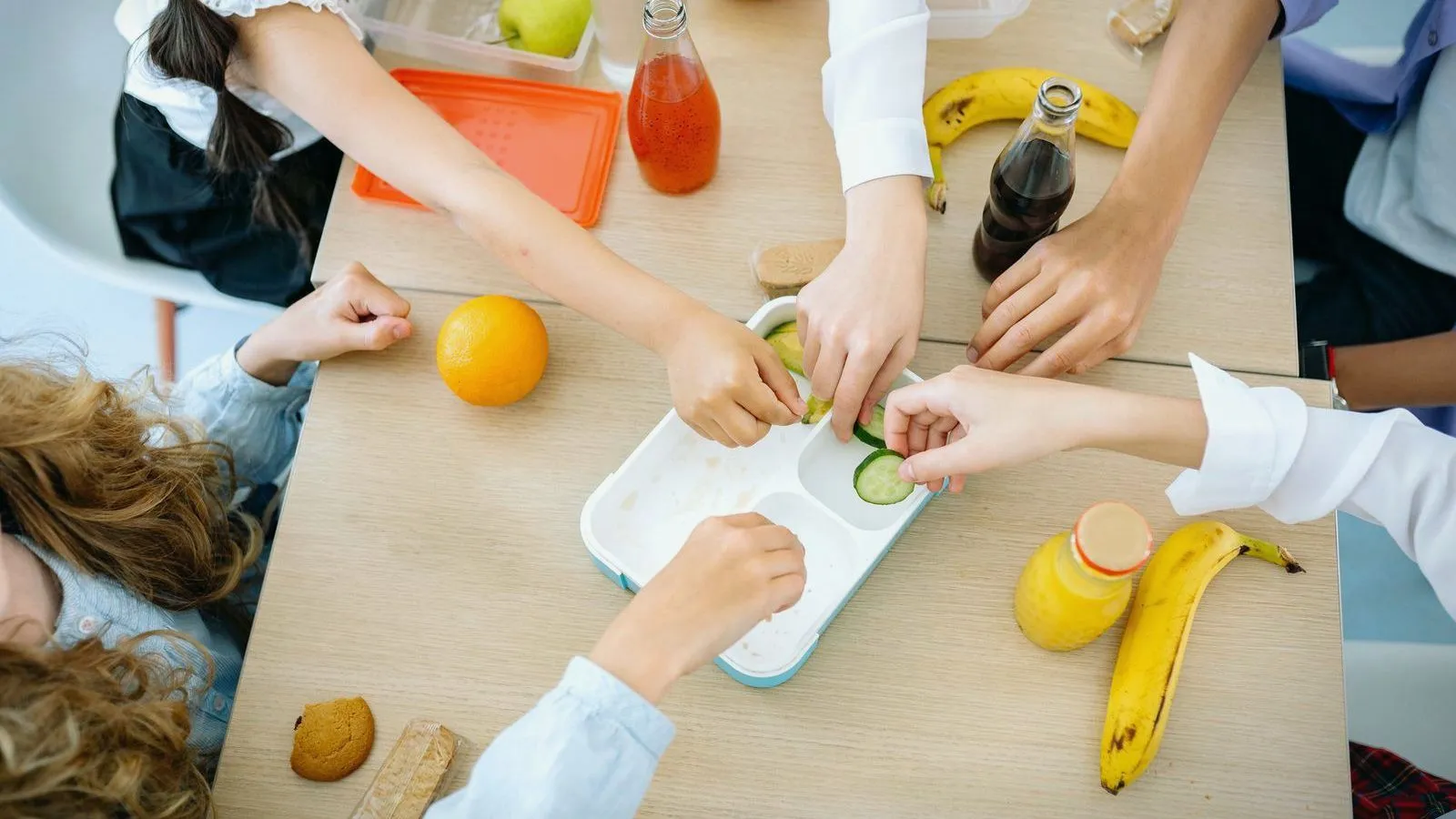
- Children at clubs running a six-week soda-to-water program ended the year with lower BMI-for-age scores.
- In an exploratory look at 74 children who began overweight, fewer on the program went on to obesity.
- Children on the program reported less soda and more water, but the gap with other clubs could have been chance.
- The program ran in after-school clubs with existing staff, not in a clinic.
- The BMI gap was small and only just cleared chance, and the trial covered Massachusetts clubs only.
Most programs to prevent childhood obesity ask families to change several things at once: eat differently, move more, sleep better, watch less. A team at Boston University School of Public Health tried asking for one change, swapping sugary drinks for water, and ran it through after-school clubs that children already attend.
Over a year, it nudged children’s weight in the right direction. In a randomized study at 11 Boys & Girls Club sites in Massachusetts, children at clubs that ran the six-week program, called H2GO!, ended the year with a slightly lower body mass index score than children at clubs that carried on as usual. More of them moved down a weight category, and fewer slid from overweight into obesity. The study, led by Monica Wang and published on October 9 in JAMA Network Open, comes with a puzzle attached: by their own reports, children at the program clubs did not cut sugary drinks or add water by measurably more than children at the other clubs.
What H2GO! asked children and parents to do
The program grew out of a pilot that the same group ran at two clubs in 2016 and 2017. In that study, children at the program site cut their sugary drinks, drank more water and saw their BMI scores fall over six months, compared with children at a club that did not get the program, results the team said would guide a larger cluster-randomized controlled trial. Unlike the pilot, the new trial spread the program across 11 clubs and many staff members, picked which clubs got it at random, and followed the children for a full year.
Trained club staff delivered 12 one-hour group sessions over about six weeks. The sessions mixed taste tests, sugar measurement demonstrations that showed how much sugar sits in a drink, and projects the children made themselves, in print, music and video, about why water mattered to them. Take-home activities pulled in a parent, and each six-week program ended with a youth-led community event where the children showed their work and served unsweetened drinks. Comparison sites received usual programming, including health sessions on unrelated topics such as online safety.
Wang explained the single-habit design in the university’s announcement. “We focused instead on one simple, concrete change that did not require a costly or complicated overhaul of family life: drink fewer sugary beverages and more water,” she said.
The study enrolled 437 children aged 8 to 13 and a parent or caregiver for each, between 2020 and 2024. About two in five children were Hispanic or Latino and one in six Black, and 297 (68%) were eligible for free or reduced-price lunch. More than half already carried extra weight: 74 children (16.9%) had overweight, and 161 (36.8%) had obesity at the start. On average they reported drinking about 12 ounces of sugary drinks a day, roughly a can of soda, and 24 ounces of water.
How much did H2GO! change children’s BMI?
The researchers tracked BMI z score, a measure built for growing children. It records how far a child’s BMI sits from the average for children of the same age and sex, so a child who grows taller and heavier at the expected pace keeps the same score. Staff measured height and weight twice at each visit on calibrated equipment.
After 12 months, the program clubs came out ahead. Their children’s scores drifted down slightly while the comparison children’s drifted up, and after a year the adjusted between-group difference was 0.19 on the z score scale. Neither group’s change was clear of chance on its own; the difference between them only just was. Nothing had separated the groups at two or six months.
A Dutch trial gives a sense of what such numbers mean in weight. It secretly swapped children’s daily sugary drink for a sugar-free one and found a gap of 0.13 units after 18 months. That gap amounted to about a kilogram, roughly 2 pounds: weight increased by 6.35 kg in the sugar-free group and by 7.37 kg among children on the sugared drink. The children, ages and measurements differed, so the comparison gives a sense of scale, not an equivalence. The H2GO! authors call their effect comparable with or slightly larger than those in other randomized sugary drink and obesity prevention trials.
The weight categories make the result easier to picture. Over the year, 28.9% of children at program clubs moved to a lower BMI category, against 17.8% at comparison clubs. The clearest split was among the 74 children who started overweight, split between the two arms: 44.4% of those in the program moved into the healthy-weight range against 31.6% at comparison clubs, and a lower percentage progressed to obesity: 5.6% against 21.1%. These were exploratory analyses, the kind a trial is not designed to settle, and with so few children in each group a percentage point or two can be a single child, so they illustrate the main result more than prove anything on their own.
Wang read the result against the national picture. “One of the most striking findings from this study is that we were able to shift our study participants’ BMI in a healthier direction at a time when childhood obesity trends nationally were moving the opposite way,” she said.
Why didn’t reported drinking change more at H2GO! clubs?
The drink data do not line up neatly with the weight data. Children at the program clubs reported drinking about 3.7 fewer ounces of sugary drinks a day after a year, and their water went up by an average of 6.6 ounces. Comparison children reported little change. Yet the differences between the two groups in sugary drink and water intake were not significant at any point, meaning they could have arisen by chance. Parents’ drinking did not differ between the groups either.
The researchers offer three explanations. Children’s reports of what they drank are subject to recall error, while height and weight were measured by staff, so the drink data are the noisier of the two. The trial was also sized to detect a change in BMI, not in drinking. And a program about sugar may have nudged other habits, such as sugar in food or sleep, which the trial did not measure closely enough to show. Each is plausible, and none is tested here, so how H2GO! moved children’s weight is still an open question.
The program’s own theory of how it would work did not hold up either. Its designers expected that building children’s sense of agency would carry the effect, but the program was not significantly associated with changes in children’s scores on a measure of that agency, meaning any shift could have been chance, and those scores did not explain the BMI difference. The authors note that the trial ran through the COVID-19 pandemic, which may have constrained children’s ability to build that agency.
How H2GO! fits with earlier sugary drink trials
Among earlier studies, the clearest evidence that sugary drinks add weight to children comes from trials that controlled the drinks themselves. In the Dutch study, 641 primarily normal-weight children aged about 5 to 12 got a drink every school day for 18 months, either sugared or artificially sweetened, without knowing which. Those on the sugar-free version gained less weight and less fat. In Boston, a trial that delivered noncaloric drinks to the homes of 224 teenagers with overweight or obesity found that the increase in BMI was smaller after one year, though the gap had closed by the end of the second, after the deliveries stopped.
Programs that try to change drinking habits, as H2GO! did, have a more mixed record. A meta-analysis of 40 such studies found that education and counseling cut children’s sugary drink intake by about 76 milliliters a day on average, a little under 3 ounces, and raised their water intake, which the reviewers judged moderately successful at reducing consumption. A German trial that installed water fountains in 32 elementary schools in deprived areas and taught four lessons on water found that children drank more water and were less likely to become overweight, although their BMI scores did not differ from those at control schools. H2GO! shows the reverse pattern: a BMI change without a clear drinking change.
Where H2GO! ran sets it apart. The US Preventive Services Task Force already recommends that clinicians provide or refer children aged 6 and older who have a high BMI to intensive behavioral programs, and estimates that about 19.7% of children and adolescents aged 2 to 19 have a BMI at or above the 95th percentile. H2GO! was something else: a short prevention program for children of every weight, run by club staff who already knew them. “Community organizations are critical partners in prevention because they are where children spend time, build relationships, and learn from one another,” Wang said.
Limits of the Massachusetts club trial
The headline result rests on a thin margin. Its plausible range runs from a meaningful drop to almost no difference, and one of the team’s checks, an analysis that adjusted for each child’s starting score in a different way, yielded a directionally similar but nonsignificant result, one that could not be told apart from chance. Two other checks, leaving out children who joined in 2020 and accounting for siblings, gave similar or slightly larger gaps.
Attendance was patchy. Children came to half of the sessions on average, so many got only part of the program. About seven in ten children (69.1%) were measured at 12 months, although those who stayed and those who left looked similar at the start. Nobody was blinded, one comparison club stopped enrolling midway and was replaced, and every site was a Boys & Girls Club in Massachusetts, which the authors say may limit generalizability to other settings. Follow-up also stopped at one year, so the study cannot say whether the gap grew, held or faded, as it did in the Boston teen trial.
What the H2GO! results mean for sugary drink programs
For families, the study fits a familiar picture. Earlier experiments tie sugary drinks to weight gain in children, and this one suggests that a light-touch program can shift weight a little when it runs where children already spend their afternoons. It does not show that six weeks of sessions will change any one child’s weight, and whether a child’s weight needs attention is assessed by their doctor.
For the researchers, the next questions are practical. Their paper calls for work to better understand potential behavioral pathways and implementation variability, meaning how delivery differed from club to club, and the university’s announcement says future studies could carry the approach to other community settings and to other habits, such as eating ultra-processed foods.
The H2GO! trial offers a modest, randomized sign that a soda-to-water program in after-school clubs can bend children’s weight gain, with the mechanism still unexplained.
People also ask
How much did the H2GO! program change children's BMI?
After 12 months, the change in BMI z score (a measure of how far a child's BMI sits from the average for their age and sex) was 0.19 lower at program clubs than at comparison clubs, with a 95% confidence interval of 0.01 to 0.38 lower (P = .04). Program children's scores fell by 0.11 and comparison children's rose by 0.08, though neither change was clear of chance on its own.
Did children in the program drink fewer sugary drinks?
Children at program clubs reported drinking about 3.7 fewer ounces of sugary drinks and 6.6 more ounces of water a day after a year, from a starting point of about 12 ounces of sugary drinks and 24 ounces of water. Children at comparison clubs reported smaller changes, but the differences between the two groups were not large enough to rule out chance. Drinking was self-reported.
What did children do in the H2GO! program?
Trained club staff led 12 one-hour group sessions over about six weeks, with taste tests, demonstrations of the sugar in drinks, projects in which the children told their own stories about water, take-home activities with a parent, and a closing community event run by the children.
What do guidelines say about helping children with a high BMI?
The US Preventive Services Task Force recommends that clinicians provide or refer children and adolescents aged 6 and older with a BMI at or above the 95th percentile to intensive behavioral programs that cover several aspects of daily life. H2GO! was a prevention program for children of all weights, run outside the clinic, and is not one of the programs that recommendation was based on.
Would the program work outside Massachusetts?
That has not been tested. The trial ran at 11 clubs in one state, during and after the COVID-19 pandemic, and the researchers say recruitment from Massachusetts clubs may limit how far the results apply elsewhere. Whether a child's weight needs attention is assessed by their doctor. This is general information rather than medical advice.
References
- Wang, M. L., Alatorre, S., Schwarz, A. G., Weinberg, J., Sprague Martinez, L., Aldworth, J., Kadel, R., Rosal, M. C., Lemon, S. C. A Community-Based Behavioral Intervention and Body Mass Index in School-Aged Children. JAMA Network Open, 2026.
- Wang, M. L., Otis, M., Rosal, M. C., Griecci, C. F., Lemon, S. C. Reducing sugary drink intake through youth empowerment: results from a pilot-site randomized study. International Journal of Behavioral Nutrition and Physical Activity, 2019.
- Vargas-Garcia, E. J., Evans, C. E. L., Prestwich, A., Sykes-Muskett, B. J., Hooson, J., Cade, J. E. Interventions to reduce consumption of sugar-sweetened beverages or increase water intake: evidence from a systematic review and meta-analysis. Obesity Reviews, 2017.
- de Ruyter, J. C., Olthof, M. R., Seidell, J. C., Katan, M. B. A Trial of Sugar-free or Sugar-Sweetened Beverages and Body Weight in Children. New England Journal of Medicine, 2012.
- Ebbeling, C. B., Feldman, H. A., Chomitz, V. R., et al. A Randomized Trial of Sugar-Sweetened Beverages and Adolescent Body Weight. New England Journal of Medicine, 2012.
- Muckelbauer, R., Libuda, L., Clausen, K., Toschke, A. M., Reinehr, T., Kersting, M. Promotion and Provision of Drinking Water in Schools for Overweight Prevention: Randomized, Controlled Cluster Trial. Pediatrics, 2009.
- US Preventive Services Task Force. Interventions for High Body Mass Index in Children and Adolescents: Recommendation Statement. JAMA, 2024.