News · Nutrition & Diet
Sugary drinks tied to liver cancer; diet versions were not
A pooled analysis of 11 cohorts and 1.5 million adults in JAMA Network Open linked each daily sugary drink to higher liver cancer risk, while artificially sweetened drinks showed no association.
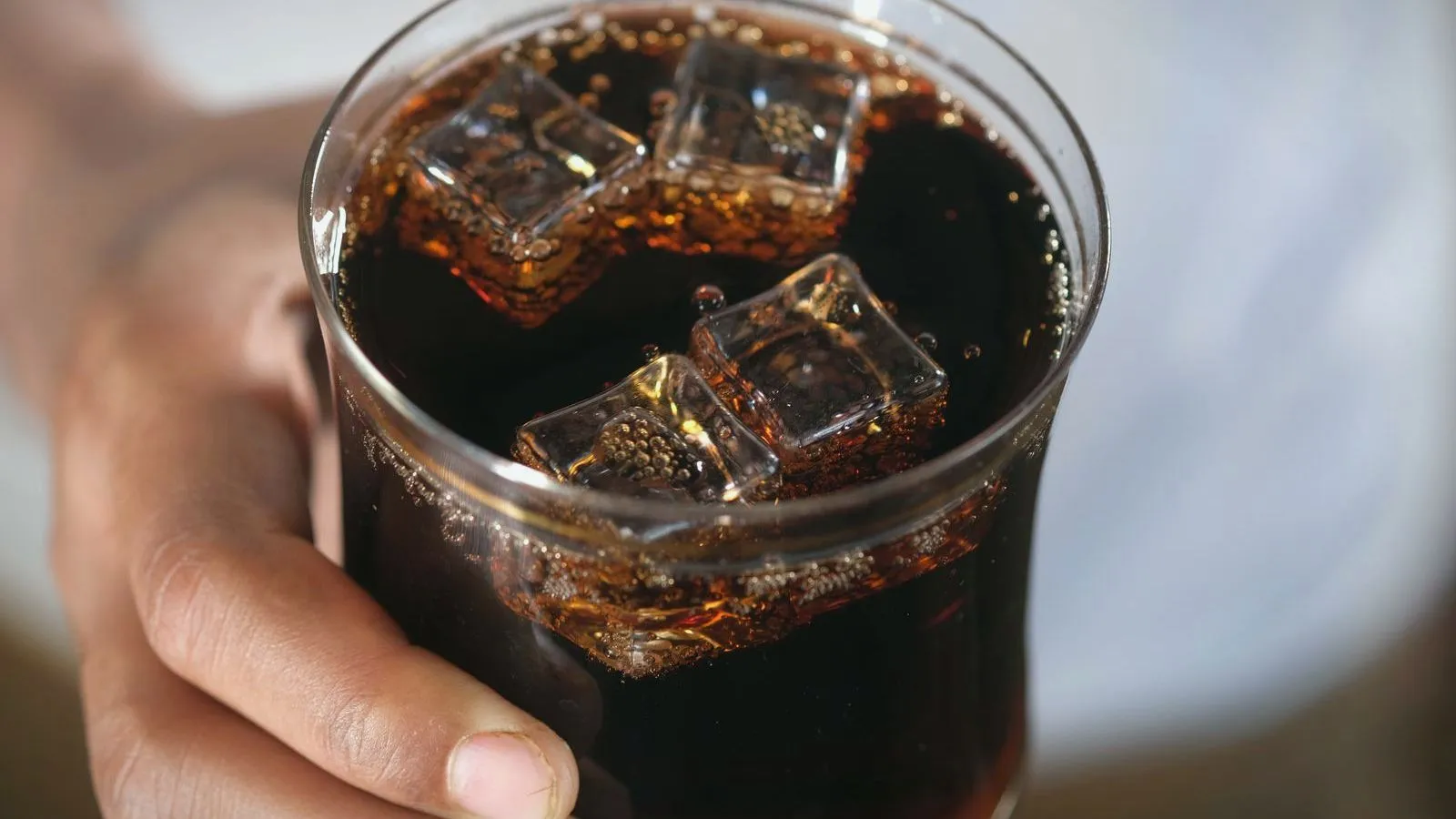
- 11 cohorts covering 1,518,411 adults, with 2,811 liver cancers over a median 17.8 years.
- Each extra daily sugary drink tracked 10% higher risk of the main liver cancer subtype (HR, 1.10).
- Artificially sweetened drinks showed no association with liver cancer or either subtype.
- Sugary drinks showed nothing for liver cancer overall, only the subtypes, which is why subtype mattered.
- Intake was self-reported once at baseline, so it cannot capture decades of changing habits.
Anyone who switched from regular cola to diet has been waiting for the other shoe to drop. In this case it did not.
A pooled analysis in JAMA Network Open, published by the American Medical Association, tracked more than 1.5 million adults for close to two decades. Sugar-sweetened drinks were linked to higher rates of the two main liver cancers. Artificially sweetened ones were not.
Why liver cancer and soft drinks needed pooling
Both drink types are consumed at enormous scale, and both have been tied to obesity and type 2 diabetes, which are themselves established risk factors associated with liver cancer. What had not been settled was whether the drinks reach the liver’s cancer risk directly, and whether the two sweetener types behave differently.
The authors are explicit that prospective evidence examining beverage consumption and liver cancer subtypes remains limited and inconsistent. Previous studies were mostly too small to break liver cancer into its subtypes, which turns out to be the whole ballgame.
Eleven cohorts, seventeen years
Rather than run a new study, the team combined existing ones: a pooled analysis of 11 prospective cohort studies, 10 US cohorts and 1 European cohort, of adults without a history of cancer at baseline. Enrolment spanned 1980 to 2009.
A total of 1 518 411 participants were included, average age 58. During a median of 17.8 years of follow-up, 2811 incident liver cancer cases were identified, including 1699 hepatocellular carcinoma and 444 intrahepatic cholangiocarcinoma cases.
Those two names matter. The first starts in the liver’s own cells and is the type most closely bound to fatty liver disease. The second starts in the bile ducts running through the organ.
Why diet drinks came out differently
For the sugar-free versions, the answer was nothing. Artificially sweetened beverage intake per 1-beverage/day increase was not associated with liver cancer risk, hepatocellular carcinoma, or the bile-duct subtype.
For the sugared versions, the answer depended on how you cut it. Sugar-sweetened beverage intake per 1-beverage/day increase was not associated with overall liver cancer risk but was associated with increased risk of hepatocellular carcinoma and of the bile-duct subtype, by roughly 10% and 15% per daily drink.
That combination looks contradictory until you remember that “liver cancer” is a bag containing different diseases. Pool them and a real subtype signal can wash out.
A second check made the result harder to explain away. There was no evidence of effect modification by diabetes status, so the association was not simply diabetes doing the work in the background.
What the liver cancer finding cannot show
The relative numbers are modest and the absolute ones smaller still, because liver cancer is uncommon. One daily soft drink is not a diagnosis.
The study also inherits the standard cohort weaknesses. Intake was self-reported at baseline using validated food frequency questionnaires, and then people were followed for the better part of two decades, during which tastes and products both changed considerably.
What survives is a clean, well-powered split. The authors conclude that increased sugar-sweetened beverage consumption was associated with increased risk of both subtypes, and that there was little evidence that artificially sweetened intake was associated with liver cancer risk overall or by subtype.
For once the advice is unambiguous rather than hedged: on this particular question, the swap people made decades ago looks to have been the right one.
People also ask
Is diet soda now cleared of causing liver cancer?
For this outcome, in this analysis, yes. Artificially sweetened beverage intake per one drink a day was not associated with liver cancer risk overall, nor with hepatocellular carcinoma across 10 cohorts, nor with the bile-duct subtype across 6. That is a reassuring null on a specific question. It says nothing about other health outcomes where sweeteners remain debated, and a null result is not the same as proof of safety.
How much does one daily sugary drink actually change the risk?
The relative increase was 10% for hepatocellular carcinoma per additional daily serving. Liver cancer is uncommon, so a 10% relative increase on a small absolute risk remains a small absolute increase for most people. Across 1.5 million adults, though, 2,811 cases occurred, and population-level shifts in soft-drink consumption move numbers of that size.
Why did sugary drinks not raise overall liver cancer risk if they raised the subtypes?
Because 'liver cancer' pools cancers with different biology. Hepatocellular carcinoma arises in liver cells and is closely tied to fatty liver and metabolic disease; intrahepatic cholangiocarcinoma arises in the bile ducts. When the association is concentrated in subtypes, and other cases dilute it, the combined estimate can look flat. That is an argument for reporting subtypes, not for ignoring the finding.
Does this only matter for people with diabetes?
Apparently not. The researchers checked and found no evidence of effect modification by diabetes status, meaning the association looked similar in people with and without diabetes. That slightly weakens the simplest explanation, that sugary drinks act purely by causing diabetes, and points toward the liver being affected more directly.
How reliable is self-reported drink intake?
It is the main weakness. Intake was captured with validated food frequency questionnaires at baseline, then followed for a median of 17.8 years. People misreport, and drinking habits change over two decades. That kind of error usually dilutes an association rather than manufacturing one, which means the true effect could be somewhat larger, but it also means precise numbers should be held loosely.