News · Brain & Mental Health
Road traffic noise linked to Parkinson's in 3.1 million Danes, unless the home had a quiet side
A JAMA Neurology study followed 3.1 million Danes for 17 years and found road traffic noise at home tracked with a modestly higher risk of Parkinson's disease, unless the home had a quiet facade.
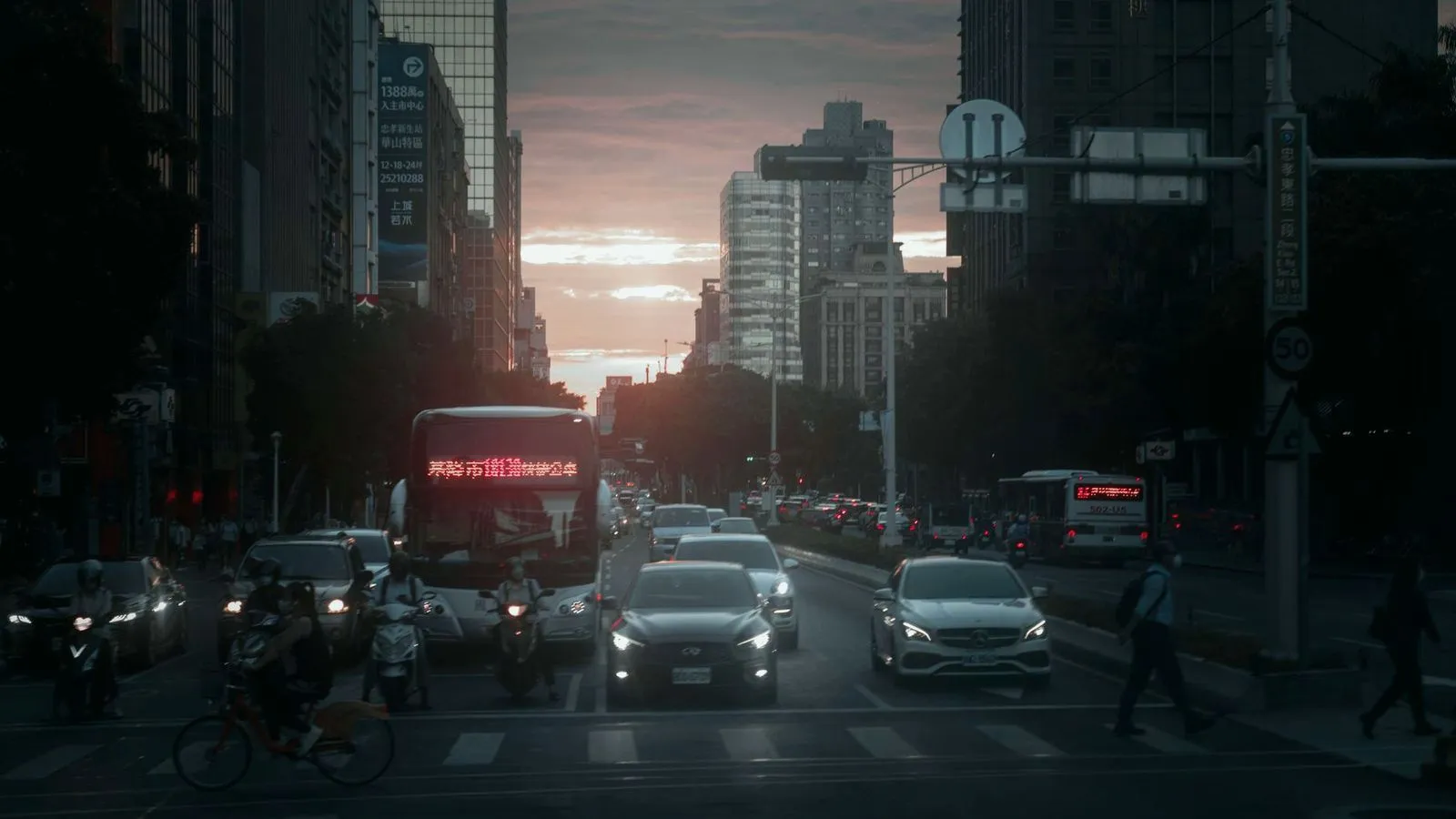
- 3,103,577 Danes aged 40 and over followed from 2000 to 2017; 20,587 developed Parkinson's.
- Noise was estimated at the front and back of every address in each person's history.
- The effect is small: about 3% higher risk per step up in noise at the loudest wall.
- A 10 decibel gap between the loudest and quietest walls tracked with lower risk.
- Observational, and noise was modeled from addresses rather than measured in a bedroom.
Most of what we know about preventing Parkinson’s disease concerns things you swallow, inherit or breathe. A study in JAMA Neurology, a journal of the American Medical Association, adds something you hear.
Researchers at the Danish Cancer Institute followed 3,103,577 adults for 17 years and found that long-term exposure to road traffic noise was associated with higher Parkinson’s risk. They also found something more useful than the risk itself: having one quiet wall on the house appeared to take the edge off it.
Why traffic noise and Parkinson’s was an open question
Noise has been on the list of suspects for a while without ever being convicted. The authors put the state of play plainly: transportation noise has been proposed as a risk factor for Parkinson disease, but epidemiological evidence remains limited and inconsistent.
Until now, what was missing was scale and address-level precision. This study has both, and it adds a variable nobody had modeled before: the gap between the loudest and quietest walls of your home.
An entire country, address by address
The design is a Danish nationwide prospective cohort study with follow-up from 2000 to 2017, drawing on the population registers that make this kind of work possible in Denmark and almost nowhere else.
Of 3 542 488 eligible individuals, 438 911 were excluded, leaving 3 103 577 participants with an average starting age of 51. Among 3 103 577 participants, 20 587 developed Parkinson’s during follow-up, identified through the National Patient Register rather than by asking anyone to remember.
Noise was estimated from complete residential address history from 1990 onward, at both the most and least exposed walls of every home.
A small effect, and a bigger one hiding behind it
Taken on its own, noise at the loudest wall nudged risk up by about 3% per step, an estimate whose range only just cleared the point of no effect. On that number alone the story would be thin.
It firmed up when the researchers accounted for the quiet side. Having a difference between noise at the most and least exposed facades of 10 dB or more was associated with a decline in Parkinson’s risk across different levels of noise above 50 decibels. And accounting for that difference strengthened the association between noise at the loudest wall and Parkinson’s, to roughly 6%.
Noise at the least exposed facade was associated with Parkinson’s as well. If the whole building is loud, there is nowhere to retreat to.
The pattern did not depend on who you were: associations were consistent across strata of sex, education, income, cohabiting status, and population density.
The pollution objection
Traffic emits noise and particles together, so any noise finding invites the suspicion that it is really air pollution wearing a disguise. The researchers adjusted for individual and area-level sociodemographics, air pollution including fine particulate matter and ultrafine particles, and green space. The association survived. Adding smoking and physical activity in a subgroup did not remove it either.
What the traffic noise finding cannot show
This is observational work, so it maps an association rather than proving that noise damages the brain. Noise was modeled at addresses, not measured in bedrooms, and it cannot know which room anyone slept in.
The individual risk is also genuinely small. Parkinson’s is not common, and a few percent on an uncommon outcome does not change any one person’s life much.
Where it earns attention is in aggregate, and in what it implies for how homes get built. The authors’ own reading is that these findings suggest noise as a novel risk factor for Parkinson’s and support mitigation strategies ensuring a quiet residential side.
That is an unusually concrete conclusion for an epidemiology paper. Not “avoid noise”, which nobody in a city can do, but: make sure there is somewhere in the building where it stops.
People also ask
How much does traffic noise actually raise Parkinson's risk?
Only slightly, per person. The study found a hazard ratio of 1.03 (95% CI, 1.00-1.05) per roughly 11.5-decibel step up in noise at the most exposed wall, strengthening to 1.06 (95% CI, 1.02-1.09) once the model accounted for whether the home also had a quiet side. Parkinson's is uncommon, so a few percent on a small baseline stays a small individual risk. What makes it matter is scale: almost everyone is exposed to some traffic noise.
What is a 'quiet side' and why would it help?
It means one wall of the home is meaningfully quieter than the loudest wall, typically a bedroom facing a courtyard or garden rather than the road. In this study, a difference of 10 decibels or more between the most and least exposed facades was associated with a decline in Parkinson's risk at exposure levels above 50 decibels. The likely explanation is that a quiet side gives you somewhere to sleep undisturbed, though the study did not measure sleep directly.
Isn't this really just air pollution, since traffic causes both?
That is the obvious objection, and the researchers tested it. The association held in models adjusted for air pollution, including fine particulate matter and ultrafine particles, as well as green space and area-level income and education. It also survived extra adjustment for smoking and physical activity in a subgroup. That does not eliminate the possibility entirely, since noise and pollution travel together, but it makes noise harder to dismiss as a stand-in.
Was the noise actually measured at people's homes?
No, and this is the study's main limitation. Noise was modeled at the most and least exposed walls of each address, using complete residential address histories from 1990 onward. Modeled noise does not capture what a specific person heard indoors, whether they slept at the front or the back, or whether they had double glazing. That kind of misclassification usually blurs an association rather than inventing one.
Should I move house?
Nothing here justifies that. The individual risk change is small and this is general information, not advice about your circumstances. If it is useful at all, it is at the margins of decisions you are already making: which room to sleep in, whether a quiet-facing bedroom is worth prioritising in a future move, and support for planning rules that protect a quiet side. Anyone worried about Parkinson's symptoms should speak to a doctor.