Explainer · Longevity & Aging
Traffic noise and heart health: how much risk rises with road, rail and aircraft noise, and why
A meta-analysis of 23 studies found cardiovascular disease risk rose about 2% for every 10 decibels of long-term road traffic noise, with larger rises for stroke and heart failure. The effect is small for one person and adds up across a noisy city.
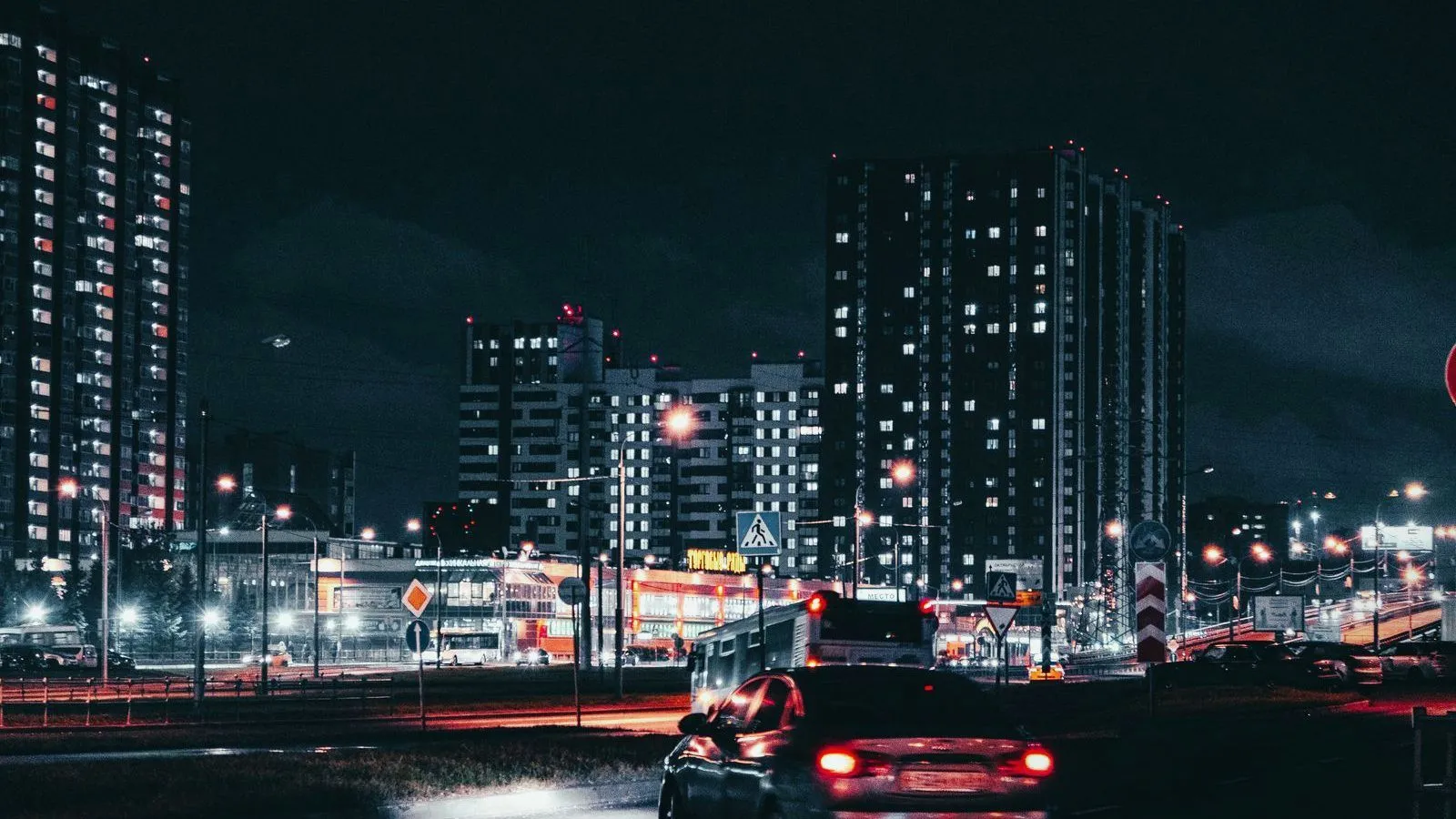
- Across 23 studies, heart and circulation disease rose about 2% for each 10 decibels of road noise.
- A 10-decibel rise sounds roughly twice as loud. Stroke and heart failure showed larger increases.
- In 4.4 million Swiss adults, the link with fatal heart attacks held after accounting for air pollution.
- Night noise breaks up sleep and raises stress hormones, a plausible route to damaged arteries.
- Studies estimate noise outside the home address, not what each person actually hears.
People who live beside a main road, under a flight path or near a railway line usually say they stop noticing the noise after a few months. The research on what it does to them suggests the body keeps noticing. Over the past two decades, long-term exposure to transport noise has moved from a quality-of-life complaint to a recognized, if modest, risk factor for heart disease and stroke.
The World Health Organization’s European office calls noise an underestimated threat that can cause a number of short- and long-term health problems, and it has published guidelines on how much is too much. The numbers behind that position are small for any one household. They matter because so many households are exposed.
How is long-term traffic noise measured?
Researchers do not put a microphone in every bedroom. They build noise maps from traffic counts, speeds, road surfaces, flight paths and building layouts, and use them to estimate the average sound level at the outside wall of each participant’s home. The usual measure averages across the whole day and adds a penalty for evening and night, when noise is more disturbing.
Levels are given in decibels, and the scale is logarithmic. A rise of 10 decibels sounds roughly twice as loud. A quiet suburban street might sit near 50 decibels and a busy urban road near 70. By WHO’s account, about 40% of the population in EU countries is exposed to road traffic noise at levels exceeding 55 decibels.
How much does heart risk rise with traffic noise?
The most complete pooling of the evidence is a 2023 meta-analysis in the Journal of Urban Health, led by Xueru Fu and Dongsheng Hu. The team searched for studies that had followed people over years and recorded new cases of cardiovascular disease. In total, 23 articles were included in our meta-analysis, the authors report.
For road traffic, the commonest source, the risk of cardiovascular disease as a whole rose by 2% for each 10-decibel step. Two specific conditions stood out. The risk of stroke rose by 3.4% and the risk of heart failure by 5% for the same step. Aircraft noise showed similar, slightly smaller increases, and railway noise was linked mainly to atrial fibrillation, an irregular heart rhythm. In each case the relationship ran in a straight line: the louder the long-term exposure, the higher the risk, with no obvious safe threshold in the range studied. The authors conclude that long-term exposure to traffic noise is positively related to the incidence risk of cardiovascular events.
A 2% rise for every 10 decibels sounds trivial, and for one person it nearly is. The arithmetic changes over a population. The gap between a quiet street and a main road can be 20 decibels, and by the WHO figures a large share of Europeans live on the loud side of it.
Other large studies agree on direction. Researchers analyzing the UK Biobank followed more than 340,000 adults and combined their results with earlier cohorts. They concluded that the work provides more evidence of increased risk of stroke, CVD, and all-cause mortality in association with exposure to road traffic noise pollution. CVD is the abbreviation for cardiovascular disease.
Is it the noise or the air pollution?
This is the obvious objection. Busy roads produce exhaust as well as noise, and dirty air is an established cause of heart disease. Any study of one has to separate it from the other.
The most thorough attempt came from Switzerland, where Harris Héritier and colleagues at the Swiss Tropical and Public Health Institute modeled both exposures for every address in the country. Their analysis covered 4.40 million adults and deaths from heart attack over eight years. Road noise was associated with about 3% more fatal heart attacks per 10 decibels, and that figure stayed the same when the team adjusted for two major air pollutants. The reverse was not true. The apparent effect of air pollution shrank once noise was accounted for. The authors’ conclusion was that transportation noise is associated with MI mortality, independent from air pollution. MI is short for myocardial infarction, meaning a heart attack.
A UK Biobank analysis of blood pressure and blood markers found the same independence. Among more than 370,000 people, exposure to road traffic noise above 65 decibels, independent of nitrogen dioxide, was associated with small but adverse changes in blood pressure and cardiovascular biochemistry.
How could noise harm the heart?
The leading explanation runs through stress and sleep. Thomas Münzel, a cardiologist at the University Medical Center Mainz who has led much of the laboratory work, summarizes it in Nature Reviews Cardiology. Traffic noise at night causes fragmentation and shortening of sleep, elevation of stress hormone levels, and increased oxidative stress in the vasculature and the brain. Oxidative stress is chemical damage from reactive molecules. Over years, those changes stiffen arteries, raise blood pressure and promote inflammation.
An imaging study at Massachusetts General Hospital offered a rare look at the pathway in people. Michael Osborne and colleagues examined scans from 498 adults that showed both brain activity and inflammation in the arteries. Those living with more transport noise had higher activity in the amygdala, the brain’s alarm center, and more inflamed arteries. They also had more heart attacks and strokes over the next four years. The team’s reading was that noise acts via a mechanism that begins with increased stress-associated limbic (amygdalar) activity and includes heightened arterial inflammation. Only 40 people had a cardiovascular event, so the result is a lead and far from a proof.
Sleep is central to the account. Münzel’s review places night-time noise, and the broken sleep it causes, at the start of the chain.
The WHO’s limits for traffic noise
The WHO has issued numerical guidance for decades. Its guidelines for night noise recommend less than 40 A-weighted decibels of annual average outside of bedrooms to prevent adverse health effects from night noise. A-weighting adjusts the measurement to match the sensitivity of human hearing. For the bedroom itself the figure is lower still, at 30.
In 2018 the organization’s European office published a fuller set of guidelines covering road, rail and aircraft noise. It describes their purpose as to provide recommendations for protecting human health from exposure to environmental noise, and says the recommended levels can be considered applicable in other regions too.
Cardiologists have followed. A 2024 review in Circulation Research describes the evidence that transport noise raises cardiovascular risk as solid for three conditions: ischemic heart disease, heart failure, and stroke. Ischemic heart disease is the kind caused by narrowed coronary arteries.
Modeled noise at the front door: the limits of the evidence
Every large study estimates noise at the home address. That is a reasonable proxy and a rough one. It misses which side of the building the bedroom is on, whether the windows are double-glazed, and how much time a person spends at home. Errors of that kind usually blur an association and make it look smaller, but they also make precise figures unreliable.
The studies are observational. Homes on loud roads tend to be cheaper, and their residents differ in income, diet and access to health care. Researchers adjust for those factors, yet with relative increases of a few percent, even a little leftover bias could account for a good share of the effect.
Little is known about whether reducing noise reverses the risk. Quieter road surfaces, barriers and night-flight limits lower exposure, and whether heart disease falls afterward has not been established.
For an individual, traffic noise is one contributor among many, and far smaller than smoking, blood pressure or cholesterol. A person’s overall heart risk is something their doctor assesses.
The evidence points to a small, real and widely shared cost of living with constant traffic noise, most of it paid at night.
People also ask
How much does traffic noise raise heart disease risk?
In a meta-analysis of 23 articles, each 10 decibel increase in long-term road traffic noise was associated with a relative risk of 1.020 for cardiovascular disease (95% CI 1.006 to 1.035), which is 2% higher. For stroke the increase was 3.4% and for heart failure 5%.
What does a 10 decibel increase mean?
Decibels are a logarithmic scale. A rise of 10 decibels is perceived as roughly a doubling of loudness, the difference between a quiet residential street and a busy road.
Is aircraft or railway noise also linked to heart problems?
Yes, with small increases. Each 10 decibels of aircraft noise was associated with 1.6% higher cardiovascular disease risk, 1% higher risk of heart attack and 2.3% higher risk of heart failure. Railway noise was associated with 1.1% higher risk of atrial fibrillation, an irregular heart rhythm.
Could air pollution explain the link?
A study of 4.40 million Swiss adults found that adjusting for the air pollutants nitrogen dioxide and fine particles did not change the association between road traffic noise and death from heart attack (hazard ratio 1.034 per 10 decibels after adjustment, where a value above 1 means higher risk).
What noise levels does the World Health Organization recommend?
WHO guidance for night noise recommends an annual average of less than 40 decibels outside bedrooms, and its community noise guidelines recommend less than 30 decibels inside bedrooms for good-quality sleep. This is general information rather than medical advice.
References
- Fu, X., Wang, L., Yuan, L., et al. Long-Term Exposure to Traffic Noise and Risk of Incident Cardiovascular Diseases: a Systematic Review and Dose-Response Meta-Analysis. Journal of Urban Health, 2023.
- Héritier, H., Vienneau, D., Foraster, M., et al. A systematic analysis of mutual effects of transportation noise and air pollution exposure on myocardial infarction mortality: a nationwide cohort study in Switzerland. European Heart Journal, 2019.
- Hao, G., Zuo, L., Weng, X., et al. Associations of road traffic noise with cardiovascular diseases and mortality: Longitudinal results from UK Biobank and meta-analysis. Environmental Research, 2022.
- Kupcikova, Z., Fecht, D., Ramakrishnan, R., Clark, C., Cai, Y. S. Road traffic noise and cardiovascular disease risk factors in UK Biobank. European Heart Journal, 2021.
- Osborne, M. T., Radfar, A., Hassan, M. Z. O., et al. A neurobiological mechanism linking transportation noise to cardiovascular disease in humans. European Heart Journal, 2020.
- Münzel, T., Sørensen, M., Daiber, A. Transportation noise pollution and cardiovascular disease. Nature Reviews Cardiology, 2021.
- Münzel, T., Molitor, M., Kuntic, M., et al. Transportation Noise Pollution and Cardiovascular Health. Circulation Research, 2024.
- World Health Organization Regional Office for Europe. Noise. Fact sheet.
- World Health Organization Regional Office for Europe. Environmental noise guidelines for the European Region.