Explainer · Brain & Mental Health
More grass near home, not more trees, went with lower dementia risk over 19 years in 6,761 US adults
Green neighborhoods have been linked to healthier brains, but satellites cannot tell a lawn from a forest. Street-level photos analyzed by computer suggested the type of green may matter.
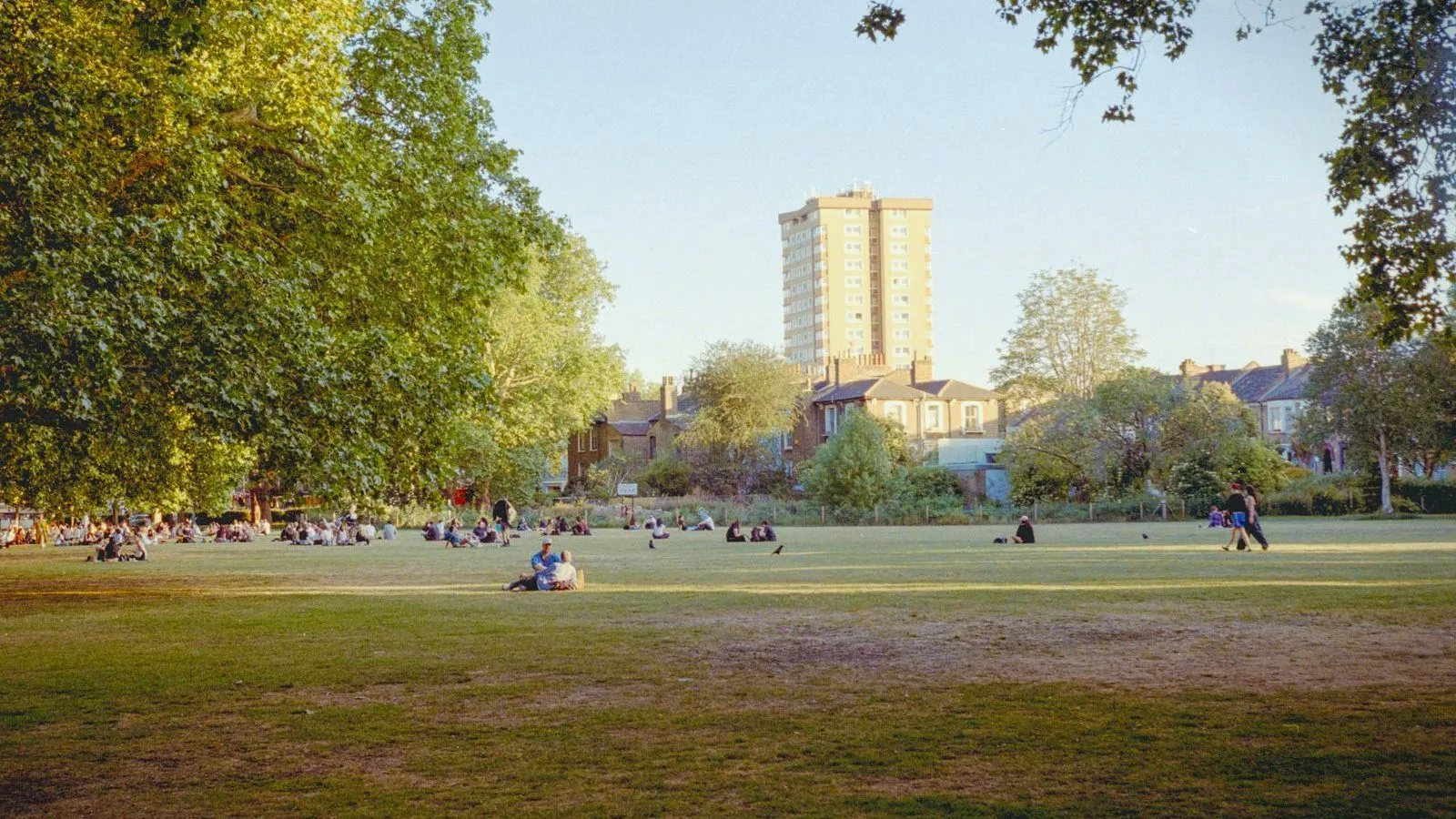
- An observational study of 6,761 US adults in the Multi-Ethnic Study of Atherosclerosis, followed from 2000 to 2018.
- Street-view images around each home were analyzed by computer to measure the share of trees, grass and other plants.
- People with the most grass nearby had an estimated 19-year dementia risk about 4.6 percentage points lower.
- The amount of trees or other greenery nearby showed no link at all.
- Where people live travels with income and health, so the study cannot show that grass itself protects the brain.
A steady stream of research has linked green neighborhoods to healthier aging, including lower rates of dementia. Most of it shares a blind spot. Greenness is usually measured from satellites, which see the world from above and cannot easily tell a mown park from a line of street trees or an overgrown vacant lot. If some kinds of green matter more than others, that method would blur the difference.
A study in the American Journal of Epidemiology took a ground-level view instead, analyzing street photos around the homes of 6,761 US adults followed for up to 19 years. Grass stood out. Trees did not.
What dementia is and why neighborhoods might matter
MedlinePlus describes dementia as a loss of mental functions that is severe enough to affect your daily life and activities, and stresses that dementia is not a normal part of aging. It also notes that living a healthy lifestyle might influence some of your risk factors for dementia.
Neighborhoods shape many of those factors. Places that invite walking, offer somewhere to meet people and buffer noise and heat could all plausibly protect the brain over decades. The authors frame the problem with the older research: most studies have used satellite-derived measures that cannot distinguish vegetation types.
How the study measured grass and trees near home
The participants came from the Multi-Ethnic Study of Atherosclerosis, a long-running US study with a deliberately diverse mix of people. The researchers followed 6761 participants from the Multi-Ethnic Study of Atherosclerosis, 2000-2018.
To measure green, they turned to street-view photos. Using deep learning algorithms applied to SV images, they measured %trees, %grass, %other green, the last covering plants, flowers and fields, within about 500 meters of each home. The computer effectively looked down every nearby street and counted what kind of green was in view. Unlike a satellite image, a street-level photo shows the neighborhood roughly as a person walking through it would see it.
What grass, trees and dementia risk showed
Over follow-up, 585 people developed dementia and 1,437 died. Because older people can die before dementia would have appeared, the researchers used a method that estimates dementia risk as if those deaths had not occurred.
For grass, the difference was notable. High exposure to %grass was linked with a 19-year dementia risk of -4.57 percentage points, meaning roughly four or five fewer cases for every hundred people. For trees and for other greenery, the estimates were essentially zero.
Why grass rather than trees might matter
The study does not test explanations, so any account of why is speculation. One plausible line is that grass tends to mean usable open space: parks, playing fields and lawns where people walk, exercise and meet. Trees along a street are pleasant but do not necessarily get anyone out of the house.
The finding is interesting mainly because it runs against a common assumption that more canopy is always better. If the type of green matters, then city planners asking how to design healthier neighborhoods may need a more specific answer than simply planting more.
What neighborhood data cannot show about dementia
Where people live is tangled up with income, education, health and much else. The authors found that participants exposed to lowest levels of %trees were more likely to have a household income < $24 999. Their analysis tried to account for such differences, but no adjustment removes them entirely.
The authors also list measurement limits. Dementia was identified from medical records, which tend to miss cases in groups that see doctors less often, and street views show only what is visible from the road, not backyards, and only at the moment the photos were taken. Residential address may not reflect where people spend their days. The study also treated all dementia as one outcome, although its different forms have different causes.
What this changes for thinking about greenspace
For an individual, nothing practical. Moving house in search of grass would be an odd response to a single observational study, and the habits with the strongest evidence for brain health, staying active, staying connected, and looking after blood pressure, can be pursued anywhere.
For researchers and planners, the study is a nudge toward precision. Treating greenness as one thing may hide what actually matters, and ground-level measurement offers a way to find out. A result like this needs repeating in other cities and groups before anyone redesigns a park around it.
People also ask
What did the study find?
Over follow-up there were 585 dementia cases (8.7%) and 1,437 deaths (21.3%). High exposure to grass was associated with a 19-year dementia risk 4.57 percentage points lower (95% CI -8.15 to -0.40), estimated as if death had been prevented. No associations were observed for trees or for other green vegetation.
How was greenery measured?
Computer programs trained to recognize plants analyzed street-view photos taken around each participant's home and measured what share of the view was trees, grass, or other greenery such as flowers and fields, within about 500 meters.
Why would grass matter more than trees?
The study does not say. Open grassy areas such as parks and playing fields may invite walking and meeting people, both linked to brain health, but that was not tested.
What does 'had death been prevented' mean?
Older people can die before they would have developed dementia, which muddies comparisons. The researchers used a statistical method that estimates dementia risk as if those deaths had not happened.
Were richer neighborhoods greener?
Partly. People living with the fewest trees were more likely to have low household incomes. The analysis tried to account for such differences, but neighborhoods differ in many ways.
Should I move somewhere greener?
Nobody should read this as a reason to move. Staying active, socially connected and managing blood pressure have much stronger evidence for protecting the brain. This is general information rather than medical advice.