News · Brain & Mental Health
Greenspace within 100 meters of home was linked to about 20% lower dementia risk over 16 years
A Stockholm University and Karolinska Institute study followed 2,993 older adults in one city district. Vegetation right around the home tracked with fewer dementia diagnoses, and reviews of earlier studies remain mixed.
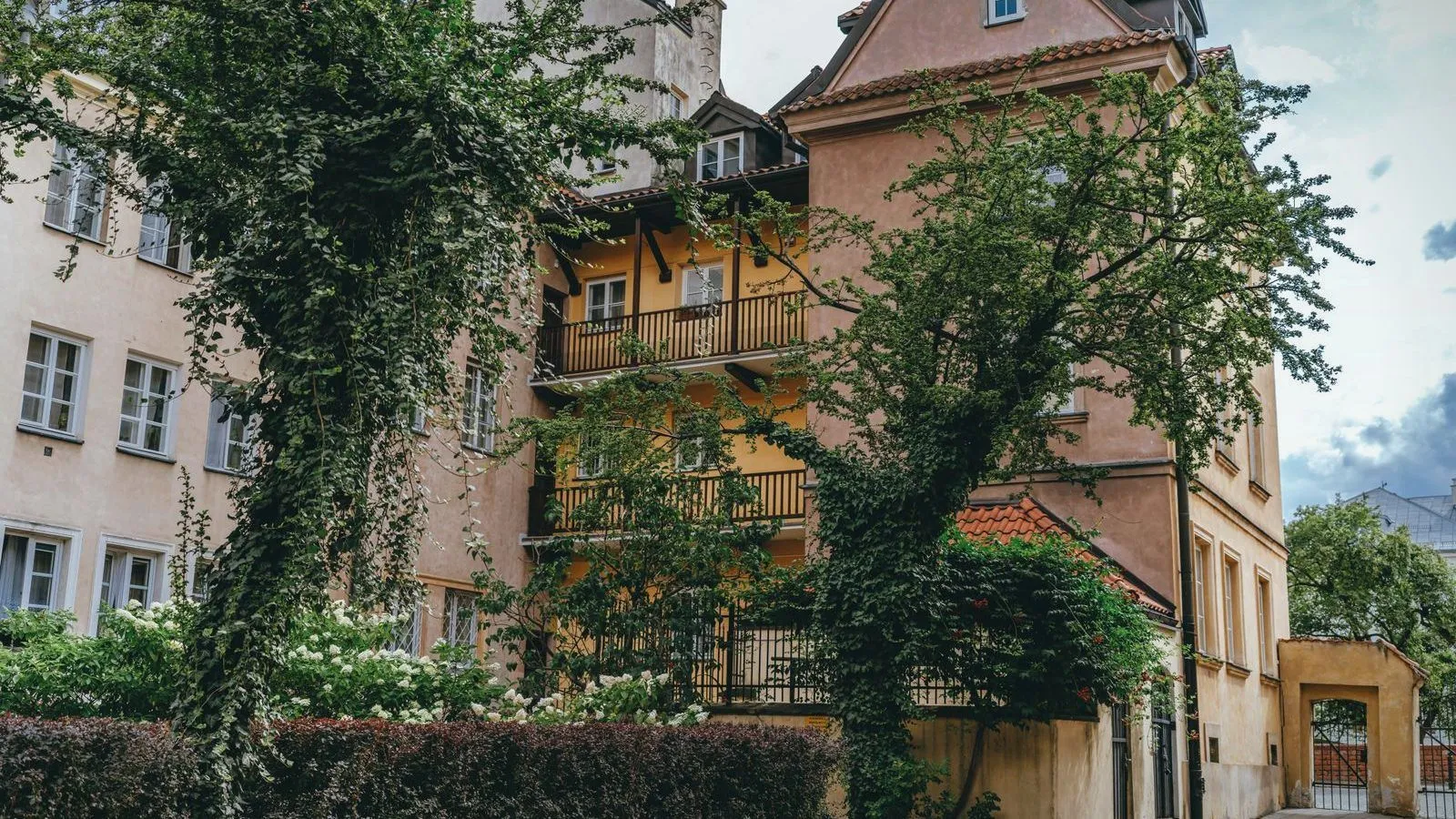
- Among 2,993 Stockholm adults aged 60 and over, 477 developed dementia during up to 16 years of follow-up.
- More vegetation within 100 meters of home went with about 20% lower dementia risk.
- Greenery measured across wider circles of 250 and 500 meters showed a weaker link.
- The link was clear in women and faint in men, a gap that may be chance.
- This is one affluent city district and an observational study, and pooled reviews call the evidence weak.
A row of street trees or a planted courtyard is usually sold as a pleasant extra. It makes an apartment easier to rent and the walk to the shops nicer, and few people would rank it alongside blood pressure or smoking as something that shapes how a brain ages.
A study from Stockholm suggests it may deserve a place in that company. Cecilia Stenfors of Stockholm University, Debora Rizzuto of the Karolinska Institute and their colleagues followed 2,993 older residents of one city district for up to 16 years and measured how much vegetation surrounded each front door. Writing in Alzheimer’s & Dementia in September, they report that people with more greenery close to home were diagnosed with dementia less often. Earlier studies had measured greenery across whole neighborhoods and disagreed with one another. This one looked much closer in, and the link appeared within 100 meters of the home and weakened beyond it.
How was greenspace near each home measured?
The participants belong to a long-running project called the Swedish National study on Aging and Care in Kungsholmen, which between 2001 and 2004 recruited people aged 60 and over living on Kungsholmen, an island district in the middle of Stockholm. Anyone who already had dementia was left out, which gave the team 2,993 people to follow.
For the greenery the researchers turned to satellites. Summer images of the city were converted into a vegetation score for every 25-meter square of ground, an index the paper describes as a measure of green vegetation foliage within a given zone. Sweden’s tax agency keeps address histories, so the team could draw a circle around every home each person had lived in since 1990 and average the score inside it. They drew three circles: one of 100 meters, roughly the block a person lives on, and wider ones of 250 and 500 meters.
Dementia was diagnosed in person. Participants came back for examinations every three or six years, depending on their age, and the process had a built-in check: the first diagnosis is made by the examining physician and reviewed by a second physician, with an outside neurologist settling any disagreement. That is more thorough than usual in this field, where, as the team points out, dementia has in most prior studies been assessed from administrative health records, which capture the condition unevenly.
How much lower was dementia risk in greener surroundings?
Over a follow-up that averaged a little under ten years, 477 (16%) were diagnosed with dementia. To see whether greenery made a difference, the researchers compared homes a quarter of the way up the greenness ranking with homes three-quarters of the way up. That step up in vegetation within 100 meters, averaged over the five years before a diagnosis, was associated with around 20% decreased dementia hazard. Hazard here means the rate at which new cases appear.
The estimate allowed for a long list of other differences between people: age, education, occupation, smoking, drinking, physical activity, body weight and neighborhood income, along with the air pollution and road traffic noise at each address. Movers did not explain it either: the results remained similar to the main results when excluding the participants who changed their addresses along the way.
Distance mattered. According to the paper, the protective effects of greenspace exposure were attenuated for larger buffer zones, so greenery a few streets away counted for less than greenery on the doorstep.
Two subgroup results need more care than the headline number. Among women the association was stronger, at roughly 30% lower, while among men it was close to nothing. A similar split appeared by genetics: the link was visible in people who did not carry APOE4, the gene variant that raises the odds of Alzheimer’s disease, and not in those who did. Neither difference passed the usual statistical test for being more than chance, and of the genetic one the paper says that this should be interpreted cautiously.
Why would greenspace near home matter for dementia?
The researchers describe three routes, none of which this study tested directly. Green surroundings are thought to lower stress and improve mood and sleep. They make it easier to walk and to meet neighbors. And vegetation may shield a home from other exposures: in the paper’s words, greenspace may buffer against environmental hazards, including traffic noise and air pollution, both of which have been tied to poorer heart and brain health.
The 100-meter result fits the first route best. Greenery outside the window is something a person takes in every day without deciding to, whereas a park ten minutes away has to be visited.
Which kind of green does the work is an open question, and a satellite score cannot answer it, because a lawn and a line of oaks can look alike from orbit. An expert working group writing in the same journal this year argued that different kinds of greenery serve different purposes, recommending researchers measure tree canopy cover for stress reduction and parks for increased physical and social activity. A separate American project tried to tell them apart using street-level photographs. Its authors followed 6761 participants from the Multi-Ethnic Study of Atherosclerosis and found that grass was associated with less dementia and trees were not.
Earlier greenspace and dementia studies have disagreed
The Stockholm team says so plainly: prior findings have been mixed. The pooled evidence bears that out.
In 2022 a group led by Federico Zagnoli at the University of Modena and Reggio Emilia combined twelve studies. Comparing the greenest areas with the least green, the review found no association with dementia. What its authors did see was a slight inverse association between greenness and dementia at intermediate exposure levels, but not at high levels, which is an awkward shape for a simple more-is-better story.
A larger analysis published in May reached a more favorable number and attached a heavy warning to it. Chunyu Shen and colleagues pooled twelve studies involving over 1.7 million participants and found about 15% less neurodegenerative disease in the greenest areas. The studies disagreed with each other so much, and carried enough risk of bias, that Shen’s group graded the certainty of its own result as very low and said the conclusion must be interpreted with extreme caution.
Individual cohorts show the same wobble. Erik Slawsky and colleagues at the University of Washington examined 3047 participants aged 75 years and older at four American sites, measuring greenery within two kilometers of home. At first, high residential greenspace was associated with a reduced risk of dementia. Once the analysis added health behaviors and genetic risk, the association was slightly attenuated and could no longer be told apart from chance.
Stenfors and colleagues offer a reason for the muddle. A score averaged over a postcode says little about what any one resident lives beside, and blurring of that kind tends to hide real associations. Their closer measurement is an argument that the link exists and was being missed. It is also, for now, a single result in a field where, in the expert group’s summary, findings remain mixed, study quality varies and most of the evidence comes from snapshots taken at a single point in time.
One affluent Stockholm district: what the greenspace study leaves open
The team names the first limit itself. The sample was limited to a generally affluent urban area in Stockholm, so nothing here speaks for suburbs, rural areas or poorer cities.
Nobody is assigned a leafy street, which is the larger problem. In this cohort, people exposed to low levels of greenspace tended to be older, less educated and less active, and they lived with more traffic noise and dirtier air. The analysis adjusted for all of those, and adjustment is never complete. The 2022 review listed the two standing weaknesses of the whole field as exposure misclassification and unmeasured confounding: greenery is measured imprecisely, and the people who live near it differ in ways that are hard to capture. About 500 participants also dropped out along the way, though they did not differ from the rest in how green their surroundings were.
For an individual, then, the study changes little. It did not test whether planting a courtyard, or moving to a greener street, alters anyone’s risk. The conclusion is aimed at city planners: the paper says its findings support efforts to “preserve and improve urban greenspace in the immediate surroundings of residences” as a possible resource for brain health alongside its other benefits.
Greenery at the front door tracked with less dementia in this one cohort, and whether it protects the brain is still unproven.
People also ask
How much lower was dementia risk with more greenspace near home?
For each interquartile range higher greenspace within 100 meters of home over the five years before diagnosis, the hazard ratio for dementia was 0.79 (95% CI 0.64 to 0.96). A hazard ratio below 1 means a lower rate, so 0.79 is about 20% lower. An interquartile range is the gap between the homes ranked a quarter and three-quarters of the way up the greenness scale.
Did greenspace farther from home matter?
Less clearly. The same analysis was run for circles of 250 and 500 meters around each address, and the authors report that the associations were attenuated, meaning weaker, for those larger areas.
Was the greenspace link different for women and men?
The hazard ratio was 0.69 (95% CI 0.54 to 0.89) in women and 0.93 (95% CI 0.71 to 1.24) in men. The statistical test for a difference between the sexes gave a p-value of 0.082, which does not meet the usual 0.05 threshold.
How was greenspace measured in the study?
With the Normalized Difference Vegetation Index, calculated from Landsat satellite images taken between May and September at a resolution of 25 by 25 meters. Values run from -1 to +1, and higher positive numbers indicate more green foliage. Water surfaces were excluded.
Does living near greenery prevent dementia?
The study does not show that. It is observational, it covers one affluent district of Stockholm, and a 2026 meta-analysis rated the overall certainty of the evidence on green space and neurodegenerative disease as very low. This is general information rather than medical advice.
References
- Stenfors, C. U. D., Wu, J., Grande, G., et al. Precision residential greenspace, urban environmental exposures, and incident dementia among older adults in Sweden: A 16-year cohort study. Alzheimer's & Dementia, 2026.
- Slawsky, E. D., Hajat, A., Rhew, I. C., et al. Neighborhood greenspace exposure as a protective factor in dementia risk among U.S. adults 75 years or older: a cohort study. Environmental Health, 2022.
- Shen, C., Su, J., Liu, L., et al. Residential green spaces and neurodegenerative diseases in middle-aged and older adults: a systematic review and dose-response meta-analysis. Archives of Public Health, 2026.
- Zagnoli, F., Filippini, T., Jimenez, M. P., et al. Is Greenness Associated with Dementia? A Systematic Review and Dose-Response Meta-analysis. Current Environmental Health Reports, 2022.
- Jarvis, I., Besser, L., Finlay, J., et al. Urban greenspace and dementia: Measures, mechanisms, and methodological guidance. Alzheimer's & Dementia, 2026.
- Pescador Jimenez, M., Rojas-Saunero, L. P., Reimer, C. J., et al. Streetview greenspace types and dementia risk in older adults: the Multi-Ethnic Study of Atherosclerosis. American Journal of Epidemiology, 2026.