News · Brain & Mental Health
More carbon monoxide on the breath went with lower Parkinson risk in 512,701 adults, smokers or not
Smokers get Parkinson disease less often, one of the strangest findings in epidemiology. A Chinese cohort points at carbon monoxide rather than nicotine, and none of it makes smoking safe.
- An observational study of 512,701 Chinese adults followed for about 12 years, so it cannot prove cause.
- Regular smokers had about 30% lower risk of Parkinson disease, and far higher risks of lung cancer and heart disease.
- Among people who had never smoked, more carbon monoxide on the breath tracked with lower Parkinson risk.
- Carbon monoxide levels were not linked to other brain diseases or to smoking-related illnesses.
- This is a clue about how Parkinson disease starts, not a reason to smoke or to seek out fumes.
For decades, one of the steadiest findings in brain research has also been one of the most awkward. People who smoke get Parkinson disease less often than people who do not. Nobody sensible recommends smoking as a result. It kills far more people than it could ever spare. But the pattern has refused to go away, and the usual suspect has been nicotine.
A study of more than half a million Chinese adults, published in JAMA Neurology, points somewhere else. Among people who had never smoked, those with more carbon monoxide on their breath were also less likely to develop Parkinson disease.
What Parkinson disease is
MedlinePlus describes Parkinson’s disease as a type of movement disorder that happens when nerve cells in the brain don’t produce enough of a brain chemical called dopamine. It typically begins with a tremor or stiffness on one side of the body and slowly worsens.
Why those nerve cells fail is still largely unknown. That is why an odd, steady pattern like the smoking one draws so much attention. It is one of the few clues about the disease’s origins that keeps turning up.
How the Parkinson study measured smoke and fumes
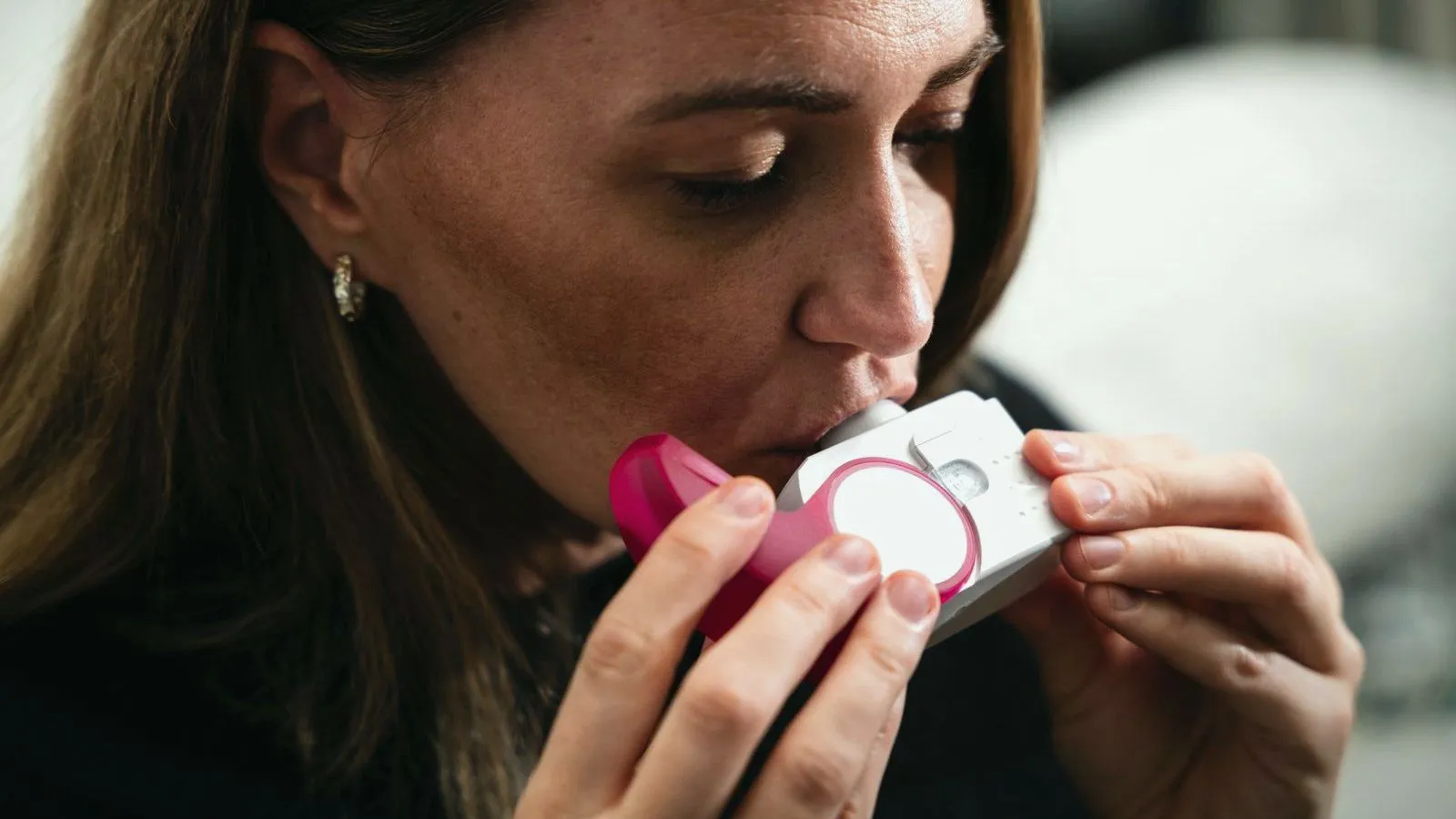
The study drew on the China Kadoorie Biobank, which recruited 512,724 adults aged 30 to 79 years between June 2004 and July 2008 and followed them through health records for about 12 years. Along with questions about smoking, everyone blew into a handheld device that measures carbon monoxide on the breath, the gas found in smoke and other fumes.
That second measure is what makes the study unusual. Previously, most studies could only compare smokers with people who did not smoke. Carbon monoxide comes from cigarettes, but also from secondhand smoke, cooking fires, coal heating and dirty air. So the team could look at people who had never smoked at all, and ask whether the gas itself tracked with the disease. Unlike a smoking history, a breath reading also puts a number on exposure, which makes it possible to see whether more goes with less risk.
What the study found for smokers and never-smokers
For smokers, the familiar double picture appeared. Regular smoking was significantly associated with elevated risks of lung cancer, ischemic heart disease, stroke, and all-cause mortality but with lower risk of PD, with about 30% lower risk of the disease.
The new part concerns everyone else. In individuals who never smoked, higher exhaled CO levels were associated with lower HRs of PD in a broadly dose-dependent manner, meaning the more carbon monoxide on the breath, the lower the risk, up to a point. Among never-smokers in the middle range of exposure, risk was around a third lower than in those with the least.
Two details make this harder to dismiss. Carbon monoxide levels were not linked to other brain diseases or to smoking-related illnesses, and the pattern was, if anything, stronger in women, almost none of whom smoked.
Why carbon monoxide rather than nicotine is interesting
If nicotine explained the smoking pattern, there would be little reason for carbon monoxide to track Parkinson risk in people who never touched a cigarette. The authors conclude the findings demonstrate a potentially protective role of CO in PD etiology, and suggest this could help explain the smoking association seen in this and other studies.
At very low levels, carbon monoxide is not only a poison; the body makes a little of its own and uses it as a signaling molecule. That offers a plausible route, but this study does not show it working in the brain, and it remains a hypothesis.
What a single breath test cannot prove
The authors are candid about the limits. A single baseline measurement of exhaled CO is a potentially crude measurement of long-term CO exposure, and when about 20,000 people were retested a few years later, their readings had shifted considerably.
They also note they were unable to exclude the possibility that nicotine or other tobacco components also contributed to the association between smoking and PD, and could not reliably tell carbon monoxide the body makes from carbon monoxide breathed in. Parkinson disease was also relatively uncommon in this fairly young group, which limits how finely the pattern can be drawn. This is one observational study; it needs repeating elsewhere before anyone treats it as more than a strong lead.
What this changes for Parkinson research
For anyone’s daily life, nothing. Carbon monoxide is dangerous at the levels people encounter from faulty heaters or car exhaust, and smoking remains among the most harmful things a person can do.
For research, it sharpens a question that has hung around for decades. If carbon monoxide, rather than nicotine, is part of why smokers get Parkinson disease less often, that points laboratory work toward a specific molecule and a specific set of pathways, which is more than the field has had from this clue before.
People also ask
What did the study find?
Regular smoking was associated with elevated risks of lung cancer, ischemic heart disease, stroke and all-cause mortality but with lower risk of Parkinson disease (adjusted HR 0.70; 95% CI 0.62-0.79). Among people who never smoked, higher exhaled carbon monoxide was associated with lower Parkinson risk in a broadly dose-dependent way, for example HR 0.62 at 3.0 to under 5.0 ppm, and was not associated with smoking-related or other neurodegenerative diseases.
How was carbon monoxide measured?
Participants blew into a handheld device, the same kind used in stop-smoking clinics, once at the start of the study. Smokers averaged 11.1 parts per million, never-smokers about 3.5.
Where does carbon monoxide come from in people who do not smoke?
Secondhand smoke, cooking and heating with solid fuels, traffic and other combustion, and a small amount the body makes itself. The study could not separate these sources.
Does this mean smoking protects the brain?
No. In the same people, smoking was tied to much higher risks of lung cancer, heart disease, stroke and early death. Any effect on Parkinson disease is tiny next to that.
Why might carbon monoxide matter?
The authors suggest a potentially protective role in how Parkinson disease develops. Carbon monoxide at very low levels acts as a signaling molecule in the body, but how that would protect brain cells is not shown here.
Should anyone change their habits because of this?
No. Carbon monoxide is poisonous at higher levels, and nothing here suggests seeking out exposure. If you smoke, quitting remains one of the best things you can do for your health. This is general information rather than medical advice.