Explainer · Brain & Mental Health
The MIND diet explained: what it is and what studies show about brain shrinkage, memory and dementia
In 1,647 adults scanned over 12 years, higher MIND diet scores went with slower loss of gray matter, described as 2.5 years less brain aging. A three-year randomized trial found no advantage over a control diet for cognition or brain scans.
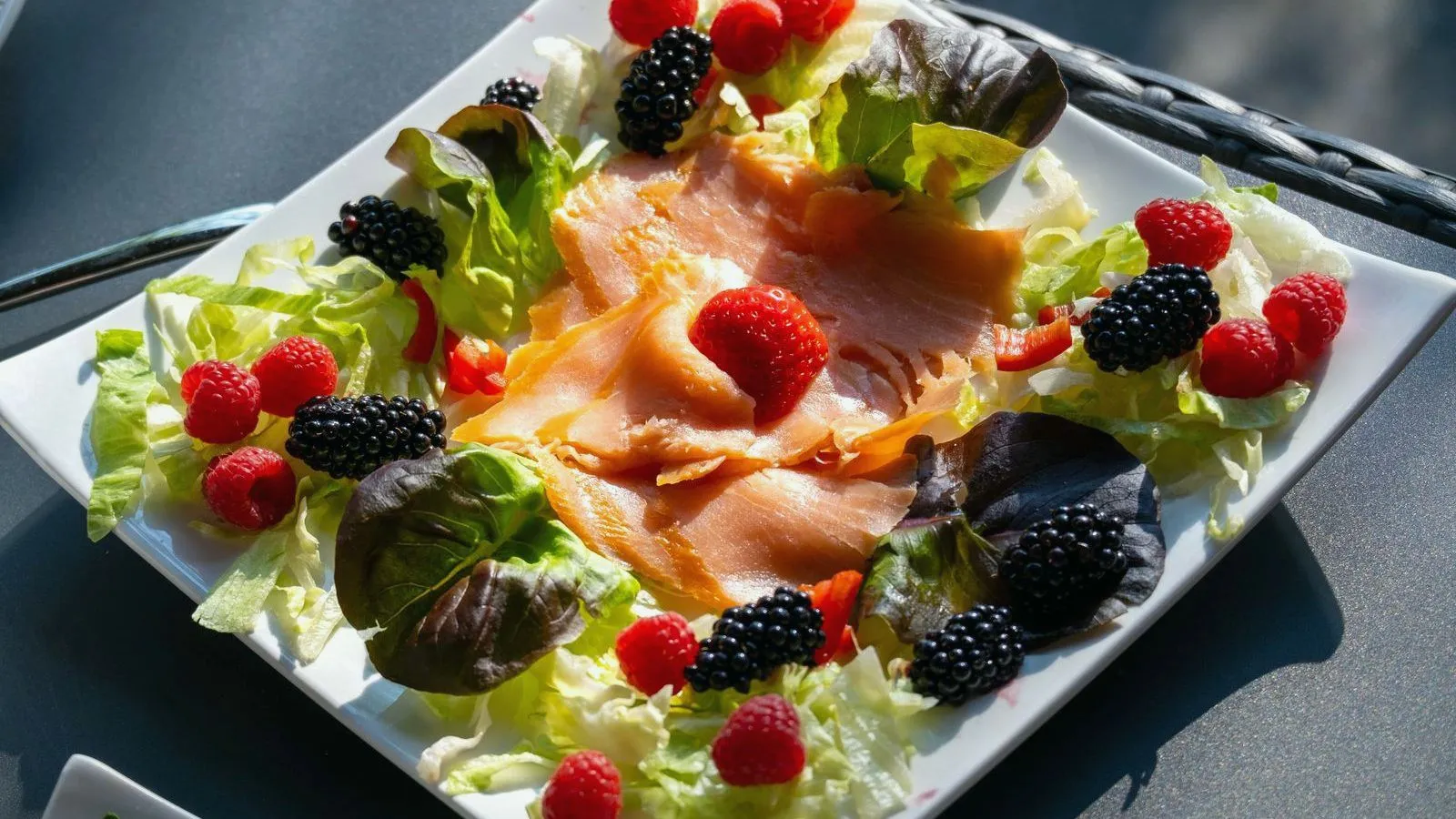
- The MIND diet scores 15 food groups, favoring leafy greens, berries, nuts, fish and whole grains.
- In 1,647 adults followed for 12 years, each 3-point higher score went with 20% slower gray matter loss.
- Across 11 cohort studies, people with the highest scores had a 17% lower risk of dementia.
- In a three-year randomized trial of 604 adults, the MIND diet did no better than a control diet.
- The brain-scan study is observational, and high scorers were healthier and better educated to begin with.
“This diet may slow brain aging by 2.5 years” ran the headline on a science news site on October 1, 2026. The diet is an eating pattern known as MIND, and the claim comes from a study that followed more than 1,600 Americans with repeated brain scans for over a decade.
The figure is real, in the sense that the researchers calculated it. What it means is narrower than the headline suggests, and the one experiment that put the diet to a direct test came out differently. Both belong in any account of what this diet can do.
What the MIND diet is
The pattern was devised in 2015 by nutrition researchers at Rush University in Chicago. It blends two established diets, the Mediterranean diet and a blood-pressure diet called DASH, short for Dietary Approaches to Stop Hypertension, and adjusts them toward foods that earlier studies had linked to brain health. The full name, Mediterranean-DASH Intervention for Neurodegenerative Delay, supplies the abbreviation. Neurodegenerative delay means slowing the loss of nerve cells.
The eating pattern emphasizes green leafy vegetables; other vegetables; berries; nuts; whole grains; fish; beans; olive oil; and poultry, along with moderate wine consumption. It also recommends limiting butter/margarine, cheese, red meat, pastries/sweets, and fried fast foods.
In research the diet is a score. Each of the 15 food groups earns up to one point, so a person’s usual eating is summed into a number from 0 to 15. Most people land in the middle. In the new study the average MIND diet score was just under 7 out of a possible 15.
What the brain-scan study of the MIND diet found
The study was led from Zhejiang University School of Medicine in China, using American data. The Framingham Heart Study is a long-running American cohort, meaning a group of people followed over time, and this analysis used its second generation. It included 1,647 middle-aged and older individuals from the Framingham Heart Study Offspring cohort, with an average age of 60.
Diet was assessed through at least 1 food frequency questionnaire, a checklist of how often a person eats each of a long list of foods, completed between 1991 and 2001. From 1999 the participants had repeated magnetic resonance imaging (MRI) scans of the brain. Follow-up ran over a median of 12.3 years.
Brains shrink with age, and the scans showed it. Gray matter, the tissue involved in memory, learning and decision making, declined across the group. The ventricles, fluid filled spaces that tend to grow as brain tissue shrinks, widened.
The question was whether those changes ran slower in people with better diet scores. They did. According to the paper, greater adherence to the MIND diet was associated with slower loss of total gray matter volume. For each 3 points on the score, the loss was slower by 0.279 cubic centimeters a year, with a plausible range of 0.089 to 0.469.
The headline number is a conversion of that figure. A typical participant lost gray matter at a certain rate, and a 3-point difference in diet score offset about a fifth of it. According to the researchers, that corresponded to 20% less age related decline and the equivalent of 2.5 years of delayed brain aging. So “2.5 years” is a way of expressing a difference in the rate of tissue loss between people with different diets over 12 years. It is a statement about scans, not about memory or thinking.
A second measure moved the same way. A higher MIND diet score was associated with slower increases in lateral ventricular volume, by an amount the authors equate to about one year. Ventricular volume means the size of those fluid-filled spaces.
The unexpected food results in the MIND diet study
The researchers also examined the 15 food groups one at a time, and the results did not all line up with the diet’s logic.
Some did. Higher berry intake was linked to slower increases in ventricular volume. Poultry showed a favorable pattern, and sweets and fried fast food an unfavorable one.
Two went the wrong way. Higher whole grain intake was associated with several unfavorable structural changes, including faster tissue loss, although whole grains are a food the diet rewards. And greater cheese intake was associated with slower declines in brain tissue volume, although cheese is a food the diet penalizes.
That pattern has two possible readings. One is that the diet’s scoring could be improved. The other, more cautious, is that single foods measured by questionnaire a quarter of a century ago are a noisy signal, and that when 15 foods are tested against several brain measures some associations will appear by chance in either direction. The second reading applies to the favorable results as much as the awkward ones.
What earlier studies found on the MIND diet and dementia
The diet’s reputation was built on cohort studies, which observe what people eat and what happens to them.
The first came from its inventors. Among 960 older adults in a Chicago aging study, followed for nearly five years, higher scores went with slower decline on memory and thinking tests. The researchers described the gap between the top and bottom thirds as equivalent to being 7.5 years younger in age. In a companion analysis they tracked diagnoses in a prospective study of 923 participants, ages 58 to 98 years, followed on average 4.5 years. People in the top third of scores developed Alzheimer’s disease at about half the rate of those in the bottom third.
A larger pooled analysis found a smaller difference. A 2023 meta-analysis by the same team that produced the brain-scan study combined 11 cohorts with more than 224,000 participants. In it, a higher MIND diet score was associated with lower risk of dementia. People in the top third of scores had a 17% lower risk than those in the bottom third, with a range from 10% to 24%.
An autopsy study added a biological angle, examining the diet in relation to Alzheimer’s changes in postmortem brain tissue of older adults. Among 581 people who had reported their diets and later donated their brains, those with higher MIND scores had less of the amyloid protein that accumulates in Alzheimer’s disease.
The 2015 authors were clear about what their own result required. Replication in a dietary intervention trial would be required to verify its relevance to brain health, they wrote.
What the randomized trial of the MIND diet found
That trial was done, by the same Rush group with colleagues at Harvard, and reported in 2023. Its authors began by noting that data from clinical trials are limited.
They recruited older adults without cognitive impairment but with a family history of dementia, who were overweight and ate poorly by the diet’s own measure. A total of 1929 persons underwent screening, and 604 were enrolled. All participants received counseling on their assigned diet. The comparison was the MIND diet with mild caloric restriction as compared with a control diet with mild caloric restriction, for three years.
Retention was unusually good. The trial was completed by 93.4% of the participants.
The result was a tie. From the start to year three, improvements in global cognition scores were observed in both groups. Global cognition is a combined score from 12 tests of memory and thinking, reported in standardized units that express change relative to the spread of scores. The MIND group improved by 0.205 standardized units and the control group by 0.170, a difference of 0.035 with a range from -0.022 to 0.092, which includes zero.
The trial also took brain scans in a subset. Changes in white-matter hyperintensities, hippocampal volumes, and total gray- and white-matter volumes on MRI were similar in the two groups. Hippocampal refers to the hippocampus, a structure central to memory, and white-matter hyperintensities are bright spots on a scan that indicate small areas of damage. White matter is the wiring that connects regions of the brain. On the same kind of measure the new observational study highlights, the experiment found no effect.
There are reasons the trial might have missed a real benefit. Three years is short against the decades over which brains age. Both groups received counseling and support for weight loss, which narrows the contrast. And the participants were chosen for poor diets at the outset, so both groups had room to gain. Those are fair points. They do not turn a null result into a positive one.
Why the MIND diet evidence is uncertain
The brain-scan study is observational, and its publisher’s summary says so directly: its results cannot establish that the MIND diet directly caused the slower brain changes.
The people who scored well differed from those who scored poorly before any scan was taken. People in the highest third for MIND diet adherence were more likely to be women and college educated. They were also less likely to smoke or have obesity, and less likely to have diabetes, high blood pressure or heart disease. Each of those is linked to brain health on its own. The analysis adjusted for them, and adjustment is never complete.
Diet was measured once or a few times between 1991 and 2001 and assumed to hold for decades. The summary acknowledges that food frequency questionnaires rely on participants accurately remembering what they ate.
The sample was narrow, because the participants were predominantly White. The researchers could not rule out that some already had mild cognitive problems at their first scan, which could itself have shaped what they ate.
Brain volume is a stand-in. A slower rate of shrinkage on a scan is assumed to mean better function later, and this study did not test that.
Whether a change of diet is worthwhile for someone concerned about dementia depends on their overall health and other risk factors, which is assessed by their doctor.
People who eat closer to the MIND pattern lose brain tissue a little more slowly and develop dementia less often in observational studies, and the one randomized trial, lasting three years, found no advantage for cognition or brain scans over a control diet.
People also ask
What is the MIND diet?
It is an eating pattern that combines the Mediterranean diet with a diet designed to lower blood pressure. It emphasizes green leafy vegetables, other vegetables, berries, nuts, whole grains, fish, beans, olive oil and poultry, and limits butter, cheese, red meat, sweets and fried fast food.
Does the MIND diet slow brain aging?
In an observational study of 1,647 adults, those with higher MIND scores lost gray matter more slowly over 12 years, a difference the authors described as equivalent to 2.5 years of brain aging. The study cannot show the diet was the cause.
Does the MIND diet prevent dementia?
People who score higher develop dementia less often in cohort studies: a pooled analysis of 11 cohorts found a 17% lower risk in the top third compared with the bottom third. That is an association. The one randomized trial measured scores on memory and thinking tests, not dementia diagnoses.
What did the randomized trial find?
In a trial of 604 older adults with a family history of dementia, cognition improved over three years in both the MIND diet group and the control diet group, with no reliable difference between them. Brain scan measures were also similar.
Which foods mattered most in the brain-scan study?
Berries and poultry were linked to more favorable changes, and sweets and fried fast food to less favorable ones. Unexpectedly, whole grains were linked to faster tissue loss and cheese to slower loss, the opposite of what the diet assumes. This is general information rather than medical advice.
References
- Chen, H., Hailili, G., Tong, L.-S., et al. Adherence to the MIND diet and longitudinal brain structural changes over a decade: evidence from the Framingham heart study offspring cohort. Journal of Neurology, Neurosurgery and Psychiatry, 2026.
- BMJ Group. This diet may slow brain aging by 2.5 years. ScienceDaily, 2026.
- Barnes, L. L., Dhana, K., Liu, X., et al. Trial of the MIND Diet for Prevention of Cognitive Decline in Older Persons. New England Journal of Medicine, 2023.
- Morris, M. C., Tangney, C. C., Wang, Y., et al. MIND diet associated with reduced incidence of Alzheimer's disease. Alzheimer's and Dementia, 2015.
- Morris, M. C., Tangney, C. C., Wang, Y., et al. MIND diet slows cognitive decline with aging. Alzheimer's and Dementia, 2015.
- Chen, H., Dhana, K., Huang, Y., et al. Association of the Mediterranean Dietary Approaches to Stop Hypertension Intervention for Neurodegenerative Delay (MIND) Diet With the Risk of Dementia. JAMA Psychiatry, 2023.
- Agarwal, P., Leurgans, S. E., Agrawal, S., et al. Association of Mediterranean-DASH Intervention for Neurodegenerative Delay and Mediterranean Diets With Alzheimer Disease Pathology. Neurology, 2023.