Explainer · Nutrition & Diet
Red meat and health: what the evidence shows for cancer, heart disease and diabetes, and how strong it is
Reviews link red meat, and processed meat more strongly, to bowel cancer, heart disease and type 2 diabetes. A 2022 analysis rated the evidence against unprocessed red meat as weak, and expert bodies set very different limits.
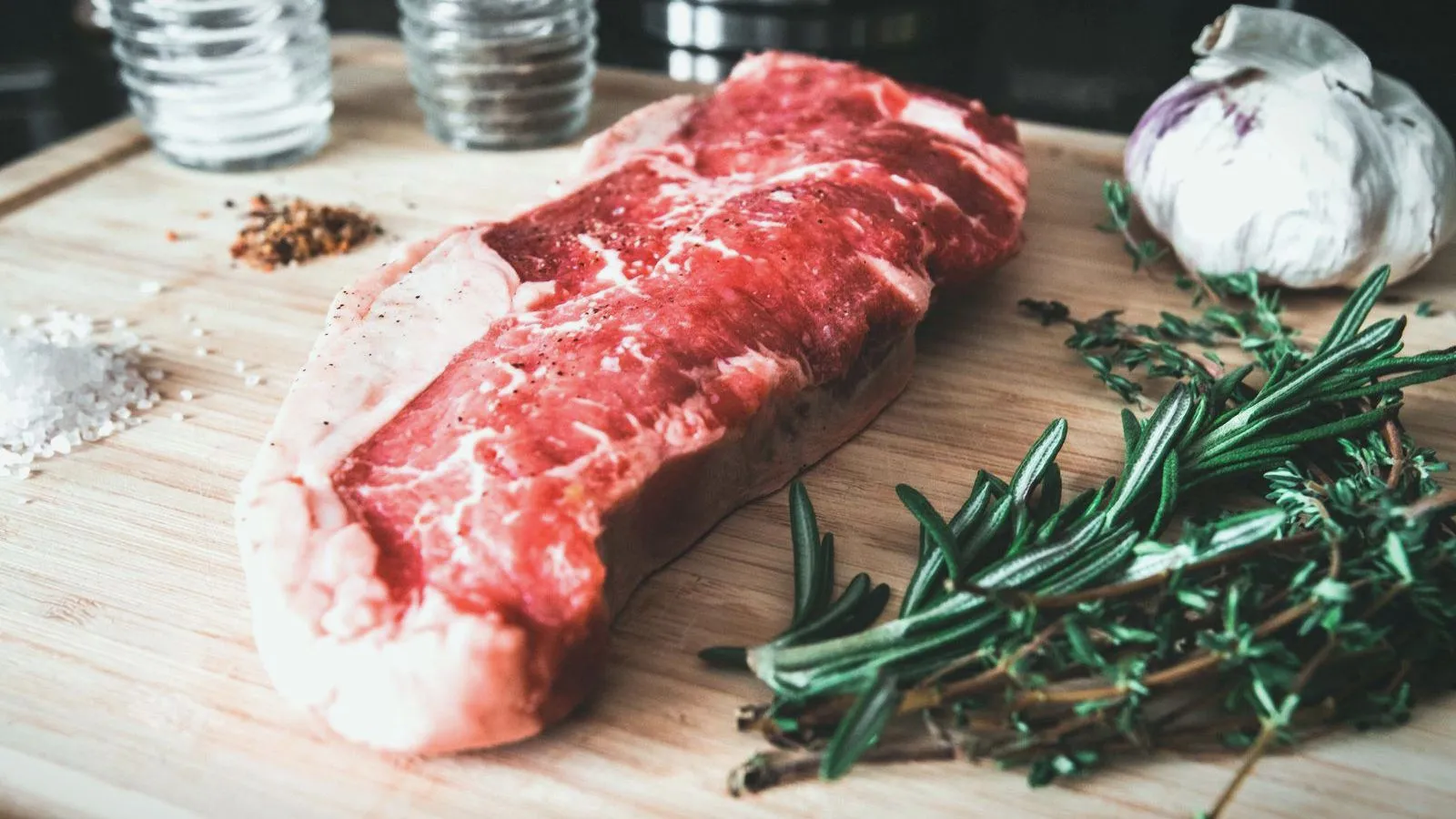
- Processed meat such as bacon and ham has the more consistent links to bowel cancer and heart disease.
- For unprocessed red meat, a 2022 analysis of 37 long-term studies rated the evidence of harm as weak.
- The World Cancer Research Fund suggests no more than about three portions of red meat a week.
- One guideline panel, by contrast, suggested adults continue eating what they eat now.
- Almost all the evidence is observational and based on food questionnaires, and studies disagree widely.
Few foods get such contradictory press as red meat. One year a headline says a daily steak shortens life; the next, a panel of scientists says there is no good reason to cut back. Butchers, ranchers, vegans and cardiologists each have a study to hand.
The confusion is not all the fault of headline writers. Expert bodies reading the same research have reached different conclusions. The World Cancer Research Fund advises that people eat no more than moderate amounts of red meat and little, if any, processed meat. A guideline panel published in a leading medical journal suggested people carry on as they are. And when the Institute for Health Metrics and Evaluation at the University of Washington set out in 2022 to grade the evidence on unprocessed red meat, it called most of it weak. Two things help in making sense of this: the difference between a chop and a slice of bacon, and how sure anyone can be about a small risk.
Which foods are red meat, and which are processed meat?
The definitions are less obvious than they sound. In the World Cancer Research Fund’s wording, red meat means all types of muscle meat from a mammal, including beef, veal, pork, lamb, mutton, horse, and goat. Pork counts, whatever its color on the plate. Chicken and fish do not.
Processed meat is a separate category. It is meat that has been transformed through salting, curing, fermentation, smoking or other processes to add taste or make it keep, which takes in ham, bacon, salami, hot dogs and many sausages. Most processed meat is made from red meat, and many older studies lumped the two together. The newer ones separate them, and the separation turns out to matter.
What a 2022 review found about unprocessed red meat
The University of Washington analysis, published in Nature Medicine in 2022, looked only at red meat that had not been processed. Haley Lescinsky, Christopher Murray and colleagues searched for every long-term study that had recorded how much of it people ate and what happened to them later. Fifty-five reports qualified, providing information on 37 prospective cohorts and one further study, from Europe, North America, Asia and Australia.
Their method, which they call Burden of Proof, is built to be skeptical. It gives each link a star rating that reflects the size of the risk and also how much the studies disagree with each other. Murray explained the motive in a statement: “There has been extensive research on the links between various risks and health outcomes, but findings are often very different across studies.” Under the scheme, a one-star rating indicates that there may be no true association, and five stars means very strong evidence, the rating given to smoking and lung cancer.
Red meat got two stars at best. The authors wrote that unprocessed red meat intake had weak evidence of an association with increased risk of colorectal cancer, breast cancer, IHD and type 2 diabetes and no evidence of an association with ischemic stroke and hemorrhagic stroke. IHD is ischemic heart disease, the kind caused by narrowed coronary arteries. Ischemic and hemorrhagic are the two types of stroke, caused by a blocked and a burst blood vessel.
“Weak evidence” has a precise meaning here. On the most cautious reading of the data, eating unprocessed red meat at typical levels raises the risk of those four conditions at least slightly compared to eating no red meat (by at least 6%, 3%, 1% and 1%, respectively). The true figures could be higher. The team’s point is that the studies are too inconsistent to be sure they are.
That uncertainty carries through to the practical question. When the researchers combined all six outcomes, the amount of red meat associated with the lowest risk was none at all, and the range of plausible answers ran from nothing to 200 grams a day. Their conclusion reads: “we contend that consuming no unprocessed red meat likely minimizes the risk of health consequences compared to consuming any, but that the wide uncertainty and low star ratings prevent us from making a strong intake-level recommendation”.
Why processed meat is treated differently
When studies separate the two kinds of meat, the processed kind looks worse almost every time.
The pattern was laid out in 2010 by Renata Micha and colleagues at Harvard, who pooled studies covering more than 1.2 million people. Unprocessed red meat showed no association with heart disease. Processed meat did, at 42% higher risk for each daily 50-gram serving. Their conclusion called for particular focus on processed meats for dietary and policy recommendations.
Larger and later analyses have filled in the picture without overturning it. A 2023 meta-analysis from the University of Hong Kong, drawing on forty-three observational studies of cardiovascular disease, found associations for both kinds of meat. For processed meat the figure was 26% higher risk for each 50 grams a day. For unprocessed meat it was 11% for each 100 grams a day, twice the amount for less than half the increase. The authors’ summary was that unprocessed and processed red meat consumption are both associated with higher risk of cardiovascular disease and diabetes.
Cancer follows the same order. Maryam Farvid and colleagues at Harvard gathered the cancer studies, 148 published articles in all. Comparing the heaviest eaters with the lightest, red meat went with a 10% higher rate of colorectal cancer, while processed meat came with an 18% greater colorectal cancer risk.
Why processing would matter is not settled. The World Cancer Research Fund points to compounds formed when meat is cooked at high heat or cured, to the form of iron in red meat, and to salt. Its judgment on the cancer evidence is firmer for processed meat than for red meat: there is convincing evidence that consumption of processed meat is a cause of colorectal cancer, it says, while consumption of red meat is probably a cause of colorectal cancer.
How much red meat do guidelines suggest?
The answers differ more than for almost any other food. The Washington team noted that recommended consumption targets are inconsistent, running from 14 grams a day in one prominent report to no limit at all in another.
The World Cancer Research Fund sits in the middle. For those who eat red meat, it suggests people limit consumption to no more than about three portions per week, which it puts at about 350 to 500 grams cooked weight in total, and eat very little processed meat. It notes that red meat can be a valuable source of nutrients, in particular protein, iron, zinc and vitamin B12, but is not an essential part of a healthy diet. On processed meat it sees no safe floor, with no level of intake associated with a lack of colorectal cancer risk.
The outlier is a 2019 guideline from a group called NutriRECS, published in Annals of Internal Medicine. A panel of 14 members, including 3 community members, from 7 countries voted on the final recommendations. Its verdict was that the panel suggests that adults continue current unprocessed red meat consumption (weak recommendation, low-certainty evidence), and the same for processed meat. The panel did not dispute the associations. It judged them small and uncertain, and weighed them against how much people value eating meat. It also set aside two things other bodies take into account: considerations of environmental impact or animal welfare did not bear on the recommendations.
Read side by side, the documents disagree less about the science than about what to do with weak evidence of a small harm. One approach says a small risk across a whole population is worth acting on. The other says advice to change a valued habit needs firmer proof.
Why the red meat evidence is hard to firm up
Almost everything known about meat and disease comes from observational studies, in which researchers ask large numbers of people what they eat and follow them for years. The Washington review found that in most studies, dietary consumption of unprocessed red meat was assessed using food frequency questionnaires, checklists on which people estimate their usual intake over months. Memory and wishful thinking blur those answers.
People who eat a lot of red meat also differ from people who eat little. On average they may smoke more, drink more, exercise less and eat fewer vegetables, and researchers can adjust for such differences only as well as they were measured. With risks in the range of 10%, a modest leftover imbalance could produce or hide an effect.
Then the studies disagree with one another. The Washington authors reported that there is substantial between-study heterogeneity and uncertainty in every link they examined, heterogeneity meaning that results vary more than chance would explain. That disagreement is the main reason their star ratings came out low.
A trial could cut through this, and none is likely. Assigning thousands of people to eat or avoid meat for decades, and checking that they do, is not practical. The existing trials are short and measure cholesterol or blood pressure.
Open questions about red meat and health
Several things the reader might most want to know are not answered by this research. The studies rarely record what people ate in place of meat, and swapping a steak for lentils is unlikely to have the same result as swapping it for white bread. They say little about how the meat was cooked or what it was eaten with. Most come from Europe and North America.
The Washington team’s own request was for better data: there is a critical need for better data from large-scale, high-quality studies around the world. Until those exist, the size of the risk from unprocessed red meat will stay uncertain. How much meat suits any one person also depends on the rest of their diet and on their health, including their need for iron, which a doctor or dietitian assesses.
Processed meat is the part of the picture on which studies and expert bodies largely agree, and the case against unprocessed red meat is real but weak.
People also ask
How strong is the evidence that unprocessed red meat is harmful?
A 2022 Burden of Proof analysis rated it weak. It gave two stars out of five to the links with colorectal cancer, breast cancer, ischemic heart disease and type 2 diabetes, and one star, meaning no evidence of association, to ischemic and hemorrhagic stroke. Its conservative estimate was that eating unprocessed red meat raises risk by at least 6%, 3%, 1% and 1% for the first four.
Is processed meat worse than unprocessed red meat?
The associations are larger and more consistent. In a 2023 meta-analysis, each 50 grams a day of processed red meat was associated with a hazard ratio of 1.26 for cardiovascular disease (95% CI 1.18 to 1.35), against 1.11 for each 100 grams a day of unprocessed red meat (95% CI 1.05 to 1.16). A hazard ratio above 1 means a higher rate.
What is the difference between red meat and processed meat?
The World Cancer Research Fund defines red meat as all types of muscle meat from a mammal, including beef, veal, pork, lamb, mutton, horse and goat. Processed meat is meat that has been transformed through salting, curing, fermentation, smoking or other processes, such as ham, salami, bacon and some sausages.
How much red meat do guidelines suggest?
The World Cancer Research Fund suggests no more than about three portions a week, about 350 to 500 grams cooked weight, and very little, if any, processed meat. The NutriRECS panel suggested in 2019 that adults continue their current consumption of both, as a weak recommendation based on low-certainty evidence.
Does red meat cause colorectal cancer?
The World Cancer Research Fund judges that processed meat is a convincing cause of colorectal cancer and that red meat is probably a cause. A 2021 meta-analysis found a relative risk of 1.10 for colorectal cancer with high versus low red meat intake (95% CI 1.03 to 1.17) and an 18% greater risk with processed meat. These studies are observational. This is general information rather than medical advice.
References
- Lescinsky, H., Afshin, A., Ashbaugh, C., et al. Health effects associated with consumption of unprocessed red meat: a Burden of Proof study. Nature Medicine, 2022.
- World Cancer Research Fund. Limit consumption of red and processed meat. Cancer Prevention Recommendations.
- Johnston, B. C., Zeraatkar, D., Han, M. A., et al. Unprocessed Red Meat and Processed Meat Consumption: Dietary Guideline Recommendations From the Nutritional Recommendations (NutriRECS) Consortium. Annals of Internal Medicine, 2019.
- Shi, W., Huang, X., Schooling, C. M., Zhao, J. V. Red meat consumption, cardiovascular diseases, and diabetes: a systematic review and meta-analysis. European Heart Journal, 2023.
- Farvid, M. S., Sidahmed, E., Spence, N. D., et al. Consumption of red meat and processed meat and cancer incidence: a systematic review and meta-analysis of prospective studies. European Journal of Epidemiology, 2021.
- Micha, R., Wallace, S. K., Mozaffarian, D. Red and Processed Meat Consumption and Risk of Incident Coronary Heart Disease, Stroke, and Diabetes Mellitus. Circulation, 2010.