News · Longevity & Aging
Air pollution rose by about a quarter in cities after US embassies stopped publishing air-quality readings
For more than a decade, US embassies posted independent pollution data in cities around the world. When the program was suspended in 2025, satellite measurements show haze climbed in the cities that lost it.
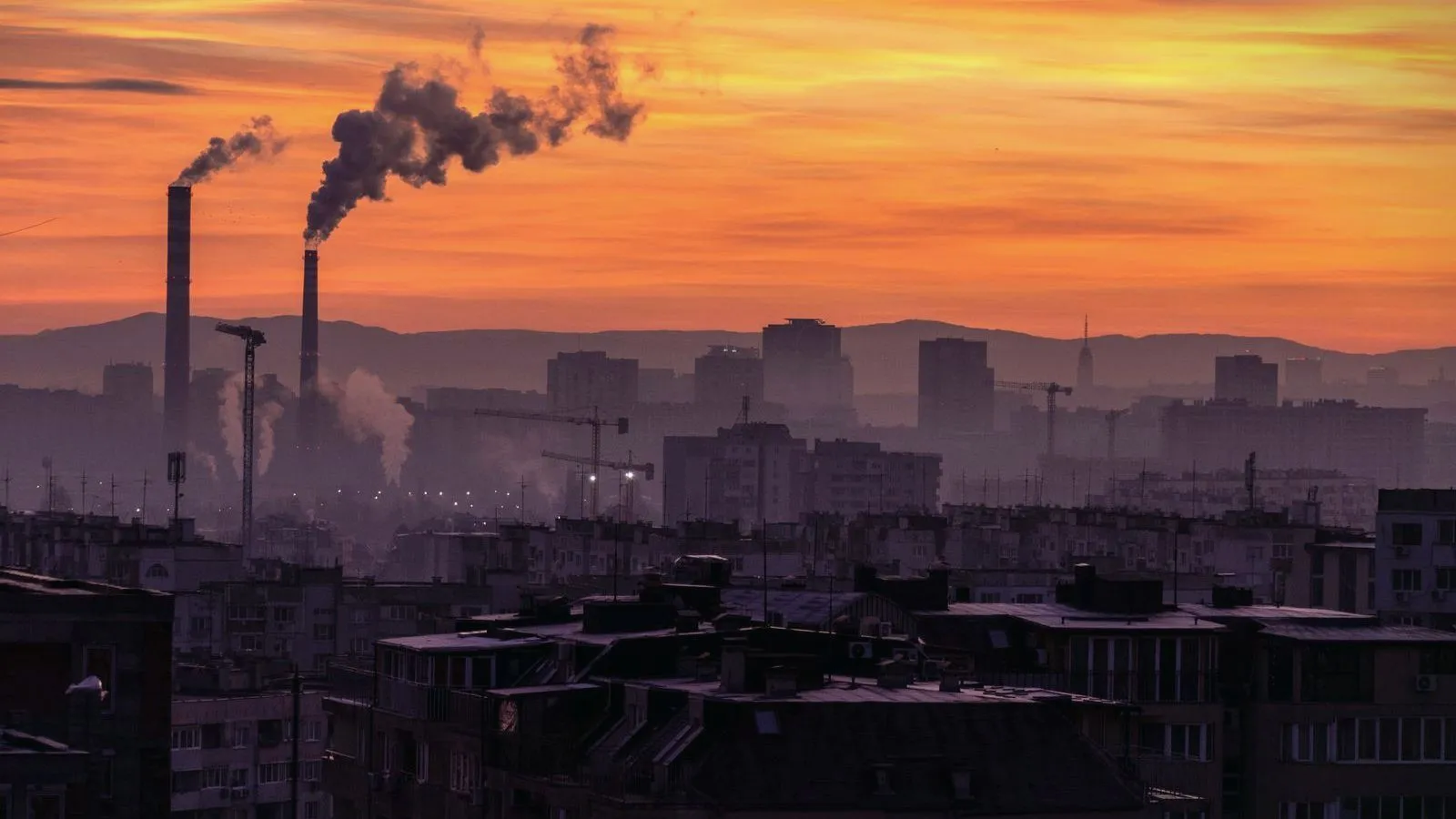
- Satellite data compared 46 cities that lost US embassy air reports with similar cities in the same countries.
- Pollution had not been trending up before the reports stopped.
- After the shutdown, pollution in affected cities rose by 24 to 33%.
- The rise was largest and lasted longest where there were few other trusted data sources.
- Health effects were not measured, and the study cannot say exactly why pollution rose.
Checking the air-quality number before a run or a school trip has become routine in many cities. For years, in dozens of places around the world, one of the most trusted sources for that number was a US embassy. A new study of 46 cities, using satellite measurements, looked at what happened to the air after those readings stopped being published in 2025.
Pollution went up. After the reports disappeared, haze rose by roughly a quarter to a third in affected cities, compared with similar cities in the same countries that had not relied on the embassy data.
What was the embassy air-quality program?
For more than a decade, US embassies and consulates provided independent, publicly accessible air-quality information in cities around the world. In some cities there were few good alternatives, a detail that turned out to matter.
In 2025, the authors write, the program was abruptly suspended, and trusted pollution information in those cities dropped sharply. That created an unplanned experiment: what happens to air quality when people lose a reliable way of seeing it?
How can satellites track air pollution in so many cities?
With the embassy monitors silent, the researchers turned to satellites. Satellite instruments measure aerosol optical depth, a gauge of how much haze and fine particles in the air block sunlight. It is not the same as a ground monitor, but it covers every city, before and after the shutdown.
To translate satellite readings into something more familiar, the team calibrated them against embassy measurements of PM2.5 taken before the program stopped. PM2.5 refers to fine particles 2.5 micrometers across or smaller, one of the most widely used measures of air pollution.
How did the researchers rule out other explanations for the pollution rise?
Pollution rises and falls for many reasons, including weather, season and economic activity. So the team, writing in PNAS, used a method called difference-in-differences. They compared how pollution changed in the 46 cities that lost embassy reporting with how it changed over the same period in matched control cities in the same countries.
A key check was the period before the shutdown. If affected cities had already been getting more polluted, the later rise would be hard to interpret. The researchers found no such trend. The two sets of cities had been moving in step until the reports stopped.
How much did air pollution rise after the reports stopped?
The increase came promptly, at 24 to 33% depending on the analysis. Under the authors’ preferred, conservative translation, that corresponds to a PM2.5 rise of about 1.9 micrograms per cubic meter. Other approaches gave estimates ranging from 1.5 to 16.3, so the true size of the change is uncertain.
The pattern across cities is telling. Effects were largest and most persistent in cities with poor substitutes for the US data. Where other trusted monitoring existed, losing the embassy readings mattered less.
What can’t the air pollution study show?
It does not explain why pollution rose. Public data might have encouraged regulators to enforce rules, pushed polluters to behave, or prompted people and governments to act on bad days, but the study does not test any of those possibilities.
It also did not measure health effects, and satellite estimates are less precise than ground monitors. As the wide range of estimates shows, the size of the increase in fine particles depends heavily on how satellite readings are converted.
Why does public air-quality data matter for health?
MedlinePlus describes air pollution as a mixture of solid particles and gases in the air, and notes that people with heart or lung disease, older adults and children are at greater risk from it. Knowing when the air is bad lets those groups plan around it.
The authors draw a broader lesson: pollution reductions are not guaranteed by previous air quality improvements or by a history of reliable data. On this evidence, simply keeping trustworthy numbers in public view may be part of what keeps the air cleaner.
People also ask
What did the study find?
Across 46 cities, there were no systematic trends before US reporting stopped, and a prompt 24 to 33% increase in local pollution levels afterward. The main estimate corresponds to a fine-particle increase of about 1.9 micrograms per cubic meter under a conservative translation, with alternative approaches giving values between 1.5 and 16.3. Effects were largest and most persistent in cities with poor substitutes for the US-provided data.
What was the US embassy air-quality program?
For more than a decade, US embassies and consulates published independent, publicly accessible air-quality readings in cities around the world. The program was suspended in 2025.
How can satellites measure pollution?
Satellites measure aerosol optical depth, which reflects how much haze and fine particles in the air block sunlight. The researchers calibrated it against the embassy readings taken before the shutdown.
What is PM2.5?
Fine particles 2.5 micrometers across or smaller, small enough to be breathed deep into the lungs. It is one of the most widely used measures of air pollution.
Why would publishing data reduce pollution?
The study does not test the reasons. It shows that pollution rose after trusted public data disappeared, most of all where no good replacement existed.
How can I protect myself from air pollution?
MedlinePlus notes that people with heart or lung disease, older adults and children are at greater risk, and links to guidance on protecting yourself when air quality is poor. This is general information rather than medical advice.