News · Nutrition & Diet
New US dietary guidelines showed no clear mortality link in 17,855 Spanish adults; a Mediterranean diet did
A University of Navarra team scored the diets of Spanish graduates against the 2025-2030 Dietary Guidelines for Americans and against a Mediterranean diet, then counted deaths over 14 years. Only the Mediterranean score tracked with fewer.
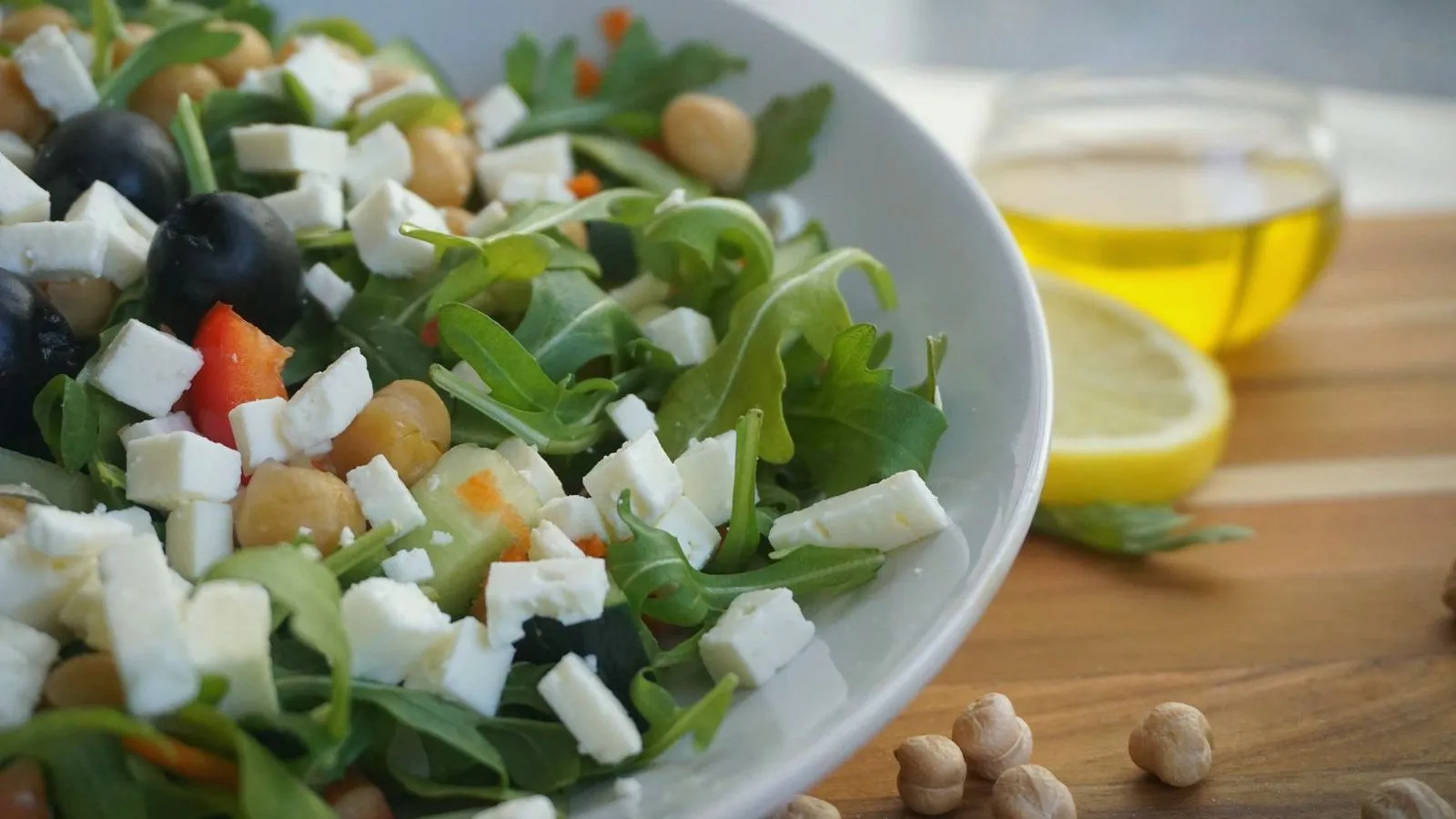
- Spanish adults whose diets best matched the 2025-2030 US guidelines did not die at clearly lower rates over 14 years.
- Those eating most like a traditional Mediterranean diet had about a third lower death rate than those eating least so.
- The guidelines' plant-based parts and their limit on processed meat did go with lower risk on their own.
- With 525 deaths in a young cohort, one diet survey and an author-built score, a modest effect either way is possible.
When the US government published its 2025-2030 Dietary Guidelines for Americans in January, the headline was a change of direction. The official summary site declares an end to what it calls the war on protein, puts protein and vegetables at the base of a new food pyramid, and lists meat, seafood and dairy alongside nuts and olives as sources of healthy fats. What nobody could say was whether eating that way goes with a longer life, because the guidelines were too new to have been tested against death rates.
A team at the University of Navarra in Spain has now run a first test, using a cohort it has followed since 1999. They scored the diets of 17,855 Spanish university graduates, mean age 37, against the new guidelines and against a traditional Mediterranean diet, and counted deaths over a median of 14.3 years. Closely following the US guidelines did not go with clearly fewer deaths. Eating the Mediterranean way did, by about a third. The study, led by Luiz Menezes-Junior of the university’s Department of Preventive Medicine and Public Health, with Maira Bes-Rastrollo as senior author, appeared in Clinical Nutrition in September.
What did the Spanish study compare?
The participants belong to the Seguimiento Universidad de Navarra cohort, known as SUN, which translates as the University of Navarra Follow-up. All were free of chronic disease when they joined, and every two years they answer questionnaires about their health. At the start each filled in a 136-item semi-quantitative food frequency questionnaire, a long checklist of how often they ate each of 136 foods, and the researchers turned those answers into two scores.
The first was a score of adherence to the 2025-2030 DGA, the authors’ abbreviation for the guidelines, built by the team itself and running from 0 to 28 points. The second was the well-established Mediterranean Diet Score, which first appeared in a 2003 Greek study and runs from 0 to 9, with higher scores indicating greater adherence. A person earns a point for each Mediterranean food group, such as vegetables, fruits, legumes, cereals and fish, where their intake was above the median consumption of the group. Another point goes to a high ratio of monounsaturated-to-saturated fatty acids, the balance of olive-oil-type fats to animal fats. Eating less meat and dairy than the median earns a point too, as does moderate wine with meals.
On paper the two eating patterns are not far apart. The government’s summary of the new guidelines says that added sugars are not recommended at all, asks for grains in whole or traditionally prepared forms, with oats, rice and true sourdough preferred, and tells Americans to avoid highly processed food. A Mediterranean diet would pass most of those tests. Where the two part company is in how they treat animal foods. The guidelines name meat and dairy among the sources of healthy fats and put protein at the base of the pyramid, while the Mediterranean score gives a point for eating less meat and dairy than the median person in the study.
Deaths were checked against Spain’s National Death Index, so nobody had to report their own. The researchers then compared people in the top quarter of each score with those in the bottom quarter, allowing for other differences between them.
Did following the new US guidelines go with fewer deaths?
Not clearly. Over the follow-up, 525 deaths occurred among the 17,855 participants, about 3%. Comparing highest to lowest adherence, the guidelines score showed no clear association with death from any cause, from cardiovascular disease or from cancer, meaning no difference large enough to rule out chance.
The numbers explain why “no association” has to be read carefully. For death from any cause, the best estimate was 13% lower risk in the top quarter, but the range of plausible values ran from about a third lower to 13% higher. For cardiovascular deaths the estimate pointed the other way, 62% higher, with a range stretching from slightly lower risk to three times the risk. With so few heart deaths in a young cohort, the study could neither confirm a benefit nor detect harm. The best estimate was smaller than the Mediterranean one, but the range is wide enough that a benefit of similar size cannot be excluded.
One detail softens the null further. The authors report that “specific plant-based DGA components and limiting processed meats showed independent inverse mortality associations,” meaning those parts of the guidelines, taken on their own, did track with lower risk. The guidelines overlap with the Mediterranean pattern in exactly those places. Whether the newer emphases, such as more animal protein and full-fat dairy, pulled the overall score toward the null is a question the study does not answer.
How did the Mediterranean diet compare in the same cohort?
The contrast is the reason the study was designed this way. High MedDiet adherence was inversely associated with death from any cause, from cardiovascular disease and from cancer. People in the top quarter of the Mediterranean score had about a third lower mortality than those in the bottom quarter, roughly 60% lower risk of cardiovascular death and about 40% lower risk of dying of cancer. The cardiovascular figure, like the guidelines figure, rests on few deaths and has a wide range.
That result matches a long line of research. The Greek study that introduced the score found a two-point increment in the Mediterranean-diet score went with a quarter lower death rate among 22,043 adults. A 2008 meta-analysis of eight cohorts covering 514,816 people found that a two point increase in the adherence score went with about 9% lower mortality. In the US Women’s Health Study, which followed 25,315 initially healthy women for an average of 24.7 years, those with the highest scores had lower mortality, although the gap shrank once lifestyle factors were taken into account.
The same Spanish cohort also tells a story about guidelines over time. In 2018 the Navarra group tested the previous edition, the 2015-2020 Dietary Guidelines for Americans, in 16,866 SUN participants and found the top quarter had reduced all-cause, cardiovascular and cancer mortality compared with the bottom; their risk of dying from any cause was about 58% lower. In two large US cohorts, the Nurses’ Health Study and the Health Professionals Follow-up Study, greater adherence to various healthy eating patterns went with lower mortality, including about a fifth lower for the Healthy Eating Index, which measures how closely people follow the older guidelines. In the same cohort, then, a score for the older guidelines tracked with longer life and the score for the new ones did not, although the two scores were built differently and tested in somewhat different groups of participants.
Why should the null for the new dietary guidelines be read cautiously?
Several features of the study limit what it can show. The participants were young when they joined, mean age 37, and highly educated, which is why only about 3% had died 14 years later, and why the estimates have such wide ranges.
Diet was measured once, at the start. People change how they eat over 14 years, and the food questionnaire predates the new guidelines, so the score measures how closely people happened to eat in ways the guidelines now describe, not people deliberately following them. The score itself is the authors’ translation of the guidelines into points, and a different translation, weighting protein or dairy differently, could give a different answer.
This was also an observational study. People who eat a Mediterranean diet in Spain may differ in other ways from those who do not, and adjustment for measured factors cannot remove every difference.
Then there is who ran the comparison. Miguel Ángel Martínez-González, a co-author, leads a research program that has built much of the evidence for the Mediterranean diet. It includes a large Spanish trial known as PREDIMED, which found fewer major cardiovascular events, a combined count of heart attacks, strokes and cardiovascular deaths, among high-risk Spaniards assigned to a Mediterranean diet supplemented with extra-virgin olive oil or nuts. That trial’s original 2013 report was withdrawn after problems with how some participants were randomized, and a corrected analysis was published in 2018 with similar results. The new result may well be right, but a team testing a rival diet against its own long-standing favorite is not an independent referee.
What the result means for the new dietary guidelines
The authors draw a firm conclusion. In their words, “Dietary recommendations should prioritize the MedDiet over the recent DGA 2025-2030 and particularly some features common to both dietary models.” Their own data support a narrower statement: in this cohort, adherence to the new guidelines “does not appear to be associated with reduced mortality,” while the Mediterranean score kept the association it has shown for two decades.
The US guidelines were not written for Spanish graduates, and a single cohort with 525 deaths is a first look, not a verdict. Larger and older populations, including American ones, will be needed to say whether the shift toward animal protein and fats changes anything about survival. How any eating pattern fits a particular person’s health is assessed by their doctor.
For now, the better-tested of the two diets is still the one around the Mediterranean.
People also ask
Did following the 2025-2030 US dietary guidelines go with lower mortality in the Spanish study?
Not clearly. Comparing the top quarter of adherence with the bottom, the hazard ratio for death from any cause was 0.87 (95% confidence interval 0.67 to 1.13), for cardiovascular death 1.62 (0.86 to 3.04) and for cancer death 0.82 (0.57 to 1.17). Every range includes no difference, and each is wide enough that a modest benefit, or for heart deaths a sizable harm, cannot be ruled out.
How much lower was mortality with a Mediterranean diet in the SUN cohort?
People in the top quarter of the 9-point Mediterranean Diet Score had a hazard ratio of 0.68 (0.50 to 0.92) for death from any cause, about a third lower than the bottom quarter. For cardiovascular death it was 0.39 (0.18 to 0.85) and for cancer death 0.59 (0.40 to 0.88). The heart-death figure rests on few deaths.
What do the 2025-2030 Dietary Guidelines for Americans recommend?
The US government's summary site, RealFood.gov, tells Americans to avoid highly processed food and puts protein and vegetables at the base of its new food pyramid. It describes fats in meat, seafood, dairy, nuts, olives and avocados as healthy and prefers whole or traditionally prepared grains such as oats, rice and sourdough.
What is the Mediterranean Diet Score?
It is a 0 to 9 scale first used in a Greek cohort in 2003. A person scores a point for each traditional food group, such as vegetables, fruits, legumes, cereals and fish, eaten in above-median amounts, a point for a higher ratio of olive-oil-type fats to saturated fats, a point for below-median meat and dairy, and a point for moderate wine with meals. Higher scores mean closer adherence.
Does this study mean the new US guidelines are harmful?
No. The study found no clear association either way. It was run in young, educated Spanish adults with few deaths, measured diet once, and used a guideline score the authors built themselves, so it is a first test rather than a verdict. How any diet fits a particular person's health is assessed by their doctor. This is general information rather than medical advice.
References
- Menezes-Junior, L., Martinez-Gonzalez, M. A., Martinez, J. A., de la Fuente-Arrillaga, C., Moreno, L. A., Bes-Rastrollo, M. Adherence to the 2025-2030 dietary guidelines (DGA) and risk of all-cause and cause-specific mortality: A prospective analysis in a middle-aged cohort. Clinical Nutrition, 2026.
- Trichopoulou, A., Costacou, T., Bamia, C., Trichopoulos, D. Adherence to a Mediterranean Diet and Survival in a Greek Population. New England Journal of Medicine, 2003.
- Sofi, F., Cesari, F., Abbate, R., Gensini, G. F., Casini, A. Adherence to Mediterranean diet and health status: meta-analysis. BMJ, 2008.
- Ahmad, S., Moorthy, M. V., Lee, I.-M., et al. Mediterranean Diet Adherence and Risk of All-Cause Mortality in Women. JAMA Network Open, 2024.
- Shan, Z., Wang, F., Li, Y., et al. Healthy Eating Patterns and Risk of Total and Cause-Specific Mortality. JAMA Internal Medicine, 2023.
- Fresan, U., Sabate, J., Martinez-Gonzalez, M. A., et al. Adherence to the 2015 Dietary Guidelines for Americans and mortality risk in a Mediterranean cohort: The SUN project. Preventive Medicine, 2019.
- Estruch, R., Ros, E., Salas-Salvado, J., et al. Primary Prevention of Cardiovascular Disease with a Mediterranean Diet Supplemented with Extra-Virgin Olive Oil or Nuts (corrected and republished). New England Journal of Medicine, 2018.
- US Department of Health and Human Services and US Department of Agriculture. Eat Real Food: Dietary Guidelines for Americans, 2025-2030 (RealFood.gov).