News · Sleep
Daylight saving time: fatal morning crashes rose 26% after the spring change, but the daily total held steady
An analysis of 375,658 fatal US crashes used Arizona and Hawaii, which never change their clocks, as a yardstick. The often-quoted rise in road deaths after springing forward vanished, and a rise between 6 and 10 a.m. did not.
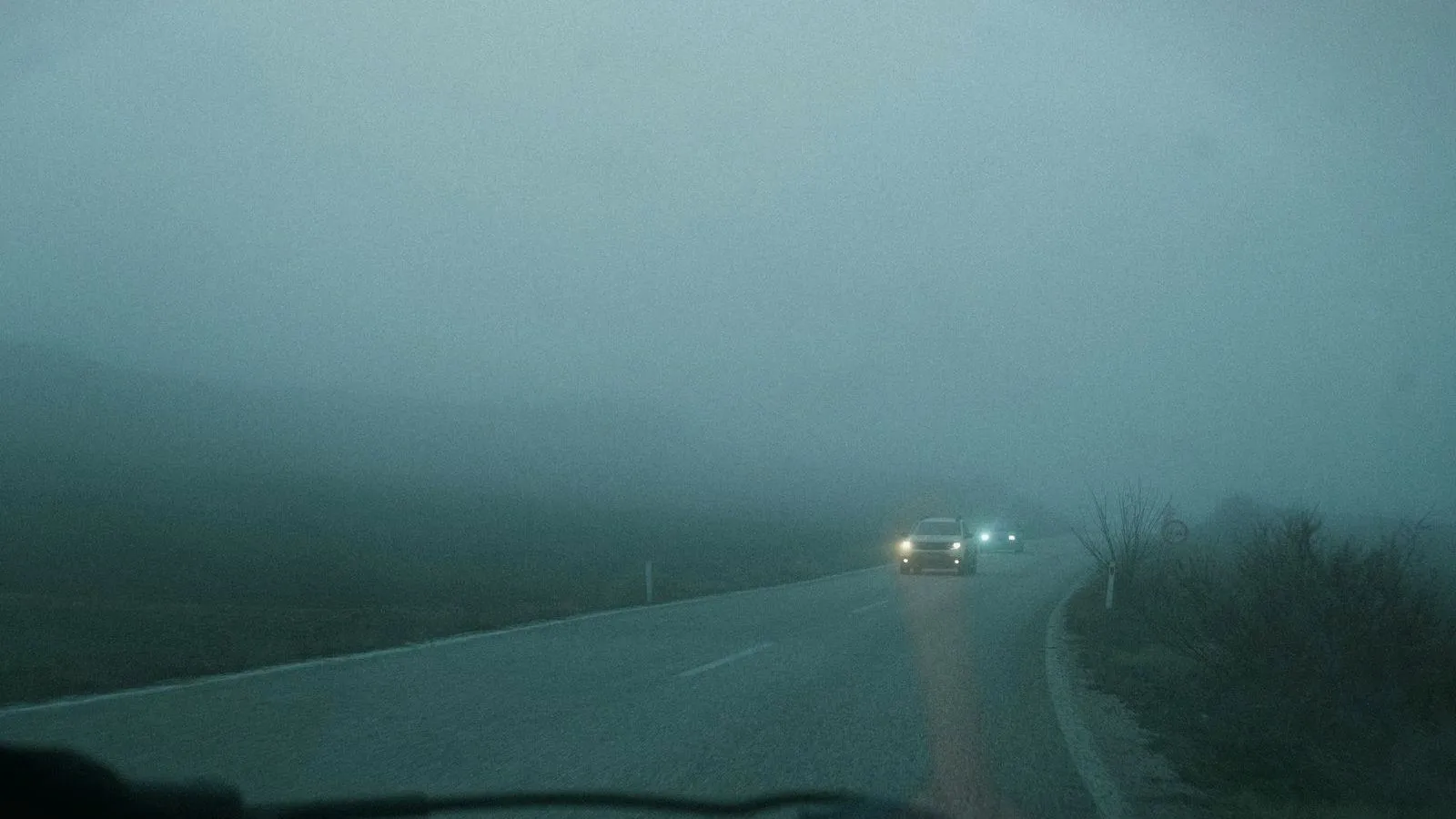
- Researchers compared fatal crashes in clock-changing states with Arizona and Hawaii, which do not change.
- Across the whole day, fatal crashes did not rise in the two weeks after the spring change.
- Between 6 and 10 a.m. they rose by about 26%, a result that held under several checks.
- The fall change showed no effect once the season was accounted for.
- The study counts crashes, not risk per trip, and it rests on just two comparison states.
Twice a year the clocks move, and twice a year the same warning does the rounds: road deaths jump in the days after the spring change, when everyone has lost an hour of sleep. The figure usually quoted is a rise of about 6%. It has been cited in news reports, in medical position papers and in the long-running argument over whether to scrap the clock change altogether.
A new analysis suggests the warning is half right. Da Lei of Sichuan University, Mingye Zhang of Southeast University in Nanjing and two colleagues went back to the American fatality records with a comparison earlier studies lacked: the two states that never touch their clocks. Their paper, published in Accident Analysis & Prevention at the end of August, finds no rise in the total number of fatal crashes after the spring change. It does find a sharp rise in the morning hours, of about a quarter.
Why earlier studies blamed daylight saving time for crashes
The best-known evidence came from the University of Colorado Boulder in 2020. Josef Fritz, Céline Vetter and colleagues used large US registry data, including 732,835 fatal crashes over 22 years, and reported a 6% increase in fatal crash risk in the week after the spring change. The effect, they found, was more pronounced in the morning and in locations further west within a time zone, where the sun rises later by the clock. An economist, Austin Smith, had reached a similar conclusion four years earlier, estimating that over one decade the transition into DST caused over 30 deaths a year. DST is the usual abbreviation for daylight saving time.
Both studies compared the days after the change with the days around it. Neither had a group of places that skipped the change. That leaves an opening for the calendar to mislead: March is also when weather shifts, days lengthen and people drive more, and any of those could move crash numbers in the same fortnight.
The wider literature was never unanimous. A systematic review in BMJ Open in 2017 found that twenty-four studies met the inclusion criteria, and of those looking at the days around the change it concluded that findings from the short-term studies were inconsistent.
How two states without daylight saving time changed the answer
Arizona and Hawaii stay on standard time all year. That makes them a yardstick. If fatal crashes climb in mid-March everywhere, including in states where nobody changed a clock, then the season is responsible. If they climb only where the clocks moved, the clock change is.
The new study applies that logic to the national fatality register, covering 375,658 fatal crashes across all 50 U.S. states and the District of Columbia between 2012 and 2022, with Arizona and Hawaii as non-DST controls. For each spring and fall change the team compared the two weeks before with the two weeks after, in changing and non-changing states alike. They note that prior studies reporting 5%-7% increases in fatal crashes over the week following spring-forward had no such comparison.
With the yardstick in place, the headline effect went away. In the authors’ wording, the estimate for overall fatal-crash counts is also null, at two-tenths of one percent. The fall change behaved the same way. An apparent effect on total fatal crashes vanished once the control states were added, which the paper calls a pattern consistent with seasonal confounding rather than a clock-shift effect. Seasonal confounding means the time of year, and not the clock, was producing the pattern.
Their conclusion on the big number is that prior uncontrolled comparisons may overstate DST’s overall crash effect.
Fatal crashes rose in the morning hours after the spring change
The picture changes when the day is split up. Between 6 and 10 in the morning, fatal crashes in clock-changing states rose by about 26% over the two weeks after springing forward, measured against the same hours in Arizona and Hawaii.
The team pushed on that result in several ways and it did not give. It stayed close to 26% when they added controls for month and day of the week, and came out at about 23% when they scaled the counts by how many miles each state’s drivers cover in a year. The rise was still there, and larger, when the window was cut to three days either side of the change. It also survived the exclusion of either non-DST control state, meaning it did not depend on Arizona alone or Hawaii alone.
If mornings got deadlier and the daily total did not move, crashes must have fallen at other hours. That fits what Smith concluded in 2016: that shifting ambient light only reallocates fatalities within a day. After the spring change, the morning commute is darker and the evening one lighter.
Is lost sleep or a dark morning behind the daylight saving crashes?
Both are plausible and both happen at once. People do lose sleep. Using national time-use surveys, Christopher Barnes and David Wagner found that on the Monday after the spring change workers sleep on average 40 min less than on other days. The loss does not end on Monday either. A review by Yvonne Harrison of Liverpool John Moores University concluded that broken and delayed sleep add up to a cumulative shortfall at least across the following week, perhaps longer.
At the same time the clock change moves sunrise an hour later, so a drive that was in daylight on Friday is in the dark on Monday.
The new study leans away from the simple sleep explanation without settling the question. Because the morning rise lasted across a full two weeks, the authors say the pattern is not readily attributable to acute sleep deprivation alone. They list sleep, the body clock, light and the amount of traffic as possible channels, and state that these are ones that this design cannot separately identify. The Colorado group had argued the opposite emphasis, pointing out that crash risk rose even in the brighter afternoons in their data and that there were no effects of the fall-back transition, when an hour of sleep is gained.
What sleep doctors say about daylight saving time
The American Academy of Sleep Medicine set out its view in a 2020 position statement, and road deaths were part of the case. It said the spring change brings increased risk of adverse cardiovascular events, mood disorders, and motor vehicle crashes, and concluded that these seasonal time changes should be abolished in favor of a fixed, national, year-round standard time.
The new result trims one of the supports for that position without removing it. A total that does not rise is weaker grounds than a 6% jump. A morning toll that climbs by a quarter for two weeks is still a cost.
Two comparison states carry the whole daylight saving analysis
The authors are plain about what they measured. All of their estimates pertain to fatal-crash counts, not crash risk per trip. If more people were on the road at 7 a.m. after the change, because an hour that used to be 6 a.m. now holds the commute, counts would rise without any single journey being more dangerous. Scaling by annual mileage cannot catch a shift like that within a day.
Two states also make a short yardstick. One in the desert Southwest and one a chain of tropical islands, they stand in for what the rest of the country would have done without a clock change. A statistical test of whether they tracked the other states beforehand was passed, which is reassuring, though it is no guarantee. A smaller comparison of seven cities in the same paper did not pass its own checks, and the authors set it aside.
Only fatal crashes were counted. Injuries and minor collisions, which are far more numerous, may behave differently.
The spring clock change appears to move road deaths into the morning without adding to the day’s total.
People also ask
Do fatal crashes increase after the spring clock change?
Not overall, in this analysis. With Arizona and Hawaii as controls, the estimated change in total fatal-crash counts in the 14 days after springing forward was +0.2% (p=0.954), which is no detectable change. Earlier studies without such controls had reported increases of 5% to 7% in the following week.
How much did morning fatal crashes rise?
Fatal crashes between 6:00 and 9:59 a.m. rose by 25.9% (p=0.007) in the 14 days after the spring change compared with the 14 days before, relative to the control states. The estimate was 26.8% with additional statistical controls and 22.8% when scaled by annual vehicle-miles traveled.
Does the fall clock change affect fatal crashes?
The study found that the apparent fall-back effect on total fatal crashes disappeared once control states were included, which the authors attribute to seasonal confounding. A 2020 analysis of 732,835 fatal crashes also found no effect of the fall transition.
How much sleep is lost when clocks go forward?
A study using US time-use data found that on the Monday after the switch to daylight saving time, workers slept on average 40 minutes less than on other days. A review of sleep studies concluded that the loss accumulates across at least the following week.
What do sleep medicine organizations say about daylight saving time?
The American Academy of Sleep Medicine's position is that seasonal time changes should be abolished in favor of a fixed, national, year-round standard time. This is general information rather than medical advice.
References
- Lei, D., Du, Y., Peng, S., Zhang, M. Does daylight saving time increase traffic crashes? Seasonal confounding and a morning fatality effect. Accident Analysis & Prevention, 2026.
- Fritz, J., VoPham, T., Wright, K. P., Vetter, C. A Chronobiological Evaluation of the Acute Effects of Daylight Saving Time on Traffic Accident Risk. Current Biology, 2020.
- Smith, A. C. Spring Forward at Your Own Risk: Daylight Saving Time and Fatal Vehicle Crashes. American Economic Journal: Applied Economics, 2016.
- Carey, R. N., Sarma, K. M. Impact of daylight saving time on road traffic collision risk: a systematic review. BMJ Open, 2017.
- Barnes, C. M., Wagner, D. T. Changing to daylight saving time cuts into sleep and increases workplace injuries. Journal of Applied Psychology, 2009.
- Harrison, Y. The impact of daylight saving time on sleep and related behaviours. Sleep Medicine Reviews, 2013.
- Rishi, M. A., Ahmed, O., Barrantes Perez, J. H., et al. Daylight saving time: an American Academy of Sleep Medicine position statement. Journal of Clinical Sleep Medicine, 2020.