News · Heart & Metabolic
CGM lowered blood sugar in type 2 diabetes without insulin, 0.9 HbA1c points more than routine care
In a Dexcom-funded randomized trial of 283 adults at 22 US primary care practices, people who wore a glucose sensor for six months also spent about five more hours a day in the target range, with no added low blood sugar.
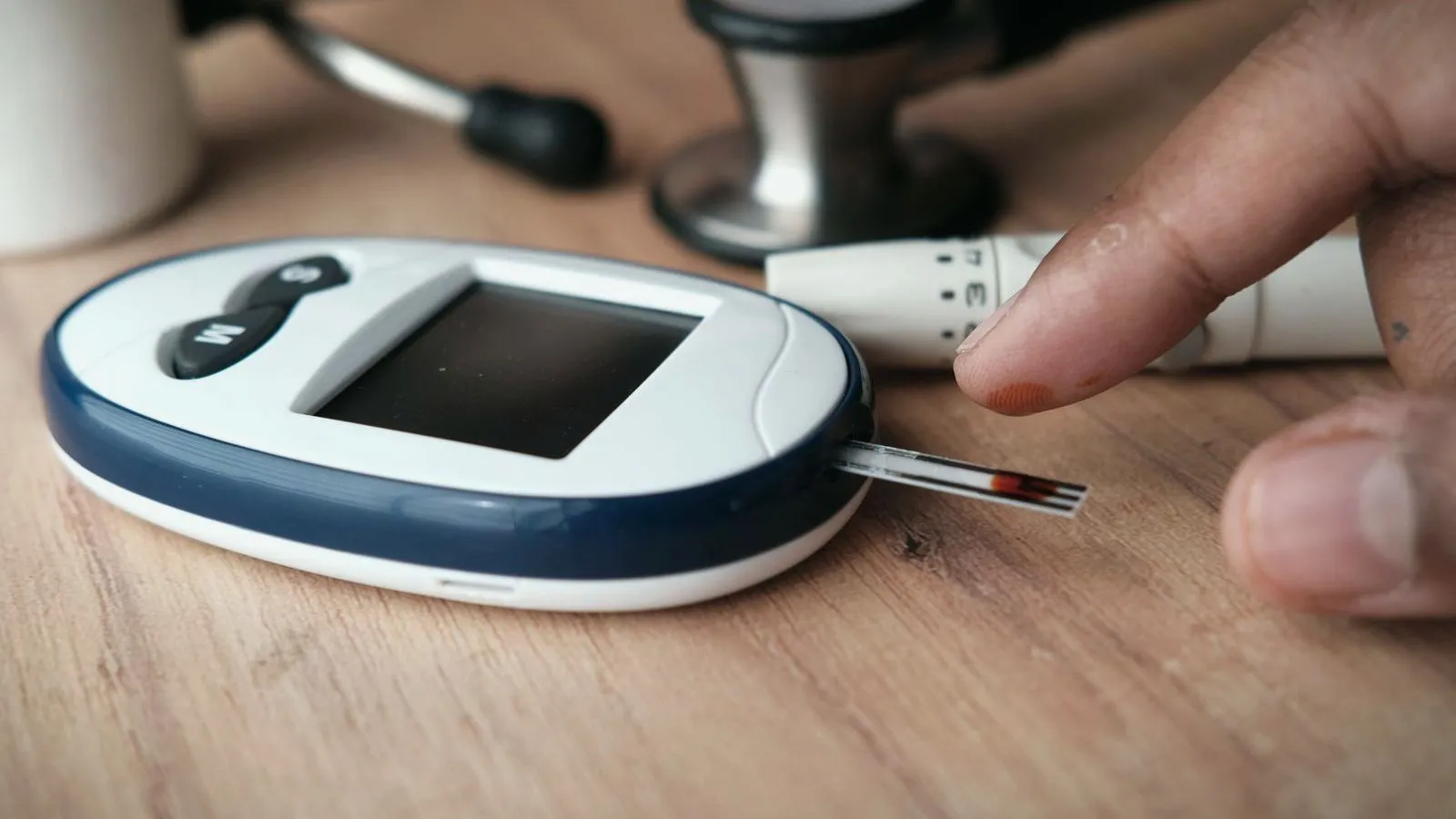
- Adults with type 2 diabetes not on insulin cut HbA1c from 8.8% to 7.2% with a sensor, and 8.7% to 8.0% on routine care.
- Sensor users spent about five more hours a day with blood sugar in the target range, and had no more lows.
- The gain was roughly three times what earlier, smaller trials in this group had found.
- Dexcom, which makes the sensor, paid for the trial, and people knew which group they were in.
- It lasted six months and measured blood sugar, so effects on complications and over years are unknown.
Most adults with type 2 diabetes who do not take insulin check their blood sugar, when they check it at all, with a finger prick and a meter. That gives one number at one moment, and it does not provide continuous data about glucose levels through the day and night. Sensors that sit under the skin and track glucose around the clock are well established for anyone who injects insulin. For everyone else with type 2 diabetes, the case for wearing one has rested on a handful of modest trials.
A six-month trial in American family practices now makes that case more firmly. Adults with type 2 diabetes who were not using insulin were assigned at random to wear a Dexcom G7 sensor or to carry on as usual. After 26 weeks, the sensor led to a greater reduction in the glycated hemoglobin level, or HbA1c, the blood test doctors use to track average blood sugar, than routine care did. The gap between the two arms of the trial was close to a full percentage point, about three times what earlier studies had found. The trial, called CONNECT, was led by Tamara Oser, a Professor of Family Medicine at CU Anschutz, the University of Colorado’s medical campus, and published on October 14 in the New England Journal of Medicine. Dexcom, which makes the sensor, provided funding for the trial.
Why glucose sensors for type 2 diabetes without insulin were an open question
A continuous glucose monitor, or CGM, is a small sensor that sits just under the skin. It measures sugar in the fluid around the cells there, which approximates blood glucose levels, and it does so without finger sticks. Its value is plainest for someone whose insulin dose depends on the reading. The American Diabetes Association says there is strong, clear evidence that CGM is beneficial for those using insulin, and that more research is needed to understand the impact where diabetes is managed without it.
That second group is far larger. About 20 million people in the U.S. have diabetes and take only non-insulin treatments, according to Thomas Martens, a co-author of the trial and medical director at the International Diabetes Center in Minneapolis. Many are already on several modern drugs and still above their blood sugar target. “Even with GLP-1 therapy, SGLT2 therapy [and] multiple diabetes therapies, we know that many of these individuals have elevated HbA1c levels,” Martens said when he presented the results.
The trials before CONNECT pointed the same way, faintly. A 2024 review by researchers in the Netherlands pooled 12 randomized trials of continuous glucose monitoring in adults with type 2 diabetes, 1,248 participants in all, some on insulin and some not. Sensors lowered HbA1c by about 0.3 of a percentage point compared with finger-stick testing. That effect was small but steady, consistent across all included studies, and about the same for those on tablets alone. A larger meta-analysis of randomized controlled trials, published in October by a team in Saudi Arabia, took in 25 of them and arrived at a similar average. Its authors found the benefits were generally more pronounced in non-insulin-treated patients and rated the certainty of the evidence as moderate. Martens describes CONNECT as “the first major randomized controlled trial evaluating CGM in individuals with type 2 diabetes not using insulin,” his way of setting it apart from the smaller trials those reviews pooled, which averaged about a hundred people each in the Dutch analysis.
Martens and several fellow CONNECT authors, among them Roy Beck, Katrina Ruedy and Peter Calhoun, had already tested sensors one step closer to this population. Their 2021 MOBILE trial enrolled adults on once- or twice-daily long-acting insulin, with no mealtime doses, and found that over eight months mean HbA1c level decreased from 9.1% to 8.0% with a sensor, against 9.0% to 8.4% with a meter. CONNECT asked the same question of patients who take no insulin at all.
How the CGM trial ran in 22 family practices
CONNECT was run through 22 primary care practices in the United States, the ordinary clinics where most of these patients are seen. Its results were first presented in June at the 2026 Scientific Sessions of the American Diabetes Association in New Orleans. The journal paper is the full, peer-reviewed report.
To join, adults needed type 2 diabetes looked after by a family doctor, nurse practitioner or physician assistant, no insulin in the previous year, and an HbA1c of 7.5% or higher at screening. The test reflects blood glucose levels over the past two or three months, and the average at the start was 8.8%. Of the 283 who enrolled, 145 were assigned to the CGM group and 138 to routine care. They ranged in age from 21 to 84 years and averaged 60, and 32% were racial or ethnic minority participants.
Nobody was asked to change their medicines. Most took metformin, four in ten a GLP-1 drug and more than a third an SGLT2 inhibitor, all of which they continued using throughout the study. The sensor arm wore the G7 and could see their readings. The comparison arm had routine care with standard blood glucose meter testing, the usual finger-prick checks, plus interval blinded CGM wear, which means they wore a sensor now and then with its display hidden. That detail lets the trial compare hour-by-hour glucose in both arms with the same device, without giving the comparison group the information the trial was testing.
Random assignment is what gives the result its weight. The two arms started out alike, so the gap that opened between them can be put down to the sensor and whatever its wearers did with it. The main outcome, HbA1c at 26 weeks, was fixed in advance. The sensor-based measures were tested hierarchically to control for chance: one at a time, in a set order, so a long list of outcomes could not throw up a lucky winner. What randomization could not provide was blinding, since the sensor group was looking at its own numbers every day.
How much blood sugar fell with a glucose monitor
Average HbA1c in the sensor group fell from 8.8% to 7.2% at 26 weeks, and in the routine-care group from 8.7% to 8.0%. Both arms improved, but the sensor group’s fall was larger by 0.9 percentage points. Even the low end of the paper’s estimate, 0.6 points, is about twice the average of the earlier trials.
Counted patient by patient, HbA1c improved by at least 0.5% in 82% of the CGM group at the June presentation, against 56% of those on routine care. Those who started with the highest readings gained the most. The benefit held whether or not someone was on a GLP-1 or SGLT2 drug, and was largest of all in GLP-1 users. “Notably, the combination of GLP-1 and CGM had the highest treatment difference differential,” Martens said.
The sensor also changed the shape of the day. Time spent with glucose between 70 and 180 mg/dL, the target range the trial used, was 21 percentage points higher with CGM. The researchers put that at about five hours per day more in range, and improvements in time in range occurred within 1 week of starting and lasted the full six months. The Dutch reviewers cite a consensus that a 5-point gain is the smallest difference in time in range worth having, and CONNECT’s gap is about four times that.
Low blood sugar was the obvious safety worry, and time spent below range was one of the trial’s pre-set outcomes. The sensor group spent slightly less time below range than the comparison group, and no severe hypoglycemia events were reported in either arm. Sensor wearers also reported greater satisfaction with glucose monitoring and reduced distress about their diabetes.
Why a sensor would help someone with no insulin dose to adjust is less obvious. The Dutch reviewers suggest that seeing the numbers may improve dosing of any glucose-lowering therapy and may encourage a healthier lifestyle. Which of those did the work in CONNECT is not yet known.
Questions the CGM trial leaves open
The first caveat is money: the sensor’s maker is listed as the trial’s lead sponsor in the registry, with the Jaeb Center for Health Research as a collaborator. Martens reports consulting, advising or speaking for Abbott, Dexcom and several other device and drug companies, and clinical research work with several of them, Dexcom included. Funding from a manufacturer does not make a result wrong, and the main outcome is a laboratory blood test. It is still a reason to want the trial repeated by researchers with no stake in the device.
Six months is short for a lifelong condition. An extension phase in which both groups will use CGM for another 26 weeks is under way, and the American Diabetes Association says it will provide further data on the sustainability of the benefit at 12 months. Whether patients keep wearing sensors for years, and whether the early gain holds, is not yet known.
HbA1c is also a stand-in for what patients care about, which is avoiding the damage diabetes does over decades. The Dutch reviewers expect that a lower HbA1c would likely translate to lower rates of diabetes-related complications in the long run, but they add that existing trials cannot show it, and CONNECT was not designed to count complications either.
Two narrower limits shape who the result describes. Everyone enrolled had an HbA1c of at least 7.5%, so the trial says little about those whose diabetes is already well controlled. And the 82% and 56% figures come from the June meeting presentation.
What the trial could mean for CGM coverage in type 2 diabetes
The researchers hope CONNECT will change guidelines and, through them, insurers. “Most people with non-insulin requiring type 2 diabetes receive their care in primary care settings,” Oser said in a University of Colorado news story. Recommendations, she added, “often drive payer coverage of CGM and so I am hopeful that the results of this trial will expand access” to many more patients. Martens went further at the meeting: “These results add to the evidence that CGM should be considered in all people with type 2 diabetes both using insulin and not using insulin.”
Those are the investigators’ hopes. The American Diabetes Association’s own description, in its June release, still separates the strong evidence for insulin users from the open question for everyone else. A guideline panel will weigh CONNECT as one trial, funded by the sensor’s maker and six months long, alongside the smaller trials that came before it.
Participants kept taking their prescribed diabetes medicines throughout, and the sensor was added on top. Do not stop or change a prescribed medicine without talking to your doctor. Whether a sensor is useful for a particular person, at what cost and with what insurance cover, is assessed by their doctor.
For adults with type 2 diabetes who do not use insulin, CONNECT shows a glucose sensor lowering blood sugar by more than earlier trials had suggested, in a six-month study paid for by the sensor’s maker.
People also ask
How much did a continuous glucose monitor lower HbA1c in the CONNECT trial?
HbA1c fell from 8.8% to 7.2% in the sensor group and from 8.7% to 8.0% with routine care over 26 weeks. After adjustment, the sensor group's fall was 0.9 percentage points larger, with a likely range of 0.6 to 1.1 points. At the meeting presentation, 82% of sensor users and 56% of the routine-care group had improved by at least half a point.
What is time in range?
It is the share of the day a person's glucose stays between 70 and 180 mg/dL, as recorded by a sensor. In CONNECT, time in range was 21 percentage points higher with the sensor than with routine care (likely range 16 to 26), which the researchers put at about five hours a day.
Did glucose sensors cause more low blood sugar?
No. Time spent below 70 mg/dL was 0.20 percentage points lower in the sensor group and time below 54 mg/dL was 0.17 points lower, both small differences in the sensor group's favor. No severe hypoglycemia was reported in either group.
Who paid for the CONNECT trial?
Dexcom, which makes the G7 sensor used in the trial, funded it and is listed as its lead sponsor. The Jaeb Center for Health Research was a collaborator. Co-author Thomas Martens, who presented the results, reports consulting, advising or speaking roles and clinical research work with Dexcom and other device and drug companies.
Does this change who is advised to use a glucose sensor?
Not yet. The American Diabetes Association says the evidence is strong for people using insulin and that more research was needed for those who are not. The trial's authors hope the results will change the association's Standards of Care, which often shape insurance coverage. Whether a sensor suits one person is assessed with their doctor. This is general information rather than medical advice.
References
- Oser, T. K., Martens, T., Ruedy, K. J., et al. Continuous Glucose Monitoring in Non-Insulin-Treated Type 2 Diabetes. New England Journal of Medicine, 2026.
- CONNECT: Continuous Glucose Monitoring in People With Type 2 Diabetes Not on Insulin. ClinicalTrials.gov, NCT06601166.
- Jancev, M., Vissers, T. A. C. M., Visseren, F. L. J., et al. Continuous glucose monitoring in adults with type 2 diabetes: a systematic review and meta-analysis. Diabetologia, 2024.
- Al Hayek, A., Al Zahrani, W. M., Alotaibi, H. F., et al. Effectiveness of Continuous Glucose Monitoring in Non-Intensively Managed Type 2 Diabetes: A Systematic Review and Meta-Analysis of Randomized Controlled Trials. Journal of Diabetes Science and Technology, 2026.
- Martens, T., Beck, R. W., Bailey, R., et al. Effect of Continuous Glucose Monitoring on Glycemic Control in Patients With Type 2 Diabetes Treated With Basal Insulin. JAMA, 2021.