News · Heart & Metabolic
A third of insured adults with diabetic-range lab results had no recorded diagnosis or no treatment a year on
Among 27,650 insured US adults with blood tests in the diabetic range, 66.6% had both a diagnosis code and a prescription within a year and 9.6% had neither. The study counted insurance claims, which miss some care.
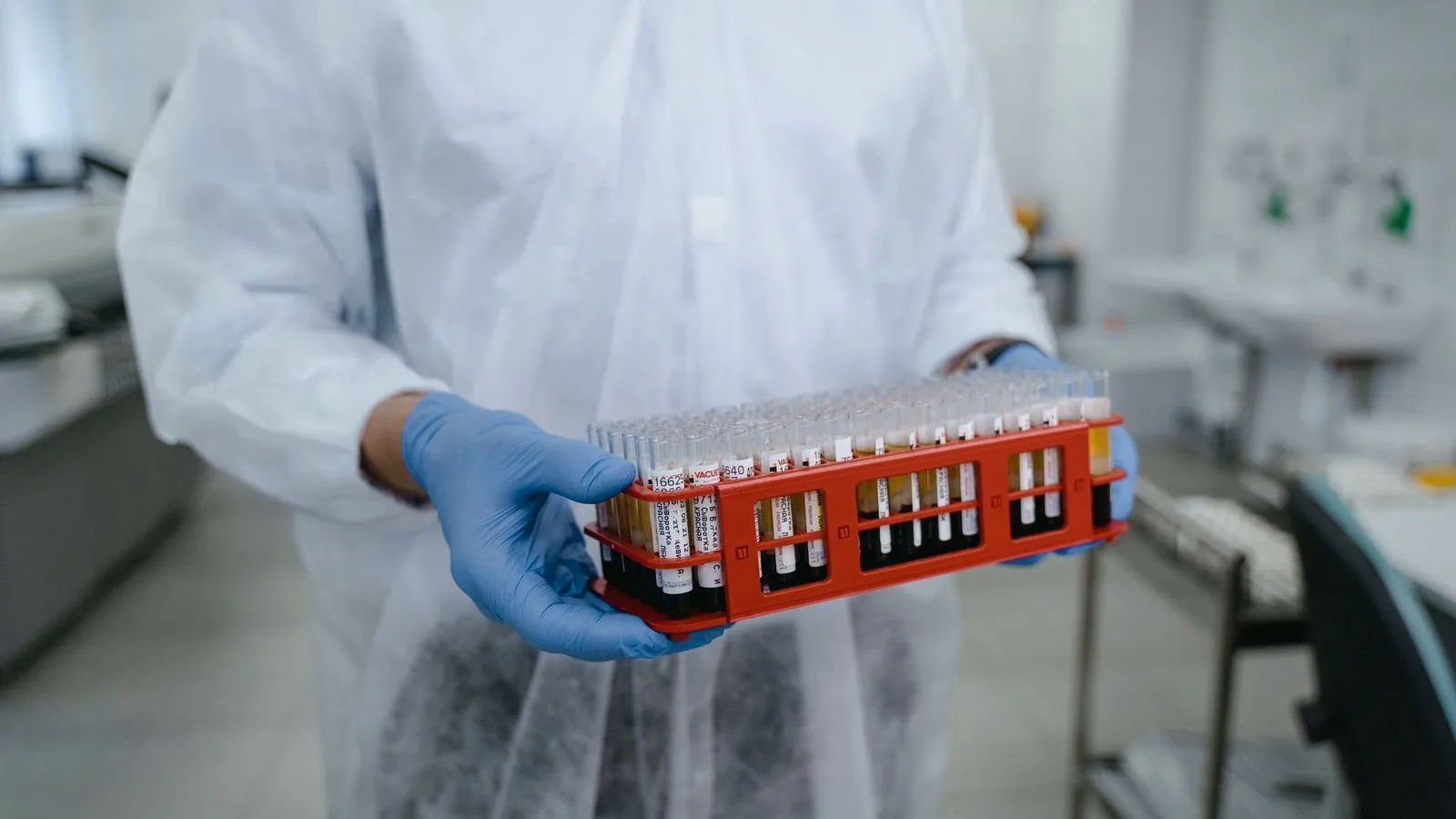
- A US study tracked 27,650 insured adults whose lab results met the definition of diabetes for the first time.
- Within a year, 66.6% had both a diabetes diagnosis code and a prescription for a diabetes medicine.
- Another 19.7% had a diagnosis only, 4.1% had treatment only, and 9.6% had neither on record.
- People with higher blood sugar were more likely to get both; those with more other illnesses were less likely.
- Insurance claims show what was billed, so some people counted as missed may have been told and managed.
A blood test that comes back in the diabetic range is supposed to start something: a diagnosis entered in the record, and usually a treatment plan. A study of 27,650 insured American adults suggests that for about a third of them, at least one of those steps left no trace in the following year.
The study, published on October 5 in Diabetes Care, found that roughly one in ten had neither a diabetes diagnosis nor a diabetes medicine on record 12 months after their results. It relied on insurance claims, which capture what was billed and can miss what was said in the consulting room, so the true size of the gap is uncertain.
Why lab results in the diabetes range do not always become a diagnosis
Diabetes is defined by numbers. The two most used are fasting blood glucose, measured after a night without food, and HbA1c, a blood test that reflects average blood sugar over roughly three months. The thresholds used in US research are a fasting glucose of 126 milligrams per deciliter or more and an HbA1c of 6.5% or more.
One raised number is not the end of the process. As a 2018 paper in Annals of Internal Medicine put it, current clinical definitions of diabetes require repeated blood work to confirm the first result. The purpose is to reduce the possibility of a false-positive diagnosis. A false positive is a test result that wrongly indicates disease.
That requirement creates a gap in which people can be lost. Someone has to notice the first result, order the second, tell the patient, write the diagnosis into the record and decide on treatment. None of this is automatic.
Most diabetes in the United States is found. An analysis of national health surveys covering 30,492 adults estimated that the share of diabetes cases going undiagnosed fell from about a third in 1988 to 1994 to under a fifth by 2017 to 2020, and to about one in ten when a stricter two-test definition was used. The authors read this as suggesting major improvements in diabetes screening and detection, and concluded that up to 90% of all cases are diagnosed. They also found the gap was uneven: Asian Americans and those without health care access had the highest proportion of undiagnosed cases.
Those survey figures count people who have never been tested as well as people who have. The new study asks a narrower question. Among people who did have the blood test, and whose results did meet the definition, what happened next?
How the diabetes lab results study worked
The research team, led by Jim Stimpson with Joshua Liao as senior author, used a national database of health insurance claims from 2017 to 2023 that had been linked to laboratory results. A claim is the bill a clinic, hospital or pharmacy sends to an insurer, and it carries codes for the diagnoses and services involved. The database covered people with commercial insurance and people in Medicare, the US public insurance program for those aged 65 and over.
From it the researchers picked out adults with what the paper calls laboratory-confirmed diabetes and who had no earlier record of diabetes or of prediabetes, the stage of raised blood sugar below the diabetes threshold. This left 27,650 people. Each was followed in the claims for one year.
Two things were looked for in that year. The paper states that outcomes were type 2 diabetes diagnostic coding and pharmacologic treatment initiation. Diagnostic coding means a diabetes diagnosis code appearing on a claim. Pharmacologic treatment initiation means a first prescription for a diabetes medicine.
The design is retrospective. Retrospective means the researchers looked back through records that already existed.
What the study found a year after the lab results
The 27,650 people fell into four groups:
- Both. 66.6% received both a diagnosis code and pharmacologic treatment within 1 year.
- Diagnosis only. 19.7% had a diabetes code on a claim and no prescription for a diabetes medicine.
- Treatment only. 4.1% were prescribed a diabetes medicine with no diabetes code recorded.
- Neither. 9.6% had no code and no prescription.
Added together, 33.4% were missing at least one of the two, which is the basis of the paper’s summary that one third lacked claims-documented diagnostic coding, treatment, or both. Looked at another way, 13.7% had no diagnosis code within the year, and 29.3% had no diabetes medicine.
In head counts, the group with neither works out to roughly 2,650 people, and the group missing one or both to roughly 9,200.
The four groups are not equally worrying. A person with a recorded diagnosis and no prescription may be managing the condition through changes to diet and activity, which leaves no claim. A person with a prescription and no code has at least been given a diabetes medicine. The group with neither is the one where, as far as the insurance record shows, nothing followed the result.
Who was less likely to get a diabetes diagnosis or treatment
Two patterns stood out.
The first was the blood sugar level itself. The comparison group was people whose HbA1c sat just over the line, at 6.5% to 6.9%. Above that band, the paper reports, higher HbA1c was associated with progressively higher probabilities of diagnostic coding and treatment initiation. The clearer the result, in other words, the more likely it was to be acted on, and the borderline results were the ones most often left without a code or a prescription.
The second pattern ran the other way from what might be expected. People who were sicker in other respects were less likely to have a diabetes code or a prescription on record. In the paper’s wording, greater comorbidity burden was associated with lower probabilities of both outcomes. Comorbidity means other illnesses a person has alongside the one in question.
The authors sum up the result as patterns of care defined by glycemic severity and comorbidity burden. Glycemic severity means how high the blood sugar is.
What earlier research shows about acting on diabetes test results
Other recent studies have followed what happens after an abnormal result, in very different settings, and each found a leak at some point.
One US health system screened patients at its four emergency departments with an HbA1c test. Of 9,897 people screened, 615 (6.2%) had diabetes. Researchers later reached 307 of them by phone. Most had seen a clinician since, and about half had started a diabetes medicine, but fewer than half remembered being given the diagnosis in the emergency department. People who never followed up reported barriers including awareness of screening result, time/scheduling issues, and financial considerations.
In Denmark, researchers read the charts of 416 patients of psychiatric services whose blood tests, ordered by those services, were in the diabetic range for the first time. They checked whether anything was done within three months, such as a referral, a repeat test or a prescription. Their result was that only 37% received a clinical intervention.
The Danish study also carries a warning for anyone reading the American figures. When the team first selected patients by laboratory result and the absence of a recorded diagnosis or treatment, about one in six turned out to be something else. In the authors’ words, manual review of clinical notes revealed that these patients were already known to have diabetes. The diagnosis existed; it had not been registered. The authors describe the discrepancy between biochemical evidence of disease and its formal diagnostic registration as a persistent problem in psychiatric and general care alike. Biochemical evidence means the laboratory result.
Delay after diagnosis is a known pattern too. A UK study of 81,573 people with type 2 diabetes found that when blood sugar stayed above target on one tablet, the median wait before a second was added was 1.6 to 2.9 years. Its conclusion was that there are delays in treatment intensification in people with type 2 diabetes despite suboptimal glycemic control. The paper’s name for the pattern has stuck: this failure to intensify treatment in a timely manner has been termed clinical inertia. Intensification means stepping treatment up.
Why would delay matter? The US Preventive Services Task Force, an independent panel that reviews evidence on preventive care, states that diabetes is the leading cause of kidney failure and new cases of blindness among adults in the US. Its 2021 statement covers screening for prediabetes and type 2 diabetes in adults aged 35 to 70 years who have overweight or obesity.
No trial has tested delaying treatment, for ethical reasons, but a 2015 computer simulation built on a European screening trial estimated the cost. It found that a three-year delay in diagnosis and routine treatment raised the five-year risk of a heart attack, stroke or similar event by 3.3 percentage points, and a six-year delay by 4.9 points. The authors concluded that major benefits are likely to accrue from the early diagnosis and treatment of raised blood sugar and other cardiovascular risk factors, and that the intensity of treatment after diagnosis is less important than the time of its initiation. A simulation is a model, and its output depends on its assumptions.
What the diabetes lab results study cannot show
Claims are not conversations. The study counted codes and prescriptions billed to insurers. A clinician may have told a patient about the result, repeated the test or given advice without a diabetes code ever reaching a claim. The Danish chart review shows how often records understate what clinicians know.
No medicine is not the same as no care. Diet and activity changes are a recognized first step. The UK paper notes that British guidelines of the period recommend lifestyle measures as the first step in the clinical treatment algorithm. Such care leaves no pharmacy claim. This matters most for the 19.7% with a diagnosis and no prescription, and for people just over the threshold.
Only prescriptions billed to insurance were visible. Medicines paid for out of pocket would not appear.
Insured adults only. Everyone had commercial or Medicare coverage and had a blood test done, so all were already in contact with health care. The national survey data suggest gaps are wider among people without access to care, who are not in this study.
One year. A diagnosis or prescription arriving in month 13 was not counted.
Why, and what happened next. The study describes who was less likely to be coded or treated. It does not establish the reasons, and it did not follow people to see whether those without a recorded diagnosis went on to worse health.
Borderline results. Some people just over the line on one occasion would test below it on another, which is why confirmation exists. The people least likely to have a code or a prescription were those just over the line.
Do not stop or change a prescribed medicine without talking to your doctor. Whether a set of blood test results in a particular person amounts to diabetes, and what treatment follows, is assessed by their doctor.
For two thirds of these adults a diabetic-range result led to a diagnosis and a prescription within a year, and for about one in ten the insurance record shows neither.
People also ask
Can you have diabetes on a blood test and not be diagnosed?
Yes. In this study of insured US adults whose lab results met the definition of diabetes, 13.7% had no diabetes diagnosis code in their insurance claims a year later. Some of them may have been told and the code never entered, which claims data cannot show.
What lab results count as diabetes?
The usual thresholds are an HbA1c of 6.5% or higher, or a fasting blood glucose of 126 milligrams per deciliter or higher. Clinical definitions call for a second test to confirm, because a single raised result can be a false alarm.
How many people in the study were not treated?
About 29% had no prescription for a diabetes medicine within a year: 19.7% who had a diagnosis code and no medicine, and 9.6% who had neither. Not starting a medicine is not always an oversight, since diet and activity changes are a recognized first step.
Who was most likely to be missed?
People whose HbA1c was just over the line, between 6.5% and 6.9%, were the least likely to get a diagnosis code or treatment. People with more other health conditions were also less likely to get either.
Does this mean my doctor might have missed my diabetes?
The study describes patterns across thousands of insurance records and cannot say what happened in any one case. Whether a particular person's blood test results amount to diabetes, and what follows, is assessed by their doctor. This is general information rather than medical advice.
References
- Stimpson, J. P., Tang, Y., Pena Bojorges, R., Liao, J. M. Gaps in Diagnosis and Treatment of Patients With Laboratory-Confirmed Diabetes: A National Cohort Study. Diabetes Care, 2026.
- Selvin, E., Wang, D., Matsushita, K., Grams, M. E., Coresh, J. Prognostic Implications of Single-Sample Confirmatory Testing for Undiagnosed Diabetes. Annals of Internal Medicine, 2018.
- Fang, M., Wang, D., Coresh, J., Selvin, E. Undiagnosed Diabetes in U.S. Adults: Prevalence and Trends. Diabetes Care, 2022.
- US Preventive Services Task Force. Screening for Prediabetes and Type 2 Diabetes: US Preventive Services Task Force Recommendation Statement. JAMA, 2021.
- Herman, W. H., Ye, W., Griffin, S. J., et al. Early Detection and Treatment of Type 2 Diabetes Reduce Cardiovascular Morbidity and Mortality: A Simulation of the Results of the ADDITION-Europe Study. Diabetes Care, 2015.
- Koziatek, C. A., Annem, V., Chan, A., et al. Assessing connection to outpatient care among patients screening positive for previously undiagnosed diabetes in the emergency department. BMC Health Services Research, 2026.
- Kølbæk, P., Rohde, C., Speed, M., Thomsen, H. H., Østergaard, S. D. Clinical Intervention Following Detection of Incident Diabetes Within a Large Psychiatric Service System: A Chart Review Study. Acta Psychiatrica Scandinavica, 2026.
- Khunti, K., Wolden, M. L., Thorsted, B. L., Andersen, M., Davies, M. J. Clinical Inertia in People With Type 2 Diabetes. Diabetes Care, 2013.