News · Heart & Metabolic
No blood test differed after fasts past 12 hours, and only a few after short fasts, in 101,148 patients
An analysis of 9.8 million results from one Korean hospital found glucose, triglycerides and two enzymes ran higher after fasts under 8 hours. Blood counts, kidney tests and most liver tests did not differ. Fasting times were self-reported.
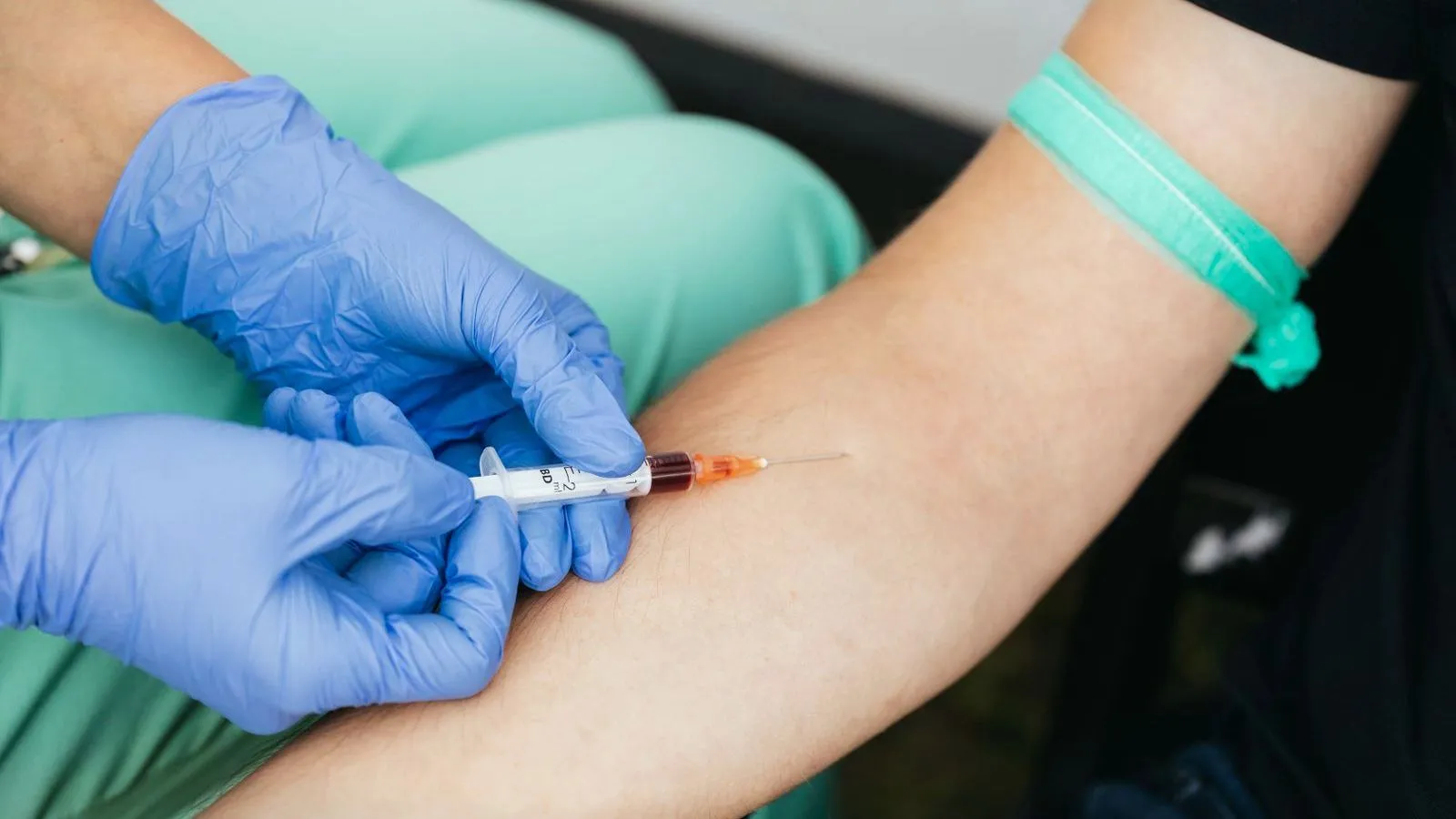
- Of 121 routine tests, 10 differed with fasting time when the same patients were compared across visits.
- After fasts under 8 hours, glucose was 10.8% higher and triglycerides 20.1% higher than after 12 hours or more.
- No test differed between a fast of 8 to 12 hours and a fast of more than 12 hours.
- Blood counts, salts, kidney tests, most liver tests and total cholesterol differed by less than the accepted margin.
- The data come from one hospital, fasting times were self-reported, and effects on diagnoses were not measured.
Most people who have had blood drawn know the instruction: nothing to eat after midnight. A study of 101,148 patients at a hospital near Seoul has now checked how much that fast changes the numbers. For most routine tests the answer was not at all, and going without food for longer than 12 hours made no difference to any of them.
A few tests did move. Blood sugar, a blood fat called triglycerides and two enzymes read higher when people had eaten within the previous 8 hours. The study was published on September 28 in JAMA Internal Medicine.
Its authors do not say fasting can be dropped. They say it matters for some tests and not others, and that the usual blanket rule is wider than the evidence.
Why patients fast before blood tests
Millions of patients are told to fast before blood tests, as News-Medical’s report on the study put it. The reason is that food changes the blood for a few hours. Sugar and fat from a meal are absorbed, and hormones and enzymes respond. To keep a meal from distorting a result, patients are routinely instructed to fast for 8 to 12 hours before blood sampling.
The rule began with two measurements. Fasting is a practice that originated with lipid and glucose testing but is now applied by default to much broader test panels, the authors write, lipid meaning the cholesterol and fat measurements. Recommendations on the optimal fasting duration remain inconsistent.
The inconsistency is long-standing. A European laboratory working group noted in 2014 that standardized protocols for patient preparation for laboratory testing are currently lacking, as things stood then. It pointed out that a fast is not even defined the same way everywhere, down to what is and what is not allowed (e.g., coffee, tea, smoking, water) during the period of fasting.
How the fasting study was done
The data came from a 670-bed secondary-care university hospital located in the Seoul metropolitan area of Korea, secondary care meaning hospital care that patients reach by referral. When an outpatient arrived for a blood draw that included a fasting test, staff asked when they had last eaten. Fasting duration was documented at the outpatient phlebotomy unit, the room where blood is drawn, at the time of the draw.
Over almost three years that produced 9,755,547 results from 101,148 adult patients across 372 test items. The team sorted each sample into one of three groups: a fast of less than 8 hours, 8 to 12 hours, or more than 12 hours.
Most people had fasted longer than the 8 to 12 hours asked of them. Most tests were drawn after long fasts, with about 90% of results in the group that had gone more than 12 hours.
Comparing those groups directly has an obvious flaw. People who turn up having eaten recently may be different people, seen for different reasons, from those who arrive fasted first thing in the morning. So the team added a second analysis. They found patients who had the same test on different visits after different lengths of fast, and compared each person with themselves.
To decide whether a difference mattered, they used a benchmark from a European laboratory federation: for each test, the amount by which a result can vary before the change is considered clinically meaningful.
Which blood tests changed with fasting time
Of 121 tests with enough data, 27 differed between the fasting groups by more than the benchmark. Then came the within-person check. Of the 27 analytes exceeding the specification between groups, 10 were reproduced within individuals, analytes being the substances a test measures and the specification being the benchmark.
The other 17 had been an artifact. The authors describe this as indicating that these between-group differences largely reflected differences between patients rather than fasting duration.
Ten tests held up. The six with reported figures are in the table: four measurements were higher with less than 8 hours fasting, and two were lower. The paper names three more that held up, a second glucose measure, total carbon dioxide and a tumor marker called CA 125.
| Test | What it measures | Difference after a fast under 8 hours, compared with over 12 hours |
|---|---|---|
| Glucose | Blood sugar | 10.8% higher |
| Triglycerides | A blood fat | 20.1% higher |
| GGT | A liver enzyme | 14.8% higher |
| Lipase | A pancreatic enzyme | 36.4% higher |
| Total bilirubin | A pigment cleared by the liver | 17.0% lower |
| Vitamin D | The body’s vitamin D level | 9.9% lower |
GGT is short for gamma-glutamyl transferase, and its rise after eating had rarely been reported before. The lipase figure rests on a small number of paired patients, and its plausible range ran from 15.7% to 57.1%.
Two results went the other way, reading lower after a short fast. In the paper’s wording, total bilirubin and vitamin D were higher with fasting more than 12 hours, which is the same comparison seen from the other end.
What a longer fast did not change
The comparison that matters most to patients is between a normal overnight fast and a longer one. There was nothing to see. In the authors’ words, prolonged fasting beyond 12 hours conferred no measurable advantage for any analyte, including triglycerides, and represents an avoidable burden for patients.
The bulk of the routine panel was also steady across all three groups. For most routine tests, including the complete blood count, electrolytes, kidney and liver function tests, differences were within the benchmark or disappeared in the within-person check. Total cholesterol and HDL-C differed no more than 3%, HDL-C being the so-called good cholesterol. Electrolytes are blood salts such as sodium and potassium, and a complete blood count tallies the cells in a sample.
One apparent signal turned out to be a lesson in caution. HbA1c, a measure of average blood sugar over the previous two to three months, was slightly higher in samples taken after short fasts. A single skipped breakfast cannot alter it. The authors note that neither HbA1c nor a similar long-term marker can change acutely with a single fasting interval. Their explanation is that patients tested without fasting were more often being seen at an unscheduled visit, when their diabetes was less well controlled. The fast had not changed the result. The patients had changed.
How quickly blood sugar falls after a meal
Because fasting time was logged in half-hour steps for people who had eaten within 8 hours, the team could trace what happens after a meal.
Glucose was the clear case. On the authors’ statistical model, adjusted glucose was lower by 4.3 mg/dL per additional hour of fasting, mg/dL being milligrams per deciliter, the usual US unit. The average reading went from 134.0 mg/dL at half an hour after eating to 113.3 mg/dL at four hours, and after that it leveled off. For comparison, a fasting glucose of 126 mg/dL is the usual line for diagnosing diabetes, so the average reading soon after a meal sat above that line.
That is why the authors hold to the rule for this test. They write that traditional 8-hour or more fasting requirements remain necessary for accurate fasting glucose measurements and diabetes screening.
Lactate, a product of muscle and gut metabolism measured mostly in hospital patients, behaved similarly. Adjusted lactate was 27.9% lower over the same interval. Cholesterol and triglycerides showed no steady trend within those first hours.
Where this fits: a decade of evidence on fasting and cholesterol tests
For cholesterol the new study confirms what was already known, and several countries have acted on it.
In 2012 two pathologists in Calgary examined the results of everyone tested in their region over six months. A total of 209,180 individuals (111,048 females and 98,132 males) were included in the study. The mean levels of total cholesterol and high-density lipoprotein cholesterol differed little among individuals with various fasting times, while the mean triglyceride levels showed variations of up to 20%. Their conclusion was that fasting for routine lipid levels is largely unnecessary.
Four years later two European societies, one for heart disease and one for laboratory medicine, made that official. “We therefore recommend the routine use of non-fasting lipid profiles,” their joint statement said. One country had already moved. Since 2009, non-fasting lipid testing has become the clinical standard in Denmark, the statement noted.
Their reasoning went beyond accuracy. Patients are often inconvenienced by having to return on a separate visit for a fasting lipid profile and may default on essential testing, the statement noted.
The remaining worry was whether a non-fasting number predicts heart disease as well as a fasting one. A 2019 analysis answered it using participants in a blood pressure trial who had both kinds of test, with nonfasting and fasting lipid levels measured 4 weeks apart. Nonfasting samples had modestly higher triglyceride levels and similar cholesterol levels compared to fasting samples. Associations of nonfasting lipid levels with coronary events were similar to those for fasting lipid levels.
Fasting also carries a cost that rarely appears in laboratory studies. People with diabetes who take insulin or certain tablets can have their blood sugar drop dangerously low if they skip a meal. A 2020 review raised the case of patients who fast for laboratory tests and commute to the laboratory facility while fasting. The fasting tradition poses a risk of hypoglycemia, especially in patients with diabetes, the reviewers wrote, hypoglycemia meaning low blood sugar.
What the Korean study adds is everything outside the lipid panel. Liver and kidney tests, blood counts and hormones had been swept into the fasting rule with little evidence either way.
Limits of the fasting study
The data come from a single secondary-care hospital in Korea and are restricted to outpatient phlebotomy. Meals differ between countries, and the size of the after-meal changes may differ with them.
Nobody checked the clock. The design prevented the researchers from controlling meal composition or verifying patient-reported fasting times.
The study measured average shifts, not consequences. “We did not evaluate how often a fasting-related difference would move a result across a clinically meaningful decision threshold,” the authors write. A 10% change in glucose is harmless for most people and decisive for someone near a diagnostic line.
Many tests entered the analysis by a side door. Fasting time was recorded only when a fasting test was ordered, so tests that never require fasting were included only when ordered alongside one.
The patients were not typical of everyone who has blood drawn. The study sample skewed toward older adults, with a median age of 61.
Comparing a patient with themselves removes stable differences between people. It does not remove what changes between visits, such as illness, new medication or the time of day, as the HbA1c result showed.
The authors’ own summary is conditional. If confirmed by prospective multicenter studies, this analyte-specific approach could reduce patient burden while maintaining test accuracy. By that they mean setting fasting rules test by test, and prospective multicenter studies are ones planned in advance and run at several hospitals. Which tests need a fast, and for how long, is decided by the clinician who orders them.
At one Korean hospital, blood sugar, triglycerides and two enzyme readings were higher after eating within 8 hours, most routine tests were no different, and nothing differed after fasts beyond 12 hours, in records that relied on patients’ own account of their last meal.
People also ask
Which blood tests were affected by how long people fasted?
Mainly four ran higher. When the same patients were tested after a fast under 8 hours and after one over 12 hours, glucose was 10.8% higher, triglycerides 20.1% higher, the liver enzyme GGT 14.8% higher and the pancreatic enzyme lipase 36.4% higher after the short fast.
Which tests were not affected?
Most of them. The complete blood count, electrolytes, kidney function tests, most liver tests, and total and HDL cholesterol either stayed within the accepted margin or showed no difference once the same patients were compared with themselves.
Is a longer fast more accurate?
Not in this study. No test differed meaningfully between fasts of 8 to 12 hours and fasts of more than 12 hours, and the authors called fasting beyond 12 hours an avoidable burden. About 90% of the results they analyzed came from fasts longer than 12 hours.
Is fasting still needed for a blood sugar test?
The authors say so. Glucose was about 4.3 mg/dL lower for each extra hour without food in the first hours after a meal, and they conclude that a fast of 8 hours or more remains necessary for accurate fasting glucose measurement and diabetes screening.
Does this change the instructions for a test?
No. The study is from a single hospital and the authors want it confirmed elsewhere before practice changes. Which tests need fasting, and for how long, is decided by the clinician who orders them. This is general information rather than medical advice.
References
- Shin, S., Kim, S., Yu, S., et al. Fasting Duration and Differences Across Routine Laboratory Tests. JAMA Internal Medicine, 2026.
- Sinha Dutta, S. Do you really need to fast before a blood test? It depends on the test. News-Medical, 2026.
- Sidhu, D., Naugler, C. Fasting Time and Lipid Levels in a Community-Based Population. Archives of Internal Medicine, 2012.
- Nordestgaard, B. G., Langsted, A., Mora, S., et al. Fasting is not routinely required for determination of a lipid profile: a joint consensus statement from the European Atherosclerosis Society and European Federation of Clinical Chemistry and Laboratory Medicine. European Heart Journal, 2016.
- Mora, S., Chang, C. L., Moorthy, M. V., Sever, P. S. Association of Nonfasting vs Fasting Lipid Levels With Risk of Major Coronary Events in the Anglo-Scandinavian Cardiac Outcomes Trial-Lipid Lowering Arm. JAMA Internal Medicine, 2019.
- Abdelfattah, O. M., Hassanein, M., Saad, A. M., et al. Fasting-Evoked En Route Hypoglycemia in Diabetes (FEEHD): From Guidelines to Clinical Practice. Current Diabetes Reviews, 2020.
- Simundic, A. M., Cornes, M., Grankvist, K., et al. Standardization of collection requirements for fasting samples. Clinica Chimica Acta, 2014.