News · Heart & Metabolic
Safiglipron, a GLP-1 pill with no fasting rules, matched or beat dapagliflozin on blood sugar
In a double-blind trial of 810 Chinese adults on metformin, all three doses of the oral drug lowered blood sugar at least as much as dapagliflozin, with more stomach side effects and no extra weight loss.
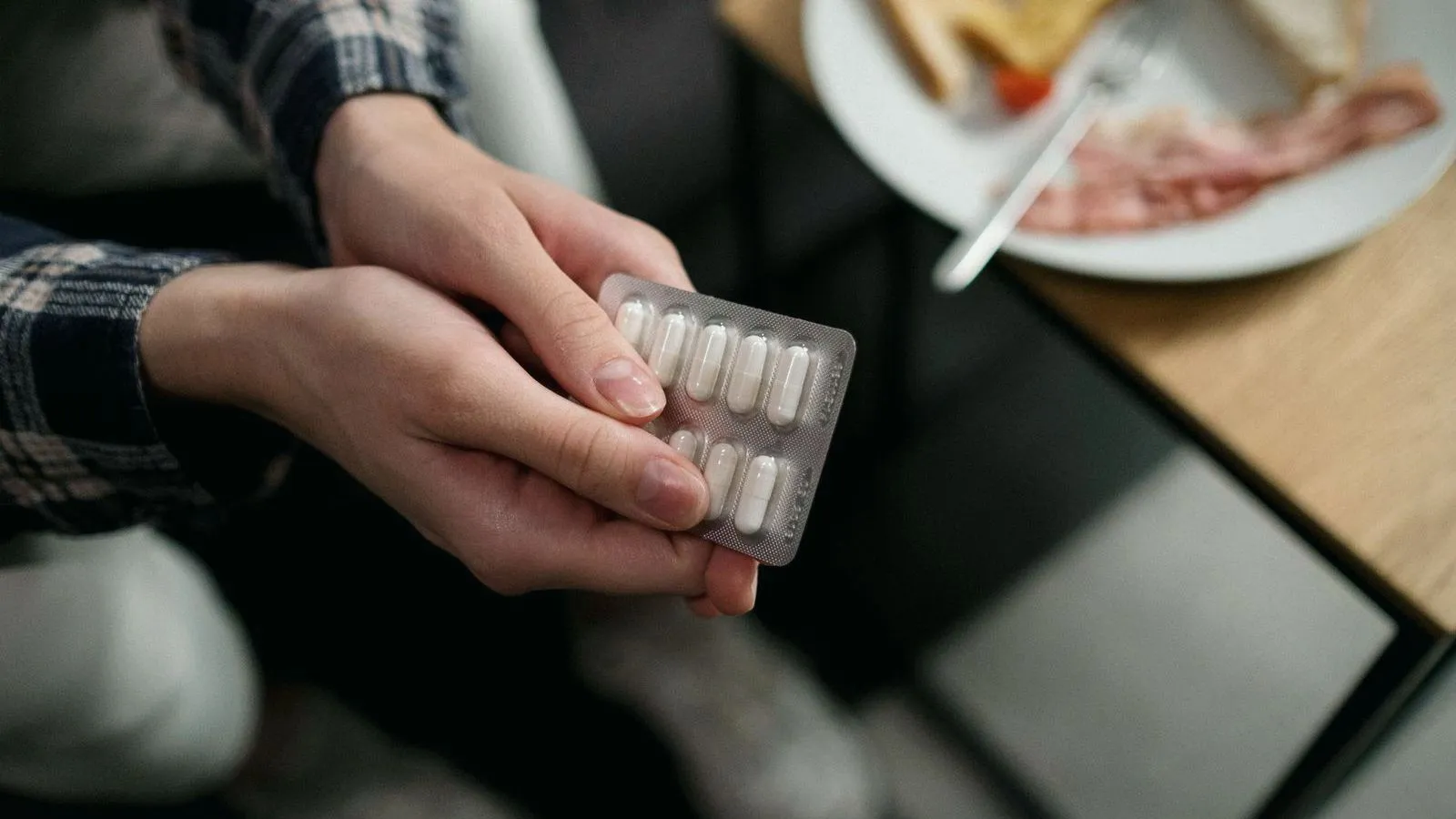
- Safiglipron, a once-daily GLP-1 pill that needs no fasting, lowered blood sugar at least as much as dapagliflozin.
- Only the highest dose formally proved better than dapagliflozin, by a small margin, after 32 weeks.
- More than half of people on safiglipron reached the usual blood sugar target, against about a third on dapagliflozin.
- Weight loss was similar, about 2% to 4%, but safiglipron caused more nausea and more people stopped taking it.
- The trial was in China, funded by the maker, and did not measure heart attacks, strokes or kidney failure.
Drugs that copy the gut hormone glucagon-like peptide-1, or GLP-1, changed diabetes and obesity care as injections, and the race now is to put them in a pill that people will actually take. The first oral version, semaglutide tablets, works but comes with a morning ritual: it has to be swallowed fasting, with only a little water. A newer kind of GLP-1 medicine, made from a small chemical molecule, skips that step.
One of them, safiglipron, has now been tested head to head against a standard second-line diabetes drug. In a trial of 810 adults in China whose type 2 diabetes was not controlled by metformin, all three doses of the once-daily pill lowered blood sugar at least as much as dapagliflozin, a widely used tablet, and the highest dose lowered it a little more. The results, from a team led by Lixin Guo of the Chinese Academy of Medical Sciences and Peking Union Medical College, were published on October 5 in Nature Medicine. Safiglipron did not beat dapagliflozin on weight, and it caused more stomach side effects.
What is safiglipron, and why do fasting rules matter?
GLP-1 receptor agonists copy a gut hormone that tells the pancreas to release insulin after a meal, slows the stomach and blunts appetite. Most are peptides, chains of amino acids that the gut breaks down, which is why the early drugs had to be injected. The first GLP-1 pill, oral semaglutide, spares people the needle, but it comes with a condition: as the safiglipron trial’s authors put it, it requires fasting administration with restricted water intake.
Safiglipron belongs to a newer group. The authors describe it as an oral non-peptide small-molecule GLP-1 receptor agonist with high oral bioavailability, meaning a compact chemical that is well absorbed when swallowed. In the trial it was administered without fasting or dietary restrictions, and the authors point out that, unlike oral semaglutide, it does not require an absorption enhancer. It was developed by Jiangsu Hengrui Pharmaceuticals and licensed outside Greater China to the US company Kailera Therapeutics in 2024, which is testing it for obesity as KAI-7535. Hengrui sponsored and funded the trial, and five of the paper’s authors worked for the company.
Why the OUTSTAND-2 trial pitted safiglipron against dapagliflozin
For most people with type 2 diabetes, metformin comes first. When it is not enough, the authors note, GLP-1 drugs and SGLT2 inhibitors are the preferred pharmacologic additions in this setting. SGLT2 inhibitors are tablets such as dapagliflozin, a selective inhibitor of sodium-glucose cotransporter 2, a protein the kidneys use to take sugar back into the blood, so that extra sugar passes out in urine. A pill that only beats a placebo tells doctors little about where it belongs. One that holds its own against dapagliflozin is a real alternative.
Safiglipron had already beaten a placebo. In the companion OUTSTAND-1 trial, published in Nature Medicine a week earlier, 284 adults with type 2 diabetes managed with diet and exercise alone took safiglipron or a dummy pill, and the drug lowered their blood sugar clearly more.
OUTSTAND-2 asked the harder question. At 98 sites in China, the researchers enrolled adults whose diabetes was not controlled on a stable dose of metformin. Of 1,431 participants screened, 810 underwent randomization into four groups of about 200: safiglipron at 30, 60 or 90 mg, or dapagliflozin 10 mg, all on top of metformin. The trial was double-blind and double-dummy, which means everyone swallowed two tablets each day, one of them a dummy, so that neither patients nor doctors could tell who was on which drug. Safiglipron started at 30 mg and was raised every four weeks to the assigned dose.
The participants were on average 52 years old, about two thirds were men, and they had had diabetes for a median of five years. Their average HbA1c, a blood test that reflects average blood sugar over the past two to three months, was 8.60% at the start, well above the 7% that is a common treatment target.
How far blood sugar and weight fell on each drug
After 32 weeks, HbA1c had dropped by about 1.5 to 1.7 percentage points on safiglipron, depending on the dose, and by about 1.3 points on dapagliflozin. The gaps between the drugs were small, between 0.2 and 0.4 points in safiglipron’s favor. The trial tested those gaps in a fixed order. The first question was whether safiglipron was no worse than dapagliflozin, and the upper confidence limits were below the prespecified margin of 0.4 points for all three doses, so all three passed. The stricter question, whether it was better, was judged with a second analysis that counts everyone as assigned, including people who stopped the drug or needed rescue treatment. On that analysis the 90 mg dose met the prespecified statistical criterion for superiority, with an advantage of about 0.25 points. The 60 mg dose fell short, so the sequence stopped there and the tests planned after it were not counted as confirmed. The 30 and 60 mg results lean in safiglipron’s favor, but they are not formal proof that those doses beat dapagliflozin.
The difference showed up more plainly in who reached the target. On safiglipron, 55.7%, 54.9% and 63.5% of people on the three doses got their HbA1c below 7%, against 36.5% on dapagliflozin. Very few people on either drug needed extra rescue treatment.
Weight was a draw. People on safiglipron lost 2.4%, 3.6% and 4.2% of their body weight on the three doses, and those on dapagliflozin lost 3.6%. At the group’s average starting weight of 74.7 kg, that is roughly 2 to 3 kg on either drug, and no dose was better than dapagliflozin.
The authors also report modest improvements in blood pressure, blood fats called triglycerides and protein in the urine, but these were exploratory measures that the study was not designed to test. Treatment continued for another 20 weeks, to a full year, to check that the effect lasted; the authors describe the year-long results as supportive and present them separately from the main analysis.
Nausea, dropouts and low blood sugar on safiglipron
The side effects followed the usual GLP-1 pattern. The most common adverse events were gastrointestinal, including nausea, vomiting and diarrhea, mostly mild to moderate, and the authors report that first-onset gastrointestinal events accumulated predominantly during the dose-titration period, the weeks when the dose was being stepped up. Side effects led about 4% of people on each safiglipron dose to stop the drug for good, mostly because of stomach problems, against 1.5% on dapagliflozin. More people on safiglipron also left treatment early for any reason: 82% to 88% completed the year, against 93% on dapagliflozin.
Low blood sugar was more common on safiglipron, though rarely serious. Mild episodes occurred in 6% to 9% of people on safiglipron and in 2.5% on dapagliflozin, a handful on safiglipron had more marked episodes, and no episodes of severe hypoglycemia were reported. Serious adverse events of any kind were not more common on safiglipron overall than on dapagliflozin. One participant on the 90 mg dose died of a heart attack, which the investigators judged unrelated to the drug. Kailera, the drug’s licensee outside Greater China, said in July that no liver safety signal was observed in the trial.
How safiglipron compares with oral semaglutide and orforglipron
Safiglipron has company. Orforglipron, another small-molecule GLP-1 pill, lowered HbA1c by between 1.24 and 1.48 points against 0.41 on placebo in a 40-week trial of people with early type 2 diabetes, and its side effects were mostly mild-to-moderate gastrointestinal events that clustered during dose increases, the same pattern seen here. In a separate trial described in the Nature Medicine paper’s discussion, orforglipron was superior to dapagliflozin for HbA1c and also produced more weight loss at its higher doses, which safiglipron did not.
Oral semaglutide has its own head-to-head record. In the PIONEER 2 trial, 822 patients with type 2 diabetes uncontrolled on metformin were randomized to oral semaglutide or empagliflozin, another SGLT2 inhibitor. Oral semaglutide lowered HbA1c more but was not better for weight at six months, and gastrointestinal adverse events were more common on it. The orforglipron-versus-dapagliflozin trial and PIONEER 2 were both open-label, with patients and doctors aware of who took which medicine. The OUTSTAND-2 authors argue that the double-blind design is what sets their trial apart, calling it a rigorous comparison that, in their words, “has previously been evaluated only in open-label trials.”
Across the three pills the pattern holds. Set against an SGLT2 inhibitor, the oral GLP-1 medicines lower blood sugar a little more, bring more stomach upset, and give mixed results on weight in people with diabetes. The OUTSTAND-2 authors’ own summary is modest: on blood sugar, oral GLP-1 pills offer efficacy at least similar to that of SGLT2 inhibitors.
Heart and kidney outcomes, the evidence safiglipron still lacks
The study enrolled only Chinese participants, so the results may not carry over to other populations. It did not use continuous glucose monitors, so it cannot say how much of the day people spent in a healthy blood sugar range. And it measured blood sugar, weight and side effects, not heart attacks, strokes or kidney failure. The long-term cardiovascular or kidney outcomes remain undetermined, the authors write, and are being studied in a separate heart and kidney outcomes trial called RENEW-CKD.
That gap matters because of what dapagliflozin brings. The DECLARE-TIMI 58 trial followed 17,160 people with type 2 diabetes on dapagliflozin or a placebo for a median of four years. Dapagliflozin did not lower the rate of major cardiovascular events such as heart attacks and strokes. It did result in a lower rate of cardiovascular death or hospitalization for heart failure, mostly through fewer heart failure admissions, and it cut kidney events too. Outcome trials like that, for SGLT2 inhibitors and injectable GLP-1 drugs, inform broader recommendations for cardiorenal protection, meaning protection of the heart and kidneys, in the consensus report of the American Diabetes Association and the European Association for the Study of Diabetes. For safiglipron, that kind of evidence does not exist yet.
The study was also funded and partly run by the company that makes safiglipron. Double-blinding limits what that can change, but no independent group has yet repeated the results.
Where safiglipron could fit in diabetes treatment
For a person whose diabetes is not controlled on metformin, the results point to a possible third kind of oral option, alongside an SGLT2 inhibitor and oral semaglutide: a GLP-1 pill with no fasting ritual that lowered blood sugar slightly more than dapagliflozin and caused more stomach upset. Which drug suits a particular person depends on their heart and kidney health, weight, side effects and cost, and is decided with their doctor. Do not stop or change a prescribed medicine without talking to your doctor.
On blood sugar, safiglipron proved itself a match for a standard drug in this trial; whether it also protects the heart and kidneys is still unknown.
People also ask
How much did safiglipron lower HbA1c compared with dapagliflozin?
After 32 weeks, HbA1c fell by 1.58, 1.50 and 1.68 percentage points on safiglipron 30, 60 and 90 mg, against 1.28 points on dapagliflozin 10 mg, from an average start of 8.60%. The differences were -0.30 (95% CI -0.51 to -0.09), -0.22 (-0.44 to -0.01) and -0.40 (-0.62 to -0.19). All three doses met the trial's non-inferiority margin of 0.4 points. Superiority was tested separately, in a fixed order, using a stricter treatment-policy analysis that counts everyone as randomized, including people who stopped the drug or needed rescue treatment. On that analysis 90 mg passed (difference -0.25, 95% CI -0.45 to -0.05) and 60 mg did not, so the sequence stopped and no lower dose was formally shown to be superior.
What side effects did safiglipron cause?
Stomach and gut problems such as nausea, vomiting and diarrhea were the most common, mostly mild to moderate and concentrated in the weeks when the dose was being raised. Side effects led 4.0%, 4.0% and 3.9% of people on the three doses to stop, against 1.5% on dapagliflozin. Mild low blood sugar was reported in 6.4% to 9.4% of people on safiglipron and 2.5% on dapagliflozin, and there were no severe episodes.
How is safiglipron different from oral semaglutide?
Oral semaglutide is a peptide, a small protein, and has to be taken fasting, with only a little water. Safiglipron is a small, non-peptide molecule that the trial gave without fasting or dietary restrictions, and it does not need an absorption enhancer.
Does safiglipron protect the heart or kidneys?
That is not known. OUTSTAND-2 measured blood sugar, weight and side effects, not heart attacks, strokes or kidney failure. The authors say a separate outcomes trial, RENEW-CKD, is under way. Dapagliflozin, the comparison drug, has outcome-trial evidence of fewer hospital admissions for heart failure and fewer kidney events.
Who makes safiglipron?
It was developed by Jiangsu Hengrui Pharmaceuticals, which also sponsored OUTSTAND-2, under the code name HRS-7535, and licensed outside Greater China to Kailera Therapeutics in 2024. Kailera says more than 2,000 patients have taken it in clinical trials in China. Which diabetes medicines suit a person is decided with their doctor. This is general information rather than medical advice.
References
- Guo, L., Yu, D., Xu, Y., Tang, G., Peng, L., Meng, C., et al. Oral small-molecule GLP-1RA safiglipron versus dapagliflozin in type 2 diabetes: a randomized, double-blind, active-comparator-controlled phase 3 trial. Nature Medicine, 2026.
- Yu, M., Peng, L., Jiang, C., et al. Oral small-molecule GLP-1 receptor agonist safiglipron in early type 2 diabetes: a randomized, double-blind, placebo-controlled trial. Nature Medicine, 2026.
- Rodbard, H. W., Rosenstock, J., Canani, L. H., et al. Oral Semaglutide Versus Empagliflozin in Patients With Type 2 Diabetes Uncontrolled on Metformin: The PIONEER 2 Trial. Diabetes Care, 2019.
- Rosenstock, J., Hsia, S., Nevarez Ruiz, L., et al. Orforglipron, an Oral Small-Molecule GLP-1 Receptor Agonist, in Early Type 2 Diabetes. New England Journal of Medicine, 2025.
- Wiviott, S. D., Raz, I., Bonaca, M. P., et al. Dapagliflozin and Cardiovascular Outcomes in Type 2 Diabetes. New England Journal of Medicine, 2019.
- Davies, M. J., Aroda, V. R., Collins, B. S., et al. Management of Hyperglycemia in Type 2 Diabetes, 2022. A Consensus Report by the American Diabetes Association (ADA) and the European Association for the Study of Diabetes (EASD). Diabetes Care, 2022.