News · Supplements
Garlic lowered average blood sugar by half a point across 27 trials, but fasting glucose barely moved
27 randomized trials and 1,619 people. Garlic supplements lowered long-term average blood sugar by about half a percentage point, a shift comparable to some drugs. Fasting glucose barely moved, which is hard to square.
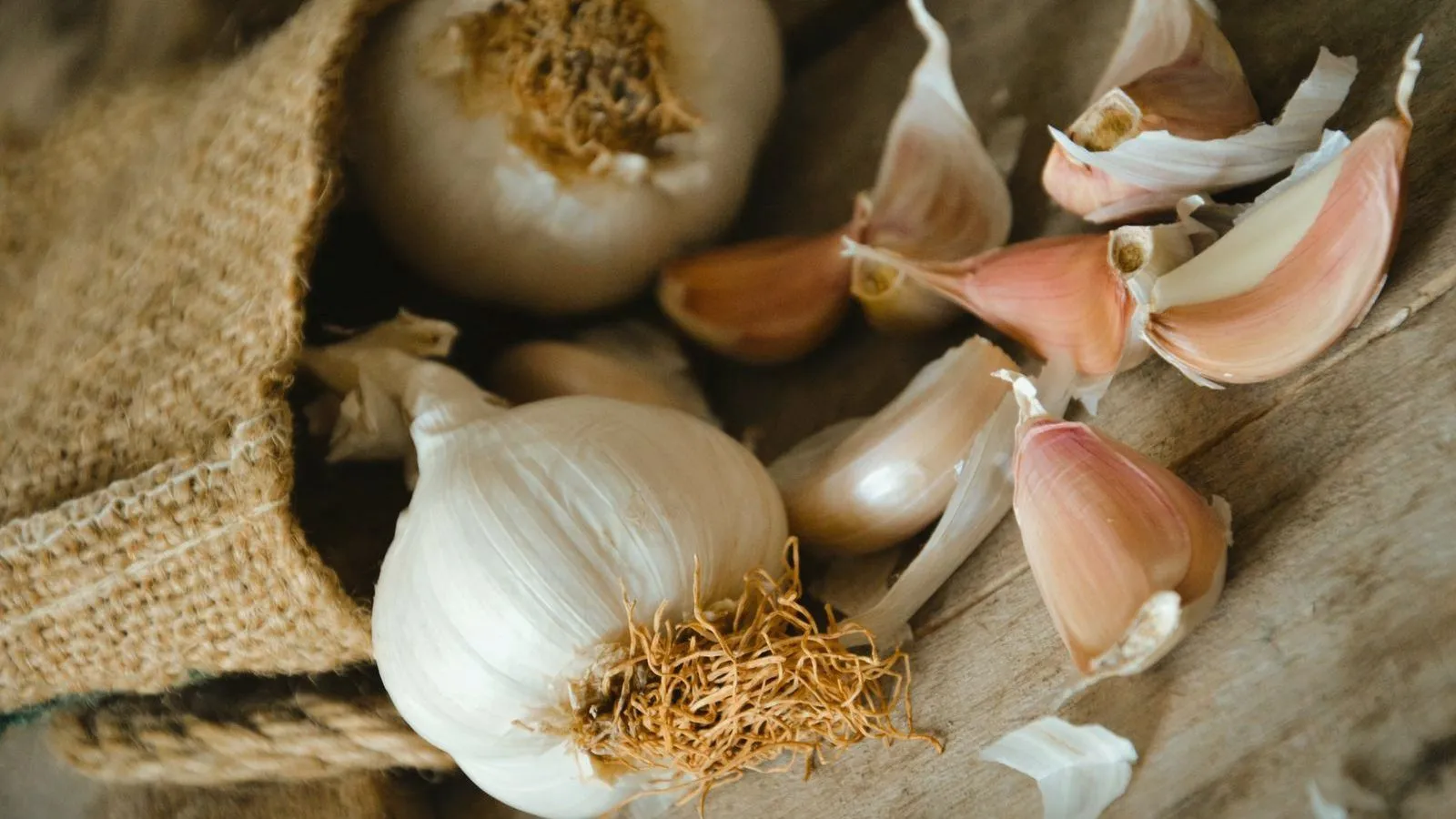
- 27 randomized trials and 1,619 people, searched to January 2026, registered in advance.
- Long-term average blood sugar fell about half a percentage point, a useful size.
- Fasting glucose fell by an amount close to nothing, which sits oddly with that.
- Insulin and insulin resistance did not move.
- Lower doses worked better than higher ones, which is usually a warning sign.
Garlic has been promoted as a blood sugar remedy for about as long as people have written things down. Ancient writings from Egypt, Greece, and India describe its use for a variety of health problems, and it is currently promoted as a dietary supplement for purposes including helping to manage high blood cholesterol, high blood pressure, and diabetes.
Alsanie and colleagues pooled 27 randomized trials and 1,619 people to see what the modern evidence says, and got a result with a genuine surprise in it. Garlic supplementation significantly reduced glycated hemoglobin by about half a percentage point, which is the sort of movement some prescription drugs produce.
The fasting glucose reading barely shifted at all. Those two things are difficult to hold together.
The blood sugar number that would matter
Glycated hemoglobin, or HbA1c, measures how much sugar has stuck to your red blood cells, and because those cells live about three months it works as a running average rather than a snapshot. It is the number a diabetes clinic actually manages. The drop was 0.53 percentage points. For scale, that is in the territory occupied by real medication, and it is a much bigger claim than the one the National Center for Complementary and Integrative Health currently makes, which is that garlic supplements may reduce blood sugar to a small extent in people with diabetes.
The review is also better built than most supplement meta-analyses. The searches ran across PubMed, Scopus and Web of Science Core Collection up to January 2026, the protocol was registered in PROSPERO, and the team ran subgroup, sensitivity and meta-regression analyses along with a dose-response model. Registering first is what stops the question being chosen after the answer is visible.
Where the garlic numbers stop adding up
Fasting glucose fell too, by 2.76 mg/dL. Converted into the units used outside the United States that is roughly a seventh of a millimole, which is to say almost nothing, and well inside the variation you would get by taking the same person’s blood twice on the same morning.
Now put the two together. If the three-month average dropped half a percentage point, the glucose making up that average has to have been meaningfully lower for months. A fasting reading that has barely moved is not, on its own, evidence against that, because fasting glucose is one measurement taken at one moment and says nothing about what happens after meals. But the studies here did not pool after-meal glucose, so the mechanism that would reconcile the two numbers is asserted rather than shown.
Insulin and insulin resistance offer no help either. Both came back with no significant effects, which removes the most obvious explanation for how a supplement might be improving glucose handling: if garlic were making cells more responsive to insulin, the insulin resistance measure is where that would show, and it did not move. So the headline result stands on one outcome, unsupported by the three measured alongside it.
The garlic dose curve points the wrong way
The dose-response analysis contains the detail that should slow everyone down. Nonlinear dose-response analysis indicated greater reductions in fasting glucose and insulin at lower doses of 0.5 g/day or less.
Less garlic worked better than more garlic.
There are ways that could be true. Compounds do sometimes have narrow effective windows, and higher doses of garlic bring gastrointestinal side effects that could reduce adherence in ways a trial never records. The likelier explanation is duller and more familiar. In meta-analysis, an inverse dose relationship is a classic signature of small-study effects: little trials with the least methodological rigour tend to report the largest results, and they also tend to use whatever dose was cheap. When effect size tracks study characteristics rather than exposure, the pattern usually lives in the literature rather than in the biology.
What the garlic authors conclude
They hedge, correctly. Garlic supplementation may lead to modest improvements in glycemic control, particularly in fasting glucose and HbA1c; however, further high-quality RCTs are needed to confirm these findings. “Further high-quality RCTs are needed” is doing real work in that sentence. It concedes that the 27 trials pooled here were not, on average, high quality, which is the ordinary state of the botanical supplement literature: small trials, short durations, and inconsistent products.
That inconsistency deserves its own mention, because garlic supplements are not one substance. Raw garlic, aged garlic extract, garlic powder and garlic oil differ in what they actually contain, in how much of the active sulfur compounds survive processing, and in whether anything measurable reaches the bloodstream at all. A meta-analysis pools them as though the word on the label were the exposure.
Where this leaves the garlic in the cupboard
A half-point drop in a three-month blood sugar average would be worth having, and this is the most rigorously assembled evidence yet that it might be real. It is not evidence that it is. Anyone with diabetes should treat it as a lead rather than a plan, and specifically should not adjust medication around it. Garlic also thins the blood, so it belongs in a conversation with a doctor rather than a quiet addition to a routine, particularly alongside anticoagulants.
Two more general points survive. Dietary supplements do not have to go through the testing that drugs do, so the gap between what a label implies and what a trial shows is wider here than in pharmacy. And eating garlic in food is not what any of this measured, which is worth remembering before anyone changes what they cook.
People also ask
What did the meta-analysis find?
Garlic supplementation significantly reduced FBG (WMD = -2.76 mg/dL; 95% CI: -5.11, -0.41) and HbA1c (WMD = -0.53%; 95% CI: -0.86, -0.20), with no significant effects on insulin (WMD = -1.18 microIU/mL; 95% CI: -2.91, 0.55) or HOMA-IR (WMD = -0.30; 95% CI: -0.72, 0.12).
Why is the HbA1c figure the interesting one?
Because 0.53 percentage points is a clinically useful amount. HbA1c, or glycated hemoglobin, reflects average blood sugar over roughly three months, and a drop of half a point is in the range some prescription diabetes drugs deliver. That is a large claim for a food supplement.
What is odd about the two results together?
They do not obviously fit. HbA1c is a summary of average glucose, so a half-point fall would normally accompany a clearly lower average glucose. The fasting glucose reduction here is 2.76 mg/dL, a fraction of what that implies. Fasting glucose is only one reading and after-meal glucose was not pooled, so the gap is not impossible, but it is the first thing a skeptical reader should notice.
What about the dose-response?
Nonlinear dose-response analysis indicated greater reductions in FBG and insulin at lower doses of 0.5 g/day or less. A supplement working better at lower doses runs against the usual pharmacological expectation, and in meta-analysis it is often a signature of small-study effects rather than of biology.
How was the review conducted?
A comprehensive search of PubMed, Scopus, and Web of Science Core Collection was conducted up to January 2026, with subgroup, sensitivity, and meta-regression analyses, and the protocol was registered in PROSPERO. Registering the plan before running the analysis is what stops the questions being chosen after the answers are visible.
What does NCCIH say about garlic?
More cautiously than this paper. Garlic supplements may reduce blood sugar to a small extent in people with diabetes, and separately may reduce total and LDL cholesterol to a small extent in people who have high blood cholesterol levels.
Should anyone with diabetes take garlic supplements?
Not as a substitute for anything. The authors themselves write that further high-quality RCTs are needed to confirm these findings. Garlic can thin the blood and interacts with some medicines, so anyone on anticoagulants or diabetes drugs should raise it with a doctor before starting. This is general information rather than medical advice.
References
- Alsanie, S. A., Alblaji, M., Almutairi, S. M., Alhodieb, F. S., Askarpour, M. Effects of garlic supplementation on glycemic indices in adults: a GRADE-assessed systematic review and dose-response meta-analysis of randomized controlled trials. Diabetes Research and Clinical Practice, 2026.
- National Center for Complementary and Integrative Health. Garlic. US National Institutes of Health.
- MedlinePlus. Dietary Supplements. US National Library of Medicine.