News · Supplements
Strawberry leaf extract failed its pre-planned memory test, then reported a win anyway
109 older adults took strawberry leaf extract or a placebo for 12 weeks. The pre-planned analysis found nothing, on memory or anything else. The paper is titled 'Enhanced memory function and reduced perceived stress'.
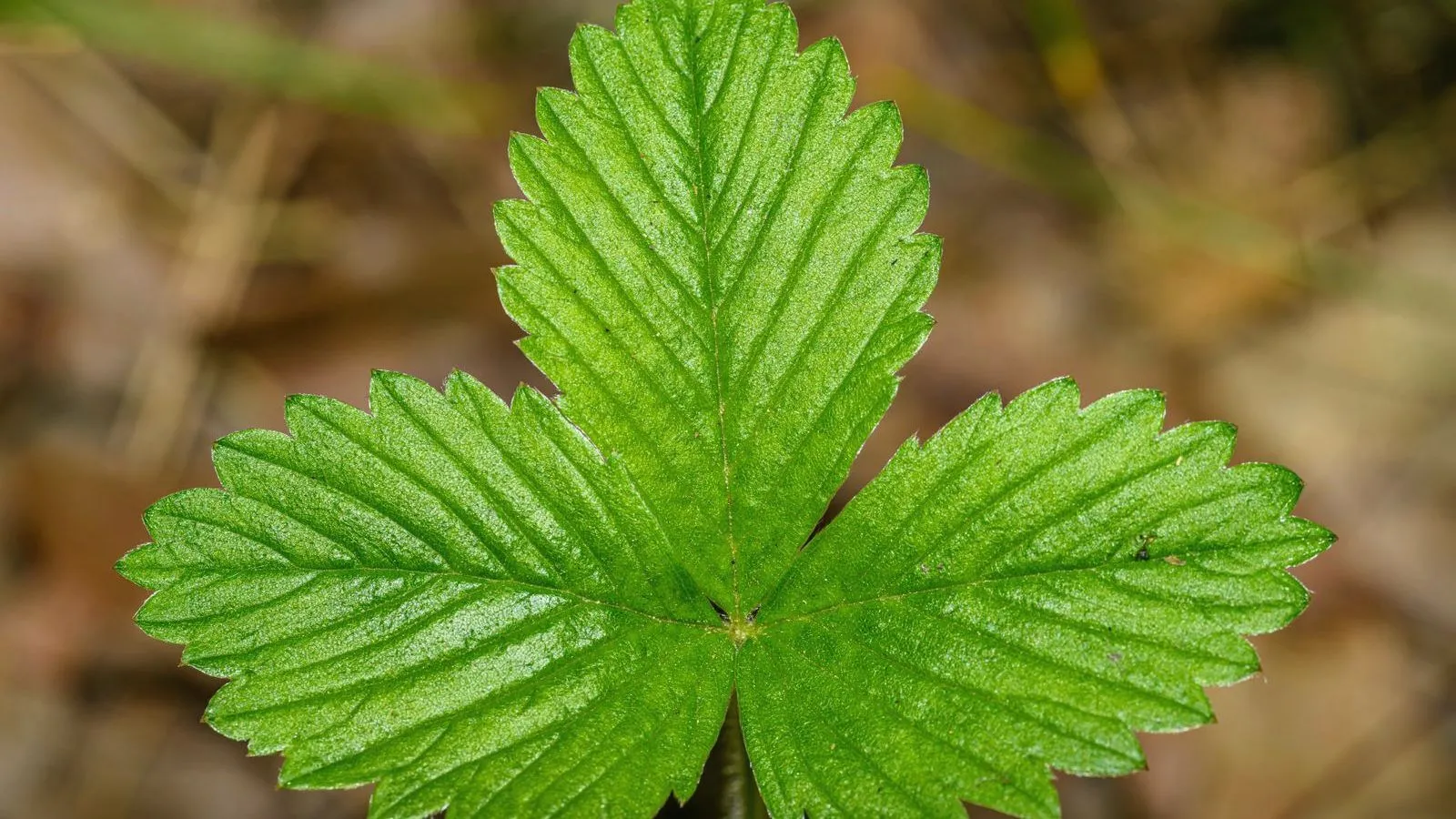
- 109 adults aged 60 to 80, randomized to 300 mg a day of the extract or a placebo.
- The pre-planned analysis found no effect on any primary or secondary outcome.
- Exploratory looks turned up some differences, and the title was built on those.
- Memory scores climb on their own when you sit the same test three times.
- The product was well tolerated, with no serious adverse events reported.
Start with the title of the paper: “Enhanced memory function and reduced perceived stress in older adults with self-reported memory complaints following strawberry leaf extract supplementation.”
Now the first line of its own results: no significant treatment-by-time interactions were observed for the primary or secondary outcomes in the mixed-effects models.
Both of those sentences describe the same trial. One of them is the analysis the researchers planned before they saw any data, and it is not the one on the cover.
What 109 people were asked to swallow for their memory
Strawberry leaf extract is a polyphenol-rich botanical supplement containing ellagitannins. Those are the compounds that also turn up in pomegranates and walnuts. Animal work had hinted at something: the authors write that it has been suggested to exert neuroprotective effects based on preclinical evidence, but that to date, no human studies have evaluated its potential benefits on cognitive performance.
This was the first human test, and its design was sound. 109 participants aged 60-80 years were randomly assigned to receive either the extract at 300 mg/day or a matching placebo for 12 weeks, double-blind, in people who had noticed their own memory slipping.
Cognition was measured properly too, with subtests from the Cambridge Neuropsychological Test Automated Battery targeting memory abilities and executive functioning, run at baseline, midpoint and endpoint.
Everything about that is the right way to ask the question. Then the answer came back empty.
The memory-test trap of sitting it three times
Having found nothing in the planned analysis, the researchers looked at the data other ways, and reported what they found as exploratory.
Two kinds of result came out. Exploratory analyses showed significant within-group improvements in episodic memory in the extract group, with fewer errors on a paired-associates task at week 6 and again at week 12, and the size of it looks impressive on its own.
It should not impress anyone. Sitting the same cognitive test three times makes you better at that test, an effect large enough that a separate analysis of nearly a thousand older adults put it at roughly a year of age-related decline. The placebo group had the same practice, which is the whole reason a placebo group exists. A within-group gain in a repeated-measures trial is a measure of familiarity, not of the capsule.
The second kind of result is the between-group comparison, which does control for that. Here the authors report differences favoring the extract on the memory task at week 6 and week 12, and on perceived stress at week 6.
Those are the numbers holding up the title. They are also exploratory, drawn from a battery of subtests across three timepoints, and one of them sits a hair inside the conventional threshold. Run enough comparisons on a null dataset and a few will look like this.
What the strawberry extract authors conclude
To their credit, they say it themselves. Although the primary analysis did not demonstrate significant treatment-by-time interactions, exploratory analysis suggested that the extract may have beneficial effect on episodic memory and self-perceived stress level, and further studies are warranted to confirm these effects.
That is an honest summary of a negative trial with a hint attached. It is a description of a lead, and the appropriate next step is another trial that names episodic memory as the primary outcome in advance and sees whether it survives.
The distance between that sentence and the title of the same paper is the thing worth noticing, because the title is what will be quoted in a product listing.
What the memory trial got right
Two things about the trial deserve saying plainly, because none of the above is a complaint about the work itself.
It was properly blinded and placebo-controlled in the population that matters, older adults who have noticed their own forgetfulness, rather than in students. And it was safe: the product was well tolerated, with no serious adverse events reported.
A first-in-human trial that finds no effect on its primary outcome has done its job. It has told the field something true and slightly disappointing, which is the more common shape of a real result.
Reading a supplement paper on your own
The habit worth taking from this one is short. Find the primary outcome, find whether it was met, and treat everything else as a question for the next study.
That matters here more than in most fields, because dietary supplements do not have to go through the testing that drugs do, so a marketing claim can rest on the phrase in a title rather than on the analysis underneath it.
Another plant compound has more behind it, though not much more. Cocoa flavanols, pooled across sixteen randomized trials and graded formally, produced a measurable improvement on timed tests of executive function.
And if the reason you are reading about memory supplements is your own memory, the useful distinction is a clinical one. Taking longer to learn something new is usually a sign of mild forgetfulness, often a normal part of aging. More serious memory problems could be due to mild cognitive impairment, dementia such as Alzheimer’s disease, or other factors beyond normal aging, and that is a question for a doctor rather than for a bottle.
People also ask
What was the primary result?
Null. In the authors' words, no significant treatment-by-time interactions were observed for the primary or secondary outcomes in the mixed-effects models. That is the analysis the trial was designed around, and it found nothing.
So where does the title come from?
From exploratory analyses run after the pre-planned one came back empty. Those showed within-group improvements in episodic memory in the extract group, with reductions in PAL total errors at Week 6 (-4.2 +/- 10.0; p = 0.001) and Week 12 (-5.5 +/- 11.2; p = 0.001), and between-group differences for PAL total errors at Week 6 (p = 0.016) and Week 12 (p = 0.048), plus perceived stress at Week 6 (p = 0.043).
Why is a within-group improvement weak evidence?
Because people get better at cognitive tests by taking them. This trial tested at baseline, midpoint and endpoint, so a within-group gain is exactly what practice produces. The placebo group would have had the same familiarity, which is precisely why the between-group comparison is the one that counts, and why the pre-planned version of it found nothing.
How was the trial run?
In this randomized, double-blind, placebo-controlled trial, 109 participants aged 60-80 years were randomly assigned to receive either strawberry leaf extract at 300 mg/day or a matching placebo for 12 weeks. Cognitive performance was assessed using Cambridge Neuropsychological Test Automated Battery subtests targeting memory abilities and executive functioning.
What is strawberry leaf extract?
A polyphenol-rich botanical supplement containing ellagitannins. The authors note it has been suggested to exert neuroprotective effects based on preclinical evidence, and that to date, no human studies have evaluated its potential benefits on cognitive performance. This trial is the first, which makes its result more informative than its title.
Is it safe?
On this evidence, yes over 12 weeks: the product was well tolerated, with no serious adverse events reported. Safety over one season in 109 people is a narrower claim than safety generally.
Should anyone buy it?
Not on this trial. Dietary supplements do not have to go through the testing that drugs do, and the pre-planned analysis here did not find a benefit. If memory changes are worrying you, that is a conversation for a doctor: more serious memory problems could be due to mild cognitive impairment, dementia, or other factors beyond normal aging. This is general information rather than medical advice.
References
- Dormal, V., Dudonne, S., Gombert, C., et al. Enhanced memory function and reduced perceived stress in older adults with self-reported memory complaints following strawberry leaf extract supplementation: a randomized, double-blind, placebo-controlled study. The Journal of Nutrition, Health & Aging, 2026.
- National Institute on Aging. Memory, Forgetfulness, and Aging: What's Normal and What's Not? US National Institutes of Health.
- MedlinePlus. Dietary Supplements. US National Library of Medicine.