Explainer · Nutrition & Diet
Nuts and heart health: what studies of 1.9 million people show, how many nuts and how sure the evidence is
A review for the Nordic nutrition guidelines found people who ate the most nuts had about a fifth less cardiovascular disease, and trials show nuts lower LDL cholesterol. Most of those trials were industry-funded, and results for stroke and diabetes are weaker.
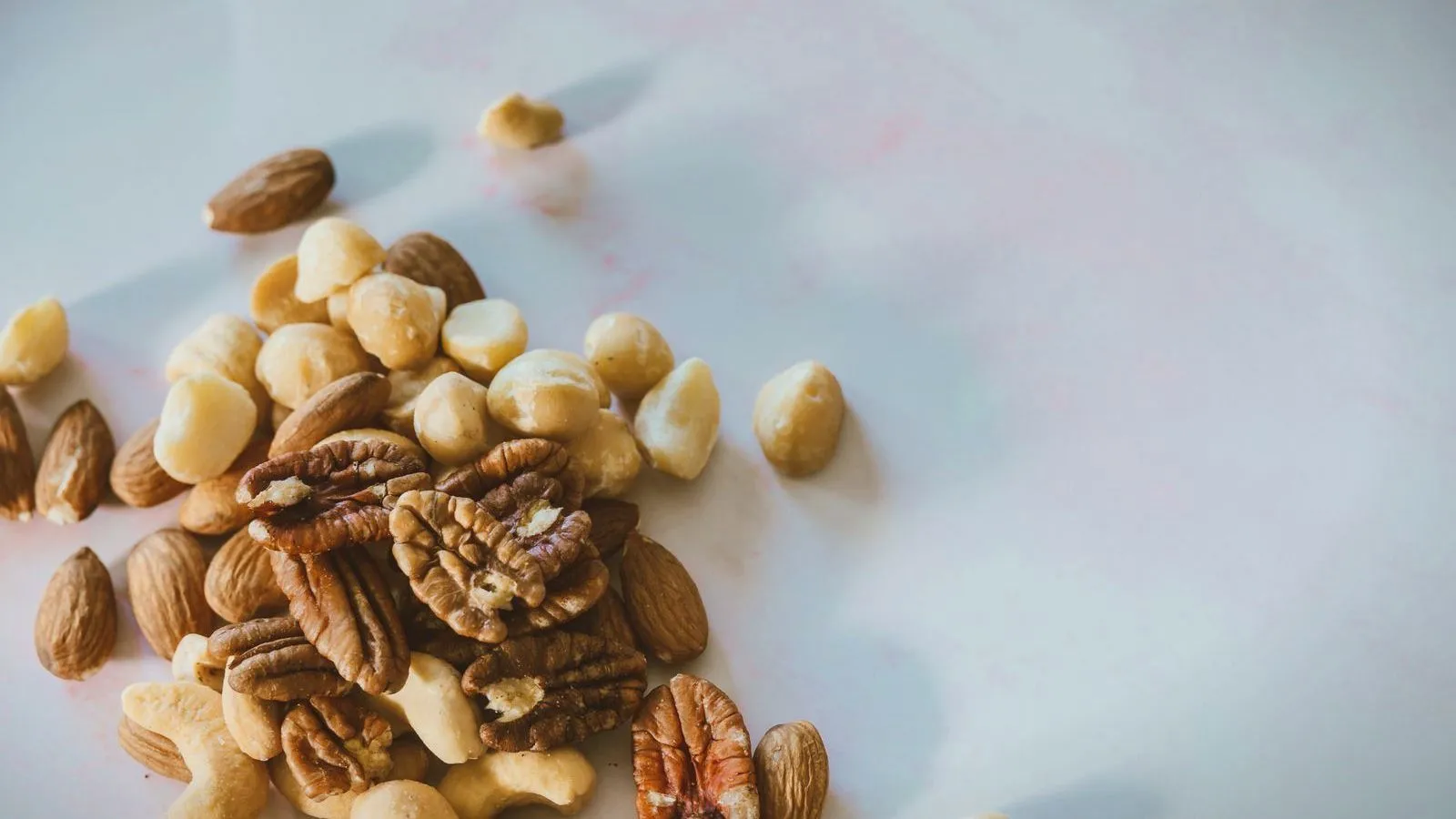
- People who ate the most nuts had about a fifth less cardiovascular disease across 28 long-term studies.
- The link held at about 30 grams a day, roughly a small handful.
- In trials, nuts lowered LDL cholesterol and did not change blood pressure or body weight.
- A large Spanish trial found fewer heart attacks and strokes on a Mediterranean diet with nuts.
- Most nut trials were industry-funded, and nut eaters tend to have healthier habits overall.
Nuts spent decades on the wrong side of dietary advice. They are dense in fat and calories, and through the low-fat years that was enough to keep them off the list of recommended foods. They now appear in almost every description of a healthy diet, and a handful a day has become one of nutrition’s most repeated suggestions.
The change rests on a large and unusually consistent body of research. When scientists preparing the latest Nordic nutrition guidelines reviewed it, they concluded that there is a probable relationship between consumption of nuts/seeds and lower risk of cardiovascular disease. That word “probable” is doing careful work. The evidence is strong for heart disease, thinner for stroke and diabetes, and carries some caveats that rarely make it onto the packet.
How much lower is heart disease risk in people who eat nuts?
Erik Arnesen of the University of Oslo led the Nordic review, which is the most recent large synthesis. The team gathered long-term studies that asked people what they ate and then followed them for years. They found 28 such cohorts with nearly 1.9 million participants, alongside 18 randomized trials.
Comparing the highest nut eaters with the lowest, the cohort studies showed about a fifth less cardiovascular disease overall, and a similar gap for coronary heart disease, the kind caused by narrowed arteries supplying the heart. Deaths from cardiovascular causes were about a quarter lower. The amount involved was small. The estimates at 30 grams a day, about a small handful, were much the same as for the highest intakes.
Other research groups have reached matching figures by different routes. A team at Imperial College London pooled the same kind of studies in 2016 and analyzed risk for each extra ounce a day. Twenty studies (29 publications) were included in the meta-analysis, and each daily ounce went with roughly a fifth less cardiovascular disease and a similar reduction in deaths from any cause. The type of nut made little difference: the results were similar for tree nuts and peanuts.
Harvard researchers looked at three American cohorts, more than 200,000 nurses and other health professionals whose diets were re-checked every four years. People who ate nuts five or more times a week had about 14% less cardiovascular disease than those who almost never did. The authors summarized that higher consumption of total and specific types of nuts was inversely associated with total cardiovascular disease and coronary heart disease.
An umbrella review, meaning a review that collects other reviews, brought 89 of these analyses together in 2022. Its overall judgment was that intake of nuts was associated with reduced risk of cardiovascular diseases and related risk factors, with moderate quality of evidence.
What do nuts do to cholesterol?
Associations in population studies are more believable when a mechanism can be shown in an experiment, and for nuts one can. Nuts are rich in unsaturated fats, fiber and plant compounds that reduce cholesterol absorption.
Researchers at Tufts University combined the feeding trials in which people were given tree nuts and had their blood measured. Sixty-one trials met eligibility criteria, and interventions ranged from 3 to 26 wk. A daily serving lowered total cholesterol and LDL cholesterol, the form most strongly tied to heart disease, by a few points each. Blood pressure did not change.
The Nordic review found the same in its own set of trials: lower total and LDL cholesterol at about 50 grams a day, and no effect on blood pressure. The drop is modest, far smaller than a cholesterol-lowering drug produces, but it points in the direction the population studies would predict.
Has a trial tested nuts against heart attacks?
One has come close. In the PREDIMED trial in Spain, researchers recruited 7,447 older adults who were at high cardiovascular risk, but with no cardiovascular disease at enrollment. Each was assigned to a Mediterranean diet with free extra-virgin olive oil, a Mediterranean diet with free mixed nuts, or advice to eat less fat. After nearly five years, the incidence of major cardiovascular events was lower among those assigned to a Mediterranean diet supplemented with extra-virgin olive oil or nuts. In the nut group the reduction was a little over a quarter.
Two things limit what that proves about nuts. The nuts came with a whole dietary pattern, so their separate contribution cannot be isolated. And the trial has a troubled history. Its first report, in 2013, was retracted after the investigators found that some participants had not been properly randomized. In the 2018 republication they wrote, “We have withdrawn our previously published report and now report revised effect estimates”. The revised results were similar, including after the affected participants were left out.
Do nuts cause weight gain?
This was the old objection, and trials have addressed it directly. Nuts carry roughly 160 to 200 calories an ounce, so adding them to a diet might be expected to add weight.
It did not. Fifty-five studies were included in the meta-analysis that examined the question, covering trials in which adults ate nuts daily for at least three weeks. Whether or not participants were told to cut something else to make room, nut-enriched diet interventions did not result in changes in body weight, body mass index or waist size. The trials did not test why.
Where nuts sit in dietary guidance
The Nordic review was written to inform the Nordic Nutrition Recommendations, and its conclusion supports including nuts in a healthy diet. The American Heart Association’s dietary guidance does not single nuts out in its summary, but its fourth principle is to choose healthy sources of protein, described as mostly plants, a category in which nuts sit alongside beans and lentils.
How strong is the evidence on nuts?
Stronger than for most single foods, with three reservations.
The first is the nature of the main evidence. People who eat nuts regularly also tend to exercise more, smoke less and eat better in general. Researchers adjust for those differences, but the adjustment is never perfect, and nobody has run a long trial of nuts alone. The Nordic team also noted that their cohorts were mainly populations with low consumption, so little is known about very high intakes.
The second is who paid for the trials. In the Nordic review’s assessment, most of the cholesterol trials were funded by industry while three had mixed funding. That does not make the results wrong, and the cholesterol effect is consistent across many trials. It is a reason for some caution about its exact size.
The third is reach. For stroke the reviewers found limited but suggestive evidence for no association with stroke. For type 2 diabetes the data were too inconsistent, and the authors’ verdict was that no conclusion could be made for that outcome.
Nuts are also not safe for everyone. The umbrella review reported that allergy and related adverse reactions to nuts were observed in 1-2% of adult populations. How nuts fit into the diet of someone managing cholesterol, weight or diabetes depends on the rest of what they eat and on their health, which their doctor or dietitian assesses.
A regular handful of nuts goes with less heart disease in every large study that has looked, and the remaining doubt is about how much of that is the nuts.
People also ask
How much lower is heart disease risk in people who eat nuts?
In a meta-analysis of cohort studies, high compared with low intake of nuts and seeds was associated with a relative risk of 0.81 for total cardiovascular disease (95% CI 0.75 to 0.86) and 0.82 for coronary heart disease (95% CI 0.76 to 0.89). A relative risk below 1 means lower risk, so 0.81 is 19% lower.
How many nuts were linked to benefit?
About 30 grams a day in the Nordic review. An earlier meta-analysis reported results for each 28 grams a day, which is one ounce or roughly a small handful, and found similar results for tree nuts and peanuts.
Do nuts lower cholesterol?
In a meta-analysis of 61 feeding trials, one serving of tree nuts a day lowered total cholesterol by 4.7 mg/dL and LDL cholesterol by 4.8 mg/dL, with no effect on blood pressure.
Do nuts cause weight gain?
A meta-analysis of 55 trials found no change in body weight, body mass index or waist circumference when people added nuts to their diet, with or without instructions to cut other foods.
Are nuts linked to less stroke or diabetes?
Less clearly. The Nordic review graded the evidence on stroke as limited, and drew no conclusion on type 2 diabetes, where the relative risk was 0.95 with a confidence interval from 0.75 to 1.21, which includes no difference. This is general information rather than medical advice.
References
- Arnesen, E. K., Thorisdottir, B., Bärebring, L., et al. Nuts and seeds consumption and risk of cardiovascular disease, type 2 diabetes and their risk factors: a systematic review and meta-analysis. Food & Nutrition Research, 2023.
- Balakrishna, R., Bjørnerud, T., Bemanian, M., Aune, D., Fadnes, L. T. Consumption of Nuts and Seeds and Health Outcomes Including Cardiovascular Disease, Diabetes and Metabolic Disease, Cancer, and Mortality: An Umbrella Review. Advances in Nutrition, 2022.
- Aune, D., Keum, N., Giovannucci, E., et al. Nut consumption and risk of cardiovascular disease, total cancer, all-cause and cause-specific mortality: a systematic review and dose-response meta-analysis of prospective studies. BMC Medicine, 2016.
- Estruch, R., Ros, E., Salas-Salvadó, J., et al. Primary Prevention of Cardiovascular Disease with a Mediterranean Diet Supplemented with Extra-Virgin Olive Oil or Nuts. New England Journal of Medicine, 2018.
- Guasch-Ferré, M., Liu, X., Malik, V. S., et al. Nut Consumption and Risk of Cardiovascular Disease. Journal of the American College of Cardiology, 2017.
- Del Gobbo, L. C., Falk, M. C., Feldman, R., Lewis, K., Mozaffarian, D. Effects of tree nuts on blood lipids, apolipoproteins, and blood pressure: systematic review, meta-analysis, and dose-response of 61 controlled intervention trials. American Journal of Clinical Nutrition, 2015.
- Guarneiri, L. L., Cooper, J. A. Intake of Nuts or Nut Products Does Not Lead to Weight Gain, Independent of Dietary Substitution Instructions: A Systematic Review and Meta-Analysis of Randomized Trials. Advances in Nutrition, 2021.
- Lichtenstein, A. H., Appel, L. J., Vadiveloo, M., et al. 2021 Dietary Guidance to Improve Cardiovascular Health: A Scientific Statement From the American Heart Association. Circulation, 2021.