News · Nutrition & Diet
Hitting the wholegrain target tracked with less breast cancer
A European Journal of Nutrition study followed 36,479 Swedish women for a mean 16.5 years and found those eating at least 90 g of wholegrains a day had lower breast cancer rates.
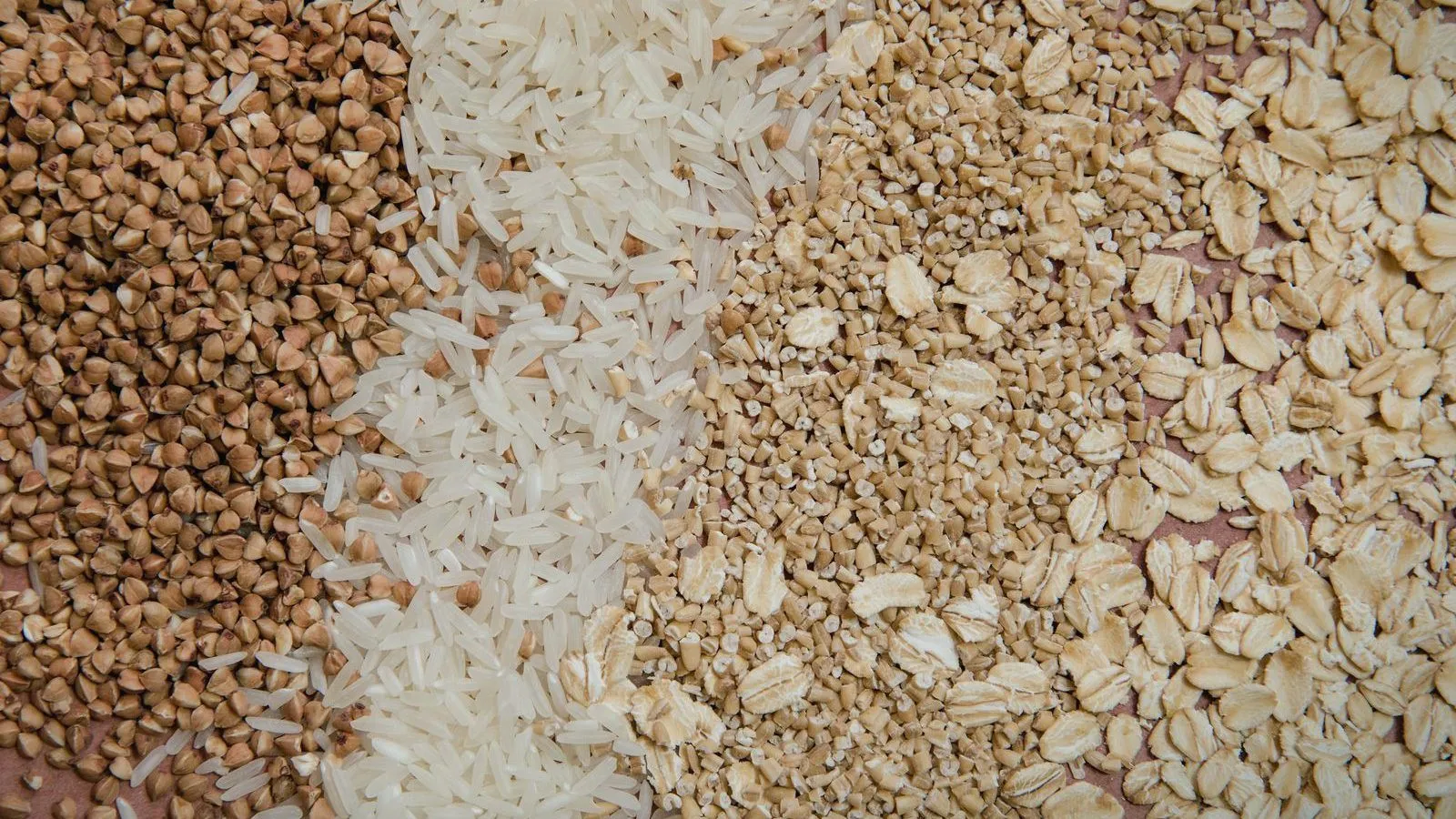
- 36,479 Swedish women aged 48 to 83, followed a mean 16.5 years, with 1,979 breast cancers.
- Diet was assessed twice, so it reflects long-term intake rather than one snapshot.
- At least 90 g of wholegrains a day carried HR 0.78 (95% CI, 0.66-0.94) against under 45 g.
- Neither hormone receptor subtype reached statistical clarity on its own.
- Observational, and intake came from food questionnaires, which people fill in imperfectly.
Wholegrain advice has been repeated for so long that it barely registers as advice. The evidence behind it for breast cancer specifically has been thinner than the confidence of the messaging suggests.
A study in European Journal of Nutrition set out to fix that. The researchers note that current findings on the relationship between wholegrain intake and breast cancer are inconsistent, and tested the question against an official target rather than an abstract gradient.
Testing a guideline instead of a nutrient
Most nutrition cohorts rank people from low to high intake and report a trend. That is useful for scientists and close to useless for a reader, because nobody knows which end of the range they are on.
This study did something more practical. It aimed to estimate the association between long-term wholegrain intake and breast cancer risk, specifically investigating adherence to the updated Nordic Nutrition Recommendations guidelines on wholegrain intake, and consumption of specific wholegrain products.
The target is a real number a person can act on: 90 g a day of wholegrains. Testing that directly is worth more than another ranking of low against high.
How intake was tracked
The cohort is a long-running one. Data from food frequency questionnaires were used to assess adherence among 36,479 women aged 48-83 years in the Swedish Mammography Cohort at two timepoints.
Two timepoints matters. A single dietary questionnaire captures one moment and then gets treated as though it described a decade. Measuring twice and using time-updated models means the exposure tracks what women were actually eating as the years passed.
The follow-up was long enough for real events to accumulate. During a mean follow-up of 16.5 years, 1,979 breast cancer cases were identified.
What full adherence tracked with
The headline comparison is between women who consistently met the target and women who consistently did not.
Compared to long-term low adherence, corresponding to under 45 g/day of wholegrain intake, women with full adherence at 90 g/day or more had a lower rate of total breast cancer. The estimate was 0.78, roughly a fifth lower, with an interval that stayed below 1.
For a dietary exposure measured by questionnaire, that is a respectable result. It is also the only one of the three main estimates that reached statistical clarity.
Where the picture gets blurrier
Breast cancer is not one disease, and the subtype results diverge.
The hormone receptor-positive estimate pointed in the same direction as the total but did not quite clear the threshold. The receptor-negative estimate went the other way entirely, with an interval so wide that it accommodates both meaningful benefit and meaningful harm.
That is what happens when a rarer subtype gets fewer cases. It is not evidence that wholegrains do nothing for receptor-negative disease; it is evidence that this study could not tell.
The product question, and why to leave it alone
The researchers also looked at individual foods, and this is where readers will be tempted to over-interpret.
There was no clear association between long-term consumption of any specific wholegrain products and total breast cancer risk, although the estimates for high oatmeal and high breakfast cereal consumption were below 1, whilst those for high crispbread consumption were above 1.
A tidy story is available here and should be resisted. These are individual comparisons inside one dataset, none of them clear on its own, and the authors explicitly flag the need for further investigation. Crispbread has not been shown to be worse for you than porridge.
What the study can bear
It is observational. Women eating 90 g of wholegrains a day differ from women eating under 45 g in more ways than grain intake, and no set of adjustments captures all of them.
The authors’ conclusion stays within that: wholegrain intake in line with the Nordic recommendations was associated with a lower risk of total breast cancer, however different wholegrain products may be differently associated with breast cancer risk.
The useful takeaway is not about crispbread. It is that an existing, unglamorous, publicly available target held up against 1,979 cases over 16.5 years. Most dietary advice never gets tested against a number that specific.
What people eat after a cancer diagnosis is studied far less than what they ate before it. In bladder cancer, postdiagnosis diet tracked what happened next: more fruit and vegetables, fewer recurrences, while the carotenoids in patients’ blood tracked nothing at all.
People also ask
How much is 90 grams of wholegrains?
More than most people eat, and less than it sounds. Roughly speaking it is a bowl of oat porridge plus two slices of genuine wholegrain bread, or a large serving of wholegrain pasta plus a slice of rye. The figure refers to the dry weight of the wholegrain content, not the weight of the finished food, which is why a 90 g target does not mean 90 g of bread. The Nordic Nutrition Recommendations 2023 set it as a population goal.
Why did the subtypes not show the same thing?
Partly biology and partly arithmetic. Hormone receptor-positive breast cancer is the common form and had enough cases to produce a reasonably tight estimate, which pointed the same way as the total (0.82) without quite reaching statistical clarity. Receptor-negative disease is rarer, so its estimate is based on fewer cases and its interval is wide (0.65-1.80), meaning the data cannot distinguish a real benefit from a real harm. Absence of a clear result in a small subgroup is not evidence of no effect.
Should I switch to oatmeal and drop crispbread?
The study does not support that, and the authors are careful about it. No single wholegrain product showed a clear association with total breast cancer risk. Oatmeal and breakfast cereal had estimates below 1 and crispbread above 1, but those are individual comparisons within one dataset, and the paper flags the need for further investigation rather than a switch. Chasing product-level differences from a study like this is how nutrition myths start.
How reliable is measuring diet with a questionnaire?
Imperfect, and this study handled it better than most. Food frequency questionnaires ask people to recall usual intake, which introduces error in both directions. The strength here is that intake was measured at two separate timepoints and modeled as time-updated, so the exposure reflects long-term habit rather than what someone remembered on one afternoon. That is a meaningful improvement over single-measurement cohorts.
Could something else explain the difference?
Possibly. Women who eat close to 90 g of wholegrains a day tend to differ in other ways: more fruit and vegetables, less processed meat, more exercise, less smoking, higher education. The analysis adjusted for a range of these, but no adjustment captures everything about a person who follows dietary guidance closely. The 16.5-year follow-up and 1,979 cases make the association solid; they do not make it causal.
References
- Pitt S, Hakansson N, Kaluza J, Larsson SC, Akesson A, Wolk A. Long-term wholegrain intake in line with the Nordic Nutrition Recommendations 2023 and risk of breast cancer in a population-based cohort of women. European Journal of Nutrition (2026).
- National Cancer Institute. Breast Cancer Prevention.
- Nordic Council of Ministers. Nordic Nutrition Recommendations 2023.