News · Sleep
Milk protein cut time spent awake in the night by 8 minutes in people whose sleep was already poor
The warm-milk folk remedy has never had much behind it. Pooling 11 randomized trials, milk-derived proteins and peptides improved the share of time in bed actually spent asleep, and the effect was largest in people with disturbed sleep.
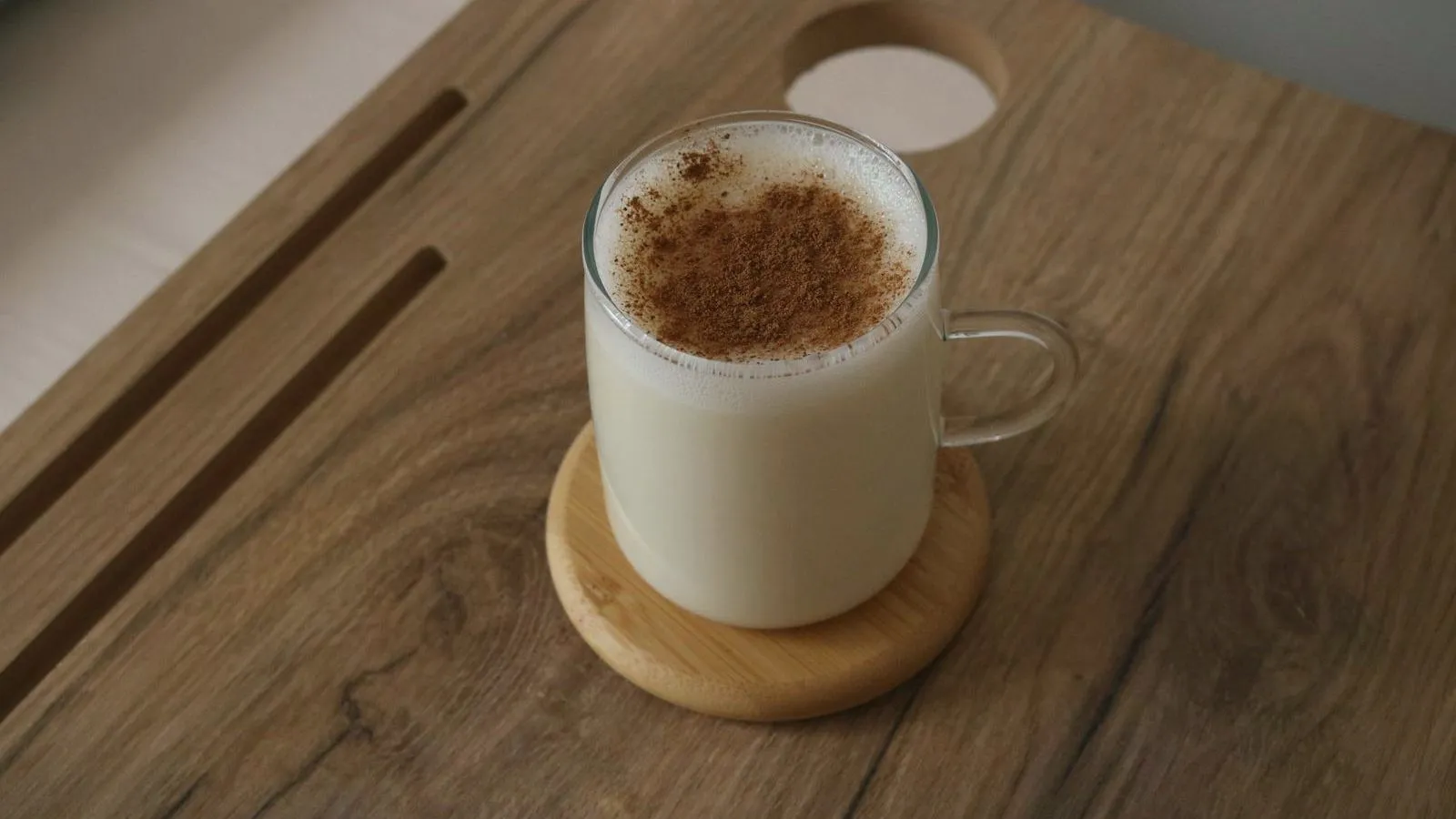
- Milk proteins cut about eight minutes off the time spent awake in the night.
- That was in people whose sleep was already disturbed; healthy sleepers gained almost nothing.
- More of the time in bed was actually spent asleep, pooled across 11 trials.
- Only milk protein worked; other milk components did not, and courses over four weeks did best.
- Eight minutes is real and small. This is not a treatment for insomnia.
Warm milk before bed is the oldest sleep advice there is, and for most of its history it has had nothing behind it except grandmothers.
Writing in Nutrition Reviews, researchers pooled the trials that have quietly accumulated. Milk-derived bioactive and fortified or fermented milk-product interventions significantly improved sleep efficiency, the percentage of time in bed spent asleep.
The larger finding sits underneath that one: the people it helped most were the people already sleeping badly.
The two problems sleep research separates
Not sleeping well is at least two different complaints, and treatments rarely fix both.
The first is getting to sleep, measured as sleep latency: the time from lights off to sleep onset. The second is staying asleep, measured as wake after sleep onset, which is the number of minutes spent awake once you have already dropped off. Anyone who wakes at three and reads the ceiling for an hour has the second problem, and it is the one that most reliably ruins the next day.
This review found different effects on each, in different people. Wake after sleep onset fell by 8.24 minutes among individuals with sleep or health disturbances, while reduced sleep latency appeared in generally healthy participants, by about two minutes.
Eight minutes less awake in the night, in people whose nights are already broken, is the more clinically interesting of the two.
What was actually in the trials
This is not a review of drinking milk.
Twenty-five studies were included in the systematic reviews, of which 11 RCTs were eligible for meta-analysis, and the interventions were a mix of concentrated milk-derived bioactives, fortified milk and fermented milk products.
The pattern within that mix is the useful part. Among intervention types, only milk protein and peptides significantly improved sleep efficiency. Fortification and fermentation, on this pooling, did not carry the effect. The protein fraction did.
That points at something specific rather than at dairy as a category, which is a more testable claim and a less marketable one.
Why it takes weeks
Interventions lasting longer than 4 weeks enhanced sleep efficiency and wake after sleep onset.
A remedy that needs a month is a different kind of thing from a sedative. It rules out the simplest explanation, which is that a warm drink before bed is soothing, and it points instead at something cumulative, most plausibly involving the amino acid tryptophan and the pathways that build melatonin and serotonin from it.
It also makes the folk version less likely to be the active one. One glass on a bad night is not what these trials tested.
The size of it, honestly
A standardized difference of 0.45 for sleep efficiency is a moderate effect by the conventions of this literature, and the interval runs from 0.21 to 0.70, which is wide.
Eleven trials is a modest evidence base, sleep outcomes vary in how they are measured, and the subgroup findings that carry most of the interest here came from post hoc analyses rather than prespecified ones. That is a real limitation: post hoc subgroups are how spurious findings are usually manufactured.
The direction survives all of that. The magnitude should be held loosely.
What to do about it
Sleep is a natural process that helps your body restore energy, supports learning and memory, and keeps you healthy, and the interventions with the strongest evidence remain unglamorous: a consistent schedule, a dark room, and treating the things that wake you.
Against that, a nightly milk-protein drink is a small, cheap, low-risk addition with a modest evidence base behind it, which is more than can be said for most of what is sold for sleep. It is not a treatment for insomnia and this review does not present it as one.
The clearer implication is for research. If the protein fraction is doing the work, the next trials should test it directly, at a stated dose, against a placebo that tastes the same. That study has not been run.
People also ask
What did the review find?
Milk-derived bioactive and fortified or fermented milk-product interventions significantly improved sleep efficiency, the percentage of time in bed spent asleep (standardized mean difference 0.45; 95% CI 0.21-0.70). Wake after sleep onset fell by 8.24 minutes among individuals with sleep or health disturbances, and sleep latency fell by 2.17 minutes in generally healthy participants.
What is sleep efficiency?
The percentage of the time you spend in bed that you are actually asleep. Somebody in bed for eight hours who sleeps six has an efficiency of 75%. It is one of the standard measures because it captures both falling asleep and staying asleep.
What is wake after sleep onset?
The minutes you are awake after first falling asleep. For many people with poor sleep this is the problem, rather than getting off to sleep in the first place, and it is what this review found the largest effect on.
Which milk products were tested?
A mix of milk-derived bioactives, fortified milk and fermented milk products. Among intervention types, only milk protein and peptides significantly improved sleep efficiency, which points at the protein fraction rather than at milk in general.
Is this the warm milk at bedtime idea?
Related but not identical. The trials tested defined preparations, often concentrated milk protein fractions, rather than a glass of milk before bed. Whether an ordinary glass delivers enough is not established here.
How long does it take?
Longer than one night. Interventions lasting longer than 4 weeks enhanced sleep efficiency and reduced wake after sleep onset, so this is not a same-evening remedy.
Who benefited most?
People who were already sleeping badly. The effect on time awake in the night appeared among individuals with sleep or health disturbances, while healthy participants got a smaller gain in how quickly they fell asleep.