News · Longevity & Aging
Regular exercise went with fewer new cases of bladder leakage after 50, in 11,126 adults in three countries
Urinary incontinence is common, embarrassing and rarely discussed. Across aging studies in the US, England and China, active people developed it less often, and poor sleepers more often.
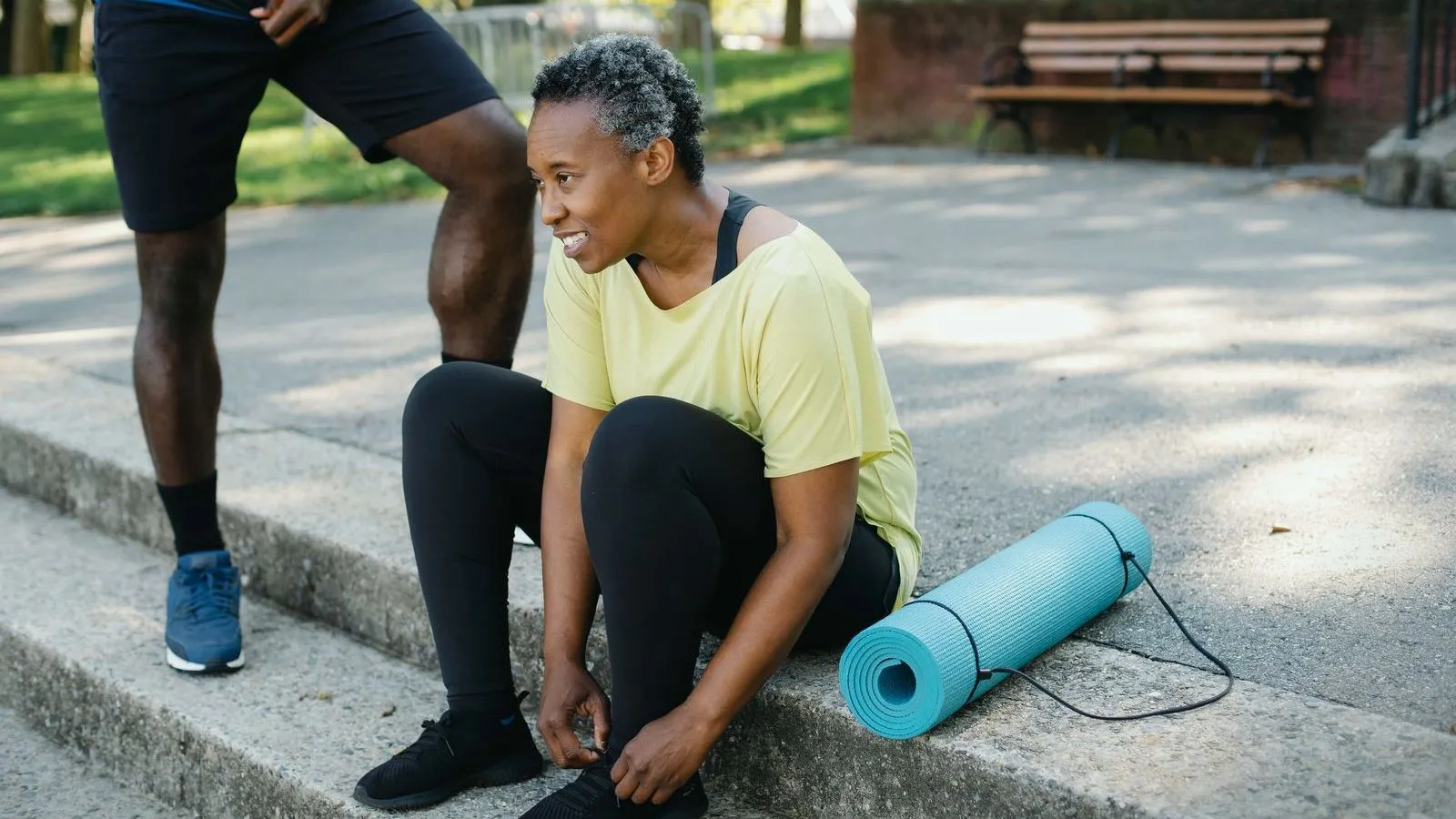
- An observational study of 11,126 adults aged 50 and over in the US, England and China, followed 8 to 10 years.
- Between about one in five and one in four developed urinary incontinence during that time.
- Regular physical activity went with about 22% lower risk; sleep problems went with about 43% higher risk.
- A combined score of healthy habits tracked with lower risk, while money and social circumstances did not clearly matter.
- Sleep problems may be an early sign of other illness, so the arrows here could point either way.
Bladder leakage is one of the most common health problems of later life and one of the least discussed. People plan routes around toilets, stop exercising, and avoid social events rather than raise it with a doctor. Because so few talk about it, it is easy to treat as an inevitable part of aging rather than something that might be influenced.
A study in Archives of Gerontology and Geriatrics followed 11,126 adults aged 50 and over in the United States, England and China for up to a decade. Those who were regularly active developed incontinence less often. Those with sleep problems developed it more often.
What urinary incontinence is
MedlinePlus describes urinary incontinence (UI) as the loss of bladder control, or being unable to control urination, and notes plainly that it is a common condition. There are several types: leakage with coughing or lifting, leakage with a sudden strong urge, and leakage when the bladder cannot empty properly.
The page adds that urge incontinence is most common in older people. The authors put the scale simply: UI affects a substantial proportion of middle-aged and older adults worldwide.
How the three-country bladder study worked
The researchers pooled three of the world’s major aging studies. They analyzed longitudinal data from the Health and Retirement Study, the English Longitudinal Study of Ageing, and the China Health and Retirement Longitudinal Study, each of which surveys tens of thousands of older adults repeatedly over many years.
They built two scores for everyone who was free of incontinence at the start. One combined five aspects of social circumstances, such as income and education; the other combined five everyday lifestyle factors, among them physical activity, body weight and sleep. Then they followed who developed incontinence over the next 8 to 10 years.
What activity and sleep showed for incontinence
New incontinence was common everywhere: weighted UI incidence was 28.6% in HRS, 23.1% in ELSA, and 19.7% in CHARLS, the US, English and Chinese studies respectively.
Healthy habits mattered more than social circumstances. The composite social score was not consistently associated with incontinence, but a higher healthy lifestyle index was associated with lower UI risk. Two individual factors stood out: regular physical activity went with about 22% lower risk, while sleep problems went with about 43% higher risk. Higher body weight also nudged risk up.
One result ran the other way from what might be expected. People with postsecondary education had higher recorded risk, which may reflect who recognizes and reports symptoms rather than who actually has them.
Why the sleep link to incontinence is interesting
The authors found that sleep problems partially mediated the association between physical activity and incident UI. In other words, part of the reason active people had less incontinence appeared to run through their better sleep.
That fits a plausible loop. Inactivity may worsen sleep, and waking to urinate at night breaks sleep further, so each problem can feed the other. The authors add an important caution, though: sleep problems may also reflect underlying health conditions, so poor sleep may be a marker of illness rather than a cause of leakage.
What pooled aging surveys cannot show
This is observational. People who exercise regularly differ from those who do not in many ways, including overall health, and some of the link may reflect people who were already becoming unwell doing less. Incontinence was self-reported in surveys, and willingness to admit to it differs between people and cultures.
The study describes associations across three very different countries, which strengthens the pattern, but the exact size of each factor’s contribution is uncertain and the three surveys asked their questions in their own ways, which the researchers had to line up after the fact.
What this changes for urinary incontinence after 50
Incontinence is common, and it is not simply something to accept. This study adds to the case that everyday habits, staying active, keeping weight in check, and looking after sleep, may be linked to lower risk.
For anyone already experiencing leakage, the most useful step is the one many people skip: telling a doctor. Treatments such as pelvic floor exercises and bladder training help many people, and sleep problems are worth raising in the same appointment, since the two may be connected.
People also ask
What did the study find?
Weighted incidence of urinary incontinence was 28.6% in the US study, 23.1% in England and 19.7% in China. A higher healthy lifestyle index was associated with lower risk (HR 0.87). Sleep problems (HR 1.43), higher body mass index (HR 1.02) and postsecondary education (HR 1.37) were associated with higher risk, while regular physical activity was associated with lower risk (HR 0.78). A composite score of social circumstances was not consistently associated (HR 0.97).
What is urinary incontinence?
Loss of bladder control, ranging from small leaks when coughing or lifting to sudden urges that cannot be held. It becomes more common with age and affects both women and men.
Why would sleep be linked to bladder leakage?
The study suggests sleep problems partly explain the link between inactivity and incontinence. Poor sleep can reflect other health problems, and waking at night to urinate can disrupt sleep in turn, so the connection may run both ways.
Why was more education linked to higher risk?
The study does not explain it. One possibility is that better-educated people are more likely to recognize and report symptoms, which would raise their recorded rate without any real difference in bladder health.
Does exercise prevent incontinence?
This study cannot prove that; it is observational. But regular activity and keeping weight in a healthy range are reasonable steps with benefits well beyond the bladder.
What should someone with leakage do?
Mention it to a doctor. Incontinence is common and often treatable, with options such as pelvic floor exercises and bladder training. This is general information rather than medical advice.