News · Heart & Metabolic
Flossing tracked 23% fewer strokes in 98,866 Korean adults followed for nine years
A Korean study followed 98,866 adults for nine years. Those who brushed twice daily and used floss and interdental brushes had 23% fewer ischemic strokes. Nobody has ever run a trial that randomizes people to floss.
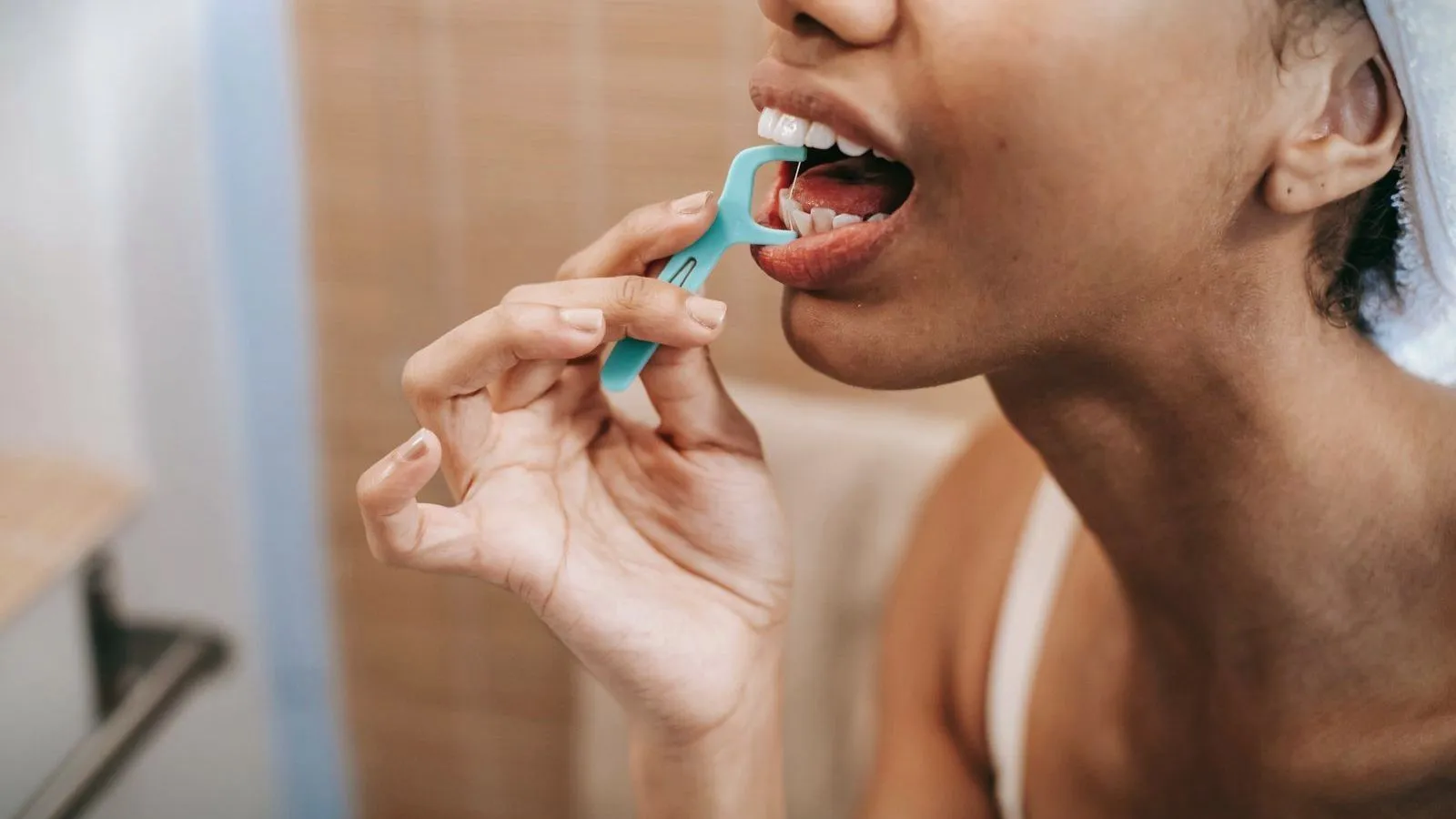
- About 80% of strokes are ischemic, the kind where a clot blocks a vessel in the brain.
- 98,866 Korean adults over 40 had a dental exam, then were followed from 2011 to 2019.
- Brushing twice daily plus floss and interdental brushes: 23% fewer ischemic strokes.
- Habits were self-reported, and people who floss differ from people who do not in many ways.
- No trial has randomized anyone to floss, so this stays a pattern rather than a cause.
Almost nobody flosses because they are worried about their brain. A study of 98,866 Korean adults suggests that maybe they should be, and it comes with a problem attached that is easy to state and impossible for the study to solve.
The people who brushed twice a day and used floss and interdental brushes had 23% fewer strokes of the commonest kind.
They were also, almost certainly, different people in a dozen other ways.
What an ischemic stroke is
A stroke happens when there is a loss of blood flow to part of the brain. Your brain cells cannot get the oxygen and nutrients they need from blood, and they start to die within a few minutes.
There are two kinds, and this study is about one of them. Ischemic stroke is caused by a blood clot that blocks or plugs a blood vessel in the brain, and it is by far the more common: about 80% of strokes are ischemic. The other kind is caused by a blood vessel that breaks and bleeds into the brain.
The established risk factors are the ones you would expect. High blood pressure is the primary risk factor for a stroke, followed by diabetes, heart diseases, smoking, and a personal or family history of stroke. Nothing about teeth appears on that list.
Why anyone would look at teeth and strokes
The idea is older than this paper and it is not eccentric.
Gum disease ranges from simple gum inflammation, called gingivitis, to serious damage to the tissue and bone supporting the teeth. In the worst cases, you can lose teeth. Along the way, if you have periodontitis, the gums pull away from the teeth and form pockets that become infected.
An infected pocket in the mouth is not sealed off from the rest of the body. That gives a mechanism: long-running low-grade infection and inflammation, feeding into the same arterial processes that produce clots.
What the mechanism does not give you is a number. The researchers say as much about the specific habits they tested: the preventive impact of adjunctive oral hygiene practices, such as dental flossing and interdental brushing, on stroke risk remains unclear.
How the flossing study was built
This is a large administrative-data study rather than an experiment. It was a population-based retrospective cohort study using data from the Korean National Health Insurance Service-Health Screening cohort.
The entry requirement is the part that makes it unusual. A total of 98,866 adults aged 40 years or older who underwent both general and oral health examinations during 2009-2010 were included. So everyone here had an actual dental examination on record, not just a questionnaire.
They were then followed from January 2011 to December 2019, nine years of national insurance records. Individuals with pre-existing cardiovascular disease, death before baseline, or missing data were excluded, which removes the people most likely to have changed their habits because they were already ill.
The outcome is harder than most. The primary outcome was incident stroke requiring hospitalization for at least 2 days, sorted into total, ischemic, or hemorrhagic stroke by diagnostic code.
The exposure is softer. Oral hygiene behaviors, including daily toothbrushing frequency and weekly use of dental floss and interdental brushes, were self-reported.
What the oral hygiene numbers showed
The direction was consistent. Participants with favorable oral hygiene behaviors showed a lower risk of stroke compared with those with poor oral hygiene practices.
The headline figure belongs to the group doing everything. Individuals who brushed their teeth at least twice daily and regularly used dental floss and interdental brushes had a 23% lower risk of ischemic stroke. Not brushing alone, and not flossing alone: the full set.
A dose-response relationship was observed across categories of oral hygiene behaviors. More of the habits, less stroke, stepwise across the groups. A graded pattern like that is one of the things that makes a link look more like cause than coincidence, and it is also exactly what you get when a behavior is standing in for something else that comes in degrees.
The estimate is not precise, though. In a study of nearly a hundred thousand people, the group doing all three things properly is not a hundred thousand people, and the range around that 23% is correspondingly wide. Every part of that range still points to less stroke rather than more.
Who flosses, and why that is the whole problem
Consider what it takes to use an interdental brush regularly. You have to know they exist, buy them, keep them somewhere, remember them, and have teeth and gums in a state where they help.
That describes a person who is more likely to have a dentist, to be able to pay one, to attend a health screening, to take medication as prescribed, to have finished more education and to have more money. Every one of those independently predicts a lower rate of stroke.
Researchers handle this by adjusting for the things they measured, and this study did adjust. Adjustment cannot touch what was not measured, and in behavior studies the unmeasured part is usually the larger part.
There is a second, subtler issue. The habits were reported once, at the start, and then treated as if they described the following nine years. People change.
What this flossing study cannot establish
It cannot establish direction. This is a retrospective look at records already collected, so nothing was assigned and nothing was tested.
It cannot rule out reverse causation at the margins. Early vascular disease, undiagnosed diabetes and the fatigue that comes with them all make a person less likely to spend three minutes a night on their teeth.
It is one country. Korean dental care, diet, smoking rates and stroke patterns are not universal, and nothing here establishes that the same pattern would appear elsewhere.
And the honest summary is the authors’ own, which stays associational: frequent toothbrushing combined with regular use of dental floss and interdental brushes was associated with a reduced risk of ischemic stroke.
The paper is paywalled, so the authors’ own limitations section was not available for this piece.
What to do about flossing anyway
Here is where this differs from most weak evidence, and it is worth being clear rather than reflexively dismissive.
The usual reason to demand strong evidence is that the intervention carries cost or risk. A drug with a 23% effect and this quality of evidence would not be worth taking. Floss costs a few dollars a year, and the realistic downside is sore gums while you get used to it.
It also has a benefit that is not in doubt at all. Gingivitis can usually be reversed with daily brushing and flossing and regular cleanings by a dentist or dental hygienist. That is the direct, demonstrated payoff, and it is reason enough on its own.
So: floss. Do it for your gums, treat any effect on your arteries as an unproven bonus, and do not let it stand in for the thing that actually dominates stroke risk. High blood pressure is the primary risk factor for a stroke, and no amount of interdental brushing substitutes for having it measured.
The authors think their finding could represent a simple, accessible, and population-based strategy for reducing ischemic stroke risk in middle-aged and older adults. It could. Establishing that would take a trial that has never been run, on a behavior nobody funds anyone to study.
Once gum disease is established, periodontal therapy is the treatment, and it has been tested against blood pressure with results that point the same way and rest on the same modest evidence base.
People also ask
What did the study find?
In multivariable-adjusted analyses, individuals who brushed their teeth at least twice daily and regularly used dental floss and interdental brushes had a 23% lower risk of ischemic stroke (adjusted hazard ratio 0.77, 95% CI 0.63-0.94). A significant dose-response relationship was observed across categories of oral hygiene behaviors.
How was the study run?
It was a population-based retrospective cohort study using data from the Korean National Health Insurance Service-Health Screening cohort. A total of 98,866 adults aged 40 years or older who underwent both general and oral health examinations during 2009-2010 were included, and participants were followed from January 2011 to December 2019. Individuals with pre-existing cardiovascular disease, death before baseline, or missing data were excluded.
How was stroke counted?
The primary outcome was incident stroke requiring hospitalization for at least 2 days, classified as total, ischemic, or hemorrhagic stroke according to diagnostic codes. Requiring a hospital admission of that length is a reasonably hard definition: it is not a self-report, and it excludes the mildest events.
Why does the self-reporting matter?
Because it was the exposure, not the outcome. Oral hygiene behaviors, including daily toothbrushing frequency and weekly use of dental floss and interdental brushes, were self-reported. People overstate flossing, and the people who overstate it are probably not a random sample of everyone.
Could something else explain the link?
That is the central question and the study cannot close it. Daily flossing is a marker of conscientiousness, dental access, income and education, all of which independently predict stroke. The researchers adjusted for the risk factors they measured, which never removes the ones they did not.
Is there a plausible biological reason?
Yes, which is why this line of research exists. Gum disease ranges from simple gum inflammation, called gingivitis, to serious damage to the tissue and bone supporting the teeth, and chronically infected gum pockets are a long-running source of bacteria and inflammation in the bloodstream. Plausible is not demonstrated.
So should someone floss to prevent a stroke?
Floss because it works on your gums, where the evidence is direct: gingivitis can usually be reversed with daily brushing and flossing and regular cleanings by a dentist or dental hygienist. The stroke benefit is unproven, costs nothing extra to pursue, and should not displace the things that are proven. High blood pressure is the primary risk factor for a stroke. This is general information rather than medical advice.