News · Heart & Metabolic
Regular cannabis users had 9% fewer extra heartbeats on days they were randomly assigned to inhale
UC San Francisco cardiologists set out to test whether cannabis adds extra heartbeats. In 108 regular users the count fell instead, and the team warns that is no evidence cannabis is good for the heart.
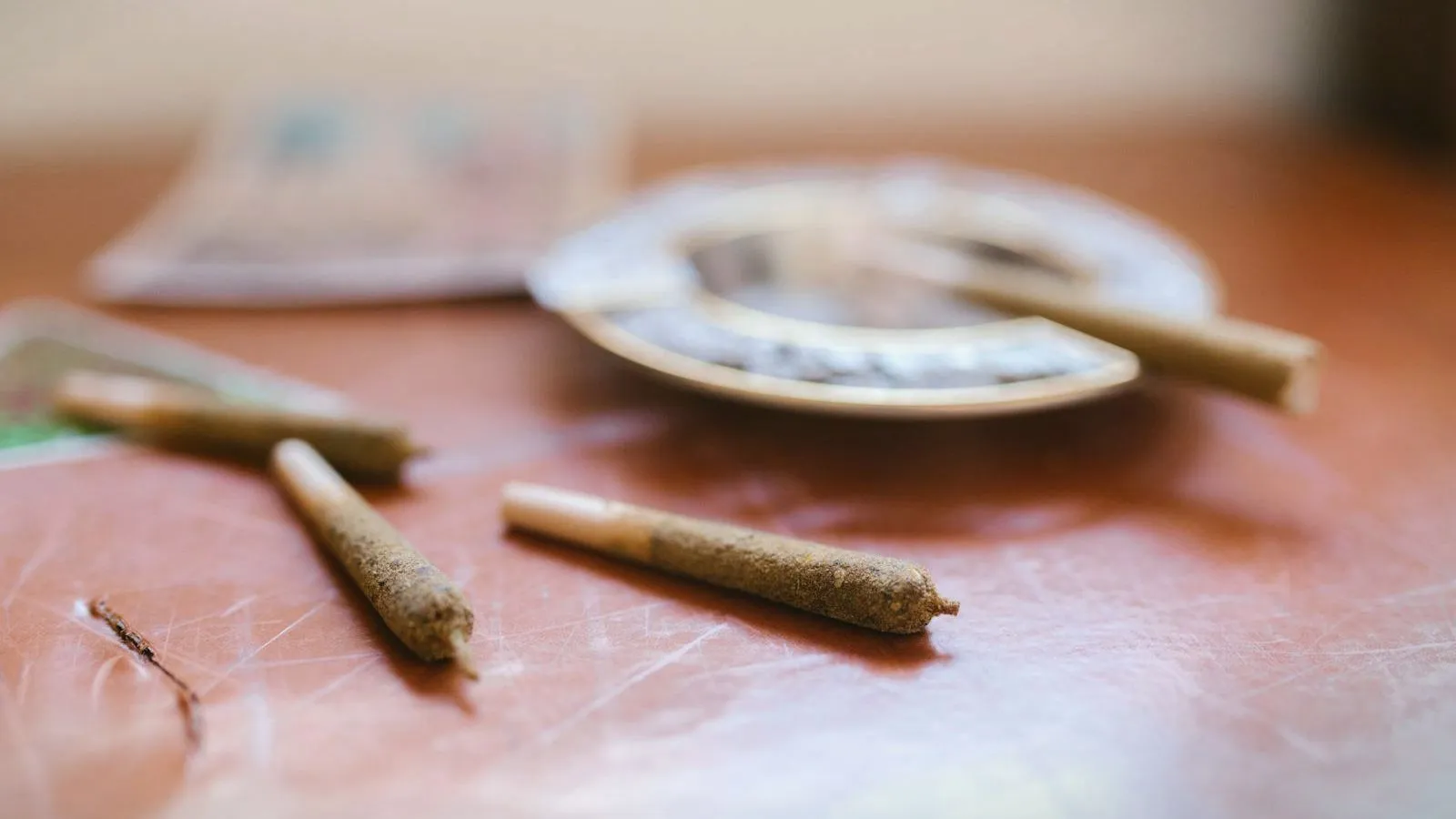
- On cannabis days, hearts made about 9% fewer extra beats, mostly because fewer came from the upper chambers.
- Sleep, daily steps and blood sugar did not clearly differ between cannabis days and days without.
- Each day was randomized to cannabis or abstinence by text, so each of 108 regular users was their own comparison.
- Why is unknown: going without cannabis may have unsettled regular users on the days they abstained.
- Only young regular users without heart rhythm problems, over two weeks: nothing here speaks to long-term heart risk.
Nobody in this trial was new to cannabis. Cardiologists at the University of California, San Francisco, recruited 108 adults who smoked or vaped cannabis on a regular basis and had no history of heart rhythm problems. For 14 days, the team randomly assigned each day to cannabis or abstinence and sent the verdict by text message.
On the days randomized to inhaled cannabis, the volunteers’ hearts produced about 9% fewer extra beats than on days without it, Adi Elias, Gregory Marcus and colleagues report in the Journal of the American College of Cardiology. The team had expected the opposite. “We were surprised by the results because they contradicted our original hypothesis,” said Marcus, a cardiologist at the university.
Until now, assumptions about cannabis and the heart were drawn largely from observational studies, which follow users without assigning anyone to take the drug. The trial is among the first to test the short-term effects of inhaled cannabis on the heart in people living their normal daily lives. Its authors warn that the results should not be interpreted as evidence that cannabis benefits heart health.
Premature atrial contractions are extra heartbeats that track with atrial fibrillation
When the signal to beat comes too early, it’s called a premature or extra heartbeat, and it may feel like your heart skipped a beat. Doctors call these ectopic beats, and Britain’s National Health Service says heart palpitations of this kind are common and not usually a sign of anything serious.
Extra heartbeats that begin in the heart’s upper chambers are known as premature atrial contractions, while those originating in the lower chambers are called premature ventricular contractions. Cardiologists watch the upper-chamber kind partly because of atrial fibrillation, which causes an irregular and fast heartbeat and is the most common type of arrhythmia, or heart rhythm problem. In the Cardiovascular Health Study, adults with more premature atrial contractions on a 24-hour heart recording were more likely to develop that condition later. The researchers behind that analysis noted that it does not establish a causal link.
Cannabis was already a suspect. Marcus and colleagues had previously combed the records of more than 23 million adult Californians who received care in an emergency department, outpatient surgery facility or hospital. Cannabis use noted in those files was associated with increased incidence of atrial fibrillation, meaning more new cases: about 35% more after accounting for other factors. So when the team registered its trial, the question it posed was “Does cannabis use increase the frequency of ‘early’ and abnormal heart beats?”
How a daily text message turned each cannabis user into their own comparison
Answering that from records runs into a stubborn problem, because cannabis users can also differ from nonusers in drinking, smoking, stress and much else. The San Francisco team compared each person with themselves instead, in a randomized crossover trial to assess the effects of inhaled cannabis. Each volunteer lived through both kinds of day and served as their own control.
A random draw decided which days were cannabis days, so nobody could save their cannabis for, say, an evening that was already stressful. Any difference between the two kinds of day can therefore be credited to the assignment, which lets the trial speak to cause for this group over these two weeks.
To qualify, adults had to have inhaled cannabis in the past month, and on four or more days in a single week sometime in the past year. They used their own supply and were asked to smoke or vape cannabis at least once on days they were told to use it. Anyone with a history of atrial fibrillation or heart failure, or with a pacemaker, was excluded.
Everyone wore a patch that recorded their heart rhythm continuously, along with an activity tracker, sleep monitor and continuous glucose monitor. They tapped a button on the patch at the time of cannabis use, and the researchers checked compliance using those time stamps, daily surveys and, in some of the volunteers, lab analysis of saliva. Not everyone did as the texts said, and the authors describe adherence as imperfect but generally supportive of the assignments. In all, the trial logged 713 days randomized to cannabis and 616 days randomized to abstinence.
Cannabis days brought fewer atrial extra beats but no change in sleep, steps or blood sugar
The drop in extra beats across those days was driven by fewer premature atrial contractions, which fell by about 10%, while premature ventricular contractions showed no clear change. The abstract does not report how many extra beats the volunteers started with, so there is no telling how many actual beats the drop represents.
Each cannabis inhalation was associated with about 2% fewer extra beats. A dose pattern like that usually strengthens the case for a real effect. Here it is weaker evidence than the main comparison, because chance decided which days were cannabis days while the users decided how often to inhale.
Step counts, sleep duration and glucose levels, meaning blood sugar, showed no clear differences between cannabis days and abstinence days. The method has picked up changes before. When Marcus’s team used it to test caffeinated coffee, coffee days brought more daily premature ventricular contractions, more steps and fewer minutes of nightly sleep.
Nobody yet knows why extra beats fell on cannabis days. The authors write that “potential withdrawal effects, moderate adherence, and co-intervention limit interpretation of causal mechanism.” Co-intervention means something else changing along with the assignment, such as drinking more coffee or alcohol on days without cannabis, and both are common causes of heart palpitations. The abstract does not say whether anything like that happened.
The first item on the authors’ list could change what the result means. Anyone who stops or sharply cuts back heavy or long-term cannabis use can get withdrawal symptoms, including feeling nervous or anxious, restlessness and insomnia. If a day without cannabis unsettled some regular users, extra beats could have risen on abstinence days, and the comparison would look just the same as if cannabis had lowered them. The schedule never asked anyone to abstain for more than two consecutive days, though.
Marcus sees a lead in the result: “these findings suggest there may be something about cannabis that can teach us more about the biological mechanisms that produce premature atrial contractions,” he said.
First-time users, older adults and long-term heart risk sit outside the cannabis trial
The 108 participants (mean age 32) were young regular users. Their results say nothing about someone trying cannabis for the first time, and little about older adults or anyone with heart disease. “This study examined the acute effects of cannabis in people who use it regularly and was not designed to evaluate the long-term health consequences,” Marcus said. “The overall health effects of inhaled cannabis may still be net negative.”
According to the National Institute on Drug Abuse, cannabis can increase heart rate and blood pressure right after use, and some research shows an association between long-term use and an increased risk of stroke, heart attack and arrhythmias. It says more work is needed to determine if there is a direct connection or if other factors are involved. An American Heart Association scientific statement concluded that cannabis may have therapeutic benefits, but few are cardiovascular in nature.
This article draws on the paper’s abstract, because the full text is paywalled. Details such as how much cannabis each person used, and the authors’ own account of the study’s limits, could not be checked.
For anyone who notices skipped or extra beats, the NHS advises seeing a doctor if palpitations keep coming back or last longer than a few minutes. Those that come with chest pain, shortness of breath or feeling faint call for emergency help. And the researchers caution that these findings should not influence medical or behavioral decisions around cannabis use.
If the result holds up, it will likely say more about what sets off extra heartbeats than about whether cannabis is safe to use.
People also ask
Does smoking or vaping cannabis cause heart palpitations or extra heartbeats?
In this trial, cannabis days brought fewer extra beats over the short term. Among 108 adults who regularly smoked or vaped cannabis, days randomized to inhaled cannabis had 9% fewer ectopic, or extra, beats than abstinence days (rate ratio 0.91; 95% CI 0.85-0.98). The trial counted beats on a heart monitor, which is not the same as the sensation of palpitations, and the NHS lists recreational drugs among the common causes of palpitations. Beyond the short term, the National Institute on Drug Abuse says some research links long-term cannabis use with stroke, heart attack and arrhythmias. This is general information rather than medical advice.
What are premature atrial contractions?
Extra heartbeats that start early in the heart's upper chambers, the atria. Premature ventricular contractions, meaning extra beats that start in the lower chambers, are the other main kind, and doctors call both ectopic beats. They can feel like a skipped beat and are usually harmless. In the Cardiovascular Health Study, each doubling of the hourly count of premature atrial contractions on a 24-hour recording went with a 17% higher risk of atrial fibrillation (hazard ratio 1.17; 95% CI 1.13-1.22). That study could not show that the extra beats cause it.
How did the MARY-JANE cannabis trial work?
MARY-JANE, short for Marijuana and Acute Risk of Arrhythmia-Joint Abstinence and Exposure (NCT06021613), was a randomized crossover trial, meaning each person spent days in both conditions and served as their own comparison. The 108 participants (mean age 32, 59% women, 37% non-Hispanic White) regularly smoked or vaped cannabis and had no history of heart rhythm disorders. For 14 days a text message assigned each day to inhaling cannabis or abstaining, and the analysis covered 713 cannabis days and 616 abstinence days. People used their own cannabis and pressed a button on a Zio heart-monitor patch when they used it. Adherence was also checked with daily surveys and, in a subset, saliva testing by mass spectrometry, and the authors describe it as imperfect but generally supportive of the assignments.
Did cannabis change sleep, step counts or blood sugar in the trial?
No clear differences turned up. Step counts, sleep duration and glucose levels did not differ between cannabis and abstinence days by more than chance could explain. Glucose was tracked with continuous glucose monitors, which Dexcom donated for the trial. When Marcus's team ran the same kind of trial on caffeinated coffee, coffee days brought about 1,000 more daily steps and 36 fewer minutes of nightly sleep.
Why would cannabis days have fewer extra heartbeats?
Nobody knows yet. The authors write that potential withdrawal effects, moderate adherence and co-intervention, meaning other changes that came along with the assignment, limit what the trial can say about the mechanism. If going without cannabis unsettled regular users, the abstinence days could be the ones carrying extra beats. Each inhalation was associated with 2% fewer ectopic beats (rate ratio 0.98; 95% CI 0.97-0.99), but participants chose how much to use. Gregory Marcus, the cardiologist who led the trial team, says cannabis may help reveal the biological mechanisms that produce premature atrial contractions.
Should people with heart palpitations use cannabis to calm them?
Nothing in this study supports that. The researchers caution that the findings should not influence medical or behavioral decisions around cannabis use, and Marcus says the overall health effects of inhaled cannabis may still be net negative. The NHS advises seeing a doctor if palpitations keep coming back, happen more often or last longer than a few minutes, and getting emergency help if they come with chest pain, shortness of breath or fainting. This is general information rather than medical advice.
References
- Elias A, Montenegro GC, Oo HH, et al. Acute Effects of Cannabis Inhalation on Cardiac Ectopy, Physical Activity, Sleep, and Glucose. Journal of the American College of Cardiology, 2026.
- ClinicalTrials.gov. The MARY-JANE Cannabis and Heart Rhythm Trial (NCT06021613). US National Library of Medicine.
- National Institute on Drug Abuse. Cannabis (Marijuana).
- MedlinePlus. Arrhythmia. US National Library of Medicine.
- NHS. Heart palpitations.
- Lin AL, Nah G, Tang JJ, et al. Cannabis, cocaine, methamphetamine, and opiates increase the risk of incident atrial fibrillation. European Heart Journal, 2022.
- Dewland TA, Vittinghoff E, Mandyam MC, et al. Atrial ectopy as a predictor of incident atrial fibrillation: a cohort study. Annals of Internal Medicine, 2013.
- Marcus GM, Rosenthal DG, Nah G, et al. Acute Effects of Coffee Consumption on Health among Ambulatory Adults. New England Journal of Medicine, 2023.
- Page RL, Allen LA, Kloner RA, et al. Medical Marijuana, Recreational Cannabis, and Cardiovascular Health: A Scientific Statement From the American Heart Association. Circulation, 2020.