News · Longevity & Aging
Two weeks of heart monitoring after unexplained fainting did not cut repeat faints, in a 2,234-patient trial
When emergency doctors cannot find why someone fainted, a wearable heart monitor seems a sensible next step. In a large UK trial, 14 days of monitoring did not reduce fainting over the following year.
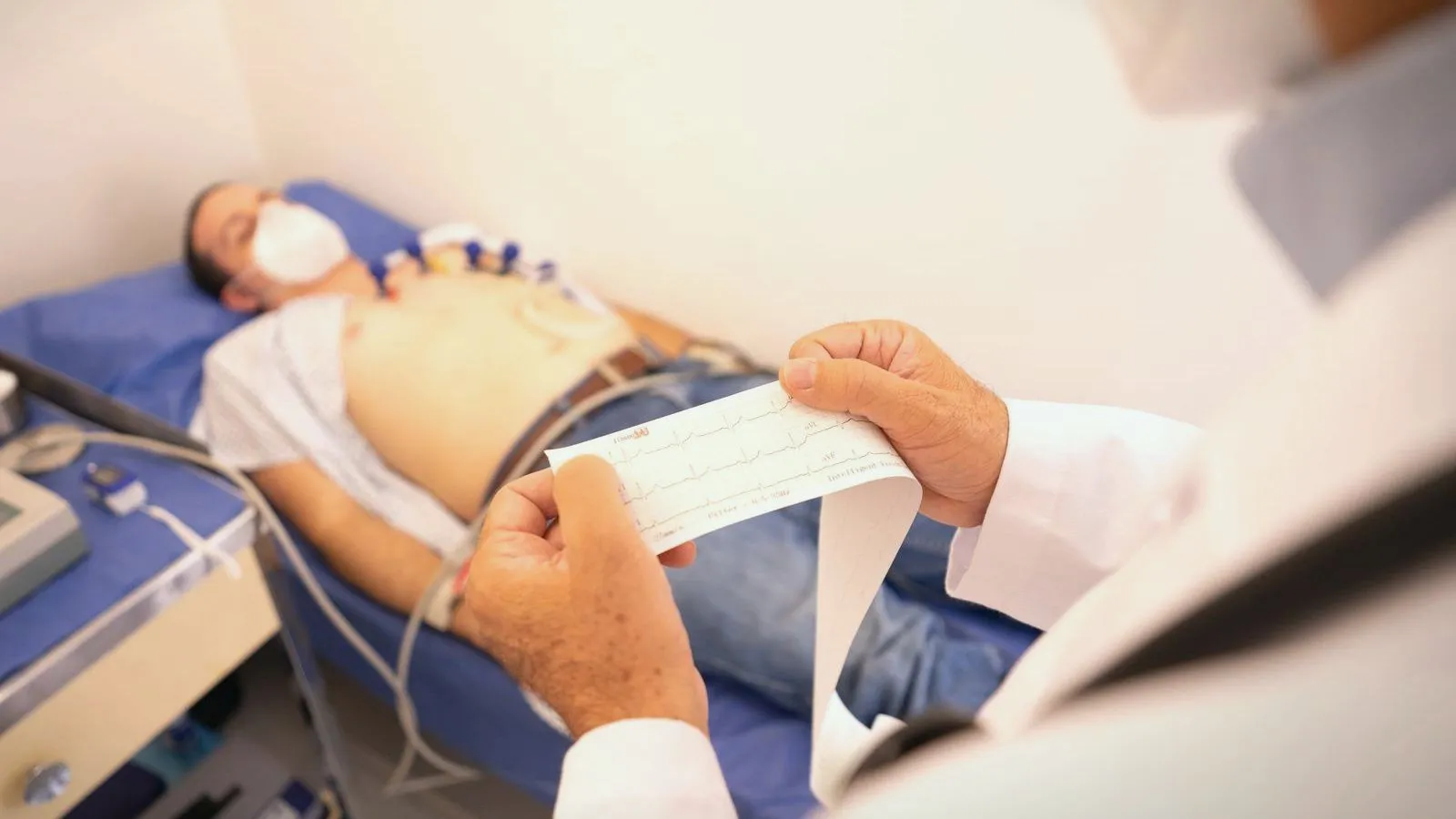
- A randomized trial at 45 UK hospitals in 2,234 adults whose fainting was still unexplained after emergency care.
- Half wore a heart rhythm monitor for 14 days; half got the usual care offered at their hospital.
- Over a year, the monitored group reported 1.37 faints on average against 1.58, a gap within chance.
- Side effects were more common with the monitor, 49 reports against 8, with one serious event in each group.
- Patients knew which group they were in, and faints were self-reported.
Fainting is frightening, and one of the first worries in an emergency department is whether the heart caused it. An abnormal heart rhythm, or arrhythmia, can cut blood flow to the brain for a few seconds and then return to normal before anyone can record it. When tests in hospital come back clear, sending someone home with a wearable heart monitor feels like the careful thing to do.
A randomized trial in the New England Journal of Medicine put that practice to the test in 2,234 adults across 45 UK hospitals. Two weeks of heart monitoring did not reduce how often people fainted over the following year.
Why fainting is hard to explain
MedlinePlus describes fainting as a temporary loss of consciousness, and explains that fainting usually happens when your blood pressure drops suddenly, cutting blood flow to the brain. It is usually nothing to worry about, it notes, but can sometimes be a sign of a serious problem.
The heart is the cause doctors most want to catch. As the authors put it, in patients with syncope who present to the emergency department for evaluation, diagnosing an underlying cardiac arrhythmia remains difficult. Syncope is the medical word for fainting, and the difficulty is timing: a rhythm problem may not show up on a heart tracing taken hours later.
How the fainting monitor trial worked
The trial took place at 45 hospitals in the United Kingdom. Adults whose fainting remained unexplained after an emergency department evaluation were assigned in a 1:1 ratio to undergo 14-day ambulatory electrocardiographic (ECG) monitoring or to the usual care at their hospital. Ambulatory ECG monitoring means recording the heart’s electrical rhythm continuously while a person goes about daily life.
The average patient was 58, and just over half were men. The main measure was how many times people reported fainting over the next year, and 1,970 patients were included in that analysis.
What happened to fainting episodes
Both groups fainted at similar rates. The mean number of patient-reported syncope episodes at 1 year was 1.37 in the monitored group and 1.58 in the usual-care group. That gap was small and within what chance could produce.
Monitoring came with more side effects. A total of 49 adverse events were reported in the intervention group, against 8 in the usual-care group, with one serious adverse event in each.
Why a negative heart monitor trial is useful
Offering a monitor to everyone with unexplained fainting sounds sensible, but it costs money and staff time, and it brought more side effects here. The authors conclude that 14-day ambulatory ECG monitoring did not result in significantly fewer patient-reported syncope episodes at 1 year than standard care.
That does not mean monitors have no place. A monitor can still catch a dangerous rhythm in an individual patient, and finding one can change treatment. What the trial suggests is that a blanket policy of monitoring everyone after unexplained fainting does not, on its own, reduce fainting across the group.
What this fainting trial cannot settle
Patients knew whether they were wearing a monitor, and fainting episodes were self-reported, so memory and expectations could shape the counts. The averages hide wide spread, with some patients fainting many times. About one in eight patients did not complete any follow-up and were left out of the main analysis. Usual care differed from hospital to hospital, and the trial took place in the UK health system, so results elsewhere could differ. The trial was built around fainting episodes; a monitor could still help with diagnosis and reassurance in ways a count of faints does not capture.
What this changes after unexplained fainting
For people sent home after an unexplained faint, the findings mean that not being given a monitor is not a sign of being overlooked. Doctors may still recommend one based on symptoms, heart history or test results.
Warning signs still matter. Fainting during exercise, or with chest pain, a pounding heart or shortness of breath, calls for urgent medical attention, and anyone who faints should find out why.
People also ask
What did the study find?
The mean number of patient-reported syncope episodes at 1 year was 1.37 in the monitoring group and 1.58 in the standard-care group (incidence rate ratio 0.89; 95% confidence interval 0.68 to 1.18), a difference that was not statistically significant. There were 49 adverse events with monitoring and 8 with standard care, with 1 serious adverse event in each group.
What is syncope?
The medical term for fainting: a brief loss of consciousness, usually caused by a sudden drop in blood flow to the brain.
What is ambulatory ECG monitoring?
Recording the heart's electrical rhythm continuously while someone goes about daily life, using a small wearable device, so that an abnormal rhythm can be caught if it happens.
What was standard care?
Whatever each hospital normally offered patients with unexplained fainting. That could vary from site to site.
Does this mean heart monitoring is useless after fainting?
No. The trial tested one question: whether offering 14-day monitoring to everyone with unexplained fainting reduced faints over a year. Monitoring can still find heart rhythm problems in individual patients, and doctors may recommend it based on symptoms or test results.
What should I do if I faint?
See a health professional to find out why, and seek urgent care if fainting comes with chest pain, a racing or pounding heart, shortness of breath or happens during exercise. This is general information rather than medical advice.