verdict · Supplements
Ashwagandha: uses, evidence, dosing and safety
Ashwagandha has real evidence for stress and sleep, thinner evidence for strength, and a liver problem that arrived in 2017. The list of people who should avoid it is unusually long, and now includes thyroid patients.
- Pooled trials show real falls in perceived stress and cortisol, though the anxiety evidence is contested.
- The performance case is weaker: the best-run trial moved perceived recovery and sleep, not measured strength.
- It does raise testosterone in men, which is a reason for caution as much as it is a selling point.
- LiverTox grades it a likely cause of liver injury, typically 2 to 12 weeks in, with jaundice and itching.
- Avoid in pregnancy, breastfeeding, thyroid disorders, liver or kidney problems, and before surgery.
Ashwagandha is the rare adaptogen with data behind it. It is also, since 2017, a supplement that turns up in liver transplant case reports.
Both things are true, and the gap between them is the reason this page exists. The stress evidence is genuinely better than the category average. The safety file got worse while nobody was looking.
What ashwagandha is
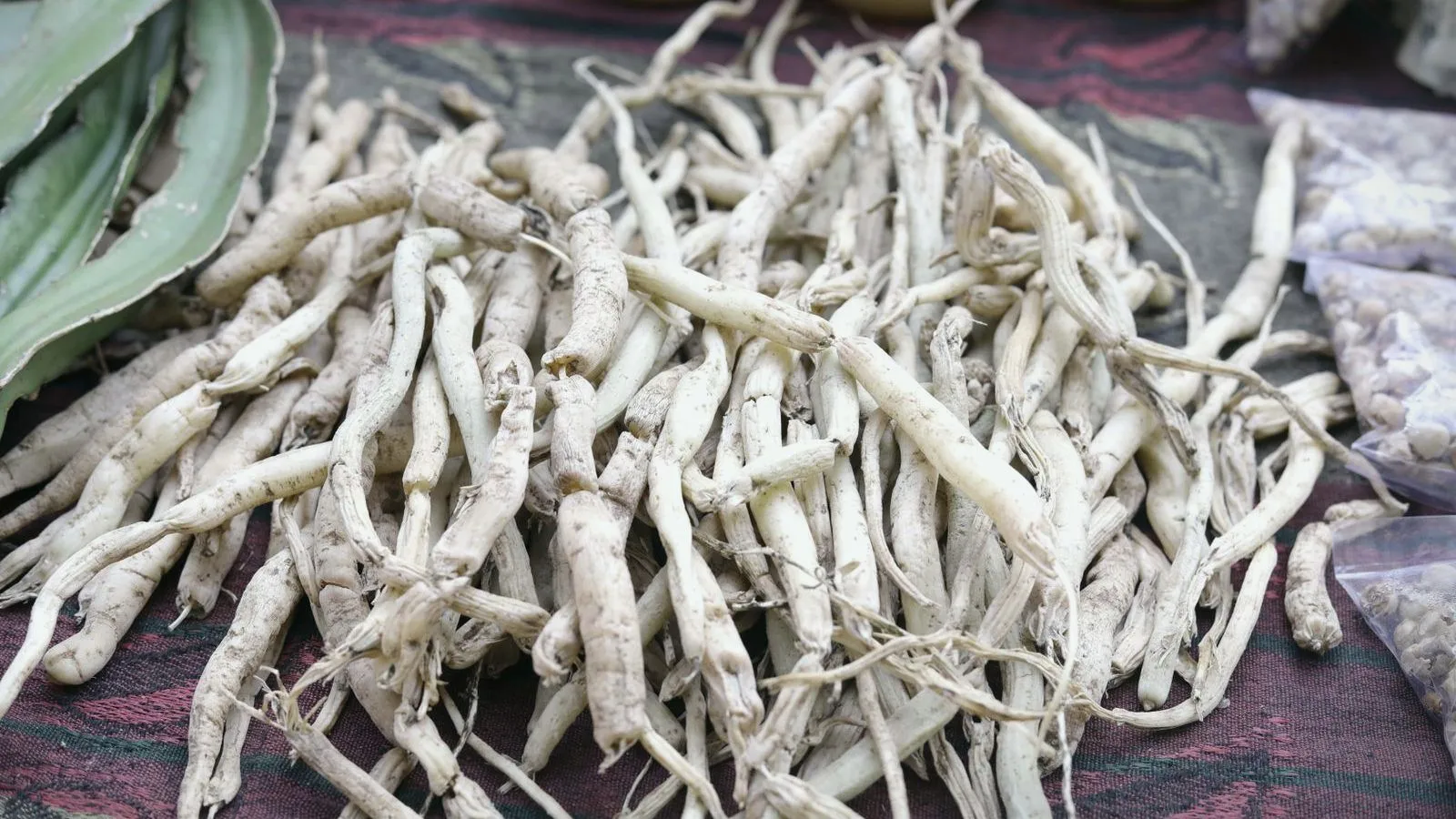
Ashwagandha is an evergreen shrub found in parts of India, Africa, and the Middle East. What is sold is the root: extracts of the roots of Withania somnifera, a low growing evergreen shrub that is native to India and Southeast Asia.
It contains several bioactive compounds, including a group of substances known as withanolides, which are steroidal lactones. Products are usually standardized to their withanolide content, which is the number worth looking for on a label.
In Ayurvedic practice it is used to treat stress, anxiety, insomnia, fatigue, pain, skin diseases, diabetes, arthritis, and epilepsy, and as a general tonic to increase energy, reduce fatigue and counteract the effects of aging. That list is far broader than the evidence, which is the usual pattern for a traditional remedy entering a modern market.
How ashwagandha is thought to work
The word attached to it is adaptogen: an adaptogenic herb used to prevent and treat psychosomatic disorders. The concept is that it buffers the body’s response to stress rather than sedating or stimulating directly.
The most concrete support for that framing is hormonal. Pooled trials found a significant effect of Ashwagandha formulations on serum cortisol levels compared to the placebo group, and cortisol is the central output of the stress axis. A questionnaire score moving is easy to explain away; a hormone moving with it is harder.
Beyond that the mechanism is not well characterized in humans, and withanolides have enough laboratory activity attributed to them that the pharmacology remains open.
What the evidence says about stress and sleep
Stress
This is the strongest case. A systematic review and meta-analysis found nine randomized controlled trials involving 558 patients eligible for pooling.
The findings showed a significant effect of Ashwagandha formulations on the Perceived Stress Scale, on the Hamilton Anxiety Scale, and on serum cortisol levels compared to the placebo group.
The perceived stress reduction was 4.72 points, with a plausible range running from 8.45 down to 0.99. That lower bound sits close to nothing, so the effect is real but its size is not well pinned down.
Sleep
The sleep trial is unusually well constructed for this category. It enrolled 150 healthy subjects scoring high on non-restorative sleep measures and gave them 120 mg of standardized ashwagandha extract once daily for six weeks.
A 72% increase in self-reported sleep quality was found for the treatment group, compared with 29% in the placebo group. Sleep actigraphy was used to measure the onset of sleep latency, sleep efficiency, total sleep time and wake after sleep onset, so the trial did not rest on self-report alone.
NCCIH’s summary matches: research shows that some ashwagandha preparations may be effective for insomnia and stress.
Anxiety, where the sources disagree
Here the picture splits, and the disagreement is worth showing rather than resolving.
The pooled trials showed a significant effect of Ashwagandha formulations on the Hamilton Anxiety Scale. NCCIH’s assessment is flatly different: evidence is unclear about its effects on anxiety.
Both are reasonable readings of a small literature. Anxiety scales are noisy, the trials are few, and most were run where the herb is traditional and expectations run high. The honest position is that stress and anxiety are being measured as if they were the same thing, and the evidence separates them less cleanly than the marketing does.
Everything else
NCCIH lists limited evidence that taking ashwagandha for 2 to 4 months may increase testosterone levels and sperm quality, and insufficient evidence for asthma, athletic performance, cognitive function, diabetes, menopause, and COVID-19.
That last list covers a good share of what ashwagandha is sold for.
What the evidence says about strength, performance and testosterone
Ashwagandha has moved from the calm-and-sleep aisle into the sports aisle, and the evidence did not move with it.
The best-conducted trial in a mainstream sports science journal randomly assigned thirty professional female footballers to 600 mg/day ashwagandha root extract or placebo for four weeks, then measured both how recovered they felt and what they could actually do.
The split in the results is the finding. On the subjective measures it worked: a dosage of 600 mg of ashwagandha root extract for 28 days may improve TQR and enhance perceived sleep quality in female footballers, where TQR is a recovery questionnaire.
On the measures that do not depend on how someone feels, it did not separate from placebo. Grip strength, a medicine ball throw and a countermovement jump were all tested, and the analysis instead highlighted the significant influence of carbohydrate intake on hand grip strength. What the athletes ate predicted their strength. The supplement predicted their mood about it.
That is not nothing. Feeling recovered and sleeping better are real, and they are consistent with everything else on this page. They are also not the same claim as getting stronger, and the products are sold on the second one.
Testosterone
This claim is true, and it is a reason to be careful rather than a reason to buy.
A review of supplements marketed to raise testosterone selected two herbal extracts with the best documented positive effects, one of them Withania somnifera root and root extracts, concluding that both significantly increase T levels in men, writing T for testosterone. The proposed route is indirect: Withania somnifera may inhibit the effects of cortisol and prolactin on the hypothalamic-pituitary-gonadal axis.
A herb that measurably shifts a hormone axis is a herb that can interact with an endocrine condition or a hormone-sensitive cancer. That is exactly why the avoid list below is as long as it is, and it is a poor fit for anyone treating the supplement as harmless because it is a plant.
Myths about ashwagandha, and what the evidence says
“It is a gentle traditional herb, so it is safe.” It has a LiverTox likelihood score of B, cases dating from 2017, and rare transplants. Traditional use is not a safety dataset.
“It fixes anxiety.” The two most authoritative sources disagree, which is not what settled evidence looks like.
“More withanolides means better.” No trial base supports dose escalation, and the successful sleep trial used 120 mg, at the low end of what is sold.
“It boosts testosterone.” NCCIH calls this limited evidence over a 2 to 4 month window, not an established effect.
Dosing and forms of ashwagandha
Extracts of ashwagandha root are often supplied as capsules or tablets in concentrations of 150 to 600 mg, which are taken one to three times daily.
That range spans a fourfold difference in single dose and a much larger one in daily total, which is a sign the field has not settled on an amount. The sleep trial that worked used 120 mg once daily, below the bottom of that range, which argues against the assumption that more is required.
Products differ in extraction method and withanolide standardization, and LiverTox’s phrasing is a reminder of why that matters: the injury cases involved “commercial herbal products that are labelled as containing ashwagandha”. That phrase is doing a lot of work, since what is in the bottle is not always verified.
Safety, side effects and who should avoid ashwagandha
The routine side effects are mild. Ashwagandha preparations may cause drowsiness, stomach upset, diarrhea, and vomiting, and the drowsiness is arguably the point when it is taken for sleep.
The liver is the serious matter, and it is a recent development. “Cases of clinically apparent liver injury have been reported in patients taking commercial herbal products that are labelled as containing ashwagandha”. First reported in 2017, an increasing number of cases have been reported since.
Three specifics make that usable.
The presentation is distinctive. Typically, the liver injury presented 2 to 12 weeks after starting ashwagandha usually with a cholestatic or mixed pattern of injury, jaundice, and pruritus. Yellowing plus persistent itching is the combination to watch for.
The severe outcomes cluster. Rare instances of fatal liver injury or need for emergent liver transplantation have been reported particularly in patients with preexisting liver disease and cirrhosis.
And recovery is usually complete but slow: the ensuing jaundice was protracted although it ultimately resolved completely in the cases described.
NCCIH’s consumer-level version is more muted, noting that although it is rare, there have been a number of cases that link liver injury to ashwagandha supplements.
On top of that, ashwagandha should be avoided during pregnancy and should not be used while breastfeeding, with caution also advised for people with autoimmune or thyroid disorders, anyone about to have surgery, and people with hormone-sensitive prostate cancer.
The thyroid warning is not a formality
That thyroid line gets repeated as boilerplate, and a 2025 safety review treats it as a genuine restriction. Examining the effects on reproductive systems, thyroid hormones and the immune system, its findings indicate that Ashwagandha poses significant risks to specific populations, such as pregnant women, patients with thyroid disorders, and individuals with liver or kidney dysfunction.
The same review reaches an unusually blunt recommendation for a supplement this popular: it recommends restricting the use of Ashwagandha as a food additive, enhancing label warnings, and notes that multiple cases of liver damage have been reported, raising concerns about its long-term safety.
Put beside the testosterone finding above, a consistent picture emerges. This is a plant with measurable endocrine activity. That is the reason it does something, and it is the reason a thyroid patient should not take it casually.
Interactions
NCCIH names a broad set: diabetes medications, blood pressure medications, immunosuppressants, sedatives, anticonvulsants, and thyroid medications.
Two deserve emphasis. Sedatives, because ashwagandha is most often taken at bedtime and its own drowsiness stacks. And thyroid medication, because thyroid disorders appear on both the interaction list and the avoid list, and ashwagandha is widely recommended in exactly the online spaces where people discuss thyroid symptoms.
The immunosuppressant interaction matters for transplant recipients, which overlaps unhelpfully with the group at highest risk from the liver signal.
Bottom line on ashwagandha
For stress and for sleep, ashwagandha has better evidence than most of what sits beside it on the shelf, including an objective hormonal marker moving in the expected direction. A six-week trial at 120 mg is a reasonable thing to consider for non-restorative sleep, with a doctor’s knowledge.
For anxiety, the field’s two best sources disagree, and that should be read as unsettled.
The reason for caution is not the efficacy data, it is the safety file. A supplement graded as a likely cause of liver injury, with cases rising since 2017 and a two-to-twelve-week window before symptoms appear, is not something to take indefinitely on the assumption that nothing is happening. The long-term picture is genuinely unknown, and the meta-analysts say so: further information is required to determine its safety with long-term administration.
Anyone with liver disease should not take it at all.
People also ask
Does ashwagandha actually lower stress?
The pooled evidence says yes, modestly. Nine randomized trials involving 558 patients found effects on the Perceived Stress Scale (MD -4.72; 95% CI, -8.45 to -0.99) and on serum cortisol (MD -2.58; 95% CI, -4.99 to -0.16). Cortisol moving alongside the questionnaire matters, because it is an objective measure rather than a report, and it makes the subjective finding harder to dismiss as expectation.
Why do NCCIH and the meta-analysis disagree about anxiety?
They are weighing the same small literature differently. The meta-analysis found an effect on the Hamilton Anxiety Scale across its nine trials. NCCIH's position is that evidence is unclear about its effects on anxiety. Both readings are defensible when the underlying trials are few, small, and mostly conducted where the herb is traditional. Treat anxiety as unsettled rather than established.
How real is the liver risk?
Real, recent, and specific enough to act on. LiverTox states that cases of clinically apparent liver injury have been reported in patients taking commercial herbal products sold as containing ashwagandha, first reported in 2017, with an increasing number since. Its likelihood score is B, likely cause. The pattern is cholestatic or mixed, meaning bile flow rather than pure liver-cell damage, and it typically shows up 2 to 12 weeks after starting.
What are the warning signs?
Jaundice and pruritus, meaning yellowing and persistent itching, are the presentation LiverTox describes, usually alongside fatigue and dark urine. Because onset runs from two to twelve weeks, most people will not connect it to a capsule they started a month or two earlier. Anyone who develops those symptoms should stop and get liver tests rather than wait it out.
Who should not take it?
More people than most labels suggest. NCCIH says it should be avoided during pregnancy and should not be used while breastfeeding. It also flags caution for people with autoimmune or thyroid disorders, anyone about to have surgery, and people with hormone-sensitive prostate cancer. Anyone with existing liver disease should avoid it outright, since that is the group in which the rare severe outcomes have clustered.
Does it interact with medication?
Yes, across several classes. NCCIH lists a risk of interaction with diabetes medications, blood pressure medications, immunosuppressants, sedatives, anticonvulsants, and thyroid medications. The sedative and thyroid interactions are the ones most likely to catch someone out, because ashwagandha is commonly taken at night and commonly taken by people already managing thyroid symptoms.
References
- Arumugam, V., et al. Effects of Ashwagandha (Withania Somnifera) on stress and anxiety: A systematic review and meta-analysis. EXPLORE, 2024.
- Deshpande, A., et al. A randomized, double blind, placebo controlled study to evaluate the effects of ashwagandha extract on sleep quality in healthy adults. Sleep Medicine, 2020.
- Chandrasekhar, K., et al. A Prospective, Randomized Double-Blind, Placebo-Controlled Study of Safety and Efficacy of a High-Concentration Full-Spectrum Extract of Ashwagandha Root. Indian Journal of Psychological Medicine, 2012.
- Ng, Q. X., et al. A systematic review of the clinical use of Withania somnifera (Ashwagandha) to ameliorate cognitive dysfunction. Phytotherapy Research, 2020.
- LiverTox: Clinical and Research Information on Drug-Induced Liver Injury. Ashwagandha. National Institute of Diabetes and Digestive and Kidney Diseases.
- National Center for Complementary and Integrative Health. Ashwagandha.
- Li, L., Zhang, X., Hao, J., et al. Evaluating the Safety of Ashwagandha as a Food Additive: A Focus on Reproductive, Thyroid, and Immune System Effects. Phytotherapy Research, 2025.
- Coope, O. C., Reales Salguero, A., Spurr, T., et al. Effects of Root Extract of Ashwagandha (Withania somnifera) on Perception of Recovery and Muscle Strength in Female Athletes. European Journal of Sport Science, 2025.
- Skrzypiec-Spring, M., Pokrywka, A., Kuliczkowska-Plaksej, J., Szelag, A., Bolanowski, M. Withania somnifera and Trigonella foenum-graecum as ingredients of testosterone-boosting supplements: Possible clinical implications. Advances in Clinical and Experimental Medicine, 2025.