News · Longevity & Aging
Social prescribing navigators beat a referral line, 50% to 36%, in 326 Ontario patients
326 primary care patients in Ontario were randomized to a navigator who stayed with them or to a referral line. 50.3% reached a needed resource against 35.8%. What nobody measured was whether their health changed.
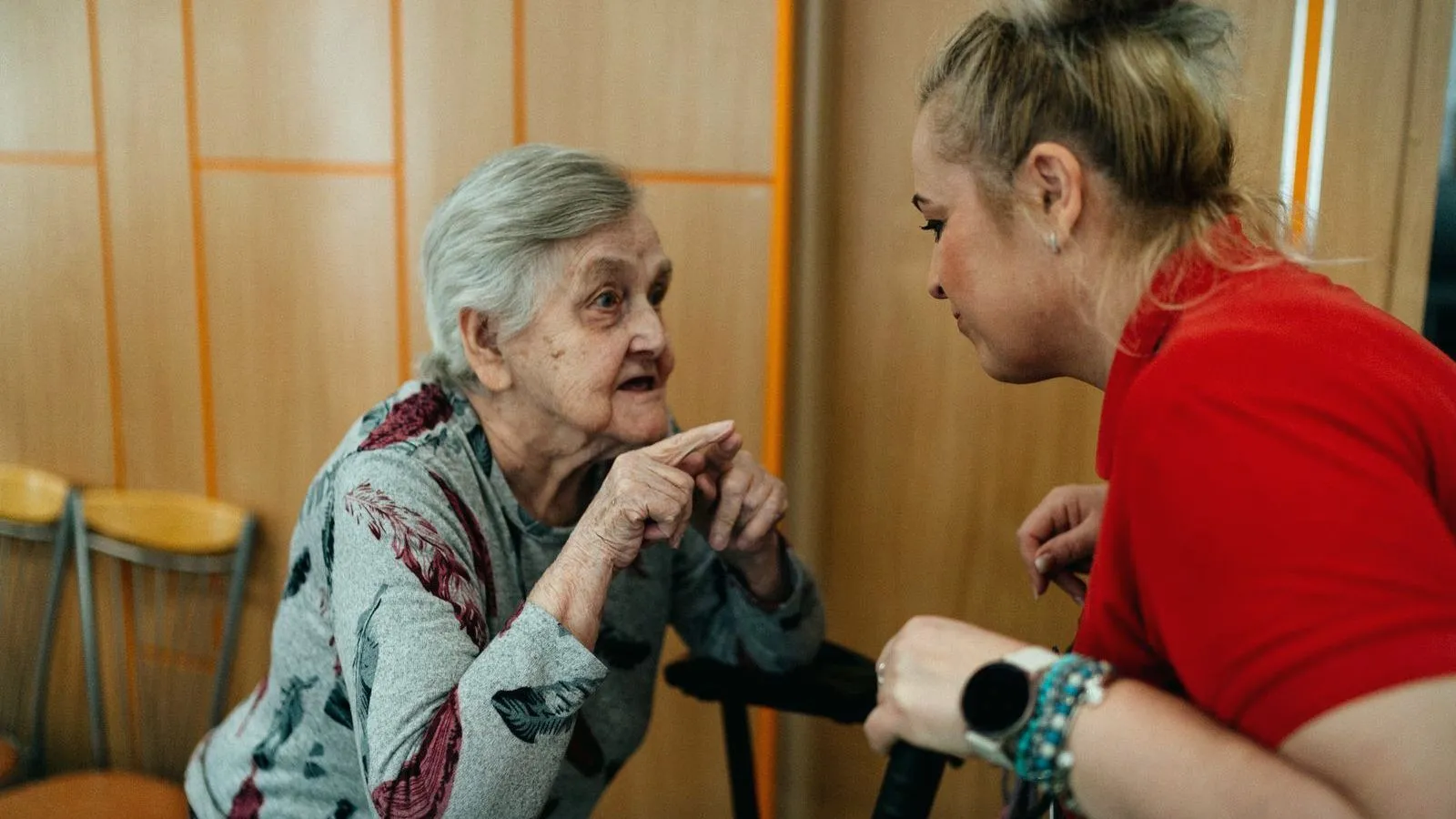
- Social prescribing links patients to community services for non-medical needs.
- 326 Ontario patients randomized to ongoing navigation or to a signposting line.
- Reached a needed resource: 50.3% with a navigator against 35.8% with signposting.
- French-speaking patients got better access to services in their own language.
- The outcome was access to a service, not any measure of health.
A doctor can diagnose the effects of a cold flat, an empty fridge or an unaffordable bus fare, and can treat almost none of it. Social prescribing is the attempt to close that gap by referring patients out of the clinic and into the community.
The usual objection is that referral is easy and arrival is hard. Handing someone a phone number is not the same as getting them help.
A trial in Ontario tested exactly that distinction. The intensive arm had a higher rate of self-reported access to needed resources at study end, by about fifteen percentage points.
What social prescribing is for
The conditions the clinic cannot reach have a name. Social determinants of health are the conditions in the environments where people are born, live, learn, work, play, worship, and age that affect a wide range of health, functioning, and quality-of-life outcomes and risks.
The list is concrete rather than abstract: safe housing, transportation, and neighborhoods; education, job opportunities, and income; access to nutritious foods and physical activity opportunities. Language and literacy skills are on it too, which matters later in this trial.
These conditions also drive the differences between groups. Social determinants contribute to wide health disparities and inequities, and the guidance is blunt about what does not fix that: just promoting healthy choices won’t eliminate these and other health disparities.
Social prescribing is one response. The researchers describe it as a promising strategy to address unmet health and social needs and reduce health disparities.
The question the trial actually asked
Not whether social prescribing works against nothing. Whether the intensity of the help matters.
Patients were randomized to an Access to Resources in the Community intervention arm or a 211-Ontario control arm. Both are real services.
The intervention arm got a person. ARC patients were offered comprehensive, longitudinal navigation services that included informational, instrumental, and emotional support. Longitudinal means the navigator stayed involved rather than making one referral.
The control arm got a direction. 211-Ontario patients were signposted, that is directed to, inbound navigation services providing mainly informational support. It is a real, staffed helpline, and reaching it is the patient’s job.
That comparison is the strength of the design. A trial against no help at all would have proved something obvious. This one asks whether comprehensive support beats a good signpost, which is the question a health system actually faces when it decides what to fund.
How it was run
The trial recruited patients with health and/or social needs in primary care practices in 2 regions of Ontario, Canada.
The main outcome was deliberately modest and clearly defined: self-reported access to at least 1 needed health or social resource, measured by survey at baseline and at the end of the study 3 months later.
One group was singled out in advance. The researchers also compared the arms on equity for the Francophone minority population, Ontario’s French-speaking community, for whom being served in their own language is a long-standing barrier. Specifying that comparison before the trial rather than discovering it afterwards is what makes the eventual finding worth reporting.
A total of 326 patients were randomized, of whom 237, or 73%, completed the end-of-study survey.
What the navigators achieved
Half the intervention group got where they were going. Among all patients randomized, the ARC arm had a higher rate of self-reported access to needed resources at study end when compared with the 211-Ontario arm, 50.3% against 35.8%, a difference of about 14.5 percentage points.
Reported among all patients randomized, not only among those who finished, which is the more conservative way to count and means the 27% who dropped out are not quietly improving the result.
The advantage survived adjustment for patient characteristics, and the range around it stays clear of no difference at both ends.
There were softer gains too. Patients in the ARC arm also reported significantly better experience and greater ability to engage in their care.
And the equity result landed. Francophones had significantly higher access to language-concordant services in the ARC arm. A navigator who knows which services operate in French is doing something a general helpline structurally cannot.
The number that should temper all of this
Half the intervention group still did not reach a resource they needed.
That is the figure worth sitting with. With comprehensive, ongoing, emotionally supportive navigation, in a trial, with researchers watching, the success rate was 50.3%. The barriers being navigated are evidently more substantial than not knowing the phone number.
It also frames what the 14.5-point gap means in practice: roughly seven people would need the intensive service rather than the signpost for one additional person to reach something they needed.
What was not measured
Health.
The outcome here is access to a service, and access is a step on the way to a benefit rather than the benefit. Nobody in this trial was followed to find out whether the food program improved their diet, whether the housing help reduced their stress, or whether any of it changed a clinical measure or a hospital visit.
That is a reasonable choice for a first trial, and it is the reason this result cannot yet answer the question a health system will eventually ask, which is whether navigation improves health enough to justify what it costs.
Three months is also short for anything downstream of a referral to show up.
What else it cannot settle
The setting is two regions of one Canadian province, with a specific mix of services and a specific minority-language population. How much transfers depends on what a community already has to refer people to.
Both the exposure and the outcome are self-reported, by patients who knew which arm they were in. Nobody can be blinded to whether a navigator has been calling them, and knowing you received the more generous service can shape how you answer a survey about it.
The authors close on the open questions: further research is required to understand the importance of in-person visits and the patient population for whom it should be prioritized.
The paper is paywalled, so the authors’ own limitations section was not available for this piece.
What follows from it
For anyone designing services, the finding is specific and useful: the referral is not the hard part, and paying for a person rather than a leaflet buys a measurable increase in whether help is actually reached.
There is a tidy way to describe what the navigator was supplying. Organizational health literacy is about how well organizations help people find the health information and services that they need, as opposed to personal health literacy, which is about how well a person can find and understand the health information and services that they need.
Among the activities a navigator might point someone toward, the evidence is uneven in ways worth knowing. Animal-assisted interventions, pooled across 20 studies in older adults, improved depression and left loneliness untouched.
The wider case for getting people out of the house is now better quantified. Pooled across 25 cohorts, higher social participation tracked lower all-cause mortality in older adults, with religious groups, volunteering and hobby clubs all pointing the same way.
Signposting puts the burden on personal health literacy. Navigation moves it onto the organization. This trial is a measurement of what that shift is worth, and the answer is: something real, and less than half the problem.
People also ask
What is social prescribing?
Connecting patients from a health setting to non-medical community resources: housing help, food programs, income support, social groups. The premise is that a large share of what shows up in a clinic has a cause the clinic cannot treat. The authors describe it as a promising strategy to address unmet health and social needs and reduce health disparities.
What were the two arms?
ARC patients were offered comprehensive, longitudinal navigation services that included informational, instrumental, and emotional support. 211-Ontario patients were signposted, meaning directed to, inbound navigation services providing mainly informational support. Both arms got something; the comparison is more support against less.
What did the trial find?
Among all patients randomized, the ARC arm had a significantly higher rate of self-reported access to needed resources at study end when compared with the 211-Ontario arm (50.3% vs 35.8%; absolute difference 14.5%; 95% CI, 3.9%-25.2%). The advantage held after adjusting for patient factors (adjusted odds ratio 1.82; 95% CI, 1.13-2.94).
What about the equity finding?
Francophones had significantly higher access to language-concordant services in the ARC arm. Ontario has a French-speaking minority for whom getting served in their own language is a recurring barrier, and the trial was designed in advance to look at that specific group rather than finding it afterwards.
What was not measured?
Health. The primary outcome was self-reported access to at least 1 needed health or social resource, collected by survey at baseline and 3 months later. Whether reaching a food program or a housing service changed anyone's blood pressure, mental health or hospital use is outside what this trial looked at.
How complete was the follow-up?
A total of 326 patients were randomized, of whom 237 (73%) completed the end-of-study survey. The headline comparison was reported among all patients randomized rather than only among finishers, which is the more conservative choice and the right one.
What should a reader do with this?
Mostly treat it as evidence about how services should be organized rather than as personal advice. If you are struggling with a non-medical problem that is affecting your health, it is worth knowing that many primary care practices can now refer to community navigation, and that asking is often what starts it. This is general information rather than medical advice.
References
- Dahrouge, S., Gauthier, A. P., Durand, F., et al. A Randomized Controlled Trial of Social Prescribing: Comparing a Comprehensive Navigation Model With Signposting. Annals of Family Medicine, 2026.
- Office of Disease Prevention and Health Promotion. Social Determinants of Health. Healthy People 2030, US Department of Health and Human Services.
- MedlinePlus. Health Literacy. US National Library of Medicine.