News · Sleep
Sleep loss made paintings look less beautiful to 68 young adults in a lab experiment
Researchers at Baylor University cut the sleep of 68 young adults to five and a half hours for two nights, then showed them abstract art. The same paintings were rated less likable and less beautiful, a drop tied to mood and alertness.
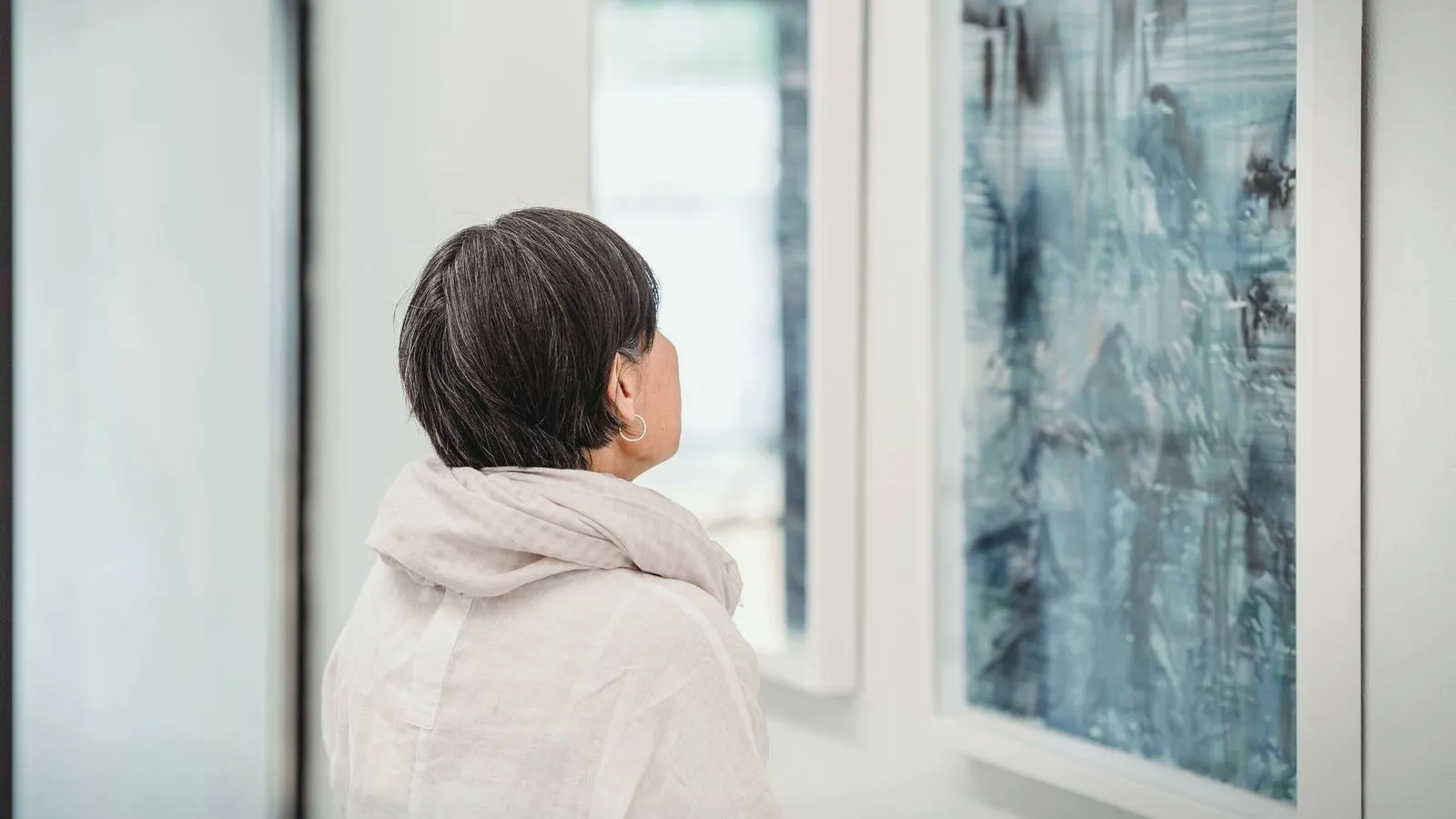
- In a lab study of 68 young adults, two short nights made abstract paintings seem less beautiful.
- Each person rated art after five and a half hours in bed and again after a full night.
- The drop in enjoyment tracked how sleepy people were and how low their positive mood was.
- Larger reviews agree that sleep loss dulls good feelings more reliably than it raises bad ones.
- The volunteers were about 20 years old and saw only abstract art, so the result may not travel.
Too little sleep makes the commute grimmer and the inbox longer. It may also take something off a painting. In a laboratory experiment with 68 young adults, two nights of shortened sleep were enough to make the same abstract artworks seem less beautiful.
The study comes from Michael Scullin’s sleep laboratory at Baylor University in Texas and appeared in the Journal of Sleep Research in September. On the reduced schedule the volunteers liked the art less, and the authors report that mild sleep restriction decreased ratings of painting likability and beauty. The size of the drop followed how sleepy and how flat each person felt.
Two nights of short sleep, then twelve paintings
Ariadne Godinho, the paper’s first author, and colleagues wanted to push sleep research past its usual territory. Experiments on tired people tend to measure reaction times, memory and basic mood. Whether fatigue reaches something as everyday and as personal as finding a picture beautiful had barely been tested.
They recruited 68 young adults, with an average age of about 20, and put each of them through both arms of the experiment. This design is known as a crossover, meaning every volunteer acts as their own comparison, and the paper describes a multi-week, counterbalanced, crossover study under laboratory control. Because the same people judged the art under both schedules, differences in taste cancel out, and shuffling the order guards against a practice effect.
The two schedules differed by three and a half hours in bed. Volunteers completed both a mild sleep restriction condition, sleeping from 1:30am to 7am, and a well-rested condition that ran from 10pm to 7am. On the morning after the second night of each schedule, participants rated 12 abstract paintings.
There was a second question tucked inside the first. Each painting was paired with a fictitious artist’s name chosen to suggest a man or a woman, and a white or an African American artist. The idea was that tired minds might lean harder on stereotypes. They did not, and the paper reports that no effects or interactions were observed for artist names.
Sleep was what mattered. The researchers then looked for what carried the effect and found two measures doing the work: these effects were mediated by sleepiness/alertness and positive mood state. People who were drowsier and less cheerful on the reduced schedule were the ones who marked the paintings down.
Why would sleep loss dull a painting?
Decades of experiments point to a specific casualty of lost sleep, and it is good feeling. A 2024 meta-analysis in Psychological Bulletin, led by Cara Palmer at Montana State University, pooled more than 50 years of studies in which researchers deliberately shortened or broke up people’s sleep. Its authors found that all forms of sleep loss resulted in reduced positive affect, the technical term for pleasant emotions such as joy and interest. Tired participants also showed blunted arousal in response to emotional stimuli. Results for negative feelings were more mixed. The authors concluded that periods of extended wakefulness, shortened sleep duration, and/or nighttime awakenings adversely influence human emotional functioning, with anxiety symptoms rising as well, which fits the long-noted overlap between insomnia and anxiety.
An earlier analysis reached a similar split. Researchers at the University of Nebraska combined 64 studies in the journal SLEEP and reported a large, negative effect of sleep loss on positive mood, next to a moderate rise in negative mood. Lost sleep, on that evidence, removes the highs more dependably than it deepens the lows.
A painting is an emotional stimulus, and enjoying one is a small positive emotion. Seen that way, the Baylor result is what the larger body of work would predict, extended to a new and more refined kind of experience.
One older experiment adds a wrinkle about which kind of disturbed sleep does the damage. At Johns Hopkins, Patrick Finan’s group woke one set of volunteers repeatedly and simply delayed bedtime for another. They concluded that partial sleep loss from sleep continuity disruption is more detrimental to positive mood than partial sleep loss from delaying bedtime. The Baylor study used the delayed-bedtime kind, the milder of the two.
How mild is mild? Five and a half hours in bed sits well under the level sleep bodies describe as adequate. The joint statement of the American Academy of Sleep Medicine and the Sleep Research Society says adults should sleep 7 or more hours per night on a regular basis to promote optimal health. A run of late nights and early alarms produces a shortfall of the same order.
Sixty-eight young adults, one sleep lab, one kind of art
The crossover design gives the finding real strength inside the laboratory, because the same eyes judged the same style of art under both conditions. Outside the laboratory, several things are missing.
The volunteers were about 20 years old. Older adults sleep differently and may respond differently to losing sleep. The art was abstract painting only, so the study is silent on music, film, landscape or anything a person has chosen for themselves. Ratings were collected after two nights, which leaves open whether people who are short of sleep for months adapt or get worse. And a score on a rating scale is a narrow stand-in for the experience of standing in front of a picture.
It is a small experiment in young people, and nothing in it amounts to a reason to change sleep habits or gallery plans. What it adds is a new item to the list of things a sleep deficit touches. That list usually runs to concentration, safety and temper. Pleasure in art now has some experimental evidence behind it too.
For these 68 volunteers, at least, the paintings were the same on both mornings, and less sleep made them duller.
People also ask
What did the sleep and art study find?
After two nights of mild sleep restriction, 68 young adults rated abstract paintings as less likable and less beautiful than they did after two well-rested nights. The effect was mediated by sleepiness and positive mood, meaning those two measures statistically accounted for the drop.
How much sleep did the participants get?
In the restricted condition they were in bed from 1:30 AM to 7:00 AM, five and a half hours. In the rested condition they were in bed from 10:00 PM to 7:00 AM.
Did the artist's name change how people rated the paintings?
No. Each painting was paired with a fictitious artist's name suggesting a gender and an ethnicity, and the study found no effects or interactions for artist names.
What does other research say about sleep loss and emotion?
A 2024 meta-analysis in Psychological Bulletin, which pools more than 50 years of experiments, found that all forms of sleep loss reduced positive affect (standardized mean differences from -0.27 to -1.14, where a negative value means lower positive mood). A 2021 analysis of 64 studies in SLEEP found a large negative effect on positive mood.
How much sleep do expert bodies recommend for adults?
The American Academy of Sleep Medicine and Sleep Research Society consensus statement says adults should sleep 7 or more hours per night on a regular basis. This is general information rather than medical advice.
References
- Godinho, A. D., Gao, C., Hebl, M. R., Scullin, M. K. Experimental Sleep Restriction Blunts Positive Emotions and Aesthetic Experiences When Viewing Artwork. Journal of Sleep Research, 2026.
- Palmer, C. A., Bower, J. L., Cho, K. W., et al. Sleep loss and emotion: A systematic review and meta-analysis of over 50 years of experimental research. Psychological Bulletin, 2024.
- Tomaso, C. C., Johnson, A. B., Nelson, T. D. The effect of sleep deprivation and restriction on mood, emotion, and emotion regulation: three meta-analyses in one. SLEEP, 2021.
- Finan, P. H., Quartana, P. J., Smith, M. T. The Effects of Sleep Continuity Disruption on Positive Mood and Sleep Architecture in Healthy Adults. SLEEP, 2015.
- Watson, N. F., Badr, M. S., Belenky, G., et al. Recommended Amount of Sleep for a Healthy Adult: A Joint Consensus Statement of the American Academy of Sleep Medicine and Sleep Research Society. SLEEP, 2015.