News · Brain & Mental Health
Infant deaths were nearly three times as common when mothers screened positive for depressive symptoms
New Jersey requires every new mother to be screened for depressive symptoms, which let researchers link 414,890 birth records to deaths in the first year. The gap it reveals is about who needs support, not about blame.
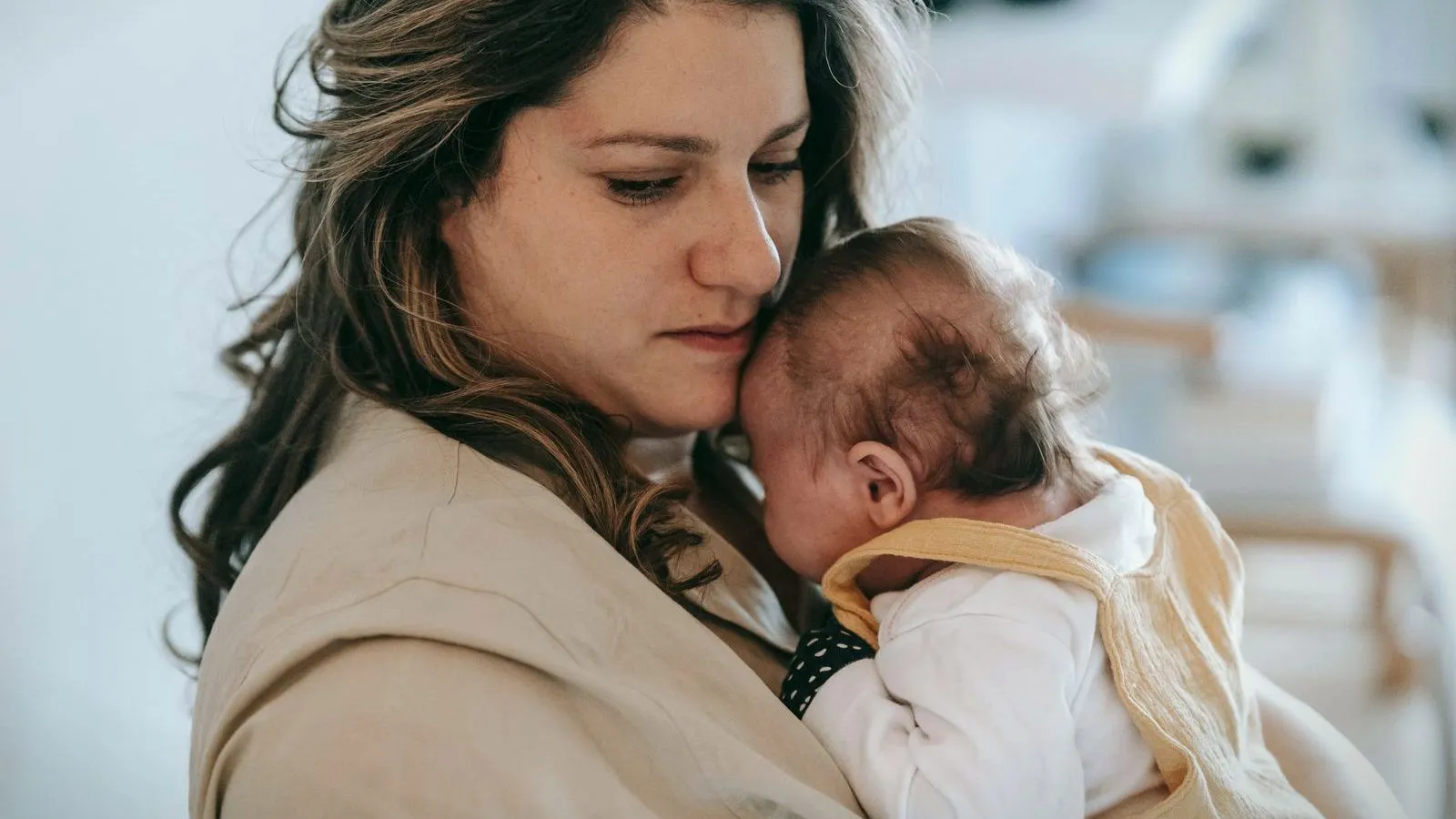
- This observational study linked 414,890 New Jersey birth records to death records, and cannot show cause.
- 906 infants died in the first year, about 2 in every 1,000 births.
- Deaths were 7.2 per 1,000 births when mothers screened positive, against 2.0 when they did not.
- After adjustment the risk was 2.89 times higher, and the pattern held across race, education and insurance.
- Depressive symptoms are treatable, and screening is how they get found.
Most new parents are asked about their mood in the days after a birth, usually with a short questionnaire handed over between other checks. New Jersey requires it of every mother, which created something researchers rarely have: a record of postpartum depressive symptoms for almost every birth in a state. Linking 414,890 of those records to death records produced a finding that is hard to read and important to get right.
Infants whose mothers screened positive for depressive symptoms died in their first year at more than three times the rate of other infants. The study cannot show that the depression caused those deaths. The authors treat it as an association and call for work on the mechanisms behind it.
What is perinatal depression, and how is it screened for?
Perinatal depression covers depression during pregnancy and after birth. MedlinePlus calls it a common but serious mood disorder that can begin anytime within the first year after childbirth, and distinguishes it from the milder, short-lived baby blues that usually pass within a week.
The screening tool is the Edinburgh Postnatal Depression Scale, a short questionnaire. A score of 10 or higher, the cutoff in this study, marks someone for further assessment. It is a flag, not a diagnosis, which matters when interpreting what follows.
How were the birth and death records linked?
Writing in JAMA Network Open, researchers used New Jersey birth records from 2016 to 2020, linked to death records through 2021. Because the state mandates screening in the immediate postpartum period, the depression measure was available for the great majority of births.
That gave them 414,890 singleton infants with complete data. Of those, 906 died before their first birthday, about 2 in every 1,000. The researchers then compared death rates by whether the mother had screened positive, adjusting for maternal and infant demographic and social factors: age, race and ethnicity, where a mother was born, education, insurance, WIC enrollment and the median household income of her zip code. A further model added risk factors such as preterm birth and low birth weight, but the authors treated the simpler model as their main result, because those factors may sit on the path between depression and an infant’s death rather than beside it.
How large was the difference in infant deaths?
The unadjusted rates were 7.2 infant deaths per 1,000 births where mothers had depressive symptoms, against 2.0 per 1,000 where they did not. After statistical adjustment, infants of mothers with depressive symptoms had 2.89 times the risk of dying within the first year.
The association held up across groups: it was consistent across maternal race and ethnicity, educational level, insurance status and whether the baby was born preterm. That consistency is part of what makes the finding hard to dismiss as a quirk of one disadvantaged group.
Breaking deaths down by cause, the associations were strongest for perinatal conditions and prematurity-related conditions, followed by congenital malformations and chromosomal abnormalities, and then sudden infant death syndrome.
Does depression cause infant deaths?
Almost certainly not in any direct sense, and the causes listed above are the clue. Congenital malformations are present before birth and cannot be caused by a mother’s mood afterward. The authors reach for the same explanation: they write that mothers who have knowledge of these underlying conditions that increase risk of infant death may consequently develop depressive symptoms. Learning that your baby has a serious condition, or watching a very premature newborn in intensive care, is among the most distressing experiences there is.
For other causes the arrows may point both ways, and the authors list the possibilities: depression has been linked to birth outcomes, and to infant care practices including breastfeeding and health care seeking. It also travels with poverty, isolation and poor access to care, which affect infant survival on their own.
The study design cannot separate these. It is an observational cohort, and a screening score is a rough measure of a complex condition. The authors also flag the obvious limits: New Jersey may not resemble other states, and 8.1% of birth records had no screening score at all, though filling those gaps statistically barely changed the result.
Why is the depression screening finding still worth acting on?
Because a screening score that flags higher risk is useful even when it is not a cause. If mothers who screen positive are also the mothers whose babies are most likely to die, then that questionnaire is identifying families who need more support, more follow-up and easier access to care, rather than a leaflet and a six-week check.
That is the practical upshot, and it is a point about services rather than about mothers. New Jersey’s mandate is what made this study possible, and it is one of only eight US states with one. Even there, the authors note, screening does not necessarily lead to diagnoses or mental health treatment: the state has no rules on what follows a positive score, and earlier work found the law did not change treatment patterns among mothers on Medicaid. A questionnaire that identifies families and then hands them nothing is only half a system.
One more line in the paper deserves attention. Infants of mothers with no recorded screening score also had raised mortality, which suggests the people missed by screening may be the ones who most need it.
What should a new parent take from the infant mortality figures?
Not guilt. Even in the higher-risk group, the rate was 7.2 deaths per 1,000 births, which means about 993 of every 1,000 infants whose mothers screened positive did not die. Postpartum depression is common and treatable.
The one thing worth acting on is asking for help early and honestly, including on that questionnaire, because an accurate answer is what triggers support. MedlinePlus says treatments may include medicines, including antidepressants, along with talk therapy, and advises telling your provider if you are breastfeeding so they can choose the safest treatment options. Anyone with thoughts of hurting themselves or their baby should get help right away: in the United States, the National Suicide and Crisis Lifeline can be reached by calling or texting 988. Telling someone is not a failure of parenting; it is the step the whole screening system is built around.
People also ask
What did the study find?
The infant mortality rate was 7.2 per 1,000 births for infants whose mothers had depressive symptoms and 2.0 per 1,000 births for those whose mothers did not. After adjustment for covariates, the relative risk of death within 364 days was higher for infants of mothers with depressive symptoms, at 2.89. Associations were found for prematurity-related conditions, perinatal conditions, congenital malformations and sudden infant death syndrome.
What is the Edinburgh Postnatal Depression Scale?
A short questionnaire used worldwide to screen new mothers for depressive symptoms. A score of 10 or higher, the threshold used here, flags someone for further assessment rather than diagnosing depression.
Does this mean depression causes infant deaths?
No. This is an observational study. Depressive symptoms may be a marker for other risks, and serious problems with a pregnancy or a baby can themselves cause a mother distress.
How common were these deaths?
Rare. Of 414,890 infants, 906 died, about 2 in every 1,000. The higher rate among mothers with depressive symptoms was about 7 in 1,000.
Why New Jersey?
The state mandates screening for depressive symptoms in the immediate postpartum period, so the records exist for nearly every birth, which is unusual.
Where can a new parent get help?
Postpartum depression is treatable, with medicines and talk therapy among the options. MedlinePlus advises talking with your provider, and anyone thinking of harming themselves or their baby should get help right away; in the United States, call or text 988. This is general information rather than medical advice.