News · Nutrition & Diet
Expressing milk before birth more than doubled exclusive breastfeeding after gestational diabetes
Babies of mothers with gestational diabetes often get formula in the first hours for low blood sugar, and breastfeeding rarely recovers. Collecting milk before the birth changed how many were still feeding weeks later.
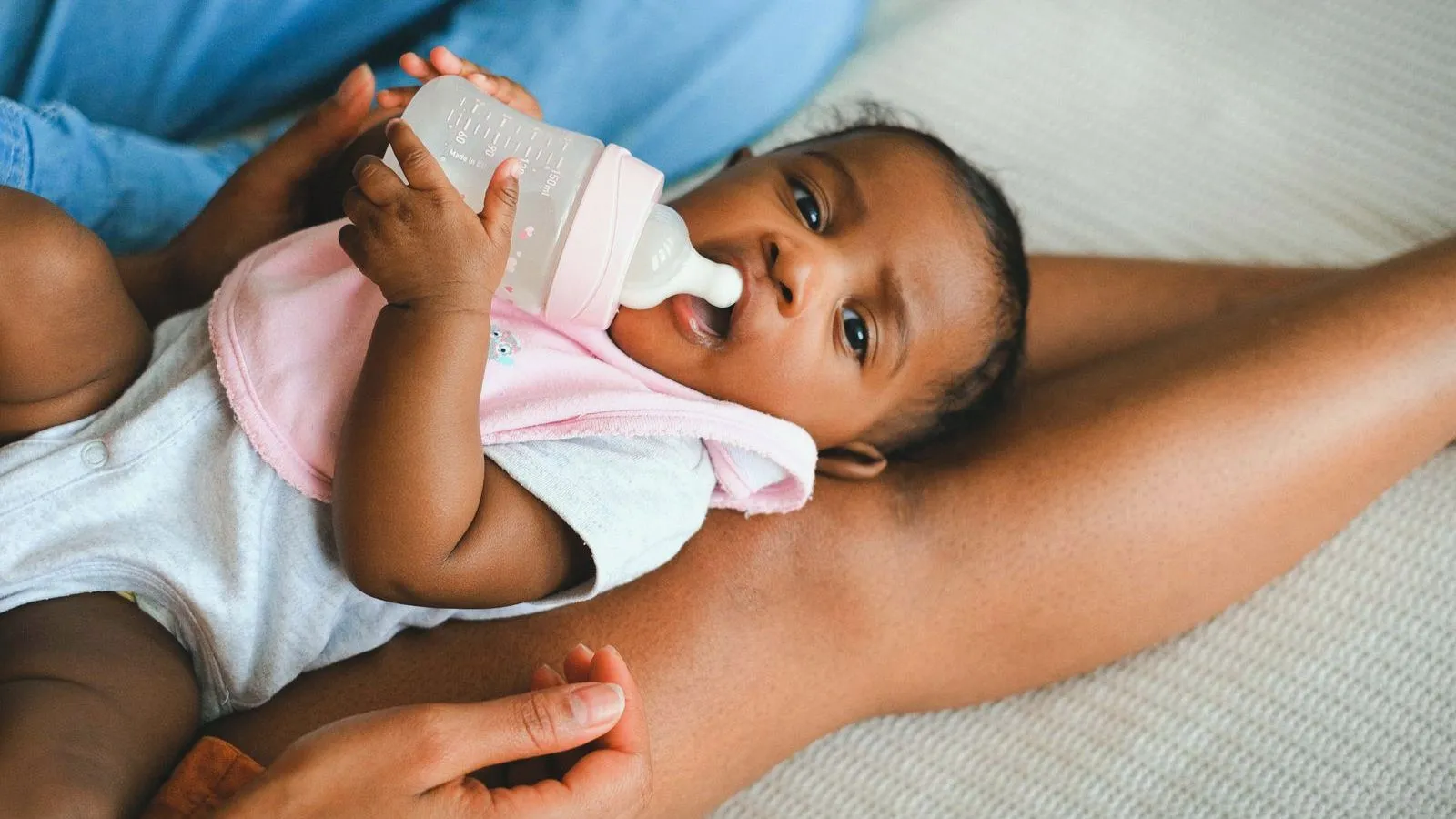
- Mothers taught to express milk before birth were more than twice as likely to be exclusively breastfeeding.
- The gap was there at discharge and still there four weeks later.
- By eight weeks the difference had narrowed and was no longer clear.
- Depressive symptoms were lower in the group that expressed.
- A randomized trial in women with gestational diabetes.
A great deal of what determines whether a mother breastfeeds is settled in the first forty-eight hours, and mothers with gestational diabetes start those hours at a disadvantage.
Their babies are more likely to have low blood sugar after birth, which is treated urgently and often with formula. That first bottle is one of the strongest predictors of exclusive breastfeeding not continuing, and by the time anyone is discussing feeding preferences the pattern is frequently set.
The trial published in the journal EClinicalMedicine addresses the sequence rather than the intention. Mothers were taught to hand-express and freeze colostrum in the last weeks of pregnancy, so that when the baby needed supplementing, there was something other than formula to give.
What happened
Over the 8-week postpartum period, the proportion exclusively breastfeeding was higher in the intervention group at every measured point.
At discharge it was 16.3% against 8.9%. At four weeks, 30.9% against 20.3%. Across the whole period the intervention group was roughly two and a half times as likely to be feeding exclusively.
By eight weeks the gap had narrowed to 29.3% against 25.2%, and its range crossed no effect. The direction still favored the intervention; the certainty did not survive.
Why the early numbers are the important ones
Sixteen percent against nine percent at discharge looks like a small difference on a small base, and it is the point where the mechanism is doing its work.
The theory is not that expressing milk makes a mother more committed. It is that having colostrum in the freezer removes the moment where formula is the only option, and that removing that moment changes what follows.
An effect that appears at discharge and persists to four weeks is consistent with that story. An effect that appeared only later would not be.
The fade, and how to read it
By eight weeks the difference is no longer statistically distinguishable from chance, and that deserves stating plainly rather than burying.
Two readings are available. The intervention may protect the fragile first days and have nothing to say about week seven, when the reasons mothers stop are different: work, sleep, supply, pain. Or the early effect may be less durable than it looked.
The trial cannot separate them, and the honest summary is that this changed the start rather than demonstrably changing the destination.
The mood result
Depressive symptoms were lower in the intervention group, reported as a secondary outcome.
That is worth noting and not overreading. Breastfeeding difficulty and low mood travel together closely, in both directions, and a trial powered for feeding outcomes is not powered for depression.
It does fit a pattern that lactation researchers describe often: mothers who intend to breastfeed and cannot frequently experience the failure as their own, and interventions that remove an obstacle can lift that as well as the feeding rate.
The objection that has been tested
Expressing milk in late pregnancy stimulates the nipple, which releases oxytocin, which causes uterine contractions. That is the reason it was discouraged for years, particularly in diabetic pregnancies already at higher risk of complications.
Trials in this population have looked for earlier births and not found them, and the practice is generally offered from around 36 weeks rather than earlier. It is still something to do with guidance rather than from an internet video, because the timing depends on the individual pregnancy.
Why any of this matters
Breast milk contains the right balance of nutrients to help an infant grow, and the gap between how many mothers intend to breastfeed exclusively and how many manage it is one of the more stubborn failures in maternity care.
Most attempts to close it have targeted intention: education, counseling, support. This one targets logistics, and logistics is where the intention usually breaks.
For a mother with gestational diabetes who wants to breastfeed, the useful thing here is not the size of the effect. It is that there is something concrete to do in the weeks before the birth, at the point where the outcome is still open.
People also ask
What did the trial find?
Exclusive breastfeeding was higher in the intervention group at discharge (16.3% vs 8.9%; adjusted odds ratio 2.28; 95% CI 1.01-5.14) and at four weeks (30.9% vs 20.3%; aOR 2.00; 1.07-3.74). At eight weeks the difference was smaller and its interval crossed no effect (29.3% vs 25.2%; aOR 1.37; 0.73-2.56). Across the whole period the adjusted odds ratio was 2.43 (1.17-5.04).
What is antenatal milk expression?
Hand-expressing and collecting colostrum in the last weeks of pregnancy, so it is available after the birth. It is stored frozen and can be given to the baby instead of formula if supplementation is needed.
Why does gestational diabetes make this relevant?
Because babies of mothers with gestational diabetes are more likely to have low blood sugar in the first hours and to be given formula for it. That early formula is one of the strongest predictors of breastfeeding not continuing.
Is it safe to express before birth?
Nipple stimulation can trigger contractions, which is the historical objection. Trials in women with diabetes have not found increased early birth, and it is generally offered from around 36 weeks under guidance rather than earlier.
Why did the effect fade by eight weeks?
The trial does not say. One reading is that the intervention protects the fragile first days and that later attrition has other causes, such as returning to work. The eight-week estimate still favored the intervention; it was no longer clearly separated from chance.
What about the depression finding?
Depressive symptoms were reported as reduced in the intervention group. Breastfeeding difficulty and maternal mood are closely linked, so this is plausible, and mood was a secondary outcome rather than what the trial was built to measure.
Should someone with gestational diabetes do this?
It is worth raising with a midwife or obstetrician, who can advise on timing and technique for the individual pregnancy. This is general information rather than medical advice.