News · Nutrition & Diet
Nuts tracked 26% lower risk of high blood pressure across 8 studies and 20,665 cases
A British Journal of Nutrition review pooled eight cohort studies and 20,665 new cases of high blood pressure. Eating about 30 grams of nuts a day went with roughly a quarter less risk, and the authors graded the case for cause as probable.
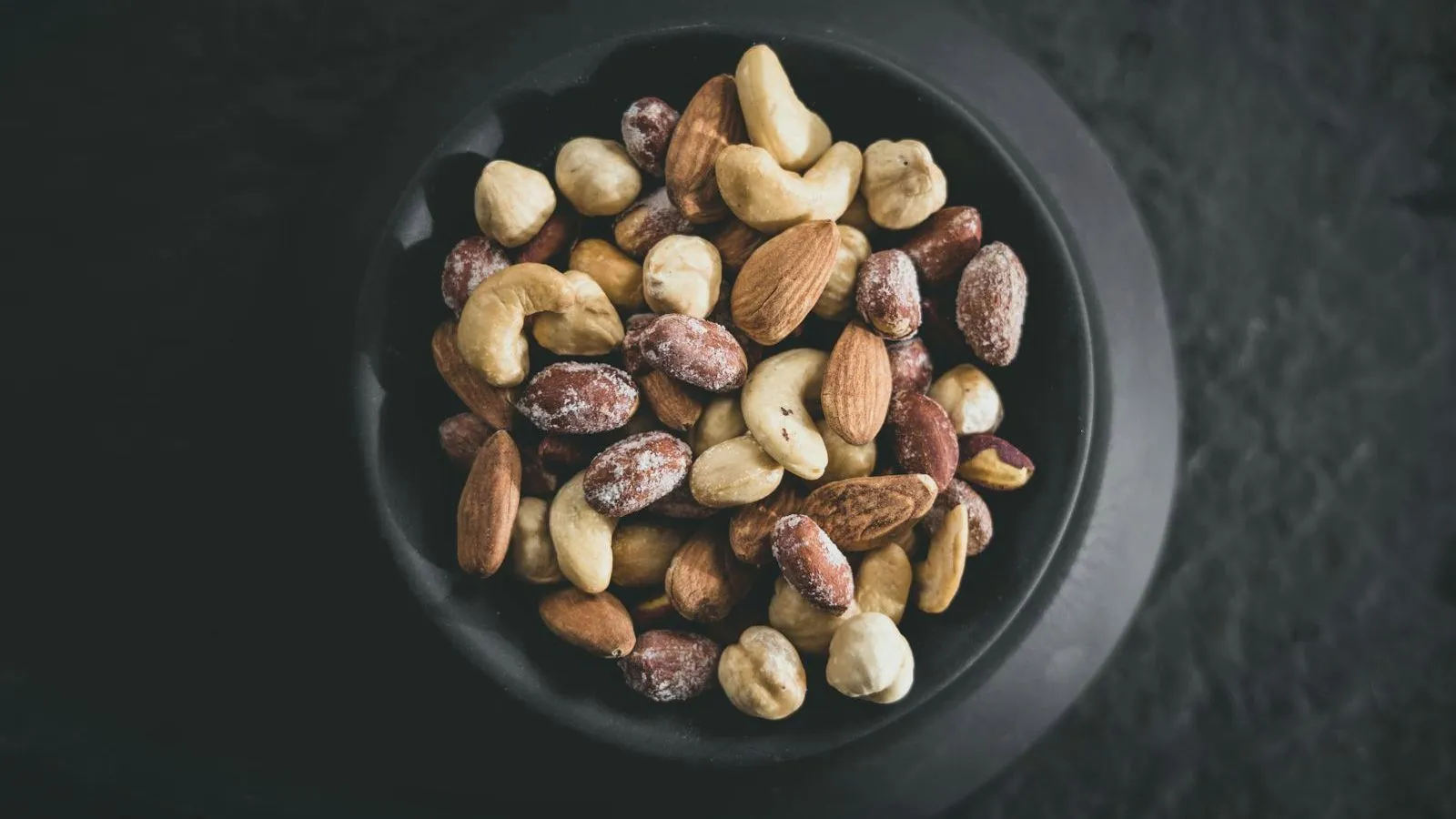
- Eight prospective cohort studies, 20,665 new cases of high blood pressure.
- Highest versus lowest nut intake: 16% lower risk (RR 0.84, 95% CI 0.77-0.91).
- Per 28 g/day: 20% lower risk (RR 0.80, 95% CI 0.71-0.89).
- Comparing 30 g/day with none gave a 26% reduction in risk.
- Graded probable for causality under World Cancer Research Fund criteria.
Twenty-six percent sounds like a lot to hang on a handful of almonds.
Writing in the British Journal of Nutrition, Metoudi and colleagues arrive at it after pooling eight prospective cohort studies covering 20,665 new cases of high blood pressure. They report a 26% reduction in risk for people eating 30 grams a day against people eating none. Thirty grams is a small handful, and the comparison group eats no nuts at all.
A duller number travels further and rests on firmer ground. Pooling all eight cohorts, the team found further evidence for a reduced risk of hypertension with higher intake of nuts, and scaled to a serving of nuts per day the estimate came out about a fifth lower.
The grade that makes this different
Most single-food findings arrive without any formal assessment of how much weight to put on them, which is why the nutrition aisle of the news is so exhausting. This paper carries one. Using World Cancer Research Fund criteria to assess the strength of evidence, the authors graded the likelihood of causality as probable.
That word is doing specific work. The World Cancer Research Fund scheme has five rungs, and probable sits second from the top, above limited-suggestive and below convincing. Reaching the top rung generally takes randomized trials, and nobody has assigned several thousand people to eat nuts every day for a decade and waited to see whose readings climbed. For a food, probable is close to the ceiling.
The grade also carries a caveat of its own: the same team that ran the analysis assigned it. Read it as a considered opinion about the weight of evidence, with the interests that implies.
Why blood pressure is the outcome worth having
Blood pressure is the force of your blood pushing against the walls of your arteries, and the reason clinicians chase it is that nothing about it announces itself. High blood pressure usually has no symptoms, so the only way to find out if you have it is to get regular checks. Left alone it does slow structural damage: when blood pressure stays high over time, it causes the heart to pump harder and work overtime, possibly leading to heart attack, stroke, heart failure, and kidney failure.
So a dietary change that shifts the odds of ever developing it is worth more than one that nudges a reading. This study counted new diagnoses over years of follow-up, which is harder to do than measuring anyone before and after a snack, and more useful to know.
What eight cohorts can and cannot show
Everyone in these studies chose what to eat, which is the whole design and the limitation you cannot analyze away. People who eat nuts most days differ from people who eat none, and they differ in ways that are hard to measure and that also protect the heart. They tend to have more money, exercise more, smoke less, and eat better across the board. The authors pooled adjusted estimates, which is the standard correction, and standard corrections handle the confounders somebody thought to record.
Two other things temper the result. The studies disagreed with each other more than chance would explain, especially in the dose-response analysis, which is what usually happens when different cohorts measure a food in different ways. The searches covered PubMed and Embase databases and nothing else, so the pool is what those two hold in English.
What the paper does have is an unusually clean bill on publication bias. There was no indication of publication bias with Begg’s test or Egger’s test or by visual inspection of the funnel plot. In a field where the small flattering results are the ones that get written up, that absence counts for something.
The shape of the dose curve
There was some indication of nonlinearity, meaning the benefit did not rise in a straight line with intake. The gap between eating no nuts and eating some looks larger than the gap between some and more.
Nutrition research turns up this shape constantly, usually because the zero group is unusual. People who eat no nuts at all sit outside the spectrum rather than at the bottom of it, and they tend to eat differently in other ways too. Either reading points the same practical direction. Getting from none to a handful is where the evidence concentrates, and the case for going further is thinner than the case for starting.
What to do with a bag of almonds
Nuts are one of the few foods where the advice has been stable for twenty years and this analysis does not disturb it. A healthy eating plan includes a variety of foods, including vegetables, fruits, and whole-grain products, and good nutrition can help people live longer and lower their risk of health problems like heart disease and type 2 diabetes.
Metoudi and colleagues end on a recommendation rather than a hedge, writing that “these findings support dietary guideline recommendations to include a serving of nuts per day”.
Nuts are also one of four components of the Portfolio diet, the cholesterol-lowering pattern that recently turned up a 10% lower all-cause mortality signal across four cohorts.
Two honest qualifications belong with that. Nuts carry a lot of energy for their size, so a handful added to a day is a different proposition from a handful that replaces something else. And this is evidence about not developing high blood pressure in the first place. If you already have it, the treatment is the treatment, and almonds are not part of it.
People also ask
What did the meta-analysis find?
The summary RR for the highest vs. lowest category of nut intake was 0.84 (95% CI: 0.77-0.91, I2=50%), and per 28 g/d was 0.80 (95% CI: 0.71-0.89, I2=75%). There was some indication of nonlinearity and there was a 26% reduction in risk when comparing 30g/d vs. 0 g/d.
What does 'graded as probable' mean?
It is a formal evidence rating, not a figure of speech. The World Cancer Research Fund grading scheme runs convincing, probable, limited-suggestive, limited-no conclusion, and substantial effect on risk unlikely. Probable is the second-highest rung and the highest that observational diet research usually reaches, because randomizing thousands of people to eat nuts for a decade is not something anyone has done.
How much is 28 grams?
About a small handful, or roughly 20 almonds. That is the standard serving size used across nutrition research, which is why the dose-response result is expressed per 28 g/day.
Is this cause and effect?
No. These are prospective cohort studies, which follow people who chose their own diets, so the association could still reflect something about nut eaters rather than nuts. The authors adjusted for confounders and applied the WCRF grading, and probable is their judgment on the strength of the evidence, not a claim of proof.
How consistent were the studies?
Moderately for the top-versus-bottom comparison and poorly for the dose-response: I2 was 50% for the first and 75% for the second. High heterogeneity means the studies disagreed with each other more than chance explains, usually because they measured nut intake in different ways.
Was there publication bias?
No sign of it. There was no indication of publication bias with Begg's test (p=0.71) or Egger's test (p=0.10) or by visual inspection of the funnel plot. That matters in nutrition research, where small positive studies are the ones that tend to get written up.
Should someone with high blood pressure start eating nuts?
Adding a serving of nuts is a low-risk change for most people, and the authors write that these findings support dietary guideline recommendations to include a serving of nuts per day. Nuts are also energy-dense, and this evidence is about preventing high blood pressure rather than treating it. Anyone already diagnosed should keep treating it with their doctor. This is general information rather than medical advice.
References
- Metoudi, M., Sadler, I., Kassam, S., Aune, D. Nut consumption and the risk of hypertension: a systematic review and dose response meta-analysis of prospective studies. British Journal of Nutrition, 2026.
- MedlinePlus. High Blood Pressure. US National Library of Medicine.
- MedlinePlus. Nutrition. US National Library of Medicine.