News · Nutrition & Diet
More fish was not better: the lowest deaths sat mid-range
A Japanese cohort of 90,944 adults found the lowest all-cause mortality in women eating the second-highest amount of fish, not the highest. In men the benefit appeared only for stroke deaths, and only for unsalted fish.
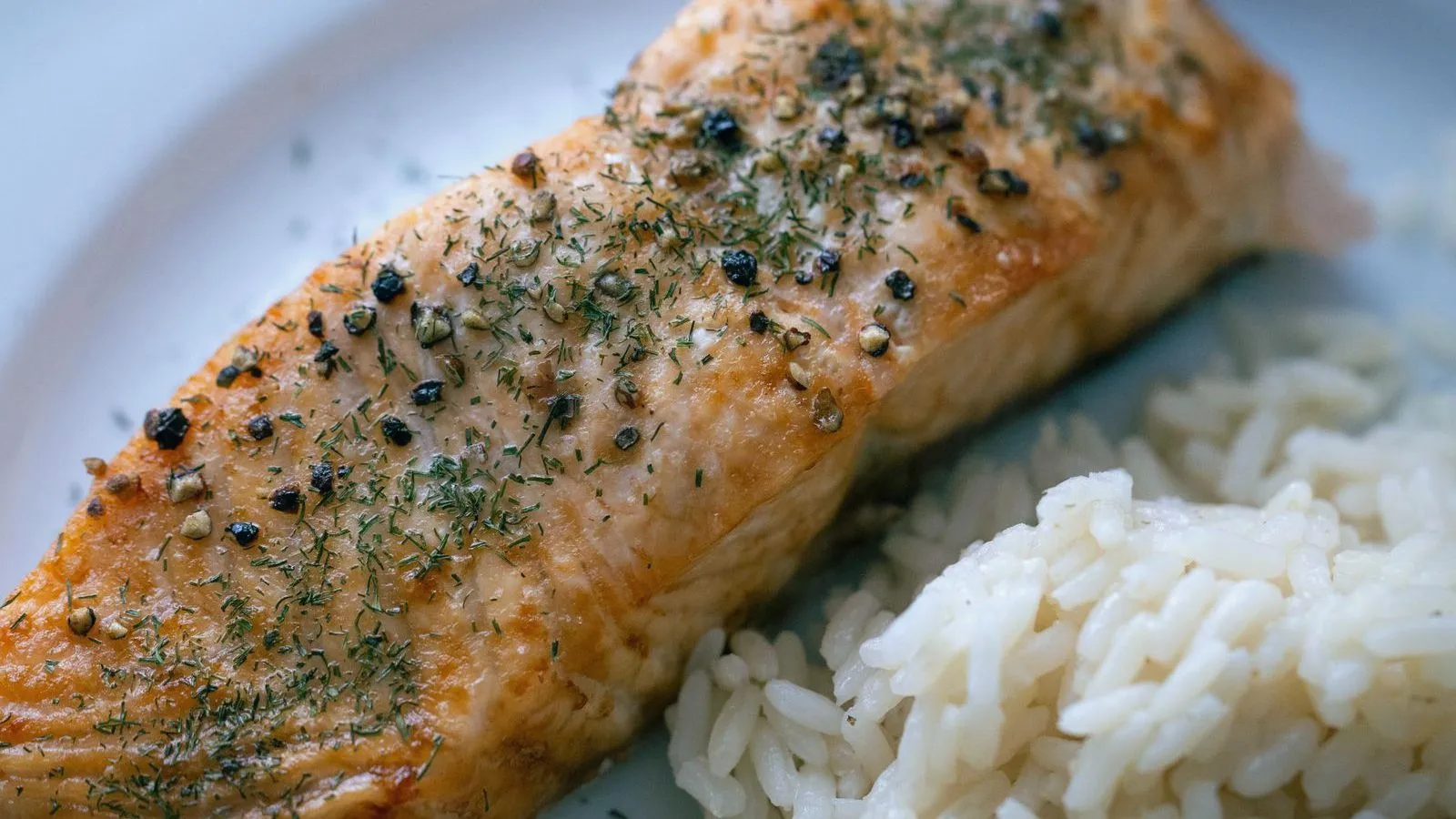
- Japan eats far more fish than the countries most fish research comes from.
- In women, all-cause mortality was lowest in the fourth of five intake groups (HR 0.92).
- The curve was nonlinear: the highest-intake group did not do best.
- In men, unsalted fish tracked lower stroke death (HR 0.77-0.84), with no all-cause effect.
- Diet was recorded once, by questionnaire, in the late 1990s.
Most of what we know about fish and health comes from populations that barely eat any. In a country where two servings a week counts as a lot, the interesting comparison is between rare and occasional.
Japan is the opposite case. A study in the Journal of Nutrition used that, following 90,944 individuals (42,150 men and 48,794 women) in the Japan Public Health Centre-based Prospective Study, where the top intake group is eating fish most days.
At that end of the range, more stopped helping.
Why fish is thought to matter
Omega-3 fats do several things to the cardiovascular system. They reduce triglycerides, a type of fat in your blood. They reduce the risk of developing an irregular heartbeat (arrhythmias). They slow the buildup of plaque, a substance comprising fat, cholesterol, and calcium, which hardens and blocks your arteries. They help to slightly lower your blood pressure.
The dietary advice that follows is specific. The American Heart Association (AHA) recommends eating at least 2 servings a week of fish rich in omega-3s, and oily fish rich in omega-3s include salmon, mackerel, albacore tuna, trout and sardines.
Note the shape of that advice: a floor, not a ceiling. It says how little is too little and stays quiet about the top of the range, largely because Western cohorts have almost nobody at the top to study.
What the Japanese fish cohort could see
Previously, few studies have concurrently evaluated fish and shellfish intakes, fish types, and omega-3 fats in relation to mortality, and findings in Asia, including in the Japanese population with high fish consumption, remain inconsistent.
The team analyzed people who completed a validated food frequency questionnaire between 1995 and 1998, and energy-adjusted intakes were sorted into five equal-sized groups, from the lowest eaters to the highest.
They also split fish by type, which most cohorts cannot. Unsalted fish and shellfish were counted separately from the salted and dried varieties that make up a large part of traditional Japanese eating, and omega-3-rich fish separately again.
That matters because salt and fish arrive together in this diet, and salt pushes blood pressure the wrong way. Lumping them hides which is doing what.
What happened to death rates across the range
In women, the curve bent. A nonlinear association was observed between fish and shellfish intake and all-cause mortality in women, with the lowest mortality observed in Q4, the fourth of the five groups.
Not the fifth. The women eating the most fish did not have the lowest death rate; the women eating the second most did, by about 8%.
For men there was no all-cause signal at all. What showed instead was narrower and specific: in men, higher intake of unsalted fish and shellfish was associated with a lower risk of cerebrovascular disease mortality in every group except the middle one, with reductions of roughly 16 to 23% against the lowest group.
Cerebrovascular disease mortality is death from stroke and related diseases of the brain’s blood vessels. It is the outcome where fish looked best in both sexes.
For omega-3-rich fish specifically, women had lower risks of all-cause and cerebrovascular disease mortality as intake rose, this time in a straight line rather than a curve.
Why the shape of the fish curve is the finding
A flat or turning curve at high intake is easy to explain badly. It is not evidence that fish becomes harmful.
The plainer readings are that the benefit saturates, that people at the very top differ in other ways, or that what accompanies very high intake in Japan, including salt and the occasional heavy metal, cancels part of the gain. The study cannot choose between them.
What it does establish is that the relationship is not a straight line in a population eating at the high end. The authors summarize it as a moderate fish and shellfish intake was associated with lower all-cause mortality in women, with moderate doing real work in that sentence.
Their overall reading: these findings suggest that different fish types may differentially associated with mortality outcomes.
What one fish questionnaire cannot show
Diet was recorded once, in the late 1990s, by asking people what they usually ate. Everything that happened to their eating over the following decades is invisible.
This is also observational. People who eat more fish in Japan differ from those who eat less in income, region and much else, and adjustment cannot remove all of it.
The sex difference is worth holding loosely. It may be real, or it may reflect men in this cohort smoking and drinking far more than women, which crowds out a moderate dietary signal.
What to do at the fish counter
Nothing here undermines the standing advice, which is a floor most people in Western countries do not reach. Two servings a week of oily fish remains the target, and this study says nothing against it.
What it argues against is the assumption that the line keeps going. If you already eat fish most days, this is evidence that pushing higher is not where the next gain comes from.
The supplement question sits underneath all of this. Most health experts agree that the best way to reap the benefits of omega-3 is from food, and for some health conditions, the evidence for benefits from seafood (fish and shellfish) is stronger than the evidence for omega-3 supplements. On stroke specifically, a 2020 review of 31 trials with 138,888 participants found increasing omega-3 supplements had little or no effect on reducing strokes.
The fish did something in this cohort that the capsules have not managed in trials.
People also ask
What did the study find in women?
A nonlinear association was observed between fish and shellfish intake and all-cause mortality in women, with the lowest mortality observed in the fourth of five intake groups (HR 0.92; 95% CI 0.86-0.98; P for nonlinearity 0.022). For fish rich in omega-3 fats, women had lower risks of all-cause (P for linear trend 0.012) and cerebrovascular disease mortality (P for linear trend 0.005).
And in men?
Different, and narrower. Higher intake of unsalted fish and shellfish was associated with a lower risk of cerebrovascular disease mortality in all quintiles except the middle one (Q2 HR 0.78; 95% CI 0.66-0.92; Q4 HR 0.77; 0.65-0.91; Q5 HR 0.84; 0.71-0.99; P for nonlinearity 0.017). No equivalent all-cause association appeared in men.
Why does unsalted fish get counted separately?
Because salted and dried fish are a large part of traditional Japanese eating, and salt raises blood pressure, which raises stroke risk. Separating the two lets the analysis ask whether the fish or the salt is doing the work. In men, the stroke finding held specifically for the unsalted category.
What is cerebrovascular disease mortality?
Death from a stroke or a related disease of the blood vessels supplying the brain. It is the outcome where fish showed its clearest signal in this cohort, in both sexes, which fits the known effects of omega-3 fats on blood pressure and clotting.
Does this contradict the advice to eat more fish?
Not the advice, but it qualifies the more. The American Heart Association recommends eating at least 2 servings a week of fish rich in omega-3s, and nothing here argues against that. What the data suggest is that above a moderate intake the curve flattens or turns, at least in a population that already eats a great deal of fish.
How was diet measured?
By a validated food frequency questionnaire completed once, between 1995 and 1998, with energy-adjusted intakes categorized into quintiles. A single questionnaire three decades ago is a thin record of what someone ate for the rest of their life, and it is also the practical limit of studies this large.
What about fish oil supplements instead?
For some health conditions, the evidence for benefits from seafood (fish and shellfish) is stronger than the evidence for omega-3 supplements. A 2020 review of 31 trials with 138,888 participants found increasing omega-3 supplements had little or no effect on reducing strokes, which is the outcome where fish looked best here. This is general information rather than medical advice.
References
- Fujimaki, M., Ishihara, J., Kanehara, R., et al. Fish and Shellfish Consumption by Type and Risks of All-Cause and Cause-Specific Mortality in the Japan Public Health Centre-Based Prospective Study. Journal of Nutrition, 2026.
- MedlinePlus Medical Encyclopedia. Omega-3 fats: good for your heart. US National Library of Medicine.
- National Center for Complementary and Integrative Health. Omega-3 Supplements: What You Need To Know. US National Institutes of Health.