News · Nutrition & Diet
A whole-food exclusion diet put 69% of Crohn's patients into remission across 17 studies
Crohn's disease is normally treated with drugs, and the liquid-only diet that works is almost impossible to stick to. Pooling 17 studies, a diet built from ordinary food matched it, and beat both a control diet and the Mediterranean diet.
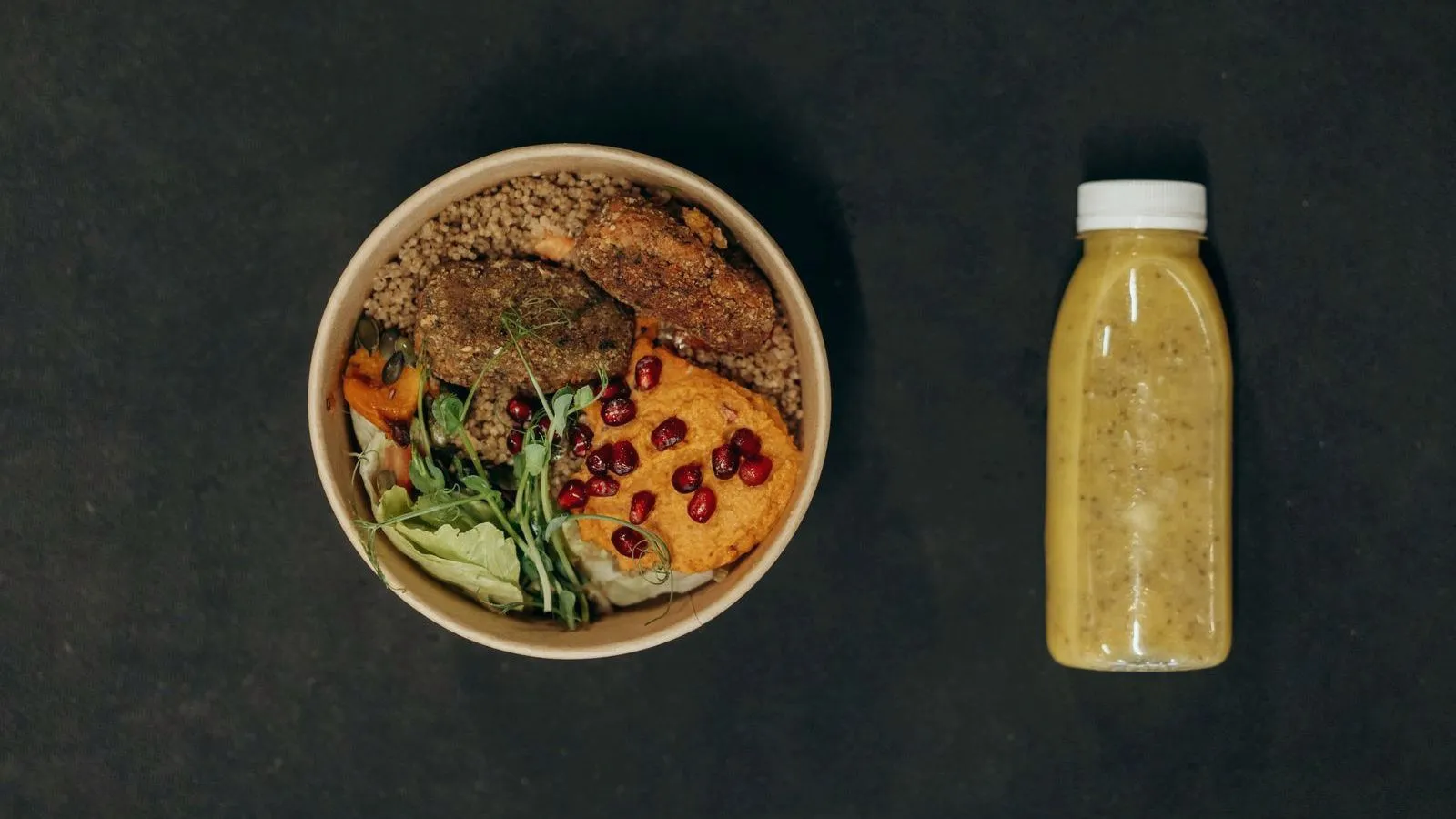
- A diet of ordinary food put 69% of Crohn's patients into remission across 17 studies.
- It matched the liquid-only feed that works but that almost nobody can stick to.
- It beat a control diet, the Mediterranean diet, and in these comparisons steroids too.
- Keeping people in remission was less reliable, and the studies disagreed with each other.
- This is pooled from small studies, not one large trial, and Crohn's needs a specialist.
For decades, the standard line to anyone with Crohn’s disease was that food does not cause it and food will not fix it. Stress and eating certain foods don’t cause the disease, but they can make your symptoms worse.
That is still true about cause. It has stopped being true about treatment, and the shift has been quiet.
Writing in Alimentary Pharmacology & Therapeutics, researchers pooled 17 studies of the Crohn’s disease exclusion diet, a whole-food regimen designed around what the gut lining and its bacteria are exposed to. The overall pooled rates for induction of clinical remission at 6-8 weeks came to 69%.
That is a number a drug would be pleased with.
Why a food diet is the interesting part
Diet already had one proven place in Crohn’s, and almost nobody can use it.
Exclusive enteral nutrition means drinking a liquid formula and eating nothing else for six to eight weeks. It puts a large share of patients into remission, particularly children, and it is one of the better-evidenced treatments in the field. It is also a request that a teenager attend school, sit through meals and drink formula for two months, and the completion rates reflect that.
The exclusion diet was built to do the same work with food. It removes specific components, including certain emulsifiers, processed meat and some wheat products, while requiring others daily, on the theory that what damages the gut barrier is identifiable and removable.
The question is whether food can match formula. On this pooling, roughly.
The comparisons, in descending order of trustworthiness
The overall odds of achieving clinical remission were higher compared to the control diet, at 2.58.
Against exclusive enteral nutrition, the odds of achieving clinical remission came in at 2.05. That is the comparison worth attention: a food-based diet performing at least as well as the liquid regimen it was designed to replace, in the same patients over the same window.
Set against steroids and Mediterranean diet, the figures were 17.33 and 3.95. The Mediterranean comparison matters because that is what many gastroenterologists recommend by default, and it is a general healthy-eating pattern rather than a Crohn’s treatment.
Ignore the steroid figure. Its interval runs from 1.75 to 171, which means it rests on a handful of patients and tells you almost nothing about size.
What the heterogeneity numbers reveal
Two figures in this paper point in opposite directions and both are informative.
The induction estimates carried no heterogeneity at all. Every study of remission at 6 to 8 weeks landed in roughly the same place, which for a dietary intervention across different countries and clinics is unusual and reassuring.
Maintenance was different. The pooled rate of maintenance of remission was 0.64, with substantial disagreement between studies. Getting into remission on this diet appears reproducible. Staying there appears to depend on things the studies did not measure the same way, which in a restrictive diet almost certainly means how long people kept following it.
What the evidence still lacks
Crohn’s disease is a chronic disease that causes inflammation in your digestive tract, and inflammation is measured by looking, not by asking.
The main limitation here is exactly that. Only limited data were available with respect to biochemical, endoscopic, transmural and histological outcomes. Clinical remission means the patient feels better and scores below a threshold on a symptom index. It does not confirm that the ulcers have healed, and in Crohn’s the two come apart often enough to matter.
The study designs are also mixed rather than uniformly randomized, which is why the authors ask for more trials rather than declaring the question settled: well-designed randomized trials are required to further validate the use of the exclusion diet as a whole food approach.
What this changes for a patient
The honest version is narrow and still useful.
Nobody should stop a drug to try a diet, and this evidence does not support the diet as a replacement for medical treatment. What it supports is the diet as a real option within treatment, particularly at the point where a doctor would otherwise reach for steroids, or would suggest enteral nutrition and expect it to fail.
It also needs supervision. The exclusion diet is restrictive by design, it removes food groups, and doing it without a dietitian risks trading inflammation for a nutritional deficiency. Good nutrition is about healthy eating, which means regularly choosing healthy foods and beverages, and a therapeutic exclusion diet is a deliberate departure from that, run for a defined period and for a reason.
The wider point is about where this sits. Ten years ago, dietary therapy for Crohn’s was formula or nothing. It is now food with a pooled remission rate that a gastroenterologist has to take seriously.
People also ask
What did the review find?
The overall pooled rates for induction of clinical remission at 6-8 weeks with exclusion-diet-based interventions were 0.69 (95% CI 0.65-0.74, I2 = 0.0%). The overall odds of achieving clinical remission were higher compared to the control diet (2.58; 1.53-4.37). Compared with exclusive enteral nutrition, steroids and the Mediterranean diet, the odds ratios were 2.05, 17.33 and 3.95.
What is the Crohn's disease exclusion diet?
A whole-food diet that removes specific components thought to disturb the gut barrier and microbiome, including certain emulsifiers, processed meats, wheat products and animal fats, while requiring particular foods each day. It is restrictive, and it is food rather than formula.
What is exclusive enteral nutrition?
A period of taking all nutrition as a liquid formula and eating nothing else, usually for six to eight weeks. It works, especially in children, and most people find it very hard to complete. That difficulty is the reason a food-based alternative matters.
Why is the comparison against steroids so lopsided?
Because that odds ratio of 17.33 comes with an interval running from 1.75 to 171, which means it rests on very few patients. The direction is clear; the size is not, and no one should read it as the diet being seventeen times better than prednisolone.
Does it keep people in remission?
Less reliably. The pooled rate of maintenance of remission was 0.64, but with substantial heterogeneity between studies, meaning they disagreed considerably about how durable it is.
How strong is the evidence?
Mixed. Seventeen studies is a reasonable base and the induction estimates showed no heterogeneity at all, which is unusual. But the authors say well-designed randomized trials are required to further validate this, and only limited data were available for endoscopic and histological outcomes.
Should someone with Crohn's try it?
Not alone. It is a restrictive diet used alongside medical treatment, usually with a dietitian, and it was tested in specific disease states rather than in everyone. Stopping drugs to try a diet is dangerous. This is general information rather than medical advice.