News · Heart & Metabolic
Why apoB may be a better cholesterol test than LDL
A Northwestern simulation of 250,000 statin-eligible US adults found guiding treatment by apoB, a count of harmful cholesterol particles, prevented more heart attacks and strokes than standard LDL goals. It is a projection, not a trial.
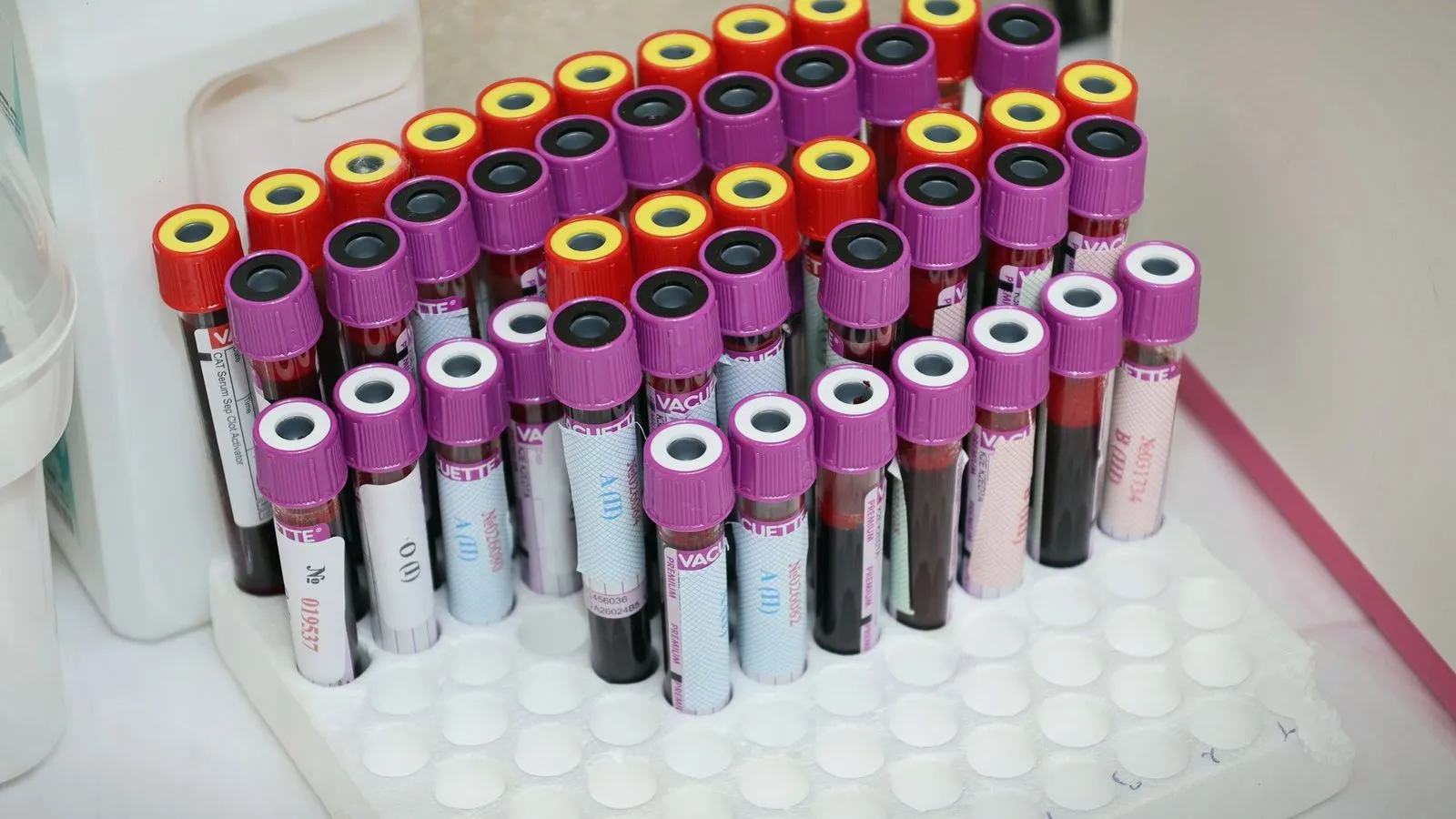
- A simulation of 250,000 US adults eligible for statins, comparing three cholesterol targets.
- apoB counts harmful cholesterol particles; an LDL test measures the cholesterol they carry.
- An apoB goal below 78.7 mg/dL prevented more heart attacks and strokes than LDL or non-HDL goals.
- It was the best-value strategy in 65% of simulations, and the test itself added little cost.
- A modeling study, not a trial. Ask your doctor which cholesterol tests are right for you.
Millions of Americans have a blood test every year to measure LDL, the so-called bad cholesterol that builds up in arteries. That number is useful, but it mostly reflects how much cholesterol you carry, while saying less about the total number of harmful particles in the blood.
A team at Northwestern University set out to test whether a different blood test would guide treatment decisions better. Their study, published in the journal JAMA, found that measuring apoB was more effective than tracking LDL or non-HDL cholesterol when deciding whether to intensify treatment.
In a computer simulation of 250,000 US adults, guiding treatment by apoB would prevent more heart attacks and strokes than the standard approaches, at a price the researchers judged good value. The results are projections of what would happen, not outcomes measured in real patients. The authors describe it as the first analysis to show that using apoB to guide cholesterol treatment is also cost effective.
What an apoB test actually counts
Cholesterol does not move through the blood on its own. It travels inside particles, and apoB is a protein found on the particles that can deposit cholesterol in artery walls. A routine LDL test mainly gauges how much cholesterol those particles are carrying. An apoB test instead counts the cholesterol carrying particles that can contribute to plaque buildup.
That difference matters because two people can have the same LDL cholesterol level but a different number of cholesterol-carrying particles. When that happens, a standard cholesterol panel may not fully show the risk a person faces. Over time, those particles can become trapped inside artery walls, where they build into plaques that restrict blood flow.
Three cholesterol tests, one simulation
To compare the options, the team did not run a clinical trial. They built a computer simulation of 250,000 US adults who were eligible for statin therapy but did not already have heart disease. The model compared three approaches for guiding treatment: an LDL goal, a non-HDL goal, and an apoB goal. Whenever a simulated patient missed the target, treatment was stepped up, first with stronger statins and then by adding a second drug, ezetimibe.
A simulation cannot watch real people age. It projects likely futures from national survey data and earlier studies, so the numbers are best estimates of what would happen across a population.
What the apoB simulation showed
Across the simulation, guiding treatment by apoB came out ahead. It consistently performed better than the LDL and non-HDL approaches, preventing more heart attacks and strokes while improving overall health. When the team accounted for the uncertainty in every input, an apoB goal was the best value in most of the runs, well ahead of the other two.
The apoB test itself added little to the bill. The higher costs reflected longer life expectancy and more years of preventive treatment, as people who avoid a heart attack live on and keep taking their medication.
What it could mean for your next cholesterol test
All of this rests on a model, so the projected benefits ride on the assumptions fed into it, and a study that follows real patients could land in a different place. There is also a practical catch. apoB is still not commonly used in routine care, and it usually means an extra blood test on top of the standard panel.
The work arrives at a busy moment for cholesterol care. Earlier this year the American Heart Association and 10 other medical organizations released updated guidelines urging many people to start cholesterol lowering therapy at younger ages. Kohli-Lynch, the lead author, framed the study as a plain value question: “Is it worth spending extra money to use apoB instead of LDL to guide treatment intensification?”
If you are wondering whether apoB belongs in your own care, that is a conversation to have with your doctor. For now, apoB counts the harmful particles rather than the cholesterol packed inside them, and the researchers make the case that a more direct indicator of cardiovascular risk is worth paying for.
It is worth remembering how much of vascular risk sits outside any blood test. Researchers have looked at habits as ordinary as dental flossing for a link to stroke, with all the caveats that observational work carries.
The other frontier is timing rather than choice of marker. NT-proBNP, the standard blood test for a strained heart, turns out to say something different when it is measured twice rather than once.
People also ask
What is apoB, and how is it different from an LDL cholesterol test?
apoB, short for apolipoprotein B, is a protein found on the particles that carry cholesterol through your blood. An apoB test counts how many of those harmful particles you have, while a standard LDL test mainly measures the amount of cholesterol packed inside them. Two people can have the same LDL number but a different number of particles, which is why some researchers view apoB as a more direct measure of heart risk.
Does this study prove apoB testing prevents heart attacks?
No. It was a computer simulation, not a clinical trial. The model estimated what would likely happen across 250,000 US adults if treatment were guided by apoB instead of LDL or non-HDL cholesterol. It projects a benefit; it does not measure one in real patients.
How much better was the apoB approach in the model?
At a value threshold of $120,000 per quality-adjusted life-year, an apoB goal was the best option in 65 percent of the simulations, compared with 25 percent for non-HDL cholesterol. Measured against a non-HDL goal, the apoB goal cost about $30,300 per quality-adjusted life-year gained, which the researchers considered good value.
Should I ask my doctor for an apoB test?
That is a decision for you and your doctor. apoB is not yet part of routine care everywhere, and it usually needs a separate blood test in addition to a standard cholesterol panel. This research looks at value across a population, not individual cases, so ask your doctor which cholesterol tests make sense for you.