News · Supplements
Vitamin K from leafy greens tracked 14% less dementia over 28 years; the other form went the wrong way
Vitamin K comes in two forms and the supplement industry prefers K2. Following 54,968 Danes for up to 28 years, higher K1 intake tracked lower dementia risk while higher K2 tracked higher, which is the opposite of the marketing.
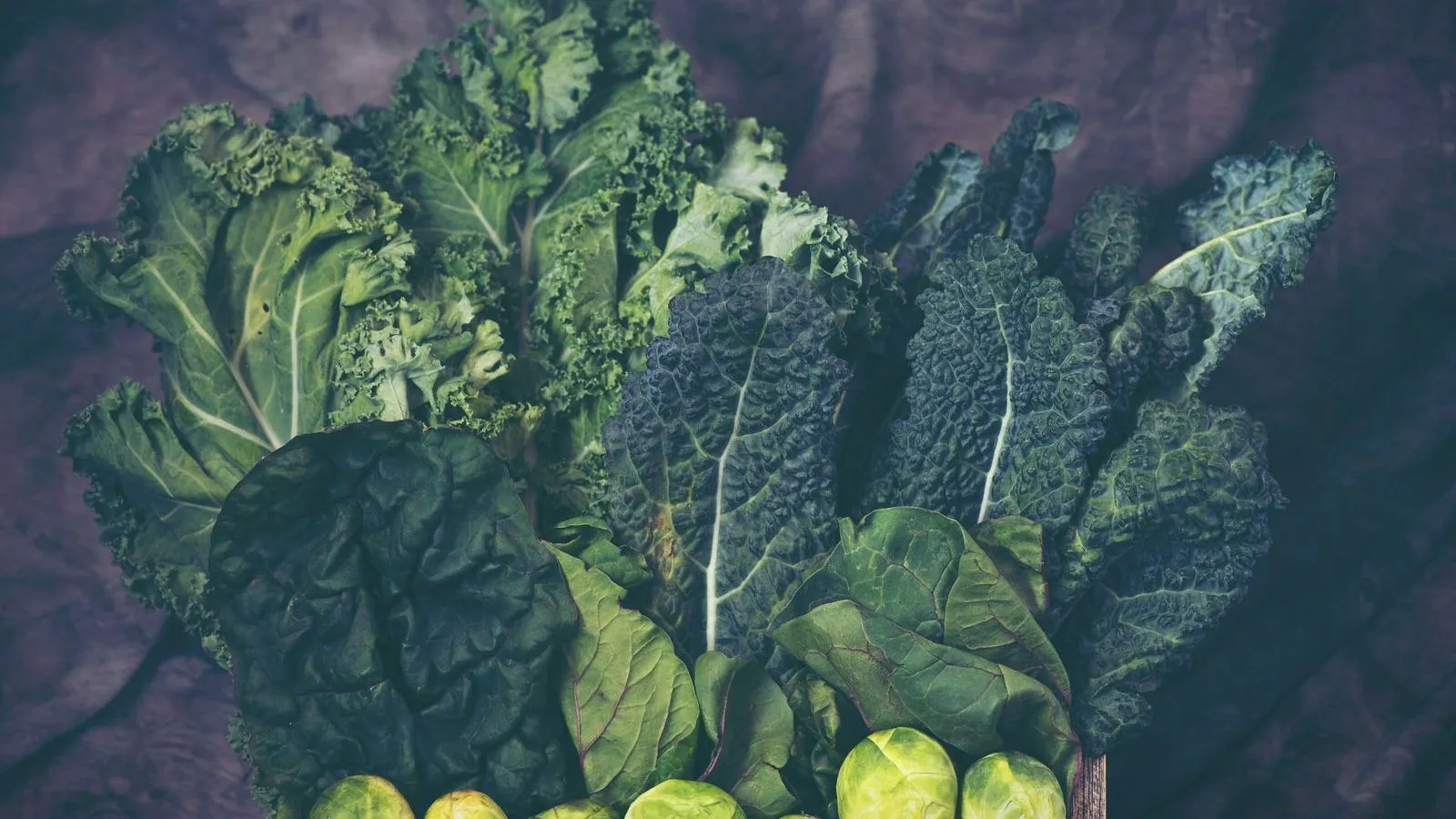
- Vitamin K from leafy greens tracked about 14% less dementia over 28 years.
- The other form of vitamin K, the one supplements favor, tracked the opposite way.
- That is the reverse of how K2 is marketed.
- The authors think the foods may be doing the work rather than the vitamin itself.
- 54,968 Danes followed for a quarter of a century, and an association is not a cause.
The vitamin K you can buy is K2. It fills the capsules, shares a label with vitamin D, and carries the enthusiastic internet following. The vitamin K most people actually eat is K1, out of leafy greens, and almost nobody sells it.
A Danish cohort has just measured both forms against dementia over a quarter of a century, and the results run the other way.
Writing in the European Journal of Nutrition, researchers followed 54,968 dementia-free participants aged 50 to 65 for up to 28 years. Vitamin K1 intake showed an inverse association with dementia, at 14% lower in the top fifth of intake. Higher K2 intake was associated with higher risk.
What the two forms actually are
They are chemically related and they arrive in completely different foods.
Most people get vitamin K from plants such as green vegetables, and dark berries, and that is K1, phylloquinone. Spinach, kale, broccoli, cabbage, and the darker salad leaves are where it concentrates.
K2, menaquinone, is different. It comes from fermented foods, hard cheese, liver, egg yolk and meat, and bacteria in your intestines also produce small amounts of another type of vitamin K.
So a person high in K1 is eating a lot of green vegetables. A person high in K2 is eating a lot of cheese and animal products. That distinction is going to matter.
Why anyone looked at the brain
Vitamin K helps your body by making proteins for healthy bones and tissues, and it also makes proteins for blood clotting.
Some of those vitamin K-dependent proteins are made in the brain and in blood vessel walls, where they are involved in preventing calcification and in the metabolism of certain fats found in nerve membranes. That is a real hypothesis rather than a stretch, and it is why the question was asked.
The cohort was well suited to answering it. Over a maximum of 28 years of follow-up, 4,802 participants developed dementia, which is a large number of cases and an unusually long gap between the food questionnaire and the diagnosis.
The obvious explanation, which the authors offer themselves
Two forms of the same vitamin pointing in opposite directions is not what you would expect if the vitamin were doing the work.
It is exactly what you would expect if the food were. A diet high in K1 is a diet high in leafy greens, and leafy greens travel with fiber, folate, potassium and generally with everything else that predicts a lower dementia risk. A diet high in K2 is a diet high in cheese and processed meat, which travels with saturated fat, salt and the rest.
The authors do not hide behind their finding. These associations may be confounded by dietary patterns and food sources associated with each vitamin form, they write, and their own practical conclusion drops the molecule entirely: greater intake of vitamin K1-rich vegetables, such as spinach, cabbages and broccoli, as part of broader dietary patterns may be relevant to cognitive health.
That is a sentence about vegetables wearing a vitamin’s clothes.
What this does and does not say about supplements
Nothing at all, and that is worth stating plainly because it is the way this finding is most likely to be misread.
Every intake in this study came from food, estimated from a 192-item questionnaire completed in the 1990s. Nobody was taking a K2 capsule, and a capsule does not arrive with cheese attached. The K2 result is a signal about a dietary pattern, not evidence that a supplement is harmful.
The reverse caution also applies. A K1 result driven by spinach is not an argument for a phylloquinone tablet.
The one group that should not act on this
Anyone on warfarin or a similar older blood thinner.
If you take blood thinners, you need to be careful about how much vitamin K you get, because these drugs work by interfering with exactly the clotting proteins vitamin K makes. The advice for those patients is consistency rather than more or less, and a sudden increase in green vegetables changes how well the drug works.
For everyone else the implication is the least surprising one in nutrition. There is no cure for most types of dementia, the prevention evidence is thin, and a study following 55,000 people for a quarter of a century has landed on eating your greens.
People also ask
What did the study find?
Vitamin K1 intake showed an inverse association with dementia, with a 14% lower rate in the highest versus lowest quintile (HR 0.86, 95% CI 0.78-0.93). Higher vitamin K1 intake was associated with lower dementia risk, while higher K2 intake was associated with higher risk.
What is the difference between K1 and K2?
K1, phylloquinone, comes from plants. Most people get vitamin K from plants such as green vegetables, and dark berries. K2, menaquinone, comes mostly from fermented foods, cheese, meat and egg yolk, and bacteria in your intestines also produce small amounts.
Why would the two forms point in opposite directions?
Most likely because of what they come with. K1 arrives inside spinach, kale and broccoli; K2 arrives inside cheese, liver and processed meat. The authors say these associations may be confounded by dietary patterns and food sources associated with each vitamin form.
Does this mean K2 supplements are harmful?
No. This measured vitamin K in food, not supplements, and the K2 signal is far more likely to be tracking the foods it travels in than the molecule itself. Nothing here tests a capsule.
How long was the follow-up?
Up to 28 years, with a median of 25.5 years and 4,802 dementia cases. That length is unusual and valuable, because it puts a great deal of distance between the dietary questionnaire and the diagnosis.
What does vitamin K do?
Vitamin K helps your body by making proteins for healthy bones and tissues, and it also makes proteins for blood clotting. Some of those proteins are found in the brain and blood vessels, which is the reason anyone looked.
What is the practical version?
Eat the green vegetables, which is advice that already existed for other reasons. Anyone taking blood thinners needs to keep vitamin K intake steady rather than change it, and should raise this with their doctor first. This is general information rather than medical advice.