News · Brain & Mental Health
TV watching, not desk work, tracked with smaller brain regions
A study in Alzheimer's & Dementia followed 1,712 adults from midlife to brain scans decades later and found frequent TV watching tracked with smaller memory-related brain regions, while sitting at work did not.
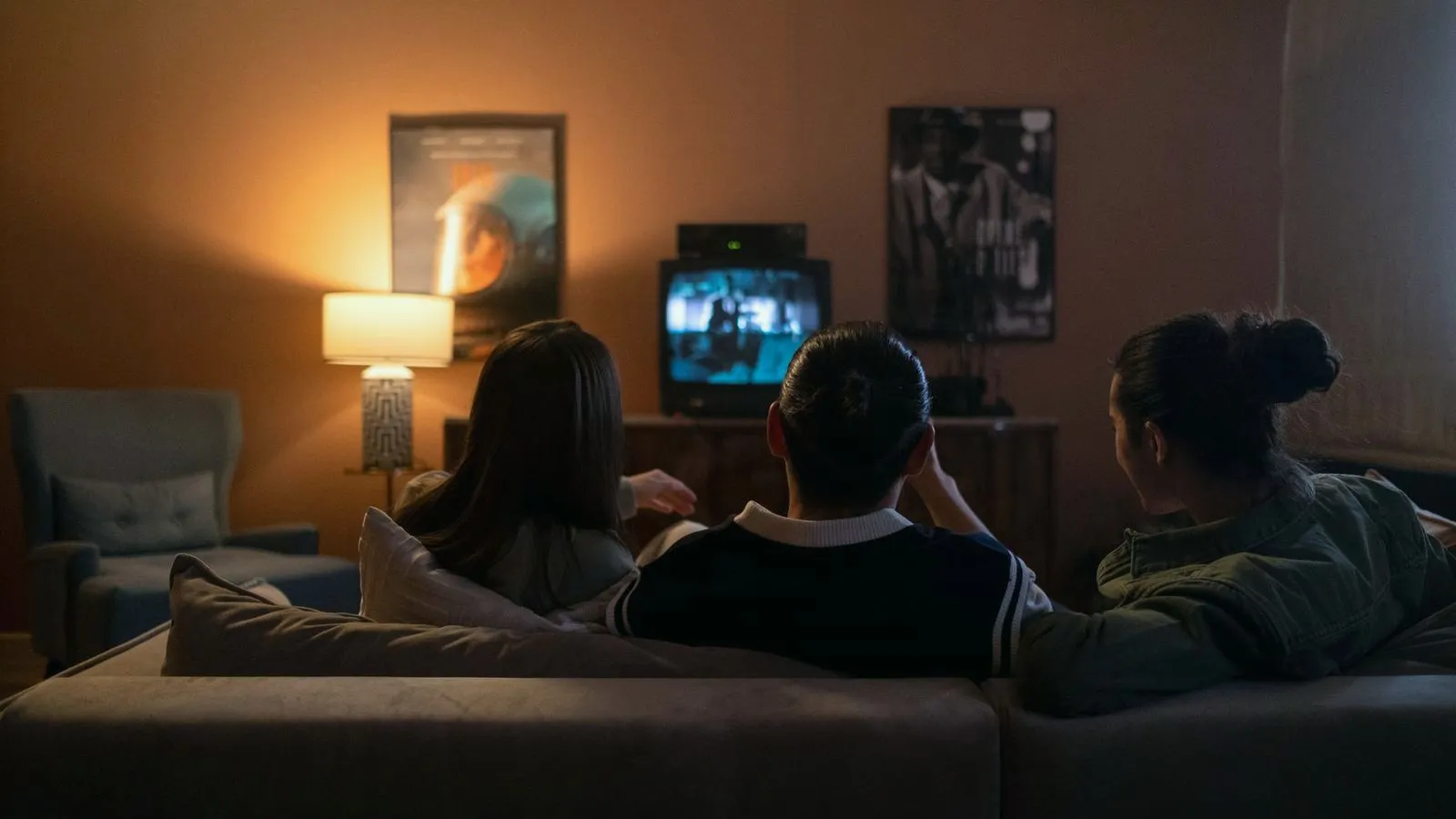
- 1,712 adults reported sitting habits at an average age of 53, with brain scans 24 years later.
- Frequent TV watching tracked more white matter damage and smaller memory-related regions.
- Sitting at work, which is more mentally active, went the other way on every measure.
- The contrast held after accounting for exercise, so it is not simply that TV watchers moved less.
- Observational, with sitting self-reported once, decades before the scans.
Public health advice has spent a decade counting the hours we spend sitting. A new study suggests the tally may be asking the wrong question.
Researchers at the University of Southern California, writing in the journal Alzheimer’s & Dementia, tracked 1,712 adults from midlife into their seventies and found that two kinds of seated time pointed in opposite directions. Frequent TV watching was associated with increased white matter hyperintensity volume, a measure of damage to the brain’s wiring, and with reduced frontal, occipital and Alzheimer’s-signature brain regions. Sitting at work was linked to the reverse.
What is new about separating types of sitting
Until now, research treated sedentary time as one thing: hours off your feet. Longitudinal studies linking sedentary behavior in different contexts to brain structure remained limited. This study split the hours apart by what people were doing during them, and the split mattered more than the total.
“For years we’ve focused on how much people sit. Our findings suggest we should also pay attention to what they’re doing while they’re sitting,” said David Raichlen, a professor of biological sciences and anthropology at the University of Southern California.
Thirty years between the question and the answer
The work draws on the Atherosclerosis Risk in Communities study, a long-running American cohort. Sitting was assessed at visit 1, between 1987 and 1989, with neuroimaging at visit 5, between 2011 and 2013. Participants were non-demented adults, 57% of them women, averaging 53 years old, who reported frequency of TV watching and occupational sitting.
That gap of roughly a quarter century is the study’s real asset. Habits were recorded long before any scan, so the reported behavior came first and the brain measurement second.
What TV watching did to brain volume
Among heavy viewers, the scans showed more damage to the brain’s wiring and reduced frontal, occipital and Alzheimer’s-signature volumes, the last being the set of regions the disease characteristically hits first.
Desk work produced the opposite pattern. It was linked to lower white matter hyperintensity volume and larger frontal, occipital and parietal volumes, with the frontal finding holding in men only.
The obvious objection is that people who watch a lot of television simply move less. The researchers tested that, and the results remained consistent when adjusted for physical activity. Something other than exercise appears to separate the two.
Their proposed explanation is mental engagement. A desk demands reading, deciding and talking, where television asks very little. Cognitively active sedentary behavior may preserve brain structure and cerebrovascular health, the authors write.
What the TV watching finding cannot show
This is an observational study, so it can show that TV watching and brain measures travel together, not that one causes the other. Heavy viewers may differ from light viewers in ways no adjustment fully captures, including income, education and health conditions that shape both habits and brains.
The exposure is also coarse. People rated their viewing from never or seldom up to very often, rather than logging hours, so the study offers no threshold to stay under. And a single self-report in the late 1980s stands in for decades of behavior.
What survives those caveats is the contrast itself. Two forms of sitting, measured the same way in the same people, moved in opposite directions on the same scans.
“We frequently encourage the public not to spend too much time sitting down, but experts may want to expand that recommendation to encompass the activities done while sitting, since those seems to have distinct impacts on brain health,” said Natan Feter, a postdoctoral scholar at the same university and the study’s lead author.
The takeaway is not that sitting is fine. It is that the hours are not interchangeable, and the ones spent with your brain switched off may be the ones that count against you.
People also ask
Does watching TV actually shrink your brain?
This study cannot show that. It is observational, meaning it tracked what people already did rather than assigning them to watch more or less TV. Frequent TV watchers had smaller volumes in several brain regions and more white matter damage on scans taken decades later, but other differences between heavy and light viewers could explain part of that. The honest reading is an association worth taking seriously, not proof of cause.
Why would sitting at work be better than sitting on the sofa?
The researchers' interpretation is that what you do while seated matters. Work sitting is usually mentally demanding, involving problem-solving, reading and talking to people, while TV is largely passive. In this study, occupational sitting was linked to lower white matter hyperintensity volume and larger frontal, occipital and parietal volumes, the opposite direction to TV. That pattern fits the idea that cognitively active sitting may be protective, though the study did not test mental effort directly.
Isn't this just because people who watch a lot of TV exercise less?
That was the obvious explanation, and the researchers checked it. The results stayed consistent after adjusting for physical activity, so exercise alone does not appear to account for the difference between the two kinds of sitting. That said, adjusting for a self-reported measure never removes an influence completely.
What are white matter hyperintensities?
They are bright spots that show up on brain scans where the brain's white matter, the wiring that connects regions, has been damaged. They become more common with age and are linked to raised risk of stroke, cognitive decline and dementia. In this study, frequent TV watching was associated with a larger volume of them.
So how much TV is too much?
The study cannot answer that. Participants rated how often they watched, on a scale running from never or seldom up to very often, rather than logging hours. No threshold was tested, so there is no number to aim below. The practical signal is about the balance of your seated time, not a TV limit.
References
- Feter N, Nanda A, Hourihan S, et al. Associations of distinct sedentary behaviors with cortical, subcortical, and white matter hyperintensity volumes: Evidence from the ARIC study. Alzheimer's & Dementia (2026).
- National Institute on Aging. What Do We Know About Diet and Prevention of Alzheimer's Disease?